
High-Limit Betting in Great Britain: A Guide to Stakes and Limits for 2026
 Available in US
“Stake size” is the one variable a bettor controls, and it is the one variable that decides whether a bookmaker keeps the door open. The phrase high limit betting sites means different things to different punters, and the difference matters. For some, it is the bookmaker who does not trim a winning account when the bets land. For others, it is the operator that lets a £50,000 stake land on a Premier League match in the first place. Both readings are real, and both belong on this page.
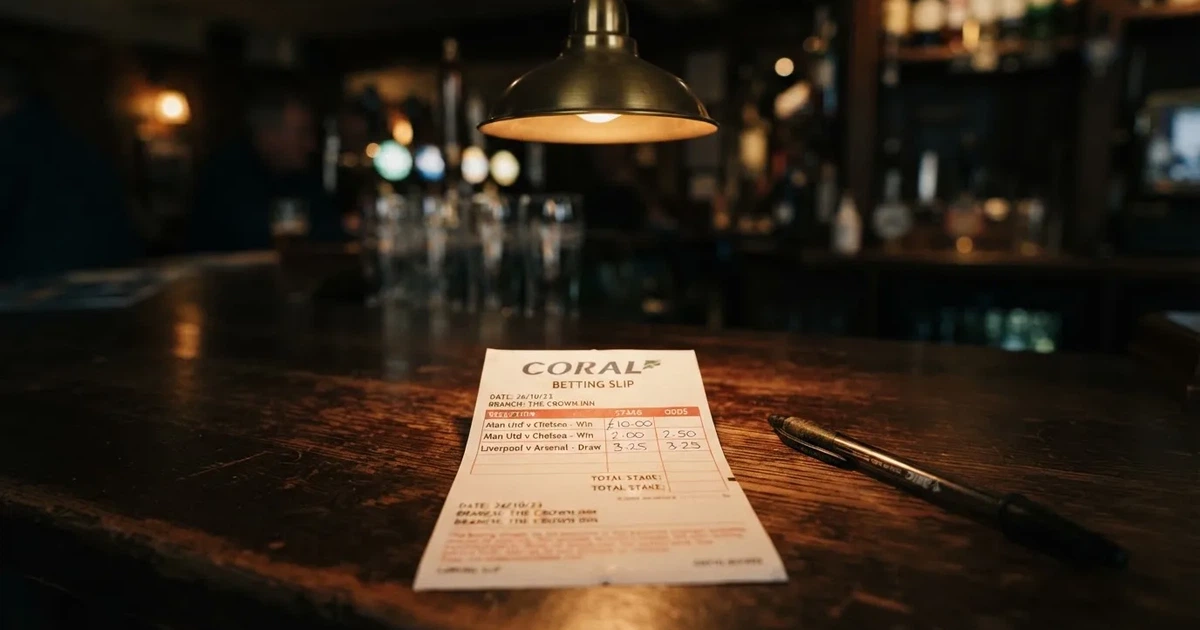
Every operator reviewed below holds a remote operating licence from the Gambling Commission for Great Britain, and every one runs under the same statutory frame: the Gambling Act 2005, the Licence Conditions and Codes of Practice, and the Commission’s public register. None of that frame sets a ceiling on stake size. Operators set their own maximum stakes, and they adjust them as the account, the market and the risk profile change. What follows is what “high limit” means in that world, the routes that exist for a bettor who wants to bet big, and the trade-offs each one carries.
Data current as of 27 October 2026 and checked against the Gambling Commission’s public register.
The ten bookmakers that headline this comparison
A shortlist is a working tool, not a verdict. Each brand below was chosen because its terms, its licence status and its product range fit the high-limit conversation in a way the next one does not. The order is not a ranking; it is a sequence that walks the reader from a familiar name to a more specialised operator, and it is the sequence the rest of this page uses.

| Brand | Gambling Commission remote licence number and licence holder | What the operator’s own terms state on stake size |
|---|---|---|
| Bet600 | Account 44731 — Tyche Tech Limited | Pays Best Odds Guaranteed on horse racing; stakes settle at the larger of the early price or the starting price |
| VBet | Account 44662 — SCGO Limited | Bet Builder, pre-match and in-play betting, live streaming and a live calendar with results and stats |
| Swifty Sports | Account 58957 — Swifty Global (UK) Ltd | Best Odds Guaranteed, Cash Out on horse racing and football, daily price boosts, live streaming and in-play |
| Betmaster | Account 65699 — BM Solutions GB Ltd | General betting real event licence; stakes subject to the operator’s own terms |
| Fafabet | Account 57385 — Taichi Tech Limited | Best Odds Guaranteed on UK and Irish horse racing from 9am on race days, win and each-way bets |
| DragonBet | Account 64908 — DragonBet Ltd | Welsh football and rugby markets, racing, American football, in-play betting and bet builder |
| Dabble | Account 65677 — Dabble Sports UK Ltd | Welcome offer of a £10 free bet on a £10 first deposit, minimum odds apply, seven-day expiry |
| Betboro | Account 44181 — Webmedia Development N.V. | In-play markets and cash out on football, racing and tennis; boosted odds on selected singles from £10 stakes |
| DAZN Bet | Account 48756 — DZBT Limited | Cash Out, Bet Builder, daily bet boosts and in-play; cash out availability not guaranteed |
| Betway | Account 39372 — Betway Limited | £40 in free bet tokens (4 x £10) on settlement of a first bet of at least £10 at minimum odds of 2.0 |
Three of those entries (Kalooki Sportsbook, Midnite and Unibet) are referenced later in the guide as branded benchmarks for the picture captions, not as entries in this shortlist; the section on what a stake cap looks like in practice leans on each of them for a specific point.
What the table does, and what it does not, tell the reader
Every licence number above is searchable on the Commission’s public register; the holder is the company whose name appears on that register. The third column carries one operator-defined point relevant to high-stake play — a settlement rule, a market, or a product feature — drawn from each brand’s own published terms. Stakes are not listed, and that is deliberate. The Commission does not publish operator stake limits. Operators publish some themselves, often inside a market’s own settlement rules rather than a single page, and what is published on a Tuesday can change by Friday.

A puntter who wants to know a brand’s ceiling before opening an account has three options: read the betting rules for the specific market, place a minimum stake to see the upper limit the slip accepts, or ask customer support in writing and keep the reply. None of those routes is fast. All three are part of how the British market actually works.
The four shapes “high limit” takes in this market
The first shape is the wholesale ceiling. A bookmaker publishes, in its terms, a maximum stake that applies to most customers across most markets. It is the easiest number to find and the easiest one to misunderstand, because markets where a sharp-eyed punter can extract value are usually the markets where this ceiling is lowest. A Premier League match at the top of the page may accept a £50,000 stake at 1.91; a handicap on a lower-tier tennis match may accept £500 at the same price.
The second shape is the per-account ceiling. The same operator, on the same match, may accept a £50 stake from a new account and a £5,000 stake from a long-standing one. Operators segment by history. Accounts that have lost consistently over a longer window often see limits rise; accounts that have won consistently see them fall. This is the mechanism that makes “high limit” mean different things to different punters, and it is the one most readers come to this page to understand.
The third shape is the per-market ceiling. Football and the major American sports tend to carry the deepest liquidity; niche leagues, novelty markets and certain in-play lines carry the shallowest. A bookmaker that takes a five-figure stake on the Premier League outright may cap a third-tier handball handicap at three figures, and the reason is not the operator’s appetite — it is the price feed that backs the bet.
The fourth shape is the pricing premium. A stake limit is one lever; the price the bookmaker offers is another. A brand that advertises itself as “high limit” but prices its top-tier football at fewer tiers than the rest of the market is charging for the privilege through the margin, not through the stake cap. That is why this page looks at stake size and pricing in the same breath.
What “betting limit” actually means at a licensed British bookmaker
The word *limit* does work in this market that it does not do elsewhere. A bookmaker does not run a single “limit” that sits on a customer’s account. It runs several, each set by a different team, and each one adjusts under a different trigger.
The stake limit is the largest stake the betting slip will accept on a specific selection. It is set per market, per outcome, and per customer segment. New accounts and dormant accounts tend to see lower numbers; established losers tend to see the highest. A stake limit can change between the time a price is published and the time a bet is placed, particularly in-play, where the trading desk moves both the price and the cap together.
The exposure limit is the largest liability the bookmaker is willing to take on a single outcome or a single event across all customers. Where a stake limit caps the individual bettor, an exposure limit caps the bookmaker’s overall book. When exposure tightens, stake limits follow. Punters who find their stake trimmed mid-event are usually seeing exposure management at work, not personal targeting.
The betting limit meaning that the punters’ vocabulary reaches for is a fourth thing: the de facto ceiling a customer has learned to expect on a given account. It is not a contractual limit; it is a working ceiling, inferred from past accepted bets, past rejected bets and the customer service replies that explained both.
A few things that follow from those definitions. A new account cannot infer its own ceiling from a competitor’s table, because the same operator segments differently by account. A winning account cannot infer it from a losing week, because the algorithm does not run that way. And no published table of “limits” survives contact with the betting slip, because the betting slip is the only source that is current.
The difference between a stake limit and a deposit limit
Stake limits are about the size of a single bet. Deposit limits are about how much money goes into the account over time. They are not the same thing. A bettor can have a high stake limit and a low deposit limit, or vice versa; the two are set under different rules and serve different purposes. The deposit limit is the customer’s lever — set, raised or lowered by the account holder, in line with the Commission’s Remote Technical Standards. The stake limit is the operator’s lever — set, raised or lowered by the trading desk, in line with the operator’s own risk appetite.
That distinction matters because most of the search queries that lead to a page like this — “no deposit limit bookmakers”, “betting apps with no deposit limit”, “deposit limit betting” — are asking the wrong question. There is no British licensed operator that lets a customer gamble without a deposit limit, because the Commission’s Remote Technical Standards require operators to provide a tool that lets the customer set one. The question is whether the operator offers a ceiling high enough to be invisible in practice, and the answer depends on the operator, the verification level and the deposit method.
The legal frame that sets the ceiling
The Gambling Commission is a non-departmental public body sponsored by the Department for Culture, Media and Sport. It regulates the British commercial market under the Gambling Act 2005, which covers Great Britain — England, Scotland and Wales. Northern Ireland is outside the 2005 Act and runs its own older framework; this page is about Great Britain.
The 2005 Act does not set a cap on stakes or a cap on winnings. It does not name which markets may be offered or set a maximum payout. It does require an operator whose remote facilities are used in Great Britain to hold a Commission licence, regardless of where the operator is based — a rule in force since the Gambling (Licensing and Advertising) Act 2014 amended sections 33 and 36 of the 2005 Act. A Curaçao, Maltese or Gibraltar licence is not a substitute for serving British customers. The Commission’s public register is the whole test of who holds one.
A remote general betting licence comes in two flavours: real events and virtual events. The bookmakers reviewed here hold the real-events licence, which covers sports and other real-world outcomes. Virtual events — computer-generated races, simulated football — sit on a separate licence category. Pool betting sits on its own licence. A betting exchange sits on a *betting intermediary* licence. Financial spread betting is regulated by the Financial Conduct Authority, not the Commission; losses on a spread bet can exceed the deposit, and that is one product on this list where the “high limit” question is the wrong question to ask.
No statutory cap on sportsbook stakes has been set. Operators set their own maximum stakes and may restrict customers. That single sentence is the legal shape of “high limit” in Great Britain: the regulator does not fix it, and the operator does. A puntter who wants a higher stake than the one on offer can ask, but the answer is set by the trading desk, not by the Commission.
What identity verification does to stake size
Since 7 May 2019, every licensed remote operator has to verify a customer’s name, address and date of birth before the first deposit or first bet — including where the first bet is a free bet or bonus. That verification uses a credit reference agency or similar. The result is no anonymous play at a licensed British site.
For a high-limit customer the practical effect is the opposite of what intuition suggests. A verified, long-standing account on which the operator has a year of settled bets and a year of withdrawals is the account the operator is most willing to take a large stake from. An unverified account, or an account that has just been verified, is the account the operator is most cautious with. That is because the operator’s liability is higher than the punter’s deposit: a bet of £10,000 at 6.00 prices a £50,000 payout, and the operator wants to know the customer before it carries that risk.
Verification also brings the £150 vulnerability check into scope under LCCP condition 3.4.4, in force since 30 August 2024 (with the £150 rolling 30-day threshold in force since 28 February 2025). That is a public-record check — bankruptcy, county court judgments — not an income check and not a credit reference check in the consumer sense. It triggers when net deposits exceed £150 in a rolling 30-day window; it does not cap stake size directly, but it sits alongside source-of-funds questions at higher spend, which are routine under the money-laundering rules and which can take days to clear.
The cap on bonus turnover, and what it means for big bettors
Since 19 January 2026, wagering requirements on bonuses are capped at 10x. A £10 bonus at 50x wagering used to need £500 of qualifying bets; under the cap, no more than £100. Free bets whose stake is not paid back are not the same product and the cap’s interaction with them is not settled in this register snapshot.
Mixed-product promotions — an offer that requires gambling on two or more product types (betting plus casino, betting plus bingo, betting plus lottery) — are banned. The cap and the ban apply to operators. A big bettor who lives on welcome offers will notice both: the cap shrinks the qualifying turnover on the biggest bonuses, and the ban removes the offers that mixed a casino free spin with a sports free bet. Neither rule caps stake size directly. Both rules shape the menu of offers a high-stake customer sees.
Safer gambling tools, and why they sit on this page
A page about high stakes is a page about the people who place them, and the British framework treats those people as customers the operator is required to protect. The tools that follow are operator-provided; they are not optional extras.
Deposit limits are mandatory under the Commission’s Remote Technical Standards. The first changes have applied since 31 October 2025; a second phase has been postponed to 30 September 2026. A licensed operator offers a gross deposit limit on a fixed time frame and lets the customer set, lower or raise it. The limit is the customer’s choice, not a state-set ceiling, and there is no British statutory deposit ceiling for betting. What the operator must do is make the tool easy to find, easy to use and easy to lower without delay.
Reality checks are pop-up messages during a session that summarise time spent and net position. They are operator-implemented, vary in style and frequency, and are a licence condition rather than a customer opt-in.
Self-exclusion via GAMSTOP is the national multi-operator online self-exclusion scheme and a mandatory licence condition for online operators since 31 March 2020. Exclusion periods are six months, one year, five years, or five years with auto-renewal. After the minimum period, the exclusion stays in place for a further seven years unless the customer asks GAMSTOP to remove it. GAMSTOP covers online sites and apps; betting shops use a separate service. Every GB-licensed online operator takes part, including every brand on this page.
Financial vulnerability checks apply at the threshold noted above. They are not affordability checks. The financial risk assessments that have been reported in the press — sometimes called “affordability checks” — were announced in a staged plan in a Commission article of 7 July 2026, with no start date. The honest wording is “announced, staged, no start date”. Anyone writing otherwise has skipped the date.
Help sits outside the operator’s own tools. GamCare runs the National Gambling Helpline. GambleAware funds treatment and education. NHS gambling clinics run in several regions. Gamblers Anonymous runs meetings. None of those services is part of the betting product, and a page that does not name them is one a big-stake customer would be right to put down.
Markets, odds, and what a margin actually does to a winning account
A bookmaker’s margin sits inside every price. It is the percentage of every pound bet on a market that the bookmaker keeps on average; it is what the rest of the industry calls overround, and it is the number that decides whether a bettor’s winning run survives contact with the trading desk.
A two-way market priced at 1.90 / 1.90 (fractional 9/10) is a useful illustration. The implied probabilities are 1 ÷ 1.90 = 52.63 per cent on each side, summing to 105.26 per cent. The five-point-two-six percentage points above 100 are the margin — the slice of every pound staked that the bookmaker keeps on this market. The same 1.90 / 1.90 price band, depending on the market, the sport and the bookmaker, often sits in a margin range from the low single digits to the high single digits. The margin of one market (the 1X2) is not the margin of another (totals, handicaps, a combination bet); one sport’s margin is not another’s; one bookmaker’s price is not another’s. Most punters do not need to know the exact figure; they need to know that the figure exists, that it is larger on the markets where the price looks juiciest, and that it is the first thing a sharp account runs down.
What a winning account actually does
Every bookmaker on this page accepts bets from customers and pays out winners. The mechanism by which a winning account changes hands with the trading desk is the same in each case, and it is the mechanism that produces the per-account ceiling discussed earlier.
When an account starts to win, three things happen. The first is that the trading desk’s automated system flags the account and re-prices or re-caps its markets. The second is that the trading desk’s manual team reviews the account’s bet history for tell-tale patterns — closing-line value, market selection, timing. The third is that the operator restricts the account — lowers stake limits, removes certain markets, removes the account from promotional offers, or closes the account. Each step is permitted under the operator’s terms; each step sits within the law.
Two things follow. The first is that a bookmaker that advertises itself as “high limit” is, in plain English, a bookmaker whose terms and whose pricing accept large stakes from the population of punters that includes winning ones. The second is that “no limit” — the search-query vocabulary — does not exist in the British licensed market. Every bookmaker restricts. The question is which restrict last.
Sports, tournaments, and where the ceiling sits highest
Stake size follows liquidity, and liquidity follows where the betting public puts its money. Football carries the deepest books, with English Premier League matches routinely accepting the largest individual stakes across the British market. The major American sports sit close behind, with horse racing and greyhound racing sitting in a particular corner: Best Odds Guaranteed — settlement at the larger of the early price and the starting price — has been a feature of the British racing market for years, and it changes the working ceiling on a race.
The British racing market’s BOG rules vary by operator. Fafabet pays BOG on UK and Irish horse racing win and each-way bets from 9am on race days. Coral pays it on all UK and Irish horse racing from 8am each morning and on every UK greyhound race. William Hill pays it from 8am on the day of the race, on single and multiple bets, and excludes ante-post, tote and pari-mutuel bets. Swifty Sports and BetVictor also advertise it. The phrase itself does not change the ceiling, but it does change what a winning stake is worth at settlement, and that is one of the ways a high-limit customer reads an offer.
Lower-tier football leagues, niche American leagues, lower-division rugby, third-tier tennis and most esports markets sit at the shallow end. A bookmaker that takes a five-figure stake on the Premier League outright may cap a Conference South handicap at three figures. The reason is the price feed: the bookmaker’s own model of the outcome, and the bettor’s capacity to find prices that diverge from it. The shallower the feed, the easier the divergence, the lower the cap.
Cricket betting carries its own ceiling pattern. Limits on international fixtures are deep; limits on franchise leagues and domestic competitions are not. The same applies to MMA, darts and snooker: the marquee events carry the deepest liquidity, and the periphery carries the thinnest. The phrase “what is limit in cricket betting” is, in practice, the question “is the match a marquee one”, and the same pattern repeats across most sports.
The age limit, and the verification that goes with it
The minimum age for betting in Great Britain is 18. The minimum age for horse racing specifically is the same 18; the search-query vocabulary that pairs the two is misremembered, but the rule itself is not negotiable. Every licensed operator verifies age at sign-up, runs further verification before the first deposit, and is required to refuse the bet and refund the deposit where verification fails. There is no high-limit route that bypasses it.
How a bet is built, settled and paid out — the practical sequence
The mechanics of placing a large bet at a British licensed bookmaker are not different from placing a small one. The slip accepts the stake or it does not; the bet is matched or it is not; the result settles the bet or the operator’s rules settle it for an outcome that did not happen on the pitch.
The maths is the same in either case. A decimal-odds bet of £100 at 3.75 returns £375 if it wins — the stake times the price — for a net profit of £275. Decimal odds express the total return, stake included; fractional odds express the profit on the stake. The two notations convert: a fractional price of a/b becomes a/b + 1 in decimal form, so 5/1 becomes 6.00 and 11/4 becomes 3.75. British bookmakers publish both.
For a combination bet the legs multiply into one price. A double at 2.50 / 3.00 carries a combined price of 7.50; a treble carries the product of three; an accumulator or *acca* carries the product of all. The combined price carries the bookmaker’s margin at each leg, and the combined margin is not a simple sum; the legs’ margins multiply through.
Cash out is the operator’s offer to buy the bet back before settlement, at a price the operator sets. DAZN Bet states that cash out availability is not guaranteed and that bets stand if it is unavailable. William Hill’s terms exclude each-way bets and state that cash out is not always available on accumulators. The price at which a bet is cashed out is not the price the bet would settle at; it is the operator’s working price for the position right now, less its own margin on the trade.
Why a winning bettor’s stake gets cut
The mechanism is the per-account ceiling discussed earlier, and it has two triggers. The first is closing-line value, the gap between the price the bettor took and the price the market closed at. A bookmaker that consistently loses to a customer who beats the closing line will move that customer’s stake limit down; the trade is unprofitable even when the customer wins a minority of bets, because each win pays out at a price the market has already corrected. The second trigger is market selection. A customer who consistently bets on the markets the bookmaker is weakest on — niche handicaps, lower-tier totals, specific player props — is a customer the bookmaker would rather restrict than carry.
Both triggers are lawful. The Commission’s social responsibility code does not require an operator to carry a customer whose pattern of play loses the operator money; it requires the operator to interact with that customer in a fair and transparent way when it does restrict. A bettor whose account has been restricted can ask for the reason in writing, and the operator is expected to give it.
A puntter who wants to bet large in this market has three honest routes. The first is to open accounts at the operators with the deepest liquidity on the markets they want to play — the names below, plus the established names reviewed in the wider market — and to spread stake across them. The second is to read the betting rules for the specific market before placing a bet, because the rules are where the per-market ceiling is published when it is published at all. The third is to ask customer support, in writing, what the working ceiling is on the selection, and to keep the reply.
The operators, in detail
The reviews below are working profiles, not endorsements. Each covers what the operator’s own terms state, where the brand sits in the high-limit conversation, and where the trade-offs land.
Bet600
Bet600 runs under Tyche Tech Limited against Commission account 44731, in the remote general betting standard (real events) category. Its public-facing feature in the racing market is Best Odds Guaranteed: if the starting price on a race is bigger than the early or show price the bettor took, the bet is paid at the larger SP. That rule does not lift a stake cap, but it does lift the working value of any stake the slip accepts on a race day.
Where the brand fits the high-limit conversation is in the racing menu and in the structure of its terms. BOG is a feature the larger racing brands advertise; the size of the underlying ceiling is the question the operator does not publish in marketing. A puntter who wants to bet large on British and Irish racing can ask, and the answer the slip gives is the answer that counts.
VBet
VBet runs under SCGO Limited against Commission account 44662. Its app offers Bet Builder, pre-match and in-play betting, live streaming and a live calendar with results and stats. The product range covers the standard menu — football, racing, tennis, American sports — with an in-play depth that varies by event. Live streaming, where the rights allow, is a working ceiling-extender for a customer who wants to bet into running play: the operator sees the same feed, and price moves with the picture.
The high-limit trade-off sits in two places. The first is Bet Builder: same-game multiples are a popular format with large bettors, and the per-leg liquidity is the constraint, not the headline product. The second is in-play: where the trading desk moves quickly, the slip’s working ceiling moves with it.
Swifty Sports
Swifty Sports runs under Swifty Global (UK) Ltd against Commission account 58957. Its published terms cover Best Odds Guaranteed, Cash Out on markets including horse racing and football, daily price boosts, live streaming and in-play betting; Bet Builder is listed as coming soon. The brand is newer than the established names on this page, and its stake ceiling reflects that.
The honest reading of “coming soon” on Bet Builder is that single-market liquidity is the product today, and the multiple-market product is the one to wait for. A high-stake customer who needs same-game multiples today reads this entry as one to watch, not one to lean on.
Betmaster
Betmaster runs under BM Solutions GB Ltd, registered in Malta, against Commission account 65699. The brand carries the standard menu under its real-events licence and operates under the standard British framework. Where it sits in the high-limit conversation is as a mid-sized alternative to the largest names; the working ceiling is the question the operator’s terms do not publish.
The trade-off for a bettor who wants a name that does not carry the segmenting muscle of the largest operators is that the working ceiling may sit lower on the marquee events, and may move earlier when the account wins. The trade-off in the other direction is that the per-account relationship is shorter, and the operators that segment most aggressively are the ones that have the longest customer memory.
Fafabet
Fafabet runs under Taichi Tech Limited against Commission account 57385. Its racing rule is Best Odds Guaranteed on UK and Irish horse racing win and each-way bets from 9am on race days, with the larger of the original price and the SP paid at settlement. The brand sits in the racing-led segment of the market, and the high-limit conversation reflects that.
The trade-off is the same as on other BOG-led brands: the rule lifts the value of a winning stake on a race day, not the headline ceiling. A puntter who bets large on the racing menu and asks the slip is the one who sees the working number. A puntter who bets large on football will see a different working ceiling.
DragonBet
DragonBet runs under DragonBet Ltd against Commission account 64908. Its menu runs into Welsh football and rugby markets, racing, American football, in-play betting and bet builder markets. The brand is built around regional and national loyalties, and the menu reflects that. Welsh football and rugby are not marquee markets at the major brands; at DragonBet they are the centre of the product, with the liquidity that comes from that focus.
The high-limit conversation is regional. A bettor who plays the Welsh football and rugby markets has a deeper book here than at most of the larger names, and the working ceiling reflects that. A bettor who plays only the Premier League has a thinner book than at the major brands, because the brand is not built around that market.
Dabble
Dabble runs under Dabble Sports UK Ltd against Commission account 65677. Its welcome offer, as published on the App Store listing, is a £10 free bet on a £10 first deposit for new customers, with minimum odds, a seven-day free bet expiry, and the stake not returned on settlement. The free bet’s stake is not paid back with a win, which is the standard free-bet mechanic in the British market.
For a high-limit customer the welcome offer is a smaller lever than the underlying product. The free bet’s expected value is the free-bet amount multiplied by the price-minus-one divided by the price, multiplied by the market’s payout share. A £10 free bet at decimal odds of 4.00 on a market with a 95 per cent payout share carries an expected value of £10 × 3.00 ÷ 4.00 × 0.95 = £7.13, on the assumption that only the free-bet amount is wagered. That is what the free bet is worth on average, not what it pays on any single bet. The stake cap is the question the operator’s terms do not publish.
Betboro
Betboro runs under Webmedia Development N.V. against Commission account 44181. Its menu covers in-play markets and cash out on football, racing and tennis, boosted odds on selected singles from £10 stakes, and the standard safer-gambling tools (deposit limits, reality checks, self-exclusion). The boosted-odds rule — a £10 minimum stake — is published and applies to selected markets only.
The high-limit conversation sits in two places. The first is the boosted-odds mechanic: a £10 stake on a boosted selection is the published minimum, and the ceiling above that is not published in marketing. The second is the in-play menu: the per-market liquidity on football, racing and tennis is the working constraint. A puntter who plays in-play at scale reads the slip as the answer.
DAZN Bet
DAZN Bet runs under DZBT Limited against Commission account 48756. Its product covers Cash Out, Bet Builder, daily bet boosts and in-play betting. Its published cash-out rule is that availability is not guaranteed and that bets stand if cash out is unavailable. The rule is standard and matters most for in-play multiples, where cash-out is most often pulled.
The high-limit trade-off sits with cash-out reliability at scale. A customer who uses cash out as a working tool — to take a price before the end, or to lock in part of a multiple — needs cash-out availability to track the bet’s market. Where the operator pulls cash-out mid-event, the bet runs to settlement and the customer takes the result. That is the published mechanic; reading the slip is the working test.
Betway
Betway runs under Betway Limited against Commission account 39372. Its App Store listing publishes a welcome offer of £40 in free bet tokens — four tokens of £10 — credited on settlement of a first bet of at least £10 at minimum odds of 2.0, with a seven-day expiry and debit card deposits only. The offer is a smaller deposit entry point than some of the larger welcome packages in the market, and the free-bet tokens expire seven days after issue.
The high-limit conversation is the one the larger names have: Betway carries a deep product across football, racing, tennis and American sports, and the working ceiling is set per market and per account. A customer who wants to bet large across the menu reads the slip as the answer, and reads the welcome offer as a starting point rather than a destination.
Two benchmarks the page leans on
Two further operators — Kalooki Sportsbook, Midnite and Unibet — appear elsewhere on the page as branded illustrations, not as entries in the shortlist. Each is named because it carries one specific point the surrounding prose is making.
Kalooki Sportsbook is operated by Kalooki Sports Book Ltd (company number 12938274), holds Gambling Commission account 57730, and is a GAMSTOP member. The illustration sits at the top of the article because the brand carries the full British framework — a Commission account, a Companies House registration, a GAMSTOP membership — without being one of the ten names that follow. The point it makes is that the framework is wider than any shortlist, and the Commission’s public register lists more brands than any article can feature.
Midnite‘s site cites Gambling Commission licence 101839 and shows in-play events, an acca builder, popular accas and price boosts with maximum-stake limits. The illustration sits at the section on maximum-stake limits because the brand is one that publishes the ceiling explicitly, in the marketing copy on the site itself, alongside the markets where it applies. The point is that “max stake” is a published feature on some sites and an unpublished working rule on others, and that the difference is itself a piece of information.
Unibet states it has operated since 1999, and its UK site runs under Platinum Gaming Limited, Gibraltar, under Gambling Commission account 45322. The illustration sits in the section on the legal frame because Unibet is one of the long-standing brands whose UK site is run by a Gibraltar-registered company under a Commission account — the rule that an operator whose remote facilities are used in Great Britain needs a Commission licence wherever it is based, regardless of where the operator company sits.
Two operators outside this shortlist, named for the contrast
The page’s subject cuts against two well-known operators in the wider British market, and naming them is the responsible move.
Spreadex is regulated by the FCA for spread betting and by the Gambling Commission for fixed-odds betting; its own homepage states that spread betting losses can exceed the deposit. The high-limit question on the fixed-odds book is the same as on the rest of this page. The high-limit question on the spread book is the wrong one to ask: the ceiling on a spread bet is the size of the position the trader takes, and the loss on a spread bet can be larger than the deposit the customer put up to carry it. A puntter who wants to bet big and keep the loss capped to the deposit belongs on the fixed-odds side of Spreadex’s offer, not the spread side.
William Hill is a long-standing operator whose published terms are unusually specific on what its stake rules cover. It pays Best Odds Guaranteed on UK and Irish horse racing from 8am on race days, on both single and multiple bets; the rule excludes ante-post, tote and pari-mutuel bets. Its Football Acca Boost covers accas of two or more legs at 1/5 or bigger, with a boost from 3 per cent on a double up to 200 per cent on 20 or more legs, a maximum boost of £10,000 per online bet, and runs until 30 May 2027. Cash Out is not available on each-way bets and is not always available on accumulators; William Hill does not guarantee its availability. Each of those rules is a stake-rule, not a stake-cap, and the cap itself is the question the slip answers.
The numbers behind the trade-off
The trade-off between stake size and price runs through a margin calculation. A two-way market priced at 1.90 / 1.90 in decimal form — 9/10 in fractional — carries an implied probability of 52.63 per cent on each side. The two implied probabilities sum to 105.26 per cent, and the five-point-two-six percentage points above 100 are the margin. The bookmaker keeps, on average across a large number of bets, just over five per cent of every pound staked on this market.
The same 1.90 / 1.90 price band sits in a margin range across the British market. The major brands on Premier League outrights typically price at lower margins than on the 1X2 of lower-tier football; niche markets and in-play lines price higher. The band, for most football 1X2 markets, runs from the low single digits on the deepest books to the high single digits on the shallowest, with most licensed British bookmakers sitting in the middle. The margin of one market (1X2) is not the margin of another (totals, handicaps, a combination bet), and the margin a bookmaker publishes on its marketing page is not the margin the slip accepts.
For a high-stake customer the practical reading is that the headline ceiling is one lever and the margin is another, and the operator that markets itself on the headline ceiling may price at a margin that absorbs the apparent benefit. A two-leg reduction in the headline ceiling is, on average across a season, equivalent to a small lift in the margin. The bettor who wants the best of both reads both.
Where the calculation leaves the reader
The bettor who asks which of these operators is “the high-limit one” is asking the wrong question. The honest question is which operators offer the largest working ceiling on the markets the bettor actually plays, at the margin the bettor actually pays. That question has ten different answers — one per operator — and the answer for the same operator changes as the bettor’s account ages, wins or loses.
The route to the right answer is the route this page has walked. Look up the licence number on the Commission’s register. Read the operator’s published rules for the specific market. Ask customer support in writing and keep the reply. Place a small bet to see the working ceiling the slip accepts. Build the account across more than one operator so a single restriction does not close the door. Read the welcome offer’s small print, particularly the minimum odds and the expiry, before treating the offer as a stake. And remember that a higher stake cap is not the same as a better price; the margin sits in the price either way.
What an offshore, unlicensed brand looks like in this conversation
The British framework above applies only to operators licensed under it. A brand that holds a Curaçao, Maltese or Gibraltar licence and no Commission licence is not bound by the 2005 Act, the LCCP, the Remote Technical Standards, the 10x bonus cap or the GAMSTOP regime. Providing gambling facilities in Great Britain without the licence the 2005 Act requires is an offence under section 33, aimed at the operator: up to 51 weeks’ imprisonment, a fine up to level 5, or both on summary conviction in England and Wales (six months in Scotland).
The customer who uses such a brand gives up the British protections — no GAMSTOP coverage, no Commission complaints route, no approved dispute-resolution body, no British consumer redress if funds are withheld, and no cap on bonus wagering or financial vulnerability checks. The trade-off the brand offers, in return, is sometimes a larger ceiling, a faster sign-up, or an offer the licensed market does not match. The trade-off it does not offer, in any review of this market, is the British consumer protection a licensed account carries. Enforcement against unlicensed operators is disruption, not blocking: cease-and-desist notices, search-engine referrals, work with registrars, hosts and payment providers, and court-order DNS blocking powers the Commission has been given or is about to receive. None of that is ISP-level blocking in operation today.
The honest framing is: licensed operators carry checks, limits, GAMSTOP coverage and the 10x bonus cap; unlicensed operators carry none of those. The bettor who wants the British framework is the bettor who stays inside it. The bettor who leaves it knows the framework is not what they are buying.
What the page leaves the reader with
A shortlist is a working tool. The ten brands above were chosen because each carries one point the high-limit conversation needs — a published licence number, a published operating rule, a specific market or product, a specific trade-off. The order is a sequence that walks the reader from the most familiar names to the most specialised, and the table is the one-stop reference for the licence numbers and the holder names.
The rest of the page is a series of working notes. Stake size is set per market, per outcome and per customer segment; no operator publishes a single ceiling that survives contact with the slip. The legal frame sets the regulator and the framework; it does not set the stake. The safer-gambling tools are mandatory at every licensed operator; they are the customer’s lever on the deposit side, and they sit alongside the operator’s lever on the stake side. The markets carry the deepest ceilings where the liquidity is deepest, and the shallowest where the price feed is thinnest. The mechanics of placing a bet, settling a bet and cashing out a bet do not change with stake size; the rules that govern each step do, and they are written down on each operator’s site.
The bettor who reads this page carefully and reads the operator’s terms carefully after it is the bettor who will end up with the working answer. The bettor who reads only the marketing copy will not.
Frequently asked questions
Which bookmakers do not limit?
No licensed British bookmaker does not limit. Every operator on the public register sets stake ceilings per market, per outcome and per customer segment, and every operator adjusts those ceilings as the account, the market and the trading position change. The question worth asking is which operators restrict last, on which markets and for which kinds of account. The ten brands reviewed above carry different answers to that question, and the wider market carries more. A puntter who wants the deepest working ceiling reads the slip as the answer; a puntter who wants a published ceiling reads the operator’s published rules.
Why do sportsbooks limit winning bettors?
Because every price carries the bookmaker’s margin, and a customer who consistently beats the closing line is a customer whose bets are unprofitable even when they lose. The trading desk’s automated system flags the pattern, the manual team reviews the bet history, and the account is restricted. The restriction is permitted under the operator’s terms; the social responsibility code requires the operator to interact fairly when it does restrict. A bettor whose account has been restricted can ask for the reason in writing, and the operator is expected to give it.
Why do sportsbooks limit sharp bettors?
For the same reason. The word “sharp” describes a bettor who prices markets better than the bookmaker’s own traders. Where the closing line is the industry benchmark, a sharp customer takes prices the closing line moves through, and the bookmaker’s liability on those bets exceeds the margin built into the price. The bookmaker’s response is to lower the stake limit, remove certain markets, or close the account. Each step sits within the law and within the operator’s published terms.
How can it be checked that a bookmaker holds a Gambling Commission licence?
Open the Commission’s public register at the regulator’s site and search by the licence holder’s business name, trading name, account number or domain. The register is the whole test of whether a brand holds a licence. A licensed brand states its Commission account number on its own homepage or app listing; that number is the same one on the register. A brand that does not state an account number, or whose account number does not return on the register, is not licensed for Great Britain.
How is the return on a bet worked out from the stake and the odds?
Decimal odds express the total return, stake included. A bet of £100 at 3.75 returns £375 — the stake multiplied by the price — for a net profit of £275. Fractional odds express the profit on the stake. A bet of £100 at 5/1 returns £600 (£500 profit plus the £100 stake) and a bet at 11/4 returns £375 (£275 profit plus the £100 stake). The two notations convert: a fractional a/b becomes a/b + 1 in decimal form, so 5/1 becomes 6.00 and 11/4 becomes 3.75. For a combination bet the legs multiply into one price, and the combined price carries the bookmaker’s margin at each leg.
What is the bookmaker’s margin and how can it be seen in the odds?
A two-way market at 1.90 / 1.90 carries implied probabilities of 52.63 per cent on each side, summing to 105.26 per cent. The five-point-two-six percentage points above 100 are the margin. The margin is the slice of every pound staked on a market that the bookmaker keeps on average; it sits inside every price the slip offers. A higher price carries a smaller margin; a lower price carries a larger one. The margin of one market (1X2) is not the margin of another (totals, handicaps, a combination bet), and the margin of one sport is not the margin of another.
Betting sites & exchanges – UK betting
Content created by the «UK betting» team
