
Where the stake limit stops mattering
 Available in US
27 October 2026 · cross-checked against the Gambling Commission’s public register

A punter walks up to a counter, picks a price, asks to stake £5,000 — and gets told no. That is a stake limit, and it sits at the centre of what this page is about. Every online bookmaker licensed in Great Britain sets its own maximum stake on every market, often every selection, and the limit that actually bites on a Tuesday afternoon is not the headline figure but the one quietly lowered after a winning run. The question is not whether a site has a cap — every licensed bookmaker does — but where the cap sits, what the customer can do about it, and which operator keeps the cap out of the way of ordinary play.
This page compares ten UK-licensed bookmakers on stake rules, on the bonus and offer structure that hangs off them, and on the rest of the offer a £100-or-more-a-week punter touches. It is not a list of bookmakers that “don’t limit” — none of the ten licensed brands listed below refuses to limit anyone in any circumstance, because a bookmaker without any stake cap would struggle to stay licensed and in business. The picture is one of ten different ways of drawing a line.
The sports and tournaments the limit sits across
Stake rules are not made on one sport. A bookmaker sets a maximum stake on a Champions League match, on a County Championship cricket game, on a Saturday at Kempton, on a UFC card, and a different ceiling for each — and the same operator can pull the cap on one tournament within a season while leaving another alone. So the question “is there a limit on sports betting” has to be answered sport by sport and event by event, with the operator’s own rules applied on the day.
Football: the most-overlaid market in the book
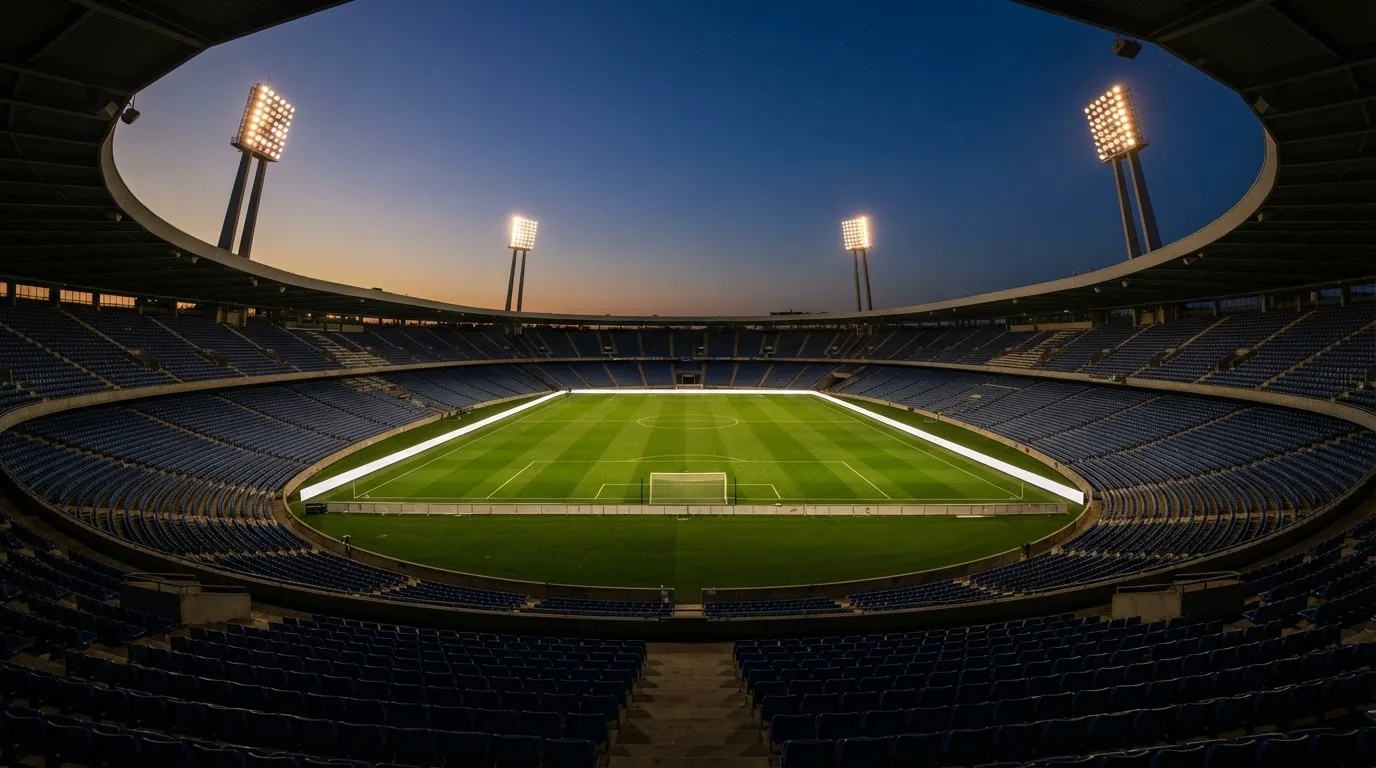
Premier League, Championship, the Champions League nights and the Scottish Premiership Saturday — football is where a UK-licensed bookmaker spreads its widest range of markets and its most generous headline caps. Match result, both teams to score, over/under goals, player shots, player fouls, corners and the same-game bet builder combinations that multiply markets from a single fixture: each carries its own maximum stake, displayed on the slip. A sharp account asking for £2,000 on a same-game multi at odds-against is the kind of bet most operators cap inside the bet builder rather than refuse outright, because the bet builder is priced in-house and the liability is theirs to compute in real time.
Lower leagues, midweek EFL matches, women’s football and youth internationals sit further down the limit ladder. Markets are sometimes priced on a third-party feed and the cap falls with the operator’s confidence in the line. Coral’s bet builder spans more than a hundred football leagues and competitions and includes match result, goalscorers, total goals and corners on the same slip; that breadth is what spreads a stake across more inputs, not what removes the cap, and the cap reappears as soon as one market on the builder runs thin.

Horse racing, BOG, and the ante-post carve-out
Horse racing is where the UK bettor meets the most consistent cap treatment — Best Odds Guaranteed from 8am on UK and Irish racing is a ceiling, not a floor, and it also rewrites early prices in the punter’s favour when the SP drifts. Several of the brands in this comparison honour it: William Hill pays it on UK and Irish horse racing from 8am on the day of the race on singles and multiples (ante-post, tote and pari-mutuel bets are excluded); Coral extends the same to UK and Irish horse racing from 8am and to every UK greyhound race; Bet600 pays it the same way, settling to SP if the starting price is bigger than the early or show price taken; BetVictor makes it part of the racing setup.
Ante-post bets — those struck before the final declarations — carry their own cap structure that is much lower than the same horse’s race-day maximum, because a withdrawal shrinks the field and the liability changes. Non-runner and Rule 4 deduction rules then apply at settlement. The headline cap a punter sees on a horse on Monday is not the cap that operates on Saturday morning, and treating them as one number misreads the market.
Cricket, UFC, golf and the long tail
Cricket’s question is the T20 franchise league, where team composition swings hard in the hours before the toss, and the Test match where the line moves slowly across five days. Markets on a T20 team to win the match are priced on a leaner feed than the Test line, and the cap falls with the data underneath. Cricket betting has its own question of “limit” — usually meaning a per-innings run line — and that is a market parameter, not a stake ceiling, which is the confusion the term sometimes invites.
Golf and the UFC carry similar treatment. Each-way betting is two equal stakes, so the total stake on an each-way bet doubles; that is the bettor’s own choice and doubles both halves of the liability. US sports, MMA, Esports and virtual events are usually on a thinner feed and sit lower on the cap ladder. Midnite’s site shows in-play events with maximum-stake limits that vary by selection; same principle, different ceiling.
In-play, bet builders and the per-event cap
In-play betting tightens caps relative to pre-match because the price moves with the action and a manual trader may not have time to re-price a large bet. A £500 pre-match cap on a Premier League match can become a £50 in-play cap five minutes in, especially on player markets or on a price that is moving fast. The same dynamic applies to a bet builder — a same-game multi priced in-house combines markets from one event into a single bet, and the cap reflects the depth of each leg against the others. Bet Builder from bet365 is the most visible example: combining markets from one event into a single bet, available pre-match and in-play, with Winnings Boosts on selected singles and Bet Builders.
How a stake limit actually works
The rule is published. The maximum stake box on the bet slip is the simple version. Behind it, the trading team and the risk engine divide the day’s book into what will be tolerated and what will be capped, and a customer ends up with three numbers at any one time: a headline cap on the market they care about, a per-bet cap on the specific selection, and an account-level cap on what they will be allowed to win across markets on a busy afternoon. None of those caps are guaranteed to stay where they are the next time the customer logs in.
How a limit is calculated inside a bookmaker
A trading team sizes every market against three numbers: the model’s “fair” price, the bookmaker’s own view of the line, and the day’s accumulated liability on each outcome. The maximum stake quoted on a slip is the size at which a single additional bet would push the book through whichever of those three numbers is tightest. Push that further and the slip shows the next tier down or rejects the stake. The number is not a marketing line — it is the price of keeping the day’s position inside the firm’s risk appetite.
That is why the cap moves. Form runs, syndicates open up, an algorithm flags an account and the slip starts returning lower numbers on markets the account has previously hit. By the time a customer who has won consistently over weeks asks why Tuesday’s cap is half of last month’s, the back end has already re-priced them, and the apparent change is just the visible part. Section “Why bookmakers limit sharp bettors” goes further into the inside of that pattern.
The minimum-bet floor and where it bites
The minimum stake is the bottom of the band. Most operators fix the lowest stake at something like £0.05 or £0.10 single-line, with combinations scaled to match. Free bets that come with a minimum odds clause usually lift the floor to “minimum odds 1/2” (decimal 1.50) or “minimum odds evens” (decimal 2.00) on the qualifying bet — a threshold the customer’s stake has to clear before the bonus credits. Betting apps show that on the slip; missing it is the single commonest reason a free-bet token never lands.
Stake limits as a customer-protection tool
The same cap that frustrates the sharp punter is the line that keeps a vulnerable customer from staking the grocery money in one click. UK licensed bookmakers operate under the LCCP (Licence Conditions and Codes of Practice): social responsibility, affordability triggers and GAMSTOP mandatory enrolment since 31 March 2020, with six-month, one-year, five-year or five-year-with-auto-renewal exclusion periods and a seven-year tail after the minimum period has run. A stake cap at the bookmaker’s end is part of that picture, not a separate regime.
Cash-out, SP settlement and the cap inside them
A cash-out value is a new price written by the bookmaker against an unsettled bet. That price carries its own effective stake — the amount the bookmaker is prepared to pay out early — and many operators reserve the right not to offer cash out on every market at every time. William Hill notes that cash out is not available on each-way bets and is not always available on accumulators and makes no guarantee of availability; the cap is the bookmaker’s privilege to set or remove. Best Odds Guaranteed is similar: it settles a bet at SP if the starting price is bigger than the price taken, but the cap on the early stake itself is the operator’s, not the punter’s.
The ten bookmakers compared
The table sits at the base of this section. Each row is a brand listed on the Gambling Commission’s public register at the named account number, with the licence type the register shows and what that licence lets the operator do. The chosen column on the operator’s own stake policy reads from each app or terms page rather than from any benchmark study.
| Brand | Gambling Commission account and licence holder | What the operator’s own terms state on stake size |
|---|---|---|
| Star Sports | Remote general betting standard (real events), account 9177 — Star Racing Limited | Pre-event and in-play markets with maximum-stake limits per selection; Bet Boosts, Daily Specials and Weekend Enhanced Boosts on offer. |
| NetBet | Remote general betting standard (real events), account 39170 — Netbet Enterprises Limited | Daily Boosts, Profit Boosts and a Bet Builder with instant dynamic odds on major leagues. |
| Swifty Sports | Remote general betting standard (real events), account 58957 — Swifty Global (UK) Ltd | Best Odds Guaranteed, Cash Out, daily price boosts, live streaming and in-play betting; Bet Builder listed as coming soon. |
| Lottoland | Remote general betting standard (real events), account 38991 — EU Lotto Limited | Casino, lottery betting, sports betting and scratchcards inside one app; sports markets under the same account. |
| DragonBet | Remote general betting standard (real events), account 64908 — DragonBet Ltd | Welsh football and rugby markets, racing, American football, in-play betting and bet builder markets. |
| Hollywoodbets | Remote general betting standard (real events), account 53028 — Hollywoodbets International UK Limited | Maximum stake on each market set on the slip; welcome offer a free-bet refund on a qualifying losing accumulator. |
| Bet600 | Remote general betting standard (real events), account 44731 — Tyche Tech Limited | Best Odds Guaranteed on UK and Irish racing by settling to SP when the starting price is bigger than the price taken. |
| VBet | Remote general betting standard (real events), account 44662 — SCGO Limited | Bet Builder, pre-match and in-play betting, live streaming and a live calendar with results and stats. |
| Smarkets | Remote betting intermediary, account 39173 — Smarkets (Malta) Limited | Standard exchange commission 2% on eligible bets; customers bet against each other rather than a bookmaker, with back and lay. |
| BetUK | Remote general betting standard (real events), account 39198 — LeoVegas Gaming PLC | Free bets exclude virtual sports, esports and non-UK/IE racing; minimum odds apply on qualifying bets. |
Smarkets stands apart in the table: account 39173 is a remote betting intermediary licence, not a standard general betting standard licence, and that gives it a different ceiling by structure — backers and layers set the price and the size of each other’s bets, and the operator takes a commission rather than carrying the liability. The other nine rows all carry the standard licence and operate in the more familiar matched-bet model.
What the spread actually costs
Bookmakers with a richer in-play range and a deeper same-game multi product tend to publish more generous headline caps, because each market is sliced thinner and the per-market liability stays modest. Horse racing books often settle a cap lower on a Saturday morning than the punt expects from the midweek maximum; smaller sportsbooks built around racing and niche markets run tighter caps because their liquidity pool is thinner. Coral’s bet builder spanning over a hundred leagues is a wide tent of markets, but the cap inside each leg of the builder is no bigger for it; the breadth just spreads stake across more inputs.
For a punter, the meaningful comparison is between the headline cap on a market they will actually bet on and the effective cap they have lived with over a recent run. Every line in the table above describes what the operator’s own terms say at the time of writing — the actual number on the slip is the only one that counts.
The marketplace in brief
UK online sports betting is a licensed market. The Gambling Commission, a non-departmental public body sponsored by the Department for Culture, Media and Sport, licenses the whole commercial stack under the Gambling Act 2005, which covers Great Britain (England, Scotland and Wales). Northern Ireland is outside the Act and runs under older law, so the right description is “Great Britain licence” or “GB-licensed”, never a GB licence regulating Northern Ireland. Since the Gambling (Licensing and Advertising) Act 2014 an operator whose remote facilities are used in Great Britain needs a Commission licence wherever it is based; sections 33 and 36 of the 2005 Act (as amended) set the requirement. A Curaçao, Maltese or Gibraltar licence is not a substitute for that.
Every brand in the table above holds a remote general betting standard (real events) licence from the Commission, with Smarkets the exception as a remote betting intermediary. Several of the bigger names in the wider UK market run under the same licence holder as their sister sites — Ladbrokes and Coral or Paddy Power and Betfair — so the right way to think about it is the licensee on the register, not the brand on the high-street window. There is no state monopoly and no cap on the number of licences.
No statutory list of permitted bets exists. The Commission licenses a category and the operator offers markets under its own rules and the LCCP. In-play betting is licensed and is run by every major operator under licence conditions and customer-protection duties; “unrestricted in-play” is not a legal conclusion. Esports are treated like any other event; virtual events sit on a separate licence category. Politics, TV shows and novelty markets are offered by GB bookmakers and no statutory prohibition was found in the public register.
Licence categories and what they let a firm do
The Commission issues four main remote betting categories: general betting standard (real events), general betting standard (virtual events), general betting limited, and pool betting. A betting exchange runs under a fifth licence, the betting intermediary, which is what backs the back-and-lay mechanics. A financial spread bet on a regulated index or commodity is the Financial Conduct Authority’s remit, not the Commission’s, and Spreadex notes that its spread betting arm is regulated by the FCA while its fixed-odds betting is regulated by the Gambling Commission, with spread betting losses able to exceed the deposit.
Operators licensed under any of those categories go through the same customer checks. Name, address and date of birth are verified before a customer can deposit or gamble, and that requirement has been in force since 7 May 2019 — including with a free bet or bonus and including for a customer who has only signalled an interest by registering. Source-of-funds questions follow at higher spend under anti-money-laundering rules. Anonymous play does not exist at a GB-licensed site, even if the size of the account never grows.
The remote rate change to flag
The General Betting Duty is the operator’s tax on gross profits and is set at 15% today; a new remote rate of 25% takes effect on 1 April 2027 within the duty, while remote bets on UK horse racing, bets on self-service betting terminals in licensed premises, pool betting and in-person betting stay at 15% (HM Government policy paper of 26 November 2025). Until 1 April 2027 the remote rate stays at 15%. Whether operators pass duty through prices is not established, and a reader should not be told that the duty is being charged to them — it is the operator’s tax, not theirs. The Commission’s statutory levy is a separate charge.
Advertising rules that touch the offers
Advertising is not licensed by the Commission. It runs through the CAP Code (non-broadcast) and the BCAP Code (broadcast), enforced by the ASA alongside the LCCP marketing conditions. CAP Code section 16 says marketing must be socially responsible, must not be of strong appeal to under-18s, and no one who is or appears to be under 25 may be featured gambling or play a significant role — that rule is about who appears in the advertisement, not who bets. “Whistle-to-whistle” is industry not law: from 1 August 2019 betting ads have not been shown on TV from five minutes before a live sporting event until five minutes after it, ahead of the 9pm watershed, horse and greyhound racing excepted.
Bonus promotion rules in force since 19 January 2026 cap wagering at 10x — a £10 bonus with 50x wagering means £500 of bets, under the cap no more than £100 of qualifying wagering. Mixed-product promotions, an offer that requires gambling on two or more product types such as betting, casino, bingo and lottery, are banned. Whether the cap applies to a free bet with no wagering condition is not established, and a cap on the money value of a bonus is not established either. Promo codes themselves are not printed on this page; the offer structure, not the code, is what the punter takes away.
Credit cards are out — and what is in
Credit cards have been banned for gambling in Great Britain since 14 April 2020 (LCCP condition 6.1.2), including credit-card-funded payments through an e-wallet; debit cards and bank-based payments are not covered. There is no state-set list of permitted payment methods at licensed operators; the methods on the cashier page are each operator’s own choice. Cryptocurrency deposits at licensed sites are not established to be banned — but the verification regime kicks in at the first deposit, which means a fully anonymous crypto deposit does not lead to anonymous play at a GB-licensed bookmaker.
The “no deposit limit” the crypto-and-anonymity cluster of the market conversation points at is not what it sounds like at a licensed operator. There is no state-set deposit or loss ceiling: limits are the customer’s choice. RTS 12 (the Remote Technical Standards on deposit limits) forces a gross deposit limit on a fixed timeframe, and the first changes have applied since 31 October 2025, a second phase was postponed to 30 September 2026, and whether it is live is not established.
What an unlicensed bookmaker leaves out
A GB licence is compulsory at the point of consumption. Providing gambling facilities in Great Britain without the licence the Act requires is an offence under section 33 of the Gambling Act 2005 — a summary conviction up to 51 weeks’ imprisonment, a fine up to level 5, or both; in Scotland, six months. The offence is aimed at the operator. No offence aimed at the customer who simply bets at an unlicensed site was identified, so the framing is about what protections are lost, not about legality: no GAMSTOP cover, no Commission complaints route, no approved alternative-dispute-resolution body, no British consumer redress if funds are withheld, no 10x bonus cap, no £150 financial vulnerability check. The honest description is “unlicensed = none of those protections and possible loss of funds”, not “legal” or “illegal”. Enforcement against unlicensed operators is disruption: cease-and-desist notices, search-engine referrals, work with registrars, hosts and payment providers; the Commission has been given, or is about to receive, court-order DNS blocking powers. ISP blocking as an active regime is not established.
Safer gambling, GAMSTOP and the protection in place
The bookmakers in this comparison all run inside the same protective ring. GAMSTOP is the national multi-operator online self-exclusion scheme and a mandatory licence condition for online operators since 31 March 2020. Periods are six months, one year, five years, or five years with auto-renewal; after the minimum period the exclusion stays in place for a further seven years unless the customer asks GAMSTOP to remove it. Online sites and apps are covered; the betting shop uses a separate service.
Financial vulnerability checks
A financial vulnerability check under LCCP condition 3.4.4 has been in force since 30 August 2024 and applies to licensed remote betting when a customer’s deposits minus withdrawals exceed £150 in a rolling 30 days (since 28 February 2025). It is a public-record check — bankruptcies, county court judgments and similar — not an income check and not a credit reference check. What the older press coverage calls “affordability checks”, the financial risk assessments, have been announced in a staged plan (Commission article of 7 July 2026) with no published start date; the correct description is “announced, staged, no start date”, never “in force”.
Where to get help
GamCare runs the National Gambling Helpline. GambleAware funds treatment and education. The NHS runs gambling clinics across the regions. Gamblers Anonymous runs peer-support meetings across the country. None of these is a substitute for self-exclusion through GAMSTOP and a deposit cap, but they are the practical front line if a punter feels the line has moved for them.
Minimum age and identity before the first stake
Minimum age is 18. Name, address and date of birth are verified before a customer can deposit or gamble — that is the rule. Even an account that has only opened and never staked runs through verification; a customer cannot stick £10 in at a GB-licensed bookmaker without first proving they are over 18 and that they are who they say they are.
Crypto, anonymity and what “no limit” usually means in this corner
The phrase “no limit” is used by the comparison cluster around crypto-friendly sportsbooks and offshore operators. None of the brands in this comparison sits outside the GB licence perimeter by accident, so any description of crypto or anonymity at the licensed tier is a description of what is and is not possible — not a route to the offshore bookmaker that handles both without a question.
Identity checks are unavoidable at a licensed site
The single most concrete blocker for a fully anonymous bookmaker is the verification regime at first deposit. A customer who has only registered and is yet to deposit must pass age and identity before money moves. There is no equivalence in the licensed stack to a no-questions-asked setup where the punter funds the account and lets the bets run. That is the line for any punter considering “no-KYC” alternatives: the protection comes with verification, the absence of verification comes without the protection.
Crypto deposits at licensed operators
Whether a GB-licensed operator accepts cryptocurrency directly is not established across the board; each operator’s terms will tell the punter what the cashier page will accept. Where crypto is accepted, the verification regime still applies on first deposit: a four-passport upload, a proof of address and a date-of-birth check proceed before the deposit clears. Crypto-anonymous play is a contradiction at a GB-licensed bookmaker.
Offshore “no limit” bookmakers
An offshore bookmaker that takes Bitcoin and has no verification on signup typically also runs without a UK consumer-protection regime. No GAMSTOP enrolment applies. No Commission complaints route exists. No ADR (alternative dispute resolution) body is in scope. Funds that are wrongly withheld rarely return via a UK small claims or chargeback frame that depends on the operator’s domicile. The honest framing: unlicensed = none of those protections and possible loss of funds. That is the trade-off a bookmaker advertises as “no limit” — no verification, no cap, no protection.
What “no deposit limit” can be inside a licence
The RTS 12 deposit-limit changes apply to licensed operators. The first changes have applied since 31 October 2025; a second phase was postponed to 30 September 2026 and it is not established whether it is live at the time of reading. Inside that regime, customers can set their own deposit limit on a fixed timeframe; the absence of an automatic state-set ceiling does not mean “no limit”, it means limits the customer sets for themselves.
Bet types, odds and the arithmetic the page stands on
Betting types drive stake treatment. A single is priced and capped differently from an accumulator; a Bet Builder combines markets from one event and its cap is set against the per-leg risk; an each-way bet doubles the stake on the same selection (win + place, both halves at the same unit); an ante-post bet sits lower on the cap because field changes can leave the book short. Each carries its own cap; ignoring the cap and treating the headline number as the rule costs the punter.
How a price is read
In Great Britain odds appear as fractional (5/1, 11/4, evens) or decimal (6.00, 3.75). To convert a fractional price a/b into decimal, divide the numerator by the denominator and add 1: 5/1 becomes 6.00, 11/4 becomes 3.75, evens (1/1) becomes 2.00. “Odds-on” describes a price shorter than evens, where the punter risks more than they stand to win. Each is the same price spoken two ways.
What a winning bet pays
The arithmetic is straightforward: the return on a single at decimal odds of 3.00 from a £10 stake is £10 × 3.00 = £30.00, profit £20.00. For combinations, the prices multiply into one combined decimal — a double at 3.00 and 4.00 has combined decimal odds 12.00, and the £10 stake returns £120. The handbook names that as the punter’s return on a win; the marketing term “win” can mean the full pay-out and is sometimes used to mean profit only. The arithmetic that settles a winning bet is the same either way.
The arithmetic that drives the information on this page
The margin is what the bookmaker keeps of every unit bet on a market, expressed as a percentage of the unit. In a market with two outcomes priced at 1.90 / 1.90 (fractional 9/10 each side), the payout share comes to 1 ÷ (1/1.90 + 1/1.90) ≈ 0.95, or around 95%, with the margin ≈ 5% (often quoted as a band rather than a single figure, because rounding and feeds vary). The reader can see the same bookmaker’s margin show up on a football match result, on a horse race each-way, on a totals line — usually landing in the same band but never identical. The implied margin is what a higher price costs in real odds; the punter pays it in every bet, win or lose.
What a free bet is worth
A free bet whose stake is not paid back with a win is worth roughly its face value multiplied by (odds − 1) ÷ odds, with a further trim by the market’s payout share. A £10 free bet at 4.00 (3/1), on a market with a 95% payout share, has expected value in the order of £10 × (4.00 − 1) ÷ 4.00 × 0.95 ≈ £7.13. That is the offer’s worth on average; what any single bet wins is whatever the slip settles at. A “risk-free” bet refunded as a free bet is not a refund in money, and the free-bet stake is usually not paid back with a win. Calling a free bet “free” is a marketing grammar trick that says nothing about whether the math works out.
The wagering and turnover behind a bonus
A 100% deposit-match bonus with 10x wagering on the bonus gives turnover of bonus × 10. A £50 bonus means £500 of qualifying bets. At a £10 stake, that is 50 bets at minimum odds the bonus requires, and only bets at or above that minimum price count. The wagering rules in force since 19 January 2026 cap qualifying wagering on bonuses at 10x (£10 bonus at 50x wagering needs £500 of qualifying bets, capped to no more than £100); mixed-product promotions are banned. Promos at licensed operators run under those rules.
What the bonus costs on average
Expected cost equals required turnover multiplied by the margin of the market research names. Turnover £500 against a margin around 5% gives an expected cost in the order of £25 against a £50 bonus face value — a one-in-two bonus after the wagering is done, as a statistical estimate over many bets rather than a guaranteed outcome for a single punter. That is what the marketing word “bonus” leaves in the punter’s pocket on average; the announcement of a bonus face value, the welcome-offer headline, and the wagering footnote read as a different sequence of events than what arithmetic shows.
Star Sports — the racing-led book on a real-event licence
Star Sports is operated on Star Racing Limited’s remote general betting standard licence for real events (Commission account 9177). The mobile app shows pre-event and in-play markets with Bet Boosts, Daily Specials and Weekend Enhanced Boosts; in-play coverage spans football, horse racing, golf and US sports. The license lets the firm offer a full real-events betting catalogue on its own platform; that breadth, rather than a specialism in markets nobody else prices, is the headline.
The cap structure follows the bookmaker norm: a maximum stake per selection shown on the slip, a per-market cap on more speculative lines and an account ceiling that grows or shrinks as a customer’s profile evolves. The account ceiling is the silent one — a £500 cap on a market is meaningless if the customer has been quietly moved to a £50 effective cap over recent weeks.
For a punter who has lived with a quiet cap on Premier League match-result markets at a different bookmaker, Star Sports is a place to test what a fresh account actually sees. Racing-led brands tend to keep caps visible rather than aggressive, because the weekend’s Saturday-morning surge of liquidity on UK and Irish racing is a market the book does not want to lock out. The constraint a customer will notice is the operator’s natural right to cut the cap further down the card or on a less popular fixture; the licence does not stop them and the trading team will not hesitate.
NetBet Sport — the same-game bet builder that surfaced in 2026
NetBet Sport runs on Netbet Enterprises Limited’s remote general betting standard licence (Commission account 39170). The app offers Daily Boosts, Profit Boosts and a Bet Builder with instant dynamic odds, with sports statistics available for major leagues. The Bet Builder is the headline: instant dynamic odds that re-price as the punter adds legs to the slip, so the cost of adding the next leg is visible before the punter commits.
The dynamic pricing exposes the cap directly. A single-leg bet at a fixed price has the cap that the market warrants; adding a second leg pushes the cap down because the combined price now carries two correlated risks; adding a third compresses the cap further. A punter building a same-game multi for £200 should expect a slip that accepts, accepts again at a lower price, then refuses at the third leg if the book has decided the cumulative liability has moved past the comfort zone. The cap is not a published number — it is the moment the slip changes its mind.
For a punter whose preferred style is the same-game multi, NetBet is among the more responsive — it shows the dynamic odds as the slip is built, so the punter sees the cost. The constraint to know about: instant dynamic odds do not last, and a Bet Builder market can be suspended during in-play trading. Live odds are not always available on every Bet Builder leg, and when the book needs to re-price the market mid-build, the cap is the visible edge of the operator’s confidence in its own line.
Swifty Sports — best odds guaranteed on a real-event licence
Swifty Sports runs on Swifty Global (UK) Ltd’s remote general betting standard licence (Commission account 58957). The app offers Best Odds Guaranteed, Cash Out on horse racing and football markets, daily price boosts, live streaming and in-play betting; Bet Builder is listed as coming soon. The racing-led feature set is the headline, and the licence lets the firm carry a full catalogue of real-event markets rather than a racing-only product.
The cap on a daily-boost price is its own ceiling — a boosted price will sometimes raise the maximum stake because the new price is still good value for the bookmaker, and sometimes lower it because the boost eats into the margin the firm is willing to give up. Cash Out’s price is set by the book and the cap is the operator’s privilege to remove; Swifty lists Cash Out on horse racing and football but does not promise it on every market. “Best odds guaranteed” being live at a Swifty Sports sign-up is more than a marketing line — it is the operator promising to settle to SP if the starting price moves against the early price.
For a racing-led punter, the value is the best-odds-guaranteed regime and the live streams running inside the app; the constraint is the Bet Builder that has not yet arrived. A punter who wants the same-game multi on a Saturday afternoon will not find it here today. For the punter whose main interest is a BOG-paid racing day with Cash Out available as a market by market option, this is the natural fit.
Lottoland — the lottery-led app with a sports book attached
Lottoland UK’s app combines casino, lottery betting, sports betting and scratchcards inside one app; the operator’s terms state it is licensed by the Gambling Commission for customers in Great Britain, holding a remote general betting licence for real events (Commission account 38991, EU Lotto Limited). The lottery-led position is the headline — the app’s centre of gravity is the lottery ticket — and the sports book is a deliberate addition rather than the main act.
The cap on a sports bet follows the standard licence pattern: the maximum stake per selection is set on the slip, and the account ceiling is the operator’s choice. Lottoland is not a sports-only bookmaker, so the cap structure is built for the lottery bettor who occasionally looks at a football coupon, rather than for the heavy weekend punter. That constraint tells the punter what to expect — a single line of price with a typical cap on what the lottery-led back end will accept on a Saturday-morning wager, not the deeper ladders a dedicated sportsbook runs.
For a casual sports punter whose main interest is the lottery but who wants a sports option on a Grand National day, Lottoland is the kind of all-in-one app that fits. For a punter whose Saturday morning revolves around Best Odds Guaranteed across three different racing books, Lottoland’s sports book will feel shallow on the racing side. The right description of the bookmaker: a lottery-centric account that supports sports, not a sports-first bookmaker with lottery on the side.
DragonBet — the Welsh-events-led real-event book
DragonBet’s mobile app is published by DragonBet Ltd and offers Welsh football and rugby markets alongside racing, American football, in-play betting and bet builder markets. The firm is listed on the Gambling Commission’s register with a remote general betting licence for real events (account 64908). The Welsh-events orientation is the headline — markets on the Welsh leagues and Principality Premiership rugby that the brand has built specifically into its catalogue.
The cap on a Welsh Premiership rugby match sits inside the same licence-based ceiling a Premier League book would apply. A brand built around niche sports typically runs a tighter cap on a niche sport than a brand built around the mass-market leagues, because the firm’s liquidity pool is smaller and a sharp customer’s pattern of action on the niche market is easier to flag. The trading team has, by design, less data on the niche sport than on a Premier League fixture at a major bookmaker.
For a Welsh-sports punter, DragonBet offers markets that the bigger books treat as a footnote, with cash out and bet builder bolted on; for a Premier League punter, the book is one of a dozen comparable offerings. The constraint that matters is the niche-sports cap — what looks like a generous feature set on a niche league will usually carry a tighter per-selection cap than the main-market price at a generalist bookmaker.
Hollywoodbets — the fixed-price welcome offer with a free-bet refund
Hollywoodbets’ sports welcome offer, as published in its UK terms: new players who deposit £10 or more by card get their stake back as a free bet of up to £30 on their first qualifying losing accumulator — stake £10+, three or more legs, odds of 4/1 (decimal 5.00) or greater, settled within seven days, one free bet per customer. The operator is authorized by the Gambling Commission to offer remote general betting on real events (Commission account 53028, Hollywoodbets International UK Limited). The welcome offer is structured rather than the headline free bet — the refund mechanism is the architecture.
The cap on a free-bet refund matters to the punter who reads the welcome-offer headline. The structure pays back the stake as a free bet of up to £30, not as cash; a free bet whose stake is not paid back with a win is worth roughly its face value multiplied by (odds − 1) ÷ odds, with a further trim by the market’s payout share. The £30 free bet at 5.00 (4/1), on a market with a 95% payout share, has expected value in the order of £30 × (5.00 − 1) ÷ 5.00 × 0.95 ≈ £22.80. That is what the welcome offer is worth on average.
For a punter who plans a weekend multi and treats the refund as a bonus rather than as a cashback, this is a bookmaker that fits. For a punter whose strategy is a 1/1 (decimal 2.00) single, the qualifying rules shut the door — three or more legs at minimum odds of 4/1 is the entry condition, and a 1/1 single does not qualify. Reading the welcome offer’s structure is the difference between a refund landing and a refund never crediting.
Bet600 — best odds guaranteed and the racing book
Bet600’s mobile app offers Best Odds Guaranteed on horse racing: if the starting price is bigger than the early or show price taken, the bet is paid at the SP. The licence is the standard remote general betting standard (real events) under Tyche Tech Limited (Commission account 44731). The racing-led feature set is the headline; the licence lets the firm run a full real-events offering, but the centre of gravity is horse racing.
The cap on a SP-paid horse is the standard racing ceiling, and the firm’s constraints are usually visible on less-popular meetings. A £500 cap on a Premier League match can be a £200 cap on a small-field Sandown handicap, because the operator knows the form book for the smaller meeting better and is more wary of a sharp account landing on it. BOG settles early-staked bets at SP when the starting price drifts, but the cap on the early-stake itself is the operator’s, not the punter’s.
For a racing punter, Bet600 is the kind of BOG-led bookmaker the model was built for. For a punter whose interests sit on Saturday afternoon football or midweek Champions League nights, the book is more of a secondary option — racing is where the brand’s range and ceiling are strongest. The constraint a customer should expect is the absence of full coverage on the more popular football leagues; Bet600 runs horse racing as a focus sport.
VBet — the betting and casino combination with live streaming
The Vbet app is published by SCGO Limited under its remote general betting standard licence (Commission account 44662). The app offers Bet Builder, pre-match and in-play betting, live streaming and a live calendar with results and stats. The combination of a full real-events catalogue with live streaming and a bet builder is the headline; the licence is the standard one for a sports and casino operation in Great Britain.
The cap structure on a same-game multi is the centrepiece of how a VBet account feels. Bet Builder combines markets from one event into a single bet, and each leg of the builder is its own priced market; the cap reflects the per-leg cap within a correlated bet. A live stream does not change the cap — the cap is on the bet the punter is placing, not the visual of the event. Live streaming is the feature, but it does not expand the ceiling on what the firm will accept on the bet itself.
For a punter whose interest is live events with a watch-along capability, VBet offers a meaningful setup. For a punter whose interest is the highest possible ceiling on a same-game multi at one operator, the cap is set by the trading team and the live calendar and stats do not change that — they sit alongside the cap, not above it.
Smarkets — the betting exchange that sets its own cap by structure
Smarkets runs on a remote betting intermediary licence rather than a remote general betting standard licence, under Smarkets (Malta) Limited (Commission account 39173). The exchange lets customers bet against each other rather than against a bookmaker, with back bets (betting for an outcome) and lay bets (betting against an outcome), the option to request a better price, and a MatchMe feature. The standard exchange commission is 2% on eligible bets; new customers have been offered 0% commission for sixty days with a minimum first deposit of £10. That is the headline — a different cap by structure.
The cap on an exchange is set by the other side of the bet. A £500 back bet on a selection is only as good as a £500 lay bet on the same selection sitting in the order book, and the matched bet is the ceiling for that trade. The exchange itself does not carry the liability; the layer does. That is the constraint that explains everything about the cap on an exchange — there is no bookmaker trade here, no in-house re-price, and the visible ceiling is the depth in the order book for that selection.
For a punter whose interest is laying rather than backing, or matching a price across multiple bookmakers through an exchange, Smarkets offers a structural offset to the bookmaker model. For a punter whose interest is the highest cap a single bookmaker will take on a niche market, the exchange is not where they find it — the niche market may simply have no liquidity at the desired size. The punter who finds value in laying favourites, trading positions in-play or asking for a better price sits at home on an exchange; the punter who wants a one-click same-game multi is on a sportsbook, not here.
BetUK — the racing-led book whose free bets exclude the niche
BetUK’s mobile app lists a free-bet welcome offer whose terms exclude virtual sports, esports and non-UK/IE horse racing, with minimum odds applying to qualifying bets. The licence is the standard remote general betting standard (real events) under LeoVegas Gaming PLC (Commission account 39198). The same account number backs several sister brands and the licence let shows what kind of operator that is. The exclusion list is the headline — what the welcome offer does not cover is as informative as what it does.
The cap on BetUK follows the standard pattern. The exclusion list inside the welcome offer is the structural constraint that often catches the punter off guard — a bet on a Premier League match qualifies, a bet on a virtual football match does not qualify for the welcome bonus’s free-bet token. The cap itself is the operator’s per-selection number on the slip; the exclusion list sits on a different layer and tells the punter which slips count for the bonus.
For a punter whose interests are mainstream UK and Irish horse racing plus Premier League football, BetUK is among the books designed with that mix in mind. For a punter whose interests are esports, virtual sports or non-UK racing, the welcome offer’s exclusions take the bookmaker’s name off the table for that audience. Reading the exclusion list is the difference between a free bet that lands and a bonus that does not credit.
Smaller and adjacent books
Three more brands touch on the same real-event licence pattern and the same cross-over from this comparison’s main line. A note on each, briefly, so the reader sees what was considered and where the ten main reviews sit.
Kalooki Sportsbook — the operator identified in the slot above
Kalooki Sportsbook is operated by Kalooki Sports Book Ltd (company number 12938274), licensed by the Gambling Commission under account number 57730, and is a GAMSTOP member. The licence is the standard remote general betting standard (real events), and the operator’s enrolment in GAMSTOP places it inside the mandatory customer-protection regime. Where Kalooki sits in the operator stack is on the smaller end of the licensed books, and the firm’s stake policy reads from its own terms page rather than from a comparison benchmark.
Midnite — acca builder with maximum-stake limits visible
Midnite’s site cites Gambling Commission licence 101839 and shows in-play events, an acca builder, popular accas and price boosts with maximum-stake limits. The acca builder is the headline on a standard real-events licence, and the explicit maximum-stake limits on price boosts are a feature the brand displays prominently rather than abstracts away. A punter considering Midnite for the same-game multi angle finds the caps visible up front.
Unibet — the long-established book on account 45322
Unibet states it has operated since 1999, and its UK site is run by Platinum Gaming Limited, Gibraltar, under Gambling Commission account 45322. The licence is the standard real-events one and the operator’s age and breadth are the headline; the firm’s stake policy is read from the same terms the rest of the licensed stack operates under.
What the cap looks like in a worked example
The arithmetic on a real two-way market looks like this. A market with two outcomes priced at 1.90 / 1.90 (fractional 9/10 each) shows payout share 1 ÷ (1/1.90 + 1/1.90) ≈ 0.95, margin ≈ 0.05, around 5% in the firm-shaped sense. State the result as a band rather than as a single figure, because rounding, feed differences and per-market adjustments mean the margin on a real-event bookmaker runs a little above or below 5% market by market. The band on a typical two-way Premier League fixture lands in the order of 4 to 6 percent; on a smaller market with weaker liquidity, the band widens.
That is the silent cost of every bet on the licensed tier. The headline price is what the punter bets at; the margin is the edge inside that price. Reading the price alone and ignoring the margin is what the marketing copy invites, and what the arithmetic says to do the opposite of.
A worked free-bet example. A £10 free bet at 4.00 (3/1) on a market with a 95% payout share has expected value around £10 × (4.00 − 1) ÷ 4.00 × 0.95 ≈ £7.13. The arithmetic is statistical — average over many bets, not a promise of £7.13 on any one bet. What the offer claims as “free” is the right to make a bet without staking your own cash, and the trade-off is that the stake is not paid back with a win.
A worked welcome-offer example. A £20 deposit unlocks a £40 free-bet bundle on Coral’s structure (deposit and sports bet of £20+ at minimum odds of 1/1 (decimal 2.00), £40 in free bets issued within seven days and expiring seven days after issue, for new GB customers who opt in). Reading the structure carefully is what tells the punter which bets the welcome bundle covers; reading the same welcome bundle with the wagering cap of 10x in mind tells the punter what the post-wagering value is.
Frequently asked questions
What is a stake limit?
A stake limit is the maximum amount an online bookmaker allows a customer to wager on a specific market or selection. Licensed operators set these limits based on their own risk assessments, the liquidity of the market, and the profile of the customer account, ensuring the bookmaker’s liabilities remain manageable.
Are stake limits arbitrary?
No, stake limits are calculated by trading teams using a combination of the model’s fair price, the bookmaker’s view of the line, and the day’s accumulated liability. The limit on a slip is the point at which a further wager would push the liability beyond what the operator is comfortable risking.
Can I challenge a stake limit?
If an account is capped, there is no formal appeal process to force an operator to raise the limit. Bookmakers adjust limits based on their own risk management policies. While a consistent punter may feel restricted, the operator retains the right to set caps to protect their commercial position.
Do all bookmakers apply the same stake limits?
No, each licensed bookmaker determines its own stake limits. These caps vary significantly between operators and often depend on the sport, the tournament, and the time of day. Major markets like the Premier League generally feature higher caps, while niche sports or fast-moving markets usually face tighter restrictions.
Does GAMSTOP affect my stake limits?
GAMSTOP is a self-exclusion scheme rather than a tool for managing stake limits. Once a player self-excludes through GAMSTOP, they cannot access any participating online betting site or app. Stake limits are a separate operational control used by bookmakers to manage risk and promote safer gambling for active accounts.
Betting sites & exchanges – UK betting
Content created by the «UK betting» team
