
Where to Bet on Curling Online in 2026
 Available in US
27 October 2026 — checked against the UK Gambling Commission’s public register for the licence numbers cited below.
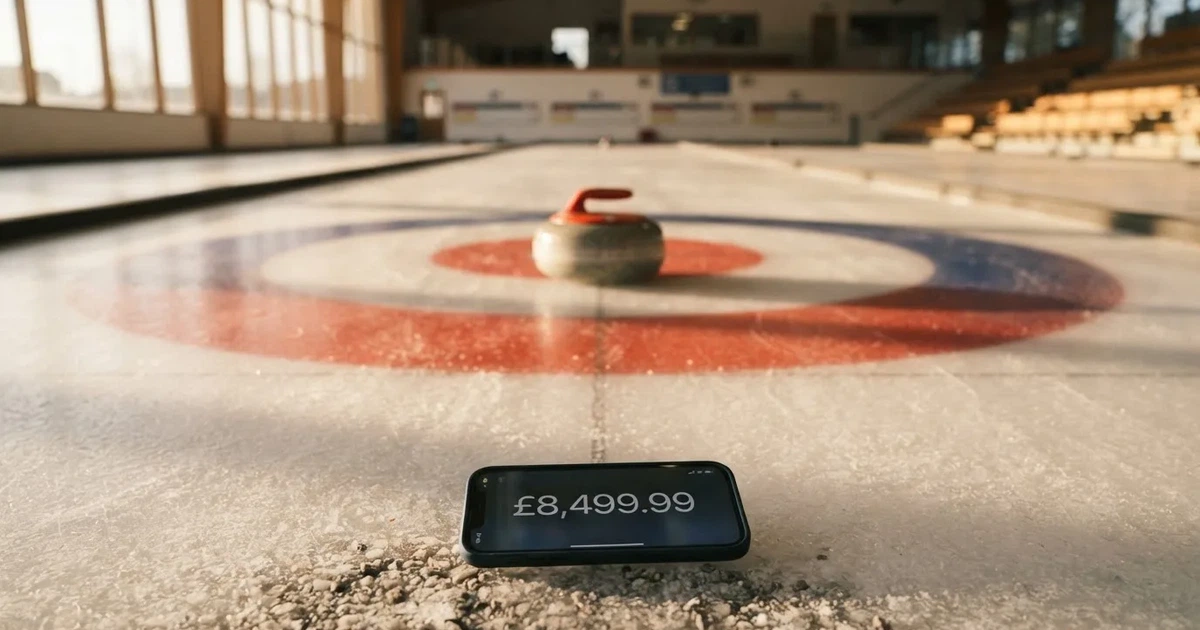
Curling sits in an odd corner of the British betting market. The sport has a calendar — World Championships, the Grand Slam, an Olympic cycle — and a fanbase that pays close attention to rinks and ends. The number of UK bookmakers building a curling section on their sportsbook is a fraction of those listing Premier League football. That is why the typical search ends here: a reader wants to know which GB-licensed brand actually lists curling, what it puts up and at what kind of margin, and what shape the rules take when the page goes from a match-winner bet to a tie-break extra end.
This guide walks through that territory. It covers how the sport itself scores (it is the one thing every curling market rests on), where UK bookmakers list it, the licence a British reader should expect every brand to hold, the responsible gambling rules that govern UK accounts, and a worked example of how a bookmaker’s margin sits inside a two-way curling price. Ten GB-licensed operators are reviewed at the end, each on the same terms: who holds the licence, what the welcome offer actually involves, and how the brand reads for a bettor looking to put a curling match on the slip.
Curling in Numbers: The Fixtures, the Calendar, the Cadence
The World Curling Federation runs the senior World Championships each year — a men’s event and a women’s event, with a qualifying pathway through the European Curling Championships and a smaller B-Division. They lead the men’s and women’s international calendar. The World Men’s Curling Championship has been held since 1959; the women’s edition followed in 1979. The Grand Slam of Curling — an invitational series run on Canadian soil — adds top-tier men’s, women’s and mixed doubles events through the autumn and winter.
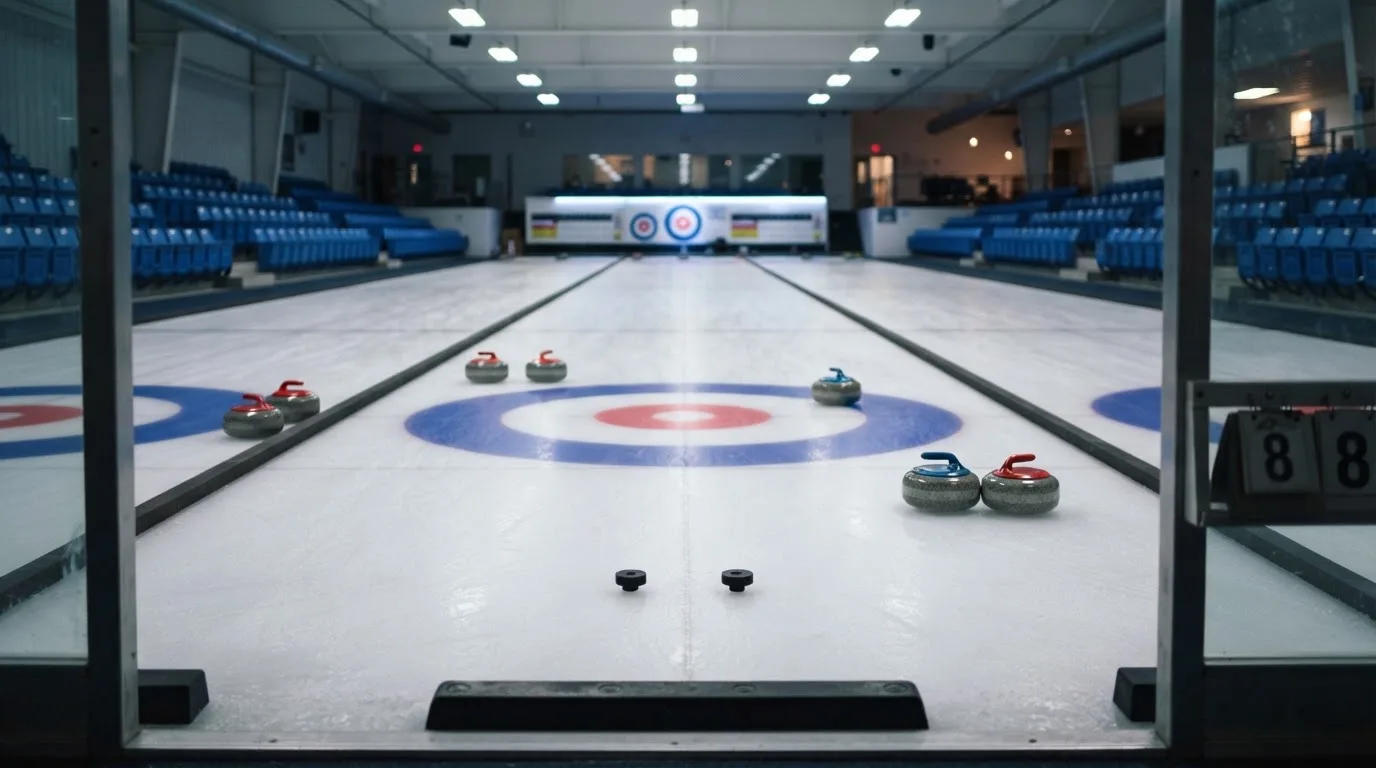
The Olympic Winter Games opened the door to the sport at the highest level: curling became an official medal sport at the 1998 Winter Olympics. Mixed doubles made its Olympic debut ten years ago, at the 2018 Winter Olympics. Outside the Olympic cycle, Europe’s continental and world qualifying events, the European Curling Championships, and the World Junior Curling Championships feed the international calendar. A handful of national and provincial leagues run in Canada, Sweden, Switzerland and Norway, where most top players keep their club seasons, and UK bookmakers tend to focus on the international events and the Grand Slam rather than on domestic club draws.
The result is a calendar that throws up a curling event in most weeks of the European autumn, winter and spring, and a quieter summer. A punter chasing the sport all year anchors to the World Championships, the Europeans and the Olympics.
How a Curling Match Is Actually Decided
Curling looks strange from outside the sport, but the basic scoring is plain: a curling team has 4 players — 2 in doubles — and each player throws two of the team’s eight stones. Curling games usually last 8 or 10 ends; international competitive games are generally 10 ends. An end is finished when all 16 stones have been delivered. After all 16 stones of an end are thrown, the team with the stone closest to the button scores one point for each of its stones closer than the opponent’s nearest stone; only stones in the house count. “Hammer” is the name for the last stone of an end, and the hammer goes to the team that did not score in the previous end; if an end is blanked, the hammer stays with the same team.
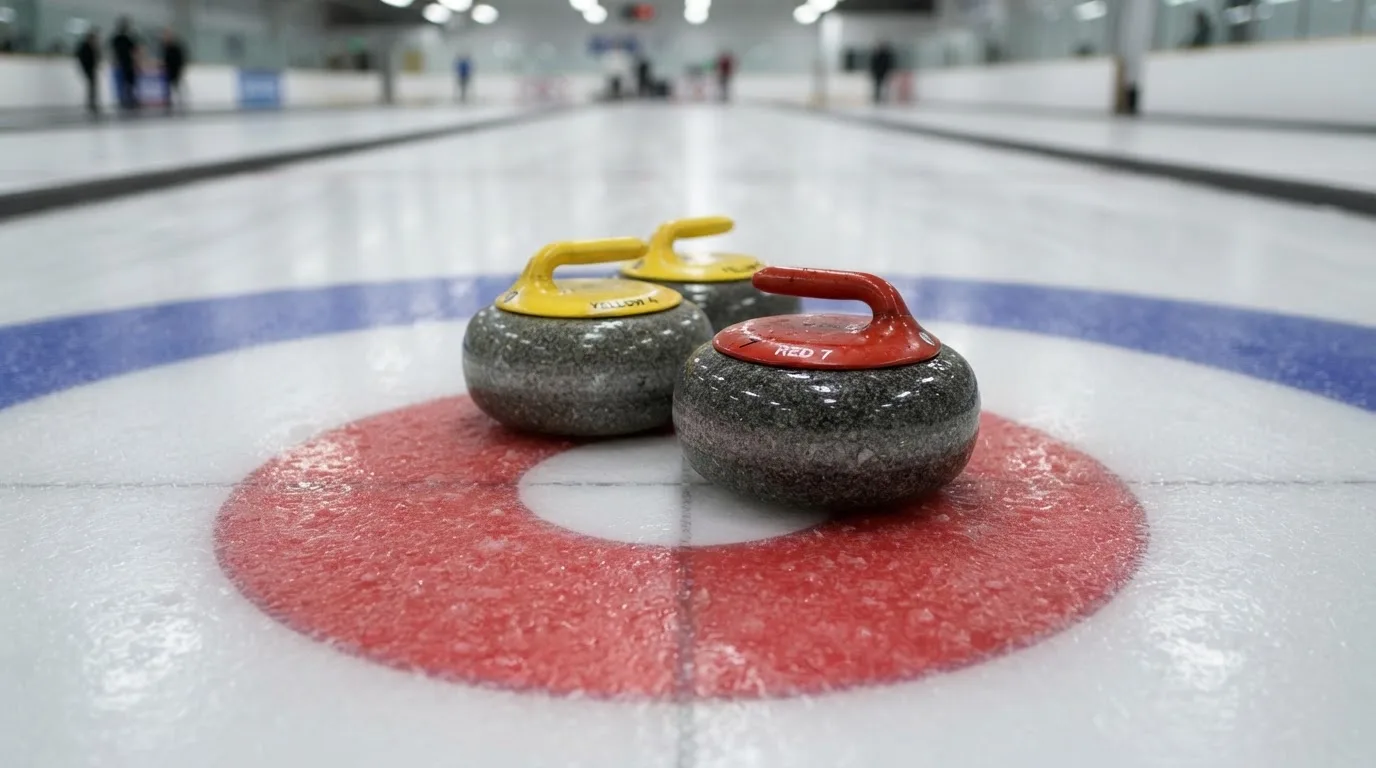
Tied curling games go to extra ends. Stones weigh between 17.24 and 19.96 kilograms under World Curling Federation rules — that detail rarely matters to a punter, but it explains why curling matches stretch longer than a casual viewer expects when the cameras catch only the final throws.
A few consequences follow from the structure above, and they matter for markets:
- “Match winner” and “winner (including extra ends)” are not the same bet. A regulation match that ends tied without extra ends is rare at elite level, but a bookmaker’s rulebook determines whether the bet stands at all on a tie. Markets labelled with “including extra ends” settle on the final score at the end of extra ends; markets labelled simply “winner” usually settle on the regulation result and may push if a match is tied.
- A “blanked end” is a real possibility — both teams clear the house, no points are scored, the hammer stays where it was, and the strategic stalemate continues. Match-winner prices reflect that, especially in a game where neither side has been able to convert the hammer.
- “Stones closest to button” is the scoring unit and the heart of the popular totals markets: a single point or many, depending on how the house looks when all sixteen stones are still.
These details are invisible in a betting app’s market list until something pushes the bettor to look. They are also the reason curling markets lean fewer than football or tennis: most bookmakers carry match-winner, set winner (after the regulation score), and a handful of tie-yes/no or total-ends-over lines, and not much more.
Where Curling Is and Isn’t on a UK Sportsbook
Curling is offered as a niche market by a small set of GB-licensed bookmakers. Football, horse racing and tennis dominate the listings; curling is a category most brands leave under the “Winter sports”, “More” or “Other” tab. A bettor searching for “Curling” in a sportsbook’s league list may not find it from the front page, particularly off-season, when the international calendar has paused and the Grand Slam events are months away.
Three practical consequences follow. First, the operator that lists curling in season is not necessarily the cheapest off-season — many bookmakers quietly hide a sport’s outright and match markets when no live event is running, and the listed “Curling” header on the main page only appears in event weeks. Second, the most reliable way to find the live calendar is each brand’s fixture list filtered by sport, not a betting-data aggregator, because the brand carries the events it has priced. Third, the deeper markets — totals per end, correct score after extra ends, individual end winners — are rare across the board. A reader who expects the same market depth one finds in a Premier League match will be underwhelmed.
The corollary is that curling’s relative obscurity is itself the answer to “who carries it”. The bookmakers that have invested in winter sports coverage and international fixture feeds will be the most useful in season; the rest will lean on a small in-house selection focused on the World Championships and the Grand Slam.
The UK Licence Frame: What Every Reviewed Brand Holds
The Gambling Commission (UKGC) licenses the whole commercial market for Great Britain — England, Scotland and Wales — under the Gambling Act 2005. A bookmaker serving customers in Great Britain needs a Gambling Commission licence wherever it is based; a Curaçao, Maltese or Gibraltar licence is not a substitute. The Commission’s public register is the whole test of who holds one. The licence types that govern this page are remote general betting standard (real events) — the category every reviewed bookmaker holds — and remote general betting standard (virtual events) — a separate category most do not hold for curling.
Minimum age for sports betting in Great Britain is 18. Identity verification is required before a customer can deposit or gamble, including with a free bet or bonus. The verify-before-gamble rule (in force since 7 May 2019) means no GB-licensed sportsbook is anonymous at sign-up. Every reviewed brand below carries a remote general betting standard (real events) licence on the public register, so the identity check is settled at the front door and any appeal that hinges on “but they let me in without ID” is non-existent.
This is also the frame that brings the responsible-gambling chapter into play. The licensee has to comply with the LCCP and the social responsibility code; the brand is the reader’s first line of defence against the marketing a brand might run; the regulator is the backstop.
How the Odds Are Built: Margin in a Two-Way Curling Market
Bookmakers make their money from the margin built into prices. The margin is what sits between the true odds and what a bookmaker actually offers; it is the bookmaker’s expected cut from a market on which outcomes on average come in proportion to the true odds. On a two-way curling market — for example a match-winner between two teams of effectively equal strength — the implied probability of each price is:
- Implied probability of a price = 1 ÷ decimal odds
If a bookmaker prices each team at 1.90 (decimal), the implied probability of each side is 1 ÷ 1.90 = 0.5263, or 52.63%. The implied probabilities add up to 105.26% — that excess over 100% is the overround, the bookmaker’s margin, here 5.26%.
A tighter market, near 1.95 the pair, sums to 102.56% — a 2.56% margin. A looser one, at 1.85 the pair, sums to 108.11% — an 8.11% margin.
That five-point difference is the gap between a sharp curling market and a soft one. It is the only number a beginner needs to price-shop: whatever the headline price is, two near-equal sides at 1.95/1.95 have the bookmaker taking less of every £1 than the same match at 1.85/1.85. Five pounds into a soft market on each side gives the bookmaker £0.41 on average; the tight market returns £0.41 less, but also gives the punter £0.41 less of their wager kept in the bookmaker’s rake.
A worked example, using the plan’s illustrative 1.90 / 1.90 (9/10 fractional):
- Implied probability per side: 1 ÷ 1.90 = 0.52632.
- Combined implied probability: 0.52632 + 0.52632 = 1.05263.
- Payout share per pound staked: 1 ÷ 1.05263 = 0.95000.
- Bookmaker margin per pound staked: 1 − 0.95000 = 0.05000, or 5.00%.
So a £10 stake at 1.90 returns £19.00 gross on a win, and £9.00 of profit — that is the “return” calculation — and across both sides the bookmaker keeps five per cent of every pound staked on the average settled event.
That 5% is a base figure for a two-way curling market priced symmetrically. The same calculation on an asymmetric two-way — say 1.50 / 2.75 for a clear favourite — would skew the margin higher or lower depending on which side the bookmaker is balancing. The point is the calculation, not the number: the margin lives in the difference between the implied probabilities and 100%.
A worked example, fee-free, for a tight market — 1.95 / 1.95 — to anchor a feel for the band:
- Implied probability per side: 1 ÷ 1.95 = 0.51282.
- Combined implied probability: 0.51282 + 0.51282 = 1.02564.
- Payout share: 1 ÷ 1.02564 = 0.97500.
- Margin: 1 − 0.97500 = 0.02500, or 2.50%.
A loose market at 1.85 / 1.85:
- Implied probability per side: 1 ÷ 1.85 = 0.54054.
- Combined implied probability: 0.54054 + 0.54054 = 1.08108.
- Payout share: 1 ÷ 1.08108 = 0.92500.
- Margin: 1 − 0.92500 = 0.07500, or 7.50%.
For a GB punter shopping a curling match, the band to expect is somewhere between roughly 2.5% and 7.5% margin on a balanced two-way market — with 5% on the symmetric 1.90/1.90 price as the illustration. Outrights at the start of a World Championship run wider than match markets, because the field is bigger, the favourites overstated, and the underdogs less known. A 25-way men’s World Championship outright market at decimal prices totalling an overround of around 130% is normal; the band for that kind of market is anything from 25% to 45% overround, depending on how the bookmaker has trimmed the long shots.
What Sits Beside the Margin: Other Costs the Punter Pays
The margin is the principal cost of a bet, but it is not the only one. Several adjacent rules push the actual payout below what a clean return calculation would suggest. They are: minimum price rules on bonus-converting bets, the wagering conditions attached to free bets, the cap on free-bet winnings where one exists, the deadline by which a bonus must be cleared, and the stake-not-returned rule that applies to most free bets (where the bet credit itself does not come back with a winning settlement).
Every reviewed brand’s offer is written below with those points laid out from the operator’s own terms. Nothing here is a promotion — no voucher, no code, no sign-up promise carried across.
Where a brand publishes a deadline — a “7-day expiry” on a free bet, say — the deadline shows what the offer actually costs. A reader who can only play at weekends loses the bet credit to the same deadline as a reader who runs through it daily; the constraint does not soften for usage patterns it was not designed for.
Payment Methods at UK Bookmakers — What the Pages Leave Out
GB bookmakers typically accept debit cards, bank-based instant transfers through services such as Trustly and the Faster Payments rails, and e-wallets such as PayPal, Skrill and Neteller. Apple Pay and Google Pay are widely accepted on mobile. Paysafecard (the prepaid voucher) is also common, though the small denominations that suit a low-stakes fan sometimes make it less efficient for a bigger deposit. Cryptocurrency deposits are not established as a feature across UK-licensed brands; offshore brands routinely offer Bitcoin and altcoin rails, but those brands are not on the page.
Credit cards are banned for gambling in Great Britain — that includes credit-card-funded payments through an e-wallet, since 14 April 2020. Debit cards and bank-based payments are not covered by that ban. Verification before the first deposit means every GB-licensed bookmaker in this listing asks for name, address and date of birth before the first transaction. There is no anonymous play at a licensed site.
Withdrawals: most GB-licensed operators pay withdrawals back to the original deposit method where the rails allow. A deposit-via-debit-card request is usually settled back to that card; an e-wallet deposit returns to the same wallet; a bank transfer lands in the source account. The expected settlement time depends on the operator’s own processing window — typically 24-72 hours for debit cards, a few hours for e-wallets, and 1-3 working days for bank transfers. The reviewed brands below note settlement on their own terms pages; the actual speed varies by brand and by method.
Identity verification is part of this, not a side issue: a customer who cannot produce the requested documents — proof of address, proof of funds at higher deposit levels — will find withdrawals held up regardless of the operator’s stated payout window.
The Ten Curling-Friendly UK Bookmakers at a Glance
| Brand | Gambling Commission licence | What the operator’s terms state on the topic |
|---|---|---|
| Fitzdares | Remote licence 000400-R-103839-030; account 400; licence holder Fitzdares Limited | Cash out, accumulators, Lucky 15s, antepost specials on horse racing, football, tennis, rugby, cricket, golf, American football; in-play live odds |
| BetMGM | Remote licence 039198-R-319450-029; account 39198; licence holder LeoVegas Gaming PLC | Four £10 free bets split across football accas and sports multiples for new UK customers depositing £10+; 7-day validity and minimum odds |
| Kwiff | Remote licence 044448-R-323408-017; account 44448; licence holder Eaton Gate Gaming Limited | Trade-mark brand operated by Spryme Ltd; sports and casino app; 17+ App Store age rating |
| Lottoland | Remote licence 038991-R-319408-020; account 38991; licence holder EU Lotto Limited | UK app combining casino, lottery betting, sports betting and scratchcards; GC-licensed for GB customers |
| Midnite | Remote licence 101839-R-342850-001; account 101839; licence holder Midnite Limited | In-play events, an acca builder, popular accas, price boosts with maximum-stake limits; £25 free-bet offer on £5+ pre-match bet at 2.0+ |
| Octobet | Remote licence 062545-R-337248-006; account 62545; licence holder Octopus Game Limited | 50% back as a free bet up to £50 on sports plus a £10 casino bonus for new customers |
| Unibet | Remote licence 045322-R-324275-019; account 45322; licence holder Platinum Gaming Limited | £40 in free bets for a £20+ sports bet at minimum odds 2.0 (1/1); 7-day free-bet expiry; debit card and instant bank transfer funding |
| Fafabet | Remote licence 057385-R-333191-006; account 57385; licence holder Taichi Tech Limited | Best Odds Guaranteed on UK and Irish horse racing win and each-way bets from 9am on race days; bigger SP settles the bet |
| Bet600 | Remote licence 044731-R-323941-016; account 44731; licence holder Tyche Tech Limited | Best Odds Guaranteed on horse racing; if SP exceeds the early or show price, the bet is paid at SP |
| BetGoodwin | Remote licence 002927-R-327985-008; account 2927; licence holder Goodwin Racing Limited | £15 free-bet bundle — £5 sports, £5 acca, £5 Sub-Cover — for a £10 qualifying sports bet |
Curling coverage across these brands varies with calendar and product. The table’s third column records only what each operator’s own terms establish on the key features the page is concerned with; an absence does not mean curling is unlisted — it means the operator’s published terms did not establish curling specifically for this review. The puff piece on each brand that follows spells out where each book’s strengths actually sit.
The Reviewed Brands in Detail
Fitzdares — a premium-positioned book with a deep horse racing specialism
Fitzdares runs a premium-positioned sportsbook focused on horse racing, football and the British sporting calendar. The brand’s app offers cash out, accumulators, Lucky 15s, specials and antepost markets on horse racing, football, tennis, rugby, cricket, golf and American football, with in-play live odds. Curling is not featured in the operator’s pitch as a headline sport; in-season, the brand tends to carry main event outrights and match markets as part of its wider winter sports coverage.
The brand’s licence is held by Fitzdares Limited, on Gambling Commission remote licence 000400-R-103839-030. That licence covers remote general betting standard (real events), so curling’s real-world tournament is in scope. The product the page reads is well-built for antepost and acca markets; the small-field curling outrights are best used through that lens, with match markets typically settling in line with the regulation result.
For the curling punter, the brand is a complementary book rather than a primary — a stable secondary account that runs a BOG-style discipline on horse racing and a respectable in-play product, into which a curling selection can be slotted while the operator’s main catalogue does the rest. The premium positioning means tighter restrictions on long-shot accounts and a more curated promotional cadence than the racing-focused mid-table.
BetMGM — LeoVegas Gaming’s UK sportsbook, a multi-product market
BetMGM UK runs as the sportsbook side of LeoVegas Gaming PLC’s UK operation under Gambling Commission remote licence 039198-R-319450-029. The new-customer side is a £10+ deposit inviting four £10 free bets split across two football accumulators of four or more selections and two sports multiples of two or more, settled within 7 days, with minimum odds and opt-in. The offer is squarely aimed at football acca fans; the construction does not suit curling’s typically thin market list, because curling does not generally run accumulator-eligible multiple legs at the same depth as domestic football.
What carries the brand on this page is the wider sportsbook. BetMGM’s UK app is a multi-vertical product — sports alongside casino — and the welcome side bundles those verticals together. Where the brand pays its dividend on curling is as a satellite bet: a small free bet on a curling side after the football staking requirement has been met, rather than as a destination sportsbook in its own right.
Kwiff — a smaller, mobile-first brand offering niche sports alongside a casino
Kwiff is licensed by the UK Gambling Commission and describes itself as a trademark operated by Spryme Ltd; the app has a 17+ App Store age rating, which is a cautionary note — App Store age ratings are publisher-set and the brand carries its own 18+ licensing requirements at the operating-licence level. The Gambling Commission remote licence 044448-R-323408-017 covers remote general betting standard (real events) and the brand sits under Eaton Gate Gaming Limited.
Curling’s niche status is a feature on Kwiff rather than a barrier. The brand’s presentation leans toward the casual app user — sports and casino on the same wallet — and offers that surface curling markets when the brand has priced them. The volume of account-holders who shop curling seriously is small, but Kwiff’s app-based product accommodates an opportunistic wager on a Winter Olympics or World Championship match without forcing the bettor to also navigate a heavyweight football-heavy lobby.
Lottoland — the lottery-mixed betting brand, with a sportsbook attached
Lottoland UK operates as a four-product platform — casino, lottery betting, sports betting and scratchcards — under Gambling Commission remote licence 038991-R-319408-020, with EU Lotto Limited as the licence holder. Sports betting is part of the platform rather than the headline, and curling’s presence tends to be limited to the major international tournaments and only when the sportsbook engine has priced them.
For a bettor whose main reason for opening a Lottoland account sits elsewhere — a player chasing the lottery vertical — the offer of curling as a one-off wager in season is a useful side benefit, not the core pitch. The brand’s identity-verification and deposit flows run the standard GB-licensed bookmaker course, and the operator is a member of the relevant self-exclusion frameworks.
Midnite — the new-breed UK sportsbook with a small-curling niche edge
Midnite is one of the more interesting brands on this list for a curling punter, in part because of how it has built its market list. The site cites Gambling Commission licence 101839 and carries in-play events, an acca builder, popular accas and price boosts with maximum-stake limits, under licence holder Midnite Limited. The curating across its sports categories is more aggressive than at the legacy brands — the brand is mobile-first and the category list runs tighter than a full-price desktop sportsbook.
The welcome side offers £25 in free bets and 50 free spins when a new customer bets £5 or more on pre-match odds of EVS (2.0) or greater within 14 days of sign-up; the free bets are valid for 7 days. The headline number is large relative to the qualifying bet, but the deadline is the usual 7-day constraint on free bets in this market.
Curling finds a place in Midnite’s winter-sports section during the in-season weeks. The brand is small enough that the operator’s market-making team has discretion over the depth of curling coverage it offers, and the bettor should not expect the deep half-game lines one might find at bookmakers with a larger customer base. Where Midnite earns its place in a curling rotation is the curation of the offer: the acca builder, the price-boosted singles, and the in-play prices lend themselves to opportunistic curling wagers against strongly mismatched opponents in the early rounds of the World Championships.
Octobet — a new brand with a sports-first book
Octobet sits under Gambling Commission remote licence 062545-R-337248-006, with Octopus Game Limited as the licence holder. The Octobet welcome offer is a 50% back as a free bet up to £50 on sports, plus a £10 casino bonus for new customers. The construction — half-back on losses — is familiar in the market and the conditional terms (minimum odds, expiry, market restrictions) sit inside the operator’s full terms.
What Octobet offers curling is a sportsbook positioned for the European-market customer with an English-language UK tax frame. The depth of curling markets is not the brand’s headline; the headline is a multi-product platform with a sportsbook attached, much like the rest of the new-breed operators on this list. A punt with Octobet on a curling match is best entered as a single bet or a small multi rather than chasing the deepest available market depth.
Unibet — a long-established brand with strong winter sports coverage
Unibet has been in operation since 1999 and its UK site is run by Platinum Gaming Limited, Gibraltar, under Gambling Commission account 45322. The sports welcome offer is “Get £40 in Free Bets when you bet £20”: a deposit and sports bet of £20 or more at minimum odds of 2.0 (1/1), with free bets expiring within 7 days of issue, for new GB customers using a debit card or instant bank transfer.
What Unibet offers curling is wider than most of this list. The brand has spent two decades building its European sports vertical, where winter sports — biathlon, alpine skiing, curling — sit alongside football and tennis on the front page. The deeper European event calendar translates into better curling outright coverage earlier in the cycle than some of the UK-only brands manage, and the in-play product on selected events includes end-by-end markets during the World Championships and the Grand Slam. The trade-off against the headline price of free bets is the operator’s market restrictions: some countries’ versions of Unibet run on different licence frames and the UK version sits on a separate sportsbook. The minimum odds for the qualifying bet are a feature here, not a bug, because the football accumulator market that Unibet is famous for is the disqualifying bet for curling fans.
Fafabet — a racing-led book with Best Odds Guaranteed
Fafabet is licensed by the UK Gambling Commission under remote licence 057385-R-333191-006, with Taichi Tech Limited as the licence holder. The brand pays Best Odds Guaranteed on UK and Irish horse racing win and each-way bets from 9am on race days — if the starting price is bigger than the original price, the bigger odds are paid. The BOG discipline runs wide on horse racing and operates alongside the operator’s broader sportsbook rather than defining it.
What Fafabet offers curling, then, is a fraction of its catalogue during in-season weeks. The BOG construction is a horse-racing-specialist feature; on curling, the brand runs on a standard margin and a standard market list. The judgement for the curling punter is whether the brand’s overall price competitiveness on a multi-sport book earns a place as a complementary book rather than as a primary — a typical assessment of a small UK-focused sportsbook with a horse-racing past.
Bet600 — another racing-specialist with BOG
Bet600 follows a similar template to Fafabet. The brand is licensed by the UK Gambling Commission under remote licence 044731-R-323941-016, with Tyche Tech Limited as the licence holder. Bet600 pays Best Odds Guaranteed on horse racing — if the starting price is bigger than the early or show price taken, the bet is paid at the SP. The BOG construction runs on the horse racing side, with broader sports beyond it.
What Bet600 offers curling, like Fafabet, is a smaller fraction of the catalogue, with the same logic: a complementary book driven by a horse racing focus, with curling as part of the broader winter sports market during in-season weeks. The reasonable position for the curling punter is to treat Bet600 as one of several books into which to place curling wagers in particular weeks rather than as the destination brand.
BetGoodwin — a Goodwin Racing brand with a multi-product book
BetGoodwin runs under Gambling Commission remote licence 002927-R-327985-008, with Goodwin Racing Limited as the licence holder. The brand’s sports welcome offer is “Bet £10 & Get £15 in Free Bets” — three free bets: £5 on a sports bet, £5 on an acca and £5 on a Sub-Cover bet. The construction is racing-tinged; Goodwin Racing’s heritage shows in the product.
Curling coverage during the in-season weeks is part of the broader winter sports umbrella. The brand’s specialism is horse racing, and curling sits in the surrounding set of niche markets carried during major events. For a curling punter, the brand reads as one of a family of medium-sized UK-licensed sportsbooks that list curling in passing rather than as a featured sport.
The Responsible-Gambling Frame: What the UK System Requires of a Licensed Brand
UK-licensed sportsbooks are bound by the Gambling Commission’s social responsibility code — the Licence Conditions and Codes of Practice (LCCP). The headline features the betting market discusses today are: deposit limits, the financial vulnerability check, GAMSTOP self-exclusion, age verification, and the controls on bonus marketing.
Deposit limits are the customer’s primary tool. Every GB-licensed operator offers the customer a chance to set a deposit cap at the point of first deposit and at any later point on request. There is no state-set deposit or loss ceiling for betting: limits are the customer’s choice. The Commission has announced a phased framework under Remote Technical Standards 12 — the first changes applied from 31 October 2025 and a second phase was postponed to 30 September 2026 — but the live status of those phased rules for any given operator on a given day is not established by the public register alone. The practical upshot: the customer-facing deposit limit is currently the customer’s own voluntary cap.
The financial vulnerability check (LCCP condition 3.4.4) applies to licensed remote betting when a customer’s deposits minus withdrawals exceed £150 in a rolling 30 days. That figure has been in force since 28 February 2025. The check is a public-record check — for example bankruptcy or county court judgments — not an income check and not a credit reference check. It is a much softer mechanism than the “affordability checks” reported in the press, which remain announced and staged with no start date as of the Commission’s own article of 7 July 2026.
GAMSTOP is the national multi-operator online self-exclusion scheme and is a mandatory licence condition for online operators since 31 March 2020. Self-exclusion periods are six months, one year, five years, or five years with auto-renewal, and after the minimum period the exclusion stays in place for a further seven years unless the customer asks GAMSTOP to remove it. GAMSTOP covers online sites and apps; betting shops use a separate service. Every reviewed brand on this page is a GAMSTOP member, which means a customer who has registered with GAMSTOP will be refused the sign-up at all of them.
Help: GamCare operates the National Gambling Helpline; GambleAware funds treatment and education services; the NHS runs regional gambling clinics; Gamblers Anonymous runs group meetings across the UK. These services are not brand-specific.
Bonuses and Marketing: The 10x Wagering Cap and the Mixed-Promotion Ban
GB-licensed sportsbooks used to run a much wider set of welcome offers than they do now. The present frame starts from the bonus conditions in force since 19 January 2026: wagering requirements on bonuses are capped at 10x (a £10 bonus at 50x needs £500 of bets; under the cap no more than £100), and mixed-product promotions — an offer that requires gambling on two or more product types — are banned. Whether the cap applies to free bets with no wagering condition, and whether there is any cap on the money value of a bonus, are not established.
The marketing rules sit beside the bonus rules. CAP Code section 16 sets the UK advertising framework: marketing must be socially responsible, must not be of strong appeal to under-18s, and no one who is or seems to be under 25 may be featured gambling or play a significant role. Advertising is not licensed by the Gambling Commission; it runs through the CAP Code (non-broadcast) and BCAP Code (broadcast) enforced by the ASA. The 19 January 2026 promotion rules cut the surface area for attached casino free spins in particular — the old “bet on football, get free spins” pitches are out.
The net effect for a curling punter is that welcome offers now look thinner than the headline numbers suggest. A £40 in free bets package on a £20+ qualifying bet sounds large until the minimum odds, the 7-day expiry and the no-stake-returned rule on free bets are stacked up — those three conditions together extract a meaningful chunk of fair value from the offer. The 10x cap limits how expensive the welcome can be, but it does not lift the headline.
Tax on Betting: The Player’s Side
The player pays no tax on betting winnings in Great Britain. This page does not constitute tax advice; a professional gambler should ask HMRC or an adviser. General Betting Duty is the operator’s tax on gross profits, currently 15%; from 1 April 2027 a new remote betting rate of 25% applies within it, while remote bets on UK horse racing, bets on self-service betting terminals in licensed premises, pool betting and in-person betting stay at 15%. Spread betting has its own rates (3% financial, 10% other). Until 1 April 2027 the remote rate stays at 15%; whether operators pass duty on through odds is not established, and the prudent framing is: the punter does not see a tax line on the slip.
Offshore Brands: What the GB Frame Does Not Cover
A GB licence is compulsory at the point of consumption. Providing gambling facilities in Great Britain without the licence the Act requires is an offence under section 33 of the Gambling Act 2005 — it is aimed at the operator, not the customer who merely bets on an unlicensed site. An unlicensed operator targeting GB customers leaves the customer without: GAMSTOP coverage, the Commission’s complaints route, an approved dispute-resolution body, British consumer redress if funds are withheld, the 10x bonus cap and the £150 vulnerability check. Whether the customer can recover winnings from a dispute on an unlicensed platform is a different question entirely.
Enforcement against unlicensed operators is disruption-led — cease-and-desist notices, search-engine referrals, work with registrars, hosts and payment providers — and the Commission has been given or is about to receive court-order DNS blocking powers. The honest framing: licensed means checks, limits, GAMSTOP and the bonus cap, alongside verification before the first bet; unlicensed means none of those protections and possible loss of funds. Neither is “the safe choice” by default.
Curling Markets In-Season: What the Bookmaker Tends to Offer
The World Men’s and World Women’s Curling Championships run each spring, with the European Curling Championships and the Olympic cycle filling the rest of the year. The Grand Slam of Curling runs through the autumn and winter in Canada, and the Olympic Winter Games add a high-profile fortnight every four years. Outrights on the men’s and women’s Worlds usually open 4-8 weeks before the event — early markets can be inefficient for the champion favourite, since the field is wide and some teams are mispriced until closer to the opening draw. Match markets in the group stage are the typical entry point for a casual betting customer; the deeper end-by-end markets tend to open only on the bigger televised matches and disappear quickly when the bookmaker’s in-house trader pulls the markets mid-game.
The Olympic cycle changes the picture dramatically. Every four years the men’s, women’s and mixed doubles competition at the Winter Olympics opens to GB-licensed bookmakers with a much deeper menu than usual — match markets, totals per end, outrights, group qualifiers, name the finalist markets — and the operator set expands for a couple of weeks to include brand entrants who would not normally run curling. Outside that fortnight, curling’s UK-licensed market depth is modest by the standards of mainstream British sports. The operator-by-operator coverage varies enough that buying prices at several books is the path to a tighter margin.
A Reader’s Checklist Before a First Curling Bet
A reader who has reached this point has a compact set of questions to settle before wagering on curling with any GB-licensed bookmaker. The list is short on purpose:
- Confirm the licence on the Commission’s public register. The account number cited on each reviewed brand above is searchable on the register; the trading name and the licence holder should match. The register is the only register.
- Confirm the welcome offer’s three constraints. Minimum odds, expiry window and qualifying market. Each reviewed brand above states its own trio.
- Check whether curling is in season. Outrights run 4-8 weeks ahead of major championships; match markets tend to materialise close to the opening draw. Off-season, curling may not be visible from the main lobby.
- Set a deposit cap at sign-up. It remains the customer’s primary responsible-gambling tool under the GB frame.
That list is small because the rest is the operator’s job — settling the bet, paying the winnings and honouring the verification flow. The reader’s task is to verify the licence, read the welcome offer, set the cap and lay the bet on the operator’s terms.
Walking Away
Curling sits in the winter-and-spring shoulder of a British sports bettor’s calendar. The markets are simpler than football’s and the margin is generally wider than Premier League pricing, but the calendar is regular, the rules are settled, and the licence frame is the same as anywhere else in the GB-regulated industry.
A reader who treats this page as the start of a curling season rather than a one-stop ranking will get more out of it. The margin band — roughly 2.5% to 7.5% on a balanced two-way curling market — is the underlying arithmetic of the cost of every bet a punter will lay. Knowing that band lets a reader spot a cheap market at a glance and walk past a soft one. Every reviewed brand on this page is GB-licensed, GAMSTOP-linked, and subject to the same social responsibility code; the differences between them are product depth, brand heritage and the small print of their welcome offers — and a reader comparing those dimensions against the price of their next curling bet is closer to acting like a bettor than like a consumer of marketing.
Frequently Asked Questions About Online Curling Betting
How do I actually bet on curling?
Pick a GB-licensed bookmaker from the ten reviewed above, confirm the licence on the Commission’s public register, deposit via debit card or bank transfer, and find Curling under Winter Sports or More. Match markets on the World Championships and the Grand Slam are the standard entry points; outrights open 4-8 weeks before the major events.
Can you bet on curling online in the UK?
Yes, with any GB-licensed bookmaker — the licence number above is searchable on the public register. The identity check rules out anonymous play: name, address and date of birth are verified before the first deposit on any UK-licensed brand, including during welcome offer claim.
How do I confirm a bookmaker holds a UK Gambling Commission licence?
Search the Commission’s public register by the brand’s name, trading name, domain or licence number. The entries above are searchable by their account number — the figure after “remote licence” in each card. Each entry must show the brand’s name and a “remote general betting standard (real events)” category to cover curling.
How is a bet’s return worked out from the stake and the odds?
Multiply the stake by the decimal odds — for example a £10 stake at 1.90 returns £19 gross, of which £9 is profit and £10 is the stake. Free bets typically pay profit only, with the stake not returned.
What is the bookmaker’s margin, and how does it show up in the odds?
The margin is the cut the bookmaker keeps from every pound staked. It sits in the difference between the implied probabilities (each one is 1 ÷ decimal odds) and 100%. Two sides at 1.90 each imply 105.26% combined — that excess of 5.26% is the margin.
Tennis, darts & cue sports – UK betting
Content created by the «UK betting» team
