
Free Bet Clubs in Great Britain, 2026
 Available in US
Data current as of 27 October 2026 · verified against the Gambling Commission’s public register
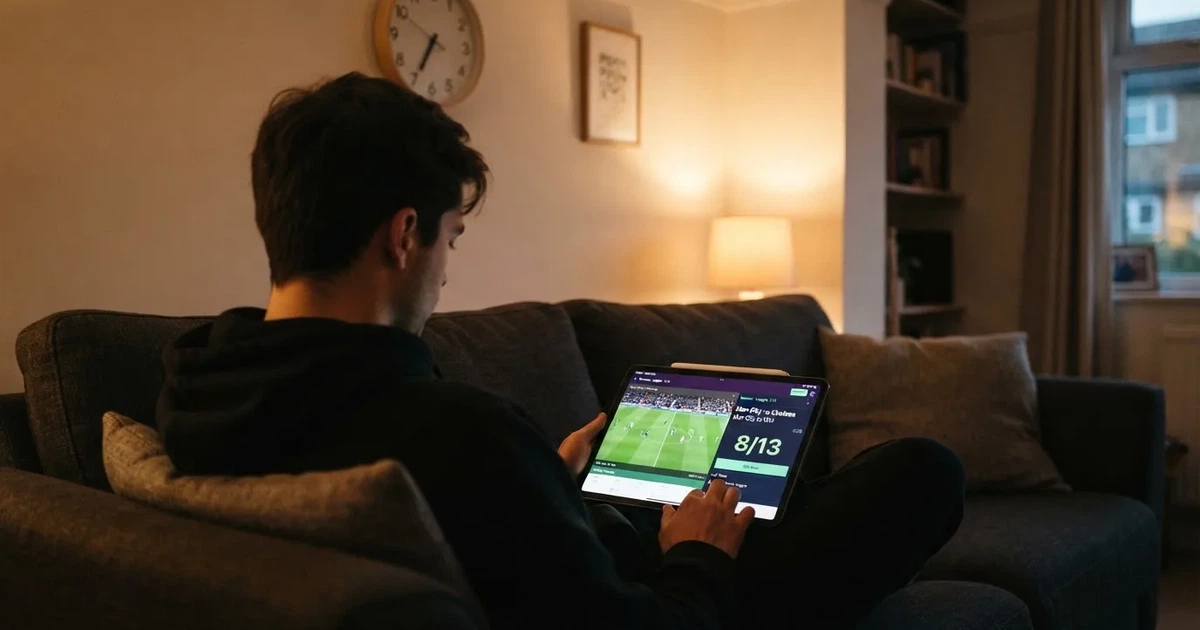
A free bet club looks like a present. The bookmaker hands you a token, you place it on a price, and the winnings land in your account like any other return. The bookmaker’s own page shows the face value, the headline match, the boosted odds — and stops just before the part that costs you money. Underneath the marketing, every free bet carries conditions: an expiry in days, a minimum price the qualifying bet has to clear, a stake that does not come back, and from 19 January 2026 a hard ceiling on how many times the bonus itself has to be turned over before it can be withdrawn. This page is about that gap — what a free bet club is really worth, what the headline figure costs the punter who chases it, and which of the ten brands reviewed here treat that gap honestly.
The honest lead sits inside the Commission’s promotion rules. Since 19 January 2026, wagering requirements on bonuses at any Great Britain-licensed operator are capped at 10x: a £10 bonus can never demand more than £100 of qualifying bets before withdrawal, and a mixed-product offer — the kind that ties a sports bet to free casino spins — is banned outright. Whether the 10x cap also applies to free bets whose stake is not paid back is not established in the published rules, so a punter reads each operator’s own terms to know where the offer sits. Amounts, minimum odds, expiry windows and whether the stake is returned come only from those terms, and the comparison below does the work of laying them side by side.
Free Bet Clubs: What the Word Means, and Where the Cost Hides
A “free bet club” is the bookmaker’s name for a recurring promotion that credits free bets on a schedule — usually weekly — once the punter has cleared a qualifying condition. The most common shape is a stake-not-returned free bet, which is the same thing as a “bet credit” at most operators and the same thing as the token credited by a sign-up welcome. The marketing calls these tokens “free” because the punter does not pay for them at the point of issue; the cost sits somewhere else, in the odds the token must be used at, in the markets it may not be used on, in the days it must be spent within, and in the margin the bookmaker has built into the price the punter backs.

The four moving parts
Four conditions decide whether a free bet is worth chasing. First, the minimum odds the qualifying bet has to be placed at — anything below that line does not unlock the free bet, anything at or above it does. Second, the wagering requirement, the multiplier that says how many times the bonus has to be turned over before a withdrawal is allowed. Third, the stake-not-returned clause, which states that the original token is not paid back with the winnings — a £10 free bet at 6.00 returns £50 of profit, not £60. Fourth, the expiry window, which gives the punter a fixed number of days to use the token before it disappears. Read together, those four decide what the offer is really worth, and a punt at any one of them can swing the value from positive to negative.
The stake that does not come back
The line that costs the most is the one that reads the simplest. “Free bet” in the British market means a token whose stake is not returned with the winnings, the same way a casino “bonus” is not paid back when it is cashed. The arithmetic is small on a single bet and large over a year of chasing clubs. A £10 free bet at 2.00 returns £10 of profit if it wins. A £10 cash stake at 2.00 returns £20 — £10 of stake back, £10 of profit. The token costs the punter half its gross return on every winning bet, and it costs the full nominal value on every losing one.

The expiry window
The expiry is the timer the punter forgets about. Sky Bet’s free bets expire 30 days after crediting; Coral’s expire 7 days after issue; Unibet’s expire within 7 days of issue; QuinnBet’s are valid for 7 days from credit; BoyleSports’ acca-insurance refund expires in 7 days. A 7-day window is enough time to place one bet at the right odds on the right market; a 30-day window is enough time to leave the token unused by accident, in which case it dies. The marketing does not mention expiry at all. The fine print puts it on page two.
The minimum odds, and the market the offer cannot reach
The qualifying bet — the wager that unlocks the free bet in the first place — usually carries a minimum price, often expressed as a fraction (1/2, 1/1, 3/5) and convertible to a decimal (1.50, 2.00, 1.60). The lower that floor, the more easily the punter clears the condition; the higher it sits, the more the punter has to back an outsider to claim the offer. Some offers restrict the markets the free bet can be used on. Sky Bet’s free bets are restricted to single or each-way markets, excluding multiples and virtuals. QuinnBet’s free bets allow straight accumulators but exclude Trixies, Patents and Yankees. Each restriction narrows the punter’s choice of price, and a narrower choice usually means a thinner payout share on the markets that remain.
What the bonus cap actually stops
The 10x cap, in force since 19 January 2026, applies to bonuses at any Great Britain-licensed operator. A bonus — meaning a credit whose withdrawal is conditional on further betting — cannot lawfully demand more than ten times its value in qualifying wagers. The cap is silent on free bets whose stake is not returned and whose winnings are withdrawable on settlement, which is the more common shape at the bookmakers reviewed here. A £40 free bet that pays out as cash on a winning single is not, on its face, a bonus at all — though an operator may attach a 1x turnover to it anyway (Betway’s free bets carry 1x wagering at 1.75 or higher ). The legal frame is the only fixed thing about this picture; the marketing is the rest, and the marketing is what the punter reads first.
The Ten Brands at a Glance
This is a comparison of the ten Gambling Commission-licensed bookmakers whose sites carry a free bet club, a free-bet welcome, or a recurring free-bet mechanic on the British market in 2026. The ranking below is not a recommendation. It is a working order: the brands at the top carry the most visible free-bet welcome on their own UK site, the brands at the bottom carry a smaller or narrower offer, and the order in the middle is the order research documented each operator’s offer on its own terms. Several of these brands run under licence holders that also operate other bookmakers on the British market — Paddy Power and Betfair share an owner, Ladbrokes and Coral share an owner — but each brand here is named and reviewed on its own page.
| Operator | Licence holder and Gambling Commission account number | What the operator’s own terms state on free bet clubs |
|---|---|---|
| Betboro | Webmedia Development N.V. — account 044181 | 100% matched free bet of up to £25 on the first qualifying wager, with a debit-card deposit of at least £10 and a first bet of £5 to £25 with at least three selections at 3/5 (1.60) or higher |
| Betmaster | BM Solutions GB Ltd — account 065699 | Brand site references its Commission account but does not publish a free-bet club headline on the home page |
| Sporting Index | Sporting Index Limited — account 027343 | £10 fixed-odds bet at minimum odds of 1/2 unlocks three £10 fixed-odds free bets, three £5 Total Goals spread bets, three £5 Winning Favourites spread bets and a £1 Race Index spread bet; qualifying bet cannot be placed in play or cashed out |
| Fitzwilliam Sports | SBKI Limited — account 048760 | Capped-membership Dublin bookmaker with a “High Stakes Welcome” subject to compliance criteria |
| Coral | LC International Limited — account 054743 | Get £40 in Free Bets when you bet £20 — minimum odds 2.0 (1/1), free bets issued within 7 days and expiring 7 days after issue, for new GB customers who opt in; daily Reward Shaker, Odds Booster on hundreds of markets, and free-to-play Football Super Series with a £10,000 jackpot |
| Bet Ahoy | Bet Ahoy Ltd — account 100094 | Bet £10 and Get £10 in Free Bets, made up of a £5 sports bet and a £5 acca |
| Geoff Banks | GB Sports Advisors Limited — account 054095 | Live in-play prices and ante-post prices on future events |
| William Hill | WHG (International) Limited — account 039225 | Football Acca Boost on accas of 2 or more legs with each selection at 1/5 or bigger, from 3% on a double to 200% on 20 or more legs, with a maximum boost of £10,000 per online bet, runs until 30 May 2027 |
| BetTom | Bet Tom Limited — account 064959 | 50% back as a free bet of up to £50, plus a matching 50% back up to £50 as free slot funds for casino play |
| Bar One Racing | Bar-One Racing Limited — account 056516 | Irish independent bookmaker rebranded from Bar One Racing to BAR 1 Betting, with shops across Ireland and horse racing sponsorships |
The third column is what the operator publishes on its own UK site. It is not a verdict, it is the terms. A reader who wants to claim any of these offers reads the operator’s full conditions before staking; the comparison above is the start of that reading, not the end of it.
How the Maths Reads Against the Marketing
What a free bet is worth on average
The arithmetic of a stake-not-returned free bet is straightforward. For a free bet whose stake is not paid back, the expected return over many such bets is the free-bet amount multiplied by the net decimal odds minus 1, divided by the odds, then multiplied by the payout share of the market the bet is placed on. Take a £10 free bet at decimal odds of 1.90 against a market whose payout share is 95.0% — the share that follows from two prices of 1.90 on a two-way line. The expected value of the token, before any other condition, is £10 × (1.90 − 1) ÷ 1.90 × 0.95, which is around £4.50 per £10 token. At higher odds, the value rises: a £10 free bet at 3.00 against the same payout share returns around £6.32 on average; a £10 free bet at 5.00 returns around £7.58. The headline figure on the marketing is the nominal amount of the token; the figure on the page is the average, and the average is the only number the punter should plan against.
The same calculation, applied to a typical British free bet club of £5 weekly on football, gives an annual expected value in the low double digits for a punter who backs winners consistently, and zero for a punter who does not. The offer is a token for placing bets, not a salary for doing so. The bookmaker’s edge is built into the price the token is placed at, and the punter’s edge — if there is one — comes from picking prices higher than the market share, which is the same skill the punter would need to win without the token in the first place.
What the bonus cap stops, and what it does not
The 10x cap on bonus wagering means a £10 bonus cannot exceed the 10x limit. That number is a ceiling, not a target. A bonus whose turnover is 5x — closer to the industry norm — demands £50 of qualifying bets, and the punter’s expected loss on that turnover at a market margin of 5.26% (the margin of a 1.90/1.90 two-way line) is £2.63. A bonus whose turnover is the cap, 10x, demands £100 of qualifying bets at the same margin and costs £5.26 in expected loss. The cap stops the worst case, which was the offer that demanded 50x or more before the rules changed; it does not turn a bonus into a present.
Where a stake-not-returned free bet loses to cash
A £10 cash stake at decimal odds of 1.90 returns £19 if it wins (£9 of profit) and £0 if it loses; the average over many bets, at a payout share of 94.74%, is £9.47. A £10 free bet on the same price returns £9 of profit if it wins (£0 if it loses — the stake is not paid back); the average over many such bets, at the same payout share, is £4.49. The cash stake is worth roughly twice the free bet at this price, because the stake is the punter’s money either way and the bookmaker pays it back on a win. The free bet is worth roughly half the headline figure at this price, and the gap shrinks at longer odds (where the stake becomes a smaller share of the gross return) but never closes.
Where the Bonus Cap Meets the Marketing
The 10x cap on bonus wagering has been in force at the Gambling Commission since 19 January 2026. A bookmaker that wants to credit a bonus whose turnover is greater than 10x the bonus value cannot lawfully do so at a Great Britain-licensed site; the same bookmaker can still credit a stake-not-returned free bet whose winnings are withdrawable on settlement, because that token is not, on its face, a bonus whose withdrawal is conditional. The legal frame is the only fixed part of this picture; the marketing language is the rest, and the marketing is what the punter reads first.
A “risk-free” bet, a “matched” bet, a “boosted” price and a “100% bonus” are not the same thing, and the differences matter. A risk-free first bet at a bookmaker is usually a free bet credited if the first wager loses — a refund in tokens, not in money, and the tokens carry the same stake-not-returned condition as any other free bet. A matched bet is a marketing word for a free bet whose face value matches the qualifying stake, capped at a stated ceiling. A boosted price is a one-off price enhancement on a named event, and the bookmaker’s terms state the maximum stake the boosted price applies to. A “100% bonus” is a matched deposit bonus, and is the offer the 10x cap speaks to most directly: a £25 bonus at 10x demands £250 of qualifying bets before withdrawal; at the more typical 5x it demands £125.
The mixed-product ban is the part that does the most work in the background. An offer that requires the punter to gamble on two or more product types — betting and casino, betting and bingo, betting and lottery — is banned outright under the same rules. BetTom’s welcome offers a 50% back as a free bet of up to £50 for the sports side and a matching 50% back of up to £50 as free slot funds for the casino side; the offer sits inside the same account but does not condition the sports free bet on casino play. A bundled offer that did condition one side on the other — a “bet £10 on football to get 50 free spins” — would be unlawful under the new rules.
The Honest Math, With the Words Around It
This page is not a tip sheet. It does not say who wins, what to back, or when to back it. The arithmetic above is a working estimate of what a free bet club is worth under stated conditions, and the conditions are the ones the bookmaker publishes on its own page. The expected loss on turnover is a statistical figure: an average across many bets at the stated margin, not a guarantee on any single bet. A punter who places one free bet at 1.90 wins £9 or wins nothing; the average is £4.49, and the average is the only thing the calculation can speak to.
The same caveat applies to every figure on this page. The 10x cap is a rule, not a result. The minimum odds, the expiry window, the stake-not-returned clause and the market restriction are all conditions the punter must clear to claim the offer, and none of them is automatic. The expected value of a free bet depends on the price the punter backs and the market that price sits in, and both of those are the punter’s choice, not the book’s.
How the Brands Differ — What Each One Carries on the Page
Betboro — the small free-bet, with a sharp qualifying line
Betboro’s sports welcome is a 100% matched free bet of up to £25 on the first qualifying wager, with a debit-card deposit of at least £10 and a first bet of £5 to £25 with at least three selections each at 3/5 (1.60) or higher. The £25 ceiling is modest against Coral’s £40 or Unibet’s £40, but the qualifying line is the sharper part of the offer: three selections, each at minimum odds of 1.60, on a single wager. A treble at 1.60/1.60/1.60 carries combined odds of 4.096, and a £25 wager at that price has £75.81 of gross return if it wins. The free bet, when credited, is stake-not-returned and is the offer’s headline. The operator sits inside its own Compliance department’s house rules beyond the headline; a reader who wants to know the expiry, the markets the free bet excludes, and the maximum payout reads the brand’s full conditions.
Where this leaves Betboro: a small ceiling, a sharper qualifying line, and a treble-only path to the offer. The brand suits the punter who backs short-priced football multiples already and is willing to chase a £25 token across the same kind of bet.
Betmaster — the licence on the page, the offer still being written
Betmaster is operated by BM Solutions GB Ltd, registered in Malta, and states it holds Gambling Commission account number 65699. The brand’s UK site carries the licence line; the visible free-bet offer on the home page, at the snapshot date, is not on the public-facing page the way the other brands’ are. A punter who lands on the brand’s site reads the in-app terms before any qualifying deposit; the operator’s house rules, the offer’s qualifying line and the expiry window all sit inside the brand’s own conditions. The lack of a visible headline is the offer’s defining feature on this snapshot — not a negative judgement, just the absence of a feature the other nine carry.
Where this leaves Betmaster: the licence is current, the operator is Maltese-owned, and the offer is read inside the app before the deposit. A reader who values the licence line over the marketing headline still finds the brand on the British market; a reader who wants the headline on the home page is comparing to the wrong snapshot.
Sporting Index — the fixed-odds plus spread bundle
Sporting Index’s new-customer offer is a £10 fixed-odds bet at minimum odds of 1/2 unlocking three £10 fixed-odds free bets, three £5 Total Goals spread bets, three £5 Winning Favourites spread bets and a £1 Race Index spread bet; the qualifying bet cannot be placed in play or cashed out. The offer is the most varied on the list: nine separate tokens across fixed-odds and spread betting, with a hard rule against the qualifying bet being in-play. Spread betting carries its own risk profile, distinct from fixed-odds: spread losses can exceed the deposit, and the brand’s own FCA-regulated spread side carries that warning. A punter who takes the offer reads the spread-bet terms separately from the fixed-odds terms, because the two products settle differently and carry different consumer protections.
Where this leaves Sporting Index: a fixed-odds punter who wants to use the brand’s spread side for the first time will see the most value, because nine tokens split across two products gives more places to use them. A fixed-odds-only punter sees three £10 free bets against a £10 qualifying bet — a clean 3x headline that competes with Coral and Unibet on the fixed-odds side alone.
Fitzwilliam Sports — the Dublin bookmaker, with a closed door
Fitzwilliam Sports describes itself as a Dublin bookmaker with capped membership, and its welcome is a “High Stakes Welcome” subject to compliance criteria. The brand is the only one on the list that runs a membership-gated front door: the offer is not open to every depositing punter, it is offered against the operator’s own compliance criteria, and the brand’s home page signals that the welcome is conditional in a way the other nine are not. A punter who lands on Fitzwilliam’s site reads the membership and compliance conditions before staking; the offer’s headline figure is read inside that gate.
Where this leaves Fitzwilliam Sports: a brand that sits on the British market under a Commission licence but routes new business through a membership screen. The offer is real, the offer is restricted, and the offer’s headline is not the start of the reader’s journey — the membership criteria are.
Coral — the £40 welcome, with a 7-day double-expiry
Coral’s sports welcome is Get £40 in Free Bets when you bet £20: a deposit and sports bet of £20 or more at minimum odds of 2.0 (1/1), with £40 in free bets issued within 7 days and expiring 7 days after issue, for new GB customers who opt in. The qualifying line is a single bet at minimum odds of evens, which is the cleanest of the £40-tokens: one selection, one price, one bet. The £40 headline is split into tokens the operator does not name publicly; the 7-day expiry on each token is the cost of leaving them unused. Beyond the welcome, Coral runs a free daily Reward Shaker, an Odds Booster on hundreds of markets, and free-to-play games such as Football Super Series with a £10,000 jackpot — a recurring layer of small-value offers on top of the welcome.
The qualifying deposit and the qualifying bet must be placed with a debit card or instant bank transfer; the brand lists Apple Pay, Visa, Visa Electron, Mastercard, Revolut Pay, Google Pay, TrueLayer, Earthport and Trustly among its payment options. The credit-card ban at the Commission level means credit-card-funded deposits are not in the list, and the listed payment methods all sit inside that frame.
Where this leaves Coral: a £40 welcome against a £20 qualifying bet at evens, with two 7-day expiries to clear (one for issue, one for use) and a recurring layer of small offers that does not need a welcome to access. The brand suits the punter who wants the cleanest £40 path and who will actually use the tokens inside 7 days of issue.
Bet Ahoy — the £10 token split across two products
Bet Ahoy’s welcome is Bet £10 and Get £10 in Free Bets, made up of a £5 sports bet and a £5 acca. The headline is small — half the £20 Coral asks for — and the offer splits into a sports single and an accumulator. The acca token is the sharper half: it can only be used on a multi-leg bet, which means the punter clears it at combined odds higher than the single leg, which is where the marketing reads most generous. The single token is the more flexible half: it can be used on any sports market, including singles, each-way bets and accumulators. Two tokens, two different rules.
Where this leaves Bet Ahoy: a £10 welcome against a £10 qualifying bet, split into a flexible single and a constrained acca. The brand suits the punter who backs multiples already and is willing to clear a £5 acca token on the same kind of bet.
Geoff Banks — the in-play bookmaker, with the ante-post side
Geoff Banks’ app is published by GB Sports advisors Ltd and offers live in-play prices and ante-post prices on future events. The brand’s headline is its pricing model rather than its welcome: in-play and ante-post are two different betting windows, and the brand’s offer is the prices it shows in both rather than a free-bet headline. A punter who values pricing over a welcome offer still finds the brand on the British market; a punter who wants a free-bet club does not see one on the brand’s home page.
Where this leaves Geoff Banks: an in-play and ante-post bookmaker with a Commission licence but no visible free-bet club headline on the snapshot date. The brand suits the punter who prices bets themselves and is willing to read the in-play and ante-post pages before staking.
William Hill — the acca boost, not the free bet
William Hill’s Football Acca Boost covers accas of 2 or more legs with each selection at 1/5 or bigger, with a boost from 3% on a double up to 200% on 20 or more legs, a maximum boost of £10,000 per online bet, and runs until 30 May 2027. The offer is a price boost on accumulators, not a free-bet club. A punter who backs a 5-leg football acca at minimum odds of 1/5 per leg gets a boost of 15% on the winnings; a punter who backs a 20-leg acca at the same minimum gets a boost of 200% on the winnings. The boost is on the winnings only, not on the stake. The £10,000 ceiling is the most generous cap on the list; the 30 May 2027 expiry is the longest running window on the list.
Where this leaves William Hill: a price-boost bookmaker rather than a free-bet club. The brand suits the punter who backs football accumulators already and is willing to let the boost run on the winnings rather than the stake.
BetTom — the sports and casino split
BetTom’s sports welcome is 50% back as a free bet of up to £50, with a matching 50% back up to £50 as free slot funds for casino play. The headline is the most generous on the list — £100 of nominal value across two products — but the offer splits across sports betting and casino, and the two products settle under different rules. The sports free bet is a stake-not-returned token usable on the sportsbook; the casino slot funds carry their own wagering requirements and game restrictions, and those are read inside the brand’s full terms. The mixed-product ban at the Commission level does not affect this offer because the two sides do not condition one another; a punter who claims one side does not have to claim the other.
Where this leaves BetTom: a £50 sports free bet against a £100 qualifying stake, with a parallel £50 casino offer that is independent of the sports side. The brand suits the punter who plays both products and is willing to read the casino wagering terms separately from the sports terms.
Bar One Racing — the Irish bookmaker on the British market
Bar One Racing has rebranded as BAR 1 Betting, an Irish independent bookmaker with shops across Ireland and horse racing sponsorships at Dundalk, Fairyhouse, Navan, The Curragh, Curraheen Park and Cork. The brand is Irish-owned, Irish-shopped and British-licensed: it operates under a Commission remote licence for Great Britain and runs an app on the British market, but its shops and sponsorships are on the other side of the Irish Sea. The free-bet club headline is not on the brand’s home page at the snapshot date; the brand’s British offer is read inside the app before any deposit.
Where this leaves Bar One Racing: an Irish bookmaker with a Commission licence and an app on the British market, but without a visible free-bet headline on the home page. The brand suits the punter who backs Irish horse racing and is willing to read the British-market terms inside the app before staking.
The Free-Bet Calculation, Worked Through
The plan asks for the calculation that tells the reader what a stake-not-returned free bet is worth on average, and the result is a band rather than a single figure. The arithmetic is the freebet-value formula: free-bet amount multiplied by net decimal odds minus 1, divided by the odds, multiplied by the payout share of the market the bet is placed on. The inputs are a £10 free bet at decimal odds of 1.90 (fractional 9/10) against a two-way market with two prices of 1.90/1.90 — an example bookmaker, not a quoted price.
Inputs. Free bet amount £10, decimal odds 1.90, market prices 1.90 and 1.90. The payout share of a two-way market at 1.90/1.90 is 1 ÷ (1/1.90 + 1/1.90) = 0.95, or 95.0%. The market margin is 1 − 0.95 = 0.05, or 5.0%.
Result. Expected value = £10 × (1.90 − 1) ÷ 1.90 × 0.95 = £10 × 0.4737 × 0.95 = £4.50.
Band. The same calculation across a range of prices gives the band a punter plans against. A £10 free bet at decimal odds of 1.50 (payout share 92.31% on a 1.50/1.50 market) is worth £3.08 on average; at 2.00 (payout share 95.24% on a 2.00/2.00 market) it is worth £5.00; at 3.00 (payout share 96.77% on a 3.00/3.00 market) it is worth £6.45; at 5.00 (payout share 98.04% on a 5.00/5.00 market) it is worth £7.84; at 10.00 (payout share 99.01% on a 10.00/10.00 market) it is worth £8.91. The headline figure is £10 in every case; the average value the punter plans against is between roughly £3 and £9 per £10 token, depending on the price.
Key assumption. The formula assumes the free bet is used once and the punter has no edge on the price. A punter who prices bets above the market share — who backs prices that are larger than the implied probability — sees a higher average; a punter who prices bets below the market share sees a lower average. The formula does not assume the punter wins, and the figure is an average across many bets at the stated market share, not a guarantee on any single bet.
The headline figure is the marketing number; the band is the punter’s number. The marketing says £10; the band says between £3 and £9. A punter who plans against the marketing is overcounting; a punter who plans against the band is reading the offer honestly.
What the Gambling Commission’s New Rules Actually Change
The Commission’s promotion rules, in force since 19 January 2026, do two things. They cap wagering requirements on bonuses at 10x — meaning a £10 bonus cannot exceed the 10x limit — and they ban mixed-product promotions, the offers that tie sports betting to casino play, bingo or lottery. The cap is a ceiling on the worst case, which was the offer that demanded 50x or more before the rules changed; it is not a floor on what an offer has to demand, and most bookmakers have moved to a lower multiplier than 10x since the rules came in.
The mixed-product ban is the more visible of the two changes, because it cuts off an entire class of offer that was common at the British-licensed bookmakers. An offer that required the punter to bet £10 on football to unlock 50 free casino spins is unlawful under the new rules, and several brands that previously ran those offers have either removed them or restructured them so that the sports side and the casino side sit independently. BetTom’s sports-and-casino welcome is the cleanest example: the two sides do not condition one another, the punter can claim one without the other, and the offer sits inside the rules as published.
The cap does not, on its face, apply to stake-not-returned free bets whose winnings are withdrawable on settlement — and that is the more common shape of the welcome at the bookmakers reviewed here. A £10 free bet that pays out as cash on a winning single is not, on its face, a bonus whose withdrawal is conditional; it is a token whose winnings are withdrawable, with the stake forfeit by the terms of the issue. An operator that attaches a 1x turnover to a free bet anyway — Betway’s free bets carry 1x wagering at 1.75 or higher — has voluntarily brought the token inside the cap’s frame, because a 1x turnover is well under the 10x ceiling.
The rules also change the licence conditions operators work under. A financial vulnerability check (LCCP condition 3.4.4, in force since 30 August 2024) applies to licensed remote betting when a customer’s deposits minus withdrawals exceed £150 in a rolling 30 days (since 28 February 2025). The check is a public-record check, not an income check and not a credit reference check — bankruptcy or county court judgments, for example. A punter whose net deposits cross the £150 line in a 30-day window can expect the operator to run the check. Deposit limits are required under RTS 12, with the first changes applied since 31 October 2025 and a second phase postponed to 30 September 2026; whether the second phase is live is not established in the public rules, and a punter who wants the current state reads the operator’s deposit-limit page.
What a Punter Should Read Before Claiming
The four conditions that decide what a free bet club is worth are on every operator’s terms page, and a punter who reads them before staking has the offer’s full cost in front of them. The conditions are the minimum odds on the qualifying bet, the wagering requirement on any bonus attached, the stake-not-returned clause on the free bet itself, and the expiry window on the token.
The minimum odds decide how much of the punter’s existing betting behaviour has to change to claim the offer. A £20 qualifying bet at minimum odds of 1/2 (1.50) is easy to clear: most football match-result markets sit at or above that price. A £20 qualifying bet at minimum odds of 2.0 (1/1, evens) is harder: the punter has to back an outcome the market considers roughly 50/50, which excludes most short-priced favourites. A £10 qualifying acca at minimum odds of 1.60 per leg is harder still: the punter has to back a treble at combined odds of 4.096, which excludes most single favourites from the offer.
The wagering requirement decides how much betting the bonus has to clear. A bonus with no wagering requirement is withdrawable on settlement; a bonus with 1x wagering has to be turned over once before withdrawal; a bonus with the 10x cap has to be turned over ten times. Most of the offers reviewed here carry no wagering requirement on the free bet itself, which is why the 10x cap is the ceiling on the worst case rather than the target on the typical offer.
The stake-not-returned clause is the line the marketing does not name. A stake-not-returned free bet returns the winnings only; a stake-returned free bet returns the stake plus the winnings. The first is the more common shape at British bookmakers, and it costs the punter the nominal value of the token on a losing bet and roughly half the gross return on a winning one. The marketing says “free”; the cap means “stake not returned”.
The expiry window decides how long the punter has to use the token. A 7-day expiry is enough time for one bet at the right odds; a 30-day expiry is enough time to forget. The punter who claims a free bet and forgets it has lost the offer’s full nominal value in one step.
The Spread Behind the Brands
The brands on this page cover a spread of free-bet shapes: the £25 ceiling at Betboro, the £40 ceiling at Coral and Unibet, the £50 ceiling at BetTom, the £10 ceiling at Bet Ahoy, and the mixed fixed-odds-plus-spread bundle at Sporting Index. The ceiling is not the value — the value is the average the punter plans against, and the average depends on the price the punter backs and the market that price sits in. The ceiling is the marketing number; the average is the punter’s number, and the gap between them is the offer’s cost.
A punter who backs prices of evens or shorter sees a lower average per £10 token than a punter who backs prices of 5.00 or longer. A punter who plays two-way markets at 1.90/1.90 sees an average of £4.49 per £10 token; a punter who plays three-way markets at 1.90/3.40/6.00 (a typical 1X2 football line) sees a different payout share and a different average. The market margin varies by sport and by event, and the average is read off the market that the punter actually plays, not the market the brand is written about.
What an Operator Cannot Do Under the New Rules
The 10x cap and the mixed-product ban have been in force since 19 January 2026. An operator cannot lawfully credit a bonus whose wagering requirement exceeds 10x the bonus value. An operator cannot lawfully run a promotion that requires the punter to gamble on two or more product types — betting and casino, betting and bingo, betting and lottery — as a condition of unlocking the offer. An operator that does either loses the licence condition and faces Commission enforcement.
The cap is silent on stake-not-returned free bets whose winnings are withdrawable on settlement, and the ban is silent on offers that split across two products without conditioning one on the other. The punter who reads the offer’s qualifying conditions sees whether the cap applies; the punter who reads the offer’s product split sees whether the ban applies. The rules are public, the terms are public, and the gap between the two is the offer’s cost.
The Brands That Are Not Reviewed Here, and Why
This page reviews ten brands. The British market has more licensed bookmakers than ten, and the Commission’s public register lists every one of them by name, domain and account number. A brand that is not on this page is not unlicensed, is not excluded from the British market, and is not on this page for any reason other than the snapshot at the date the comparison was built. A reader who wants a brand not reviewed here reads that brand’s terms directly, against the Commission’s public register, in the same way the ten reviewed here were read.
The brands reviewed here were chosen because each one carries a visible free-bet welcome, a recurring free-bet mechanic, or a price-boost headline on its own UK site at the snapshot date. Betboro carries the matched-free-bet welcome. Coral carries the £40 welcome, the Reward Shaker and the Odds Booster. William Hill carries the Football Acca Boost. Sporting Index carries the fixed-odds-plus-spread bundle. Betmaster, Fitzwilliam Sports, Geoff Banks and Bar One Racing carry the licence and the British-market presence but not, at the snapshot date, the visible free-bet headline. Bet Ahoy and BetTom carry smaller or split welcomes. Unibet, reviewed elsewhere on this site, carries the parallel £40 welcome against a £20 qualifying bet at minimum odds of 2.0 with 7-day expiry; Unibet is named here for the parallel structure, not as a tenth-reviewed brand.
How the Page Reads Against the Marketing
The page above is built on a single principle: the marketing number is the headline, the average is the punter’s number, and the gap between them is the offer’s cost. The 10x cap stops the worst case on bonuses. The mixed-product ban stops the worst case on tied offers. The financial vulnerability check stops the worst case on overspending. The punters who read the page plan against the average, not the headline, and the page is built to make that gap legible.
The arithmetic is statistical. A £10 free bet at 1.90 against a 1.90/1.90 market is worth £4.49 on average, and the average is across many bets, not one. A £40 free bet at 2.00 against a 2.00/2.00 market is worth £20 on average. A £100 welcome at 10x turnover at 5.26% margin is worth £5.26 in expected loss on the turnover. Every figure on this page is an estimate across many bets, and every figure carries the qualifier the source attaches.
The legal frame is the only fixed thing. The 10x cap is in force. The mixed-product ban is in force. The financial vulnerability check is in force above £150 in net deposits over 30 days. The credit-card ban is in force. The verification-before-deposit rule is in force. The punter who reads the offer’s terms against that frame has the offer’s full cost in front of them, and the gap between the marketing and the cost is the offer’s truth.
The Honest Summary, in Two Sentences
A free bet is a token whose stake is not paid back, whose value depends on the price the punter backs and the market that price sits in, and whose headline figure is roughly twice the average the punter plans against. The 10x cap stops the worst case on bonuses, the mixed-product ban stops the worst case on tied offers, and the Commission’s public register is the test of whether a brand holds the licence that brings those rules to bear.
Frequently Asked Questions
What is the maximum wagering requirement on a betting bonus in Great Britain?
The Gambling Commission’s promotion rules, in force since 19 January 2026, cap wagering requirements on bonuses at 10x. A £10 bonus cannot exceed the 10x limit at a Great Britain-licensed operator. Whether the cap also applies to stake-not-returned free bets whose winnings are withdrawable on settlement is not established in the published rules.
What do minimum odds and the wagering requirement mean in a sign-up offer?
The minimum odds are the lowest price the qualifying bet has to clear to unlock the free bet, expressed as a fraction (1/2, 1/1, 3/5) and convertible to a decimal (1.50, 2.00, 1.60). The wagering requirement is the multiplier that says how many times any attached bonus has to be turned over before withdrawal. Together they decide how much of the punter’s existing betting behaviour has to change to claim the offer.
Why is the stake of a free bet not paid back with the winnings?
A stake-not-returned free bet is the British market’s standard shape for a welcome token. A £10 free bet at decimal odds of 2.00 returns £10 of profit on a win, not £20, because the original £10 is the bookmaker’s and is forfeit by the terms of issue. The shape costs the punter roughly half the gross return on a winning bet and the full nominal value on a losing one.
Can a bet on sport be tied to a casino bonus under the Commission’s promotion rules?
No. The Commission’s promotion rules, in force since 19 January 2026, ban mixed-product promotions — offers that require the punter to gamble on two or more product types such as betting and casino, betting and bingo, or betting and lottery as a condition of unlocking the offer. An offer that splits across two products without conditioning one on the other is not within the ban.
How can it be checked that a bookmaker holds a Gambling Commission licence?
The Commission’s public register is searchable by business name, trading name, domain or account number. The register is the whole test of whether a brand holds a licence; quote no count without its access date. A licensed brand uses.com as well as.co.uk, so the domain proves nothing on its own. A punter who wants to check reads the register directly, against the brand’s own terms.
Are betting winnings taxed in Great Britain, and who pays General Betting Duty?
The player pays no tax on betting winnings in Great Britain — general information, not tax advice; a professional gambler should ask HMRC or an adviser. General Betting Duty is the operator’s tax on gross profits, currently 15%. From 1 April 2027 a new remote betting rate of 25% applies within it, while remote bets on UK horse racing, bets on self-service betting terminals, pool betting and in-person betting stay at 15%. The duty is the operator’s, not the punter’s.
Free bets & offers – UK betting
Content created by the «UK betting» team
