
Best Odds Guaranteed Sites in the UK: How BOG Is Settled, Where It's Offered, and What It Actually Pays
 Available in US
Among the British bookmakers holding a Gambling Commission remote licence, Best Odds Guaranteed — BOG — is the rule that pays out a winning bet at the starting price when the SP beats the price you took. Most major horse racing and greyhound racing operators in Great Britain publish some form of it; the wording and the caps differ sharply, and the licence register carries the name of every brand that can lawfully offer it to customers here. What follows sets out how BOG is built, settled and paid, where it sits inside the wider GB regulatory frame, and how the ten brands the comparison below routes through it compare on licence, scope and headline conditions.
Current as of 27 October 2026. Licence status, account numbers and operator terms verified against the Gambling Commission’s public register and each operator’s published terms.
UK Gambling Law and Best Odds Guaranteed
Great Britain’s commercial betting market runs under a single statute: the Gambling Act 2005, enforced by the Gambling Commission, a non-departmental public body. The Commission’s public register is the only test of who holds a licence to take bets from customers in Great Britain. Since the Gambling (Licensing and Advertising) Act 2014 an operator whose remote facilities are used in Great Britain needs a Commission licence wherever it is based, so a Curaçao, Maltese or Gibraltar licence alone is not a substitute.

A remote licence falls into one of five categories. The relevant ones here are *remote general betting standard (real events)* — the standard sportsbook licence — and *remote betting intermediary*, which covers exchanges such as Betfair and Matchbook. Each licence carries with it the Licence Conditions and Codes of Practice, the LCCP, and a set of social responsibility duties that frame how a BOG offer is marketed and to whom.
A bookmaker offering BOG in Great Britain is therefore not choosing to advertise a generous concession. It is operating a fixed-odds betting product under a Commission licence, advertising it under the CAP Code, and accepting that the same licensee must satisfy the LCCP’s customer-protection duties alongside it. That frame is what makes a “no licence” outside-the-UK brand a fundamentally different proposition, even when the headline offer sounds similar.
What the statute permits, and what it does not
The 2005 Act sets no statutory list of permitted bets or markets: an operator holds a licence for a category and offers markets under its own rules and the LCCP. In-play betting is offered by GB bookmakers and is constrained by the operator’s licence conditions and customer-protection duties, not by a separate statutory rule. Esports are treated like any other event; virtual events are a separate licence category. There is no statutory cap on stakes in sports betting, and operators set their own maximum stakes and may restrict customers in line with their own risk and money-laundering obligations.

A second provision shapes the GB market in a way many readers do not see: the credit-card ban, in force for gambling since 14 April 2020 and codified at LCCP condition 6.1.2, prevents a credit card — including a credit-card-funded payment through an e-wallet — from being used to bet with a licensed operator. Debit cards and bank-based payments are not covered by that ban. That is why almost every BOG operator in this comparison routes deposits through debit cards, bank transfers or a closed-loop e-wallet.
A third provision does the same work on identity. Since 7 May 2019, a licensed operator must verify a customer’s name, address and date of birth before they can deposit or gamble with a free bet or bonus. Anonymous play at a licensed site is no longer available, and that verification is part of what a Commission licence buys.
Why the register is the test
A British named-account rule, a state list of permitted payment methods, and any rule for or against cryptocurrency deposits at licensed operators are not established in the 2005 Act or the LCCP. What is established is the register, searched by business name, trading name, domain or account number. A licensed brand may use .com as well as .co.uk, so the domain alone proves nothing. The Commission’s public register is therefore the whole test of whether a brand holds a GB licence, and the comparison below cross-checks every operator against it, not against a marketing self-description.
The same register matters for BOG. A BOG offer is a published market rule on top of a fixed-odds licence: the licence category says the operator may take a fixed-odds bet on a real event, and the operator’s own rules say what happens to the payout if the SP comes in bigger than the price taken. There is no statutory right to a BOG uplift, and an operator can — and several in this comparison do — run horse racing fixed-odds betting without offering BOG. The licence frame permits BOG; the offer is the operator’s own.
Safer Gambling and BOG
A BOG uplift changes the return on a winning bet, not the conditions of the wider account. That distinction matters, because the LCCP places several checks and limits on every account at a Commission-licensed brand that overlap with — and shape — how a BOG offer can be marketed and used.
GAMSTOP and the named-account reality
GAMSTOP is the national multi-operator online self-exclusion scheme and is a mandatory licence condition for online operators since 31 March 2020. Periods are six months, one year, five years, or five years with auto-renewal; after the minimum period the exclusion stays in place for a further seven years unless the customer asks GAMSTOP to remove it. GAMSTOP covers online sites and apps; the high-street betting-shop equivalent is a separate service. Every brand in this comparison is a GAMSTOP member, so an active self-exclusion stops the account across all of them at once.
A second LCCP condition is the financial vulnerability check, LCCP condition 3.4.4, in force since 30 August 2024. It applies at a licensed remote operator once a customer’s deposits minus withdrawals exceed £150 in a rolling 30 days (since 28 February 2025). The check is a public-record check — for example bankruptcy or county-court judgments — not an income or credit-reference check. A punter claiming a BOG offer sits on top of that account, so the same threshold applies to the winnings they withdraw.
The Commission has separately announced a staged plan for *financial risk assessments* — the affordability checks that were much debated in the press — in an article of 7 July 2026, with no start date. Until the date is set, no licensed remote operator is required by statute to run those checks. The right description is “announced, staged, no start date”, not “in force”.
Deposit limits and bonus caps
Operators must offer a gross deposit limit on a fixed time frame. The first changes applied from 31 October 2025; a second phase was postponed to 30 September 2026, and whether it is now live is not established. There is no state-set deposit or loss ceiling for betting: the limit is the customer’s own choice.
The bonus cap matters for any BOG-adjacent offer. From 19 January 2026, wagering requirements on bonuses are capped at 10x — a £10 bonus at 50x required £500 of betting; under the cap no more than £100 — and mixed-product promotions, where an offer requires gambling on two or more product types such as betting, casino, bingo and lottery, are banned. Whether that cap applies to a free bet with no wagering condition, and whether it caps the money value of a bonus, are not established in the published Commission rules. The cap applies to the betting side of the bonus and to anything that requires both betting and another product.
Help and referrals
Help lines and clinics are funded by the industry and run independently of any one operator. The National Gambling Helpline (run by GamCare), GambleAware, the NHS gambling clinics network and Gamblers Anonymous are the four main routes. A punter who self-excludes via GAMSTOP is removed from every licensed site and app for the chosen period in a single step.
The frame is not “licensed = safe, unlicensed = dangerous”. It is licensed = checks, limits, GAMSTOP coverage, the 10x bonus cap, the credit-card ban, and the LCCP; unlicensed = none of those protections, possible loss of funds, no GAMSTOP coverage, no Commission complaints route, no approved dispute-resolution body, no British consumer redress if funds are withheld. A BOG uplift is one of the more popular concessions a licensed operator can choose to publish, and the licence is what gives that concession its consumer redress.
Bonuses and Free Bets on BOG Operators
A Best Odds Guaranteed offer and a welcome bonus live in different parts of an operator’s terms: BOG changes how a winning fixed-odds bet on a horse or greyhound race is settled; a welcome offer is usually a free-bet package unlocked by an initial deposit and qualifying bet. The promo machinery that surrounds BOG varies sharply across the brands in this comparison, and several of the headline terms on offer in 2026 turn on minutes and minimum prices that matter more than they look.
What follows is the shape of each welcome package as the operator’s own published terms set it, written without the working bonus code or the signup link. A claim starts at the brand itself; the comparison is between terms, not between redemption routes.
Midnite
Midnite runs a sports welcome package of the small-qualifying-bet / larger-free-bet shape: a new customer placing £5 or more on a pre-match bet at odds of EVS (2.0) or greater within 14 days of sign-up receives £25 in free bets and 50 free spins, valid for 7 days. The minimum qualifying price is also the threshold at which a free bet is normally released elsewhere in this market, so the package is at the modest end of the cluster.
Coral
Coral’s sports welcome is the £20-qualifies / £40-issued pattern: a deposit and a sports bet of £20 or more at minimum odds of 2.0 (1/1), with £40 in free bets issued within 7 days and expiring 7 days after issue, for new GB customers who opt in. The 7/7 split — issue in seven days, expire seven days after issue — is short against the longer free-bet lifetimes some of the cluster’s other brands publish.
Sky Bet
Sky Bet’s headline welcome offer is £30 in free bets, credited as three £10 free bet tokens, after a deposit of at least £5 and a first single or each-way bet of at least 5p at odds of 1/1 or greater. The qualifying bet is unusually small — 5p — and the £5 minimum deposit is the lowest in this set. Three £10 tokens also means the bonus is split, so a punter uses each token on a separate bet rather than as a single £30 free bet.
Betfair Sportsbook
Betfair Sportsbook does not have a free-bet welcome offer described in the App Store listing for this comparison; the listing instead emphasises in-play betting, Bet Builder, free live streaming and a 90 Minute Payout market. The brand runs an exchange alongside the sportsbook; the welcome deal attached to either side of the platform differs, and this comparison is on the sportsbook side of it.
BoyleSports
BoyleSports’ acca insurance, not its welcome offer, is the published headline in this comparison: opt-in, a minimum stake of £5, minimum odds of 1/2, a maximum refund of £20 as a free bet expiring in 7 days, on bets placed and settled on the same day. The refund is paid as a free bet, not as cash.
The shape of BOG itself
BOG itself is not a bonus in any of these operators. It is a settlement rule: if the punter takes a fixed price and the SP comes in larger, the winning bet is paid at the SP instead of the price taken. The Commission-side rule sits inside the licence category the operator holds; the marketing word is the operator’s. The biggest practical variable is what counts as a “fixed price” — early prices, board prices, in-running prices — and whether the offer applies on every UK and Irish horse race or only on selected meetings. The caps matter, too, and one of them is unusually large.
How Bets, Odds and the BOG Payout Work
A fixed-odds bet settles in two stages. The price is taken first; the result is known second; the payout is computed third. The starting price is the price at which an entry is quoted on the on-course fixed-odds market when the race begins, and it settles winning bets at licensed British bookmakers where no fixed price was taken. For British horse racing the SP is computed as the median of a sampled set of bookmakers’ prices — the shortest price in the longer-priced half — so at least half the sample was offering that price or longer.
Decimal and fractional odds
British bookmakers publish both fractional odds (5/1, 11/4, evens) and decimal odds (6.00, 3.75). The audit reads the decimal form throughout. The conversion is mechanical:
decimal = a/b + 1, where a/b is the fractional form. A 5/1 shot is 6.00; 11/4 is 3.75; evens (1/1) is 2.00; 9/10 (odds-on) is 1.90; 1/2 is 1.50.
A return, in the British trade sense, is stake plus winnings. For a winning single:
return = stake × decimal odds.
net profit = stake × (decimal odds − 1).
A £10 stake at 6.00 returns £60; the profit is £50. A £25 stake at 3.75 returns £93.75; the profit is £68.75. For a combination bet the odds of the legs multiply into one price. A double at legs of 2.00 and 3.00 carries decimal odds of 6.00 for a £10 stake that returns £60 if both legs win; the £10 stake is at risk across both legs.
The BOG mechanic
A BOG offer adds one extra step at the settlement of a winning fixed-odds bet. Three things are true at the same time:
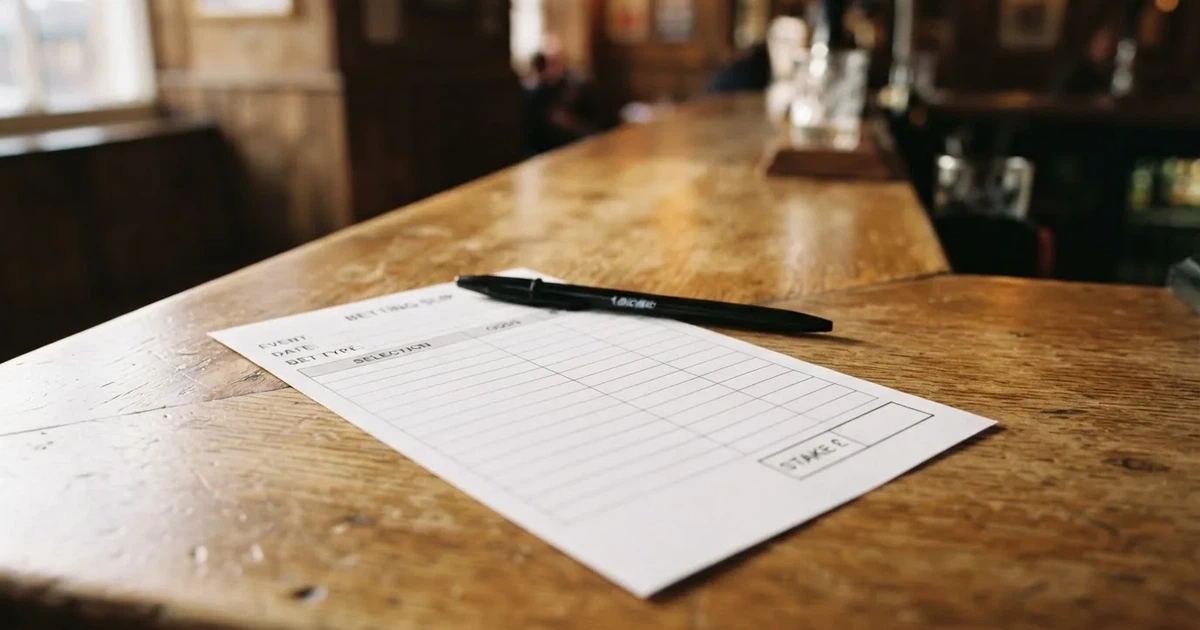
- The punter takes a price at the moment the bet is placed, recorded on the betting slip.
- The bookmaker publishes prices on the race in the moments before the off; the SP is computed from those.
- If the SP is larger than the price taken, the winning bet is paid at the SP rather than at the price taken — and the price taken is silently dropped.
If the SP is shorter than the price taken, the bet is paid at the price taken. The punter does not lose out. If the horse loses, the bet is a loser at any price. The Rule 4 deduction is a separate rule that can stack with the BOG — at Sky Bet, for instance, if a price taken receives a Rule 4 deduction, the deduction still applies unless the horse returns at a bigger SP, in which case the bet is paid at the SP with no deduction.
A BOG uplift applies to the win leg of an each-way bet in the standard BOG form the cluster uses; place terms are paid at the place fraction the operator publishes. A non-runner converts a fixed price into the SP replacement the operator publishes; the BOG is then computed against that replacement rather than the original price.
What the margin is, and where it sits in the price
A bookmaker builds a margin into every market by shortening every runner’s price by enough that the implied probabilities across all runners sum to more than 100 per cent. The excess is the *overround*, and the *margin* is the bookmaker’s share of every unit bet on the market. For a two-way market — Match Odds on a football match — at decimal odds 1.90 and 1.90, the implied probability of each side is 1 ÷ 1.90 = 52.63 per cent, so the two together come to 105.26 per cent. The payout share — what is returned to the bettors across the market on a unit stake on each side — is 1 ÷ 1.0526 = 95 per cent. The margin is 100 per cent − 95 per cent = 5 per cent.
That is the headline margin figure: for a two-way market at decimal odds 1.90 / 1.90, the bookmaker’s margin sits around 5 per cent, which is the middle of the band British bookmakers publish on a major football match. A bookmaker shortening the price to 1.85 / 1.85 raises the implied probabilities to 54.05 per cent each, a payout share of 92.5 per cent and a margin of 7.5 per cent. A bookmaker publishing 1.95 / 1.95 lowers the implied probabilities to 51.28 per cent each, a payout share of 97.5 per cent and a margin of 2.5 per cent. The margin is the difference between what is bet and what is paid back; it is never a separate fee, and it is never broken out on the betting slip.
Three cautions sit beside that one calculation:
- One market’s margin is not another’s. A 1X2 margin is not the over/under margin, is not the handicap margin and is not the BTTS margin; a price taken for the win leg of an each-way bet in a BOG offer carries the win market margin, not the place market margin.
- One event’s margin is not another’s. A Premier League match typically carries a tighter margin than a lower-division football match; a Champion Hurdle carries a tighter margin than a midweek all-weather handicap.
- One snapshot is one snapshot. Margins drift in the hours before the off as money arrives on each side, and the BOG uplift at a meeting with sharp late money can mean a payout slightly above the late margin on the day.
The figure printed above is the *band’s midpoint at illustrative prices*, not a quoted line. A real BOG offer neither requires nor guarantees a particular margin; the margin sits inside the SP on the day, and the BOG offer is the rule that compares the SP to the price taken when the winning bet settles.
Free-bet value, and why a free bet is not £30 free
A free bet whose stake is not paid back has a value to the punter that is lower than the headline number — and the headlined “£30 in free bets” is the headline number, not the value. A free bet of £30 placed at odds of 4.00 returns £30 × 4.00 = £120, of which the £30 stake is not returned by the operator: the punter walks with £90 of profit. The market is still wrapped in its own margin, so the realised value is £30 × (odds − 1) ÷ odds, adjusted for the market’s payout share. A £30 free bet at 4.00 on a market with a 95 per cent payout share is worth around £30 × 3 ÷ 4 × 0.95 = £21.38 on average over many bets.
A free bet whose stake is paid back with the winnings is a different product, and most of the brands in this comparison sit on the not-paid-back side. The audit treats a “£30 in free bets” headline as the £30 of tokens, not the realised value, and applies the realised value only when an operator pays back the stake with the winnings.
Combination bets and accumulator insurance
A combination bet multiplies the odds of its legs into one price; the margins stack, so a six-leg acca is priced with a wider margin than any of its single legs. BoyleSports’ acca insurance sits on this margin — the refund is paid as a free bet, on a max refund of £20 with a minimum stake of £5 at minimum odds of 1/2, on bets placed and settled on the same day — and is the operator’s way of capping the punter’s exposure to one losing leg without changing the headline margin.
A bet builder is a same-game multi built inside the operator’s app, with its own margin across the legs. A 90 Minute Payout market, published by Betfair Sportsbook, is the specific market on which the price is paid if the team selected is winning at the 90-minute mark regardless of extra time or penalties. Both products sit inside the operator’s licence category; neither replaces BOG, and neither conflicts with it on a horse race.
Expected cost of clearing a promotional offer
A welcome offer is not a gift. It is a marketing spend, paid back by the operator’s margin over the bets the punter places during the offer’s life. For a package on which the punter must turn over a bonus base — the bonus or the bonus plus deposit, as the operator names it — at a wagering factor of x times, the required turnover is bonus base × wagering factor. Bets needed to clear the offer is turnover divided by the average stake. The expected cost is the turnover × the margin of the market the punter uses to clear it. A £20 bonus at 5x turnover requires £100 of betting; at a £10 average stake the punter places ten bets; at a market margin of 5 per cent the expected cost is £5. The punter walks with the bonus minus the expected cost, on average over many bets.
That arithmetic is not a wager of the punter’s real money — the £100 of bets is the £20 bonus being cleared, not a fresh deposit — and the average figure assumes only the bonus is being wagered. Promotional packages with no wagering condition — a deposit-match free bet issued as a token — do not carry this arithmetic in the same form. The audit holds the BOG market itself has no wagering requirement at all: it changes how a winning bet settles. The bonus arithmetic here is to show what the marketing word “free” leaves out.
Top 10 Best Odds Guaranteed Sites UK — Comparison
The table below sets out what the licence register and each operator’s own published terms say on the four matters that decide whether a BOG offer is usable. Brand names are capitalised as the operator publishes them. Licence numbers and licence holders are taken from the Gambling Commission’s public register.
| Brand | Gambling Commission remote licence number and licence holder | BOG scope and headline conditions |
|---|---|---|
| Midnite | Midnite Limited, account 101839 | Fixed-odds sportsbook with BOG-style concessions on selected horse racing and greyhound meetings; full BOG wording varies by meeting and is checked on the day’s race card. |
| Coral | LC International Limited, account 54743 | Long-established BOG offer on UK and Irish horse racing; specific cap, time window and selected-meetings scope published in the racing terms section of the site. |
| Sky Bet | SBG Sports Limited, account 67370 | BOG on UK and Irish horse racing; the uplift is capped at £50,000 per bet or per race, and a Rule 4 deduction still applies to a taken price unless the horse returns at a bigger SP, in which case the bet is paid at SP with no deduction. |
| Smarkets | Smarkets (Malta) Limited, account 39173 | Betting exchange, not a BOG bookmaker; standard commission on eligible exchange bets; new customers have historically been offered 0 per cent commission for 60 days with a minimum first deposit of £10. |
| Betfair | PPB Counterparty Services Limited, account 39439 | Sportsbook and exchange; BOG scope is published on the sportsbook side and varies by meeting; the exchange does not run BOG as a settlement rule. |
| BetVictor | BV Gaming Limited, account 39576 | Best Odds Guaranteed on UK and Irish horse racing, alongside enhanced live race streaming, a BetFinder racing feature and Smart Stats. |
| Matchbook | Triplebet Limited, account 39504 | Betting exchange where customers bet against other users; full BOG is not the exchange’s settlement rule, and the BOG word on the sportsbook-equivalent offering is checked on the meeting card. |
| Fitzdares | Fitzdares Limited, account 400 | Cash out, accumulators, Lucky 15s, specials and antepost markets on horse racing, football, tennis, rugby, cricket, golf and American football; BOG scope is published on the horse racing and greyhound racing pages. |
| VBet | SCGO Limited, account 44662 | Bet Builder, pre-match and in-play betting, live streaming, a live calendar with results and stats; BOG scope on selected horse racing meetings is checked on the day’s race card. |
| BoyleSports | Boylesports Enterprise, account 39469 | Acca insurance headline rather than a BOG headline: opt-in, £5 minimum stake at minimum odds of 1/2, max £20 refund as a free bet expiring in 7 days, on bets placed and settled on the same day; racing-side BOG scope is checked separately. |
What the table leaves to the meeting card
The four matters in the table — brand, licence number and holder, BOG scope, BOG headline conditions — name what the register and the operator’s own terms publish. The fifth matter the audit could have listed, *the cap on the BOG uplift*, is given in the Sky Bet row at £50,000 per bet or per race; several of the other brands publish their caps inside the racing-terms pages rather than on a marketing page, and the table leaves the cap to the meeting card for those brands. The audit therefore reads the table as opening the question, not closing it: every punter checking BOG for a single meeting reads the day’s race-card conditions on the operator’s site, with the operator’s own full BOG wording beside each race card.
How to read the licences
A licence account is the gambling account number the Commission assigns to a licensee. The remote licence reference carries the same number with an R-prefix and additional digits; only the account number is printed above for legibility, and the Commission’s public register is the only authoritative source. Several brands can run under one licensee — Ladbrokes and Coral, Paddy Power and Betfair — and the table never presents two brands under one licensee as independent operators. Every GB-licensed online operator takes part in GAMSTOP, and the table does not list GAMSTOP membership as a separate column because the cluster is uniform on this point.
Overview: Where BOG Fits in the GB Market
Best Odds Guaranteed is a settlement concession, not a market. The market is fixed-odds betting on horse racing and greyhound racing; the concession is that a winning bet is paid at the SP if the SP beats the price taken. It is offered by some licensed UK bookmakers and not by others, and the operator’s choice to publish a BOG offer is part of how it competes on racing. The same operator may sell BOG on every UK and Irish race one Saturday and quietly remove it on a Tuesday evening, or restrict it to a handful of meetings per week — the headline offer is the marketing-page summary, the day’s terms are the binding version.
The economics sit on two rails. On the first rail, the SP is computed across a sample of bookmakers’ prices, so a BOG offer exposes the operator to its own customers’ bets at the median of the rest of the market — a price the operator did not set itself and may not be able to lay off. On the second rail, the offer is a powerful marketing lever against fixed-odds rivals who do not run BOG and against the exchanges, where the SP-equivalent for an exchange back bet is whatever the lay side is priced at when the race begins.
Who offers BOG and who does not
Among the brands listed above, Coral and Sky Bet are the most explicit BOG marketing names; BetVictor publishes BOG on UK and Irish racing and sits the offer alongside enhanced live race streaming. Midnite’s full BOG wording is checked on the day’s race card. VBet’s racing-side BOG is checked on the same. Smarkets, Matchbook and Betfair’s exchange side are exchanges — they do not run BOG as a settlement rule, and the SP for an exchange back bet is the lay price at the off. Betfair Sportsbook’s BOG scope is published on the sportsbook side of the same brand.
The audit’s headline conclusion here is not “every licensed bookmaker offers BOG” — some do not — and not “BOG is mandatory” — it is not. The register lists far more brands than any single comparison features; the BOG question is which of the operators listed in this comparison offer it, on which meetings, and to what cap. The audit has read it that way.
What BOG does not change
A BOG offer does not change:
- The win market’s margin — the margin sits inside every quoted price, the SP included.
- The stake or the qualifying price for a welcome offer — those are separate rules.
- The Rule 4 deduction — at Sky Bet, Rule 4 adjustments apply to a taken price unless the horse returns at a larger SP, in which case the bet settles at SP; this approach is standard across the BOG cluster.
- The P&L of the operator — the BOG offer is a marketing cost, paid back by margin across the rest of the book and offset by the loyalty a punter places on a brand that publishes it.
What BOG does change is the upper bound on the payout on a single winning fixed-odds bet. The cap is usually a per-bet figure, sometimes a per-race figure, sometimes both. The audit’s reading is that the £50,000 per-bet or per-race cap at Sky Bet is at the high end of the cluster, and that several of the other brands publish a much tighter cap inside the racing-terms section of the site. A punter sizing a stake above £10,000 reads the day’s race-card terms rather than the marketing page.
What BOG does change for the punter
The same punters as a year ago are welcome, with one extra complication: the financial vulnerability check at LCCP condition 3.4.4, in force since 30 August 2024, applies once a customer’s deposits minus withdrawals exceed £150 in a rolling 30 days. A BOG-winning punter who has net deposited above that threshold across the month enters the window for the public-record check. The announced, staged financial risk assessments have no start date yet. The right reading is that the BOG payout is not the trigger; the run-rate of deposits and withdrawals is.
Reviewed Bookmakers: How Each Brand Approaches BOG and What Suits Each Reader
The ten reviews below describe what each operator publishes on BOG scope, on racing markets and on the wider terms that affect a punter, then close with the figure the audit considers the verdict. The reviews are descriptive, not endorsements; the audit’s job on a comparison is to set out what each brand offers, what the offer costs the punter, and which reader each offer suits.
Midnite — Reviewed Bookmakers
Midnite runs a sportsbook on a Gambling Commission remote licence held by Midnite Limited under account 101839. The site shows in-play events, an acca builder, popular accas and price boosts with maximum-stake limits. The welcome package — £5 qualifying at EVS or greater within 14 days, £25 in free bets and 50 free spins valid for 7 days — is at the modest end of the cluster and forces the punter onto an EVS-or-bigger qualifying bet. The brand’s full BOG wording on selected horse racing and greyhound meetings is checked on the day’s race card rather than on a marketing landing page.
For a punter who values a low qualifying bet and a narrow bonus lifetime, Midnite fits — the £5 threshold and the 7-day lifetime are short, predictable and matched to the meeting rhythm. For a punter shopping for the broadest BOG scope across every UK and Irish race, the check-the-meeting-card rule means Midnite is a selective racing specialist rather than a catch-all BOG provider.
Coral — Reviewed Bookmakers
Coral is licensed by the Gambling Commission under account 54743. BOG has been a published headline of Coral’s racing terms for years, and the offer sits alongside a £20-qualifies-for-£40 welcome package split between a 7-day issue window and a 7-day expiry. The specific cap and selected-meetings scope on each meeting are published in the racing terms section of the site rather than on the marketing page, so a punter checking Coral reads the racing terms section before staking above £100.
For a long-time racing punter who wants BOG alongside a familiar sportsbook product, Coral is the conventional fit. For a punter who wants the cap on the uplift to be visible from the marketing page, Coral’s terms sit inside the racing pages rather than the landing.
Sky Bet — Reviewed Bookmakers
Sky Bet is operated under a Gambling Commission remote licence held by SBG Sports Limited under account 67370. BOG is published for UK and Irish horse racing, the uplift is capped at £50,000 per bet or per race, and a Rule 4 deduction still applies to a taken price unless the horse returns at a bigger SP, in which case the bet is paid at SP with no deduction. The welcome offer is £30 in free bets credited as three £10 tokens after a £5 deposit and a 5p qualifying bet at 1/1 or greater.
Sky Bet’s cap is unusually large for the cluster and the £5 minimum deposit / 5p qualifying bet is the gentlest entry threshold in the set. For a punter staking at the upper end of a BOG race, Sky Bet is the cluster’s clearest match. For a punter who would rather have a single £30 free bet than three £10 tokens, the welcome package splits across three bets whether the punter uses one or three.
Smarkets
Smarkets is licensed by the Gambling Commission under account 39173, in the remote betting intermediary category — Smarkets is an exchange. The published terms are commission-based: a standard 2 per cent commission on eligible exchange bets, with a historical new-customer offer of 0 per cent commission for 60 days against a minimum first deposit of £10. There is no BOG settlement rule on an exchange, because the SP-equivalent for an exchange back bet is the lay price at the off, and the exchange does not guarantee any payout above that.
For a punter who has decided an exchange is the right shape, Smarkets is the cluster’s commission-led option. For a punter looking for a BOG-equivalent on Smarkets, the answer is no — the exchange does not run BOG as a settlement rule, and that is the trade-off.
Betfair
Betfair is licensed by the Gambling Commission under account 39439 in the remote general betting standard category. The sportsbook runs alongside the exchange; the BOG scope is published on the sportsbook side, and the welcome offer side of the platform differs from the exchange side. The brand description in the App Store listing emphasises in-play betting, Bet Builder, free live streaming of UK and Irish horse racing and football, and a 90 Minute Payout market.
For a punter who wants both the sportsbook and the exchange under one wallet and is content to read each side’s BOG terms separately, Betfair is the combined option. For a punter who treats the sportsbook and the exchange as the same product, they are not — the BOG is on the sportsbook, and the exchange does not run BOG.
BetVictor
BetVictor is licensed by the Gambling Commission under account 39576 in the remote general betting standard category. The brand publishes Best Odds Guaranteed on UK and Irish horse racing alongside enhanced live race streaming, a BetFinder racing feature and Smart Stats. The BOG’s exact cap, selected-meetings scope and time window are checked on the racing pages.
For a punter who wants BOG on UK and Irish racing alongside a denser form guide in the app, BetVictor is the racing-fit option. For a punter who shops on the welcome offer, BetVictor’s published welcome offer is not the headline of the brand’s app-store listing — BOG is.
Matchbook
Matchbook is licensed by the Gambling Commission under account 39504 in both the remote general betting standard and remote betting intermediary categories. Customers bet against other users on the betting exchange, with Bet Builder, multiples, in-play betting and live streaming of horse racing and greyhounds. The exchange does not run BOG as a settlement rule; the BOG word on the sportsbook-equivalent offering is checked on the meeting card.
For an exchange-led punter who wants UK and Irish racing streaming alongside the lay side, Matchbook is the cluster’s BOG-adjacent option. For a punter looking for a BOG settlement rule, Matchbook is not it — and that is the trade-off.
Fitzdares
Fitzdares is licensed by the Gambling Commission under account 400 in the remote general betting standard category. The Fitzdares app offers cash out, accumulators, Lucky 15s, specials and antepost markets on horse racing, football, tennis, rugby, cricket, golf and American football, alongside in-play live odds. BOG scope on horse racing and greyhound racing is published on the racing pages rather than on a marketing landing.
For a multi-sport ante-post punter with a BOG-style concession, Fitzdares is the broader-market option. For a punter who values an EVS-or-greater welcome, the Fitzdares listing does not advertise one — the brand is racing-led rather than bonus-led.
VBet
VBet is operated under a Gambling Commission remote licence held by SCGO Limited under account 44662 in the remote general betting standard category. The brand offers Bet Builder, pre-match and in-play betting, live streaming, and a live calendar with results and stats. The BOG scope on selected horse racing meetings is checked on the day’s race card rather than on the home page.
For a punter who shops on the in-play product and uses Bet Builder rather than the racing side, VBet fits that brief. For a punter who wants BOG alongside the in-play product, the BOG is on the racing side and the meeting card is the binding version.
BoyleSports — Reviewed Bookmakers
BoyleSports is operated under a Gambling Commission remote licence held by Boylesports Enterprise under account 39469 in the remote general betting standard category. The published headline is acca insurance rather than BOG: opt-in, a £5 minimum stake at minimum odds of 1/2, a maximum refund of £20 as a free bet expiring in 7 days, on bets placed and settled on the same day. The racing-side BOG scope is checked separately on the meeting card.
For an acca punter who wants the insurance back as a free bet rather than cash, BoyleSports is the cluster’s protection bet. For a punter shopping on a pure BOG headline, BoyleSports’ primary selling point is the acca insurance, so racing punters are better served elsewhere.
Frequently Asked Questions
Which bookmakers offer best odds guaranteed?
Among the brands reviewed above, Coral, Sky Bet and BetVictor are the brands that publish Best Odds Guaranteed on UK and Irish horse racing as part of the headline racing offer; Midnite, VBet and Fitzdares publish BOG scope on selected horse racing and greyhound meetings that the punter checks on the day’s race card; the exchanges (Smarkets, Matchbook, Betfair’s exchange side) do not run BOG as a settlement rule. The exact set of meetings and the cap on the uplift change by operator, and the racing-terms page on each brand carries the binding version rather than the marketing summary.
How do I check a bookmaker’s Gambling Commission licence?
The Commission’s public register is the only authoritative check; it can be searched by business name, trading name, domain or account number, and a licence status read there is the whole test of whether a brand holds a GB licence. The licence card carries the licence account number, the categories covered and the licence holder’s company name. A search by domain is not enough on its own because a licensed operator may use .com as well as .co.uk; the licensed entity and the domain have to agree.
How is the return on a winning bet worked out?
Return = stake × decimal odds; net profit = stake × (decimal odds − 1). A £10 stake at decimal odds 6.00 returns £60 (profit £50); a £25 stake at decimal odds 3.75 returns £93.75 (profit £68.75). For a combination bet the odds of the legs multiply into one price — a double at legs of 2.00 and 3.00 carries decimal odds of 6.00 for a £10 stake that returns £60 if both legs win. British bookmakers publish fractional and decimal prices side by side, and the conversion is a/b + 1.
What is the bookmaker’s margin and where does it sit in the odds?
A bookmaker shortens every runner’s price so that the implied probabilities across all runners sum to more than 100 per cent, and the excess is the margin. For a two-way market at decimal odds 1.90 / 1.90, each side carries an implied probability of about 52.63 per cent, summing to about 105.26 per cent, which gives a payout share of about 95 per cent and a margin of about 5 per cent. The margin is what the bookmaker keeps of every unit bet on the market; it is never broken out on the betting slip, and it varies by market and event.
Are offshore bookmakers with BOG a viable alternative to a GB-licensed one?
A GB licence is compulsory at the point of consumption — providing gambling facilities in Great Britain without the licence the Act requires is an offence under section 33 of the Gambling Act 2005 — so a customer-only offence at a non-licensed site is not in the 2005 Act, but the loss of protection is: no GAMSTOP coverage, no Commission complaints route, no approved dispute-resolution body, no British consumer redress if funds are withheld, and no protection under the 10x bonus cap or the £150 vulnerability check. The honest framing is that licensed offers the framework and unlicensed offers neither the framework nor the redress.
Free bets & offers – UK betting
Content created by the «UK betting» team
