
Online greyhound racing betting in Great Britain — what each bookmaker actually offers
 Available in US
Data current as of 27 October 2026, cross-checked against the Gambling Commission’s public register and each operator’s own terms page.
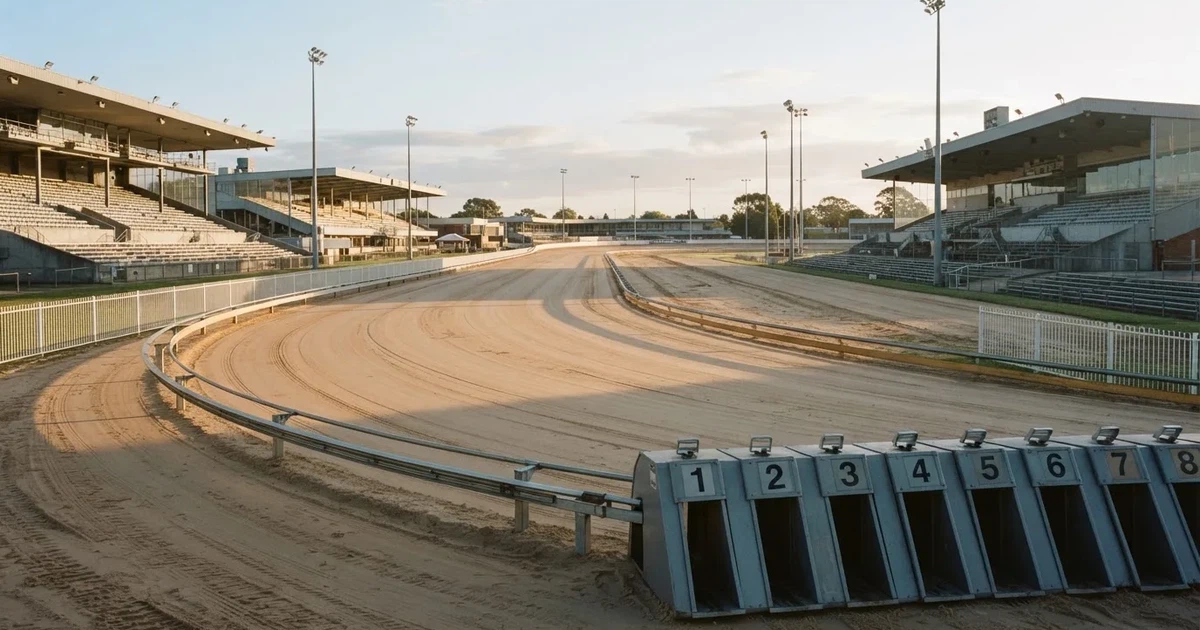
Greyhound racing sits in an odd corner of British betting. It has fewer followers than horse racing, no headline sponsorships on Premier League shirts, and no statutory list of permitted events — and yet licensed bookmakers publish meetings from Towcester to Perry Barr every other night, with ante-post markets running for the English Greyhound Derby and the Scottish Greyhound Derby. This page maps the ten Gambling Commission-licensed operators that cover greyhound racing online, explains what their welcome offers cost once the small print is folded back, and walks through the markets, the live-betting mechanics and the spread-betting alternative. The angle is choice: which paths exist, what each one costs, and who each one actually suits.
Welcome bonuses and free bets on greyhound racing
A “free bet” sounds like a gift. The arithmetic almost never agrees. Every welcome offer on a licensed British site is now subject to the 10× wagering cap that took effect on 19 January 2026 — a £10 bonus at 50× would have demanded £500 of qualifying bets; under the cap, no bonus requires more than £100 of staking. The cap is real, and it changes which offers are worth taking. What it does not change is the rest of the small print: minimum odds on the qualifying bet, expiry windows, whether the free-bet stake is returned with a winner, and whether the free bet is restricted to singles or allowed on accumulators.

What the welcome offers actually cost
Coral runs a £40-in-free-bets headline for a £20 qualifying sports bet at minimum odds of 2.0 (1/1), with the free bets issued within seven days and expiring seven days after issue. For a new customer betting £20 on a single greyhound race at 2.0, the cost is the expected loss on that qualifying stake — a single bet at evens carries roughly a 5% margin on most racing markets, so the £20 has an expected cost of about £1 once it settles. The £40 of free bets is then non-withdrawable, and the stake is not returned with a winning free bet. A £10 free bet on a winner at 3.0 returns £30 in profit (stake forfeited), and the expected value of that free bet on a 3.0 greyhound market is roughly £10 × (3.0 − 1) ÷ 3.0 × 0.95, or about £6.30 — the offer in total has an expected value close to £5 against a £20 qualifying stake.
BetGoodwin runs “Bet £10 & Get £15 in Free Bets”, split into a £5 sports free bet, a £5 acca free bet and a £5 Sub-Cover free bet. The structure lets the punter spread the £15 across three bet types, including accumulators — but the Sub-Cover free bet is restricted to a specific market type, which limits flexibility. At minimum qualifying odds of around 1.5 on the £10, the expected cost of qualifying is roughly £0.50, and the £15 of free bets at typical racing margins has an expected value of around £5. BetGoodwin is the lighter-touch option for a customer who wants to sample a new account without committing much.
Sky Bet issues free bets that expire thirty days after crediting, are usable only on single or each-way markets (not multiples), exclude virtuals, are non-withdrawable and do not return the stake with winnings. That last point matters: a £10 Sky Bet free bet on a winner at 4.0 returns £30 of profit, not £40, and that is the headline distinction between a free bet and a cash bonus. Punters who treat free bets as cash stake equivalents will misread every price they look at.
Spreadex is dual-regulated — the FCA covers its financial spread betting and the Gambling Commission covers its fixed-odds book. For fixed-odds greyhound markets the bonus mechanics mirror any other licensed bookmaker, but the spread-betting side carries a separate and starker warning: losses can exceed the deposit. Spread betting on a greyhound race is a different product from fixed-odds betting on the same race, and the leverage inherent in spread bets makes the “what could I lose” calculation non-linear. Anyone tempted by the spread markets on greyhounds should read Spreadex’s own risk warning before sizing a position.
Mixed-product promotions and the January 2026 rule
Since 19 January 2026, offers that require gambling across two or more product types — for example “bet on football to get free spins” — have been banned by the Gambling Commission. The cap on wagering requirements sits in the same policy frame. Both rules narrow the shape of what a welcome offer can be. A bookmaker that previously offered a sports-betting bonus gated by casino play cannot do so any longer, and a £50 bonus at 35× rollover (£1,750 of qualifying bets) is now unlawful where the equivalent £100-of-staking cap would have allowed it. The bettor reading a current welcome offer is therefore seeing a smaller, cleaner product than the equivalent offer two years ago. Whether that is a gain depends on whether the punter preferred heavy rollovers or resented them; either way, the small print is shorter.
Verdict on bonuses
The free-bet headline number is not the offer — the qualifying odds, the expiry window, the stake-returned rule and the market restriction are. A £40 free bet at 7-day expiry with stake-not-returned on singles only is a different product from a £30 free bet at 30-day expiry usable on accumulators, even before either is multiplied by a margin assumption. For a casual greyhound punter betting £20 at a time, Coral and BetGoodwin both sit close to fair value once the qualifying cost is netted out. For a serious accumulator player, Sky Bet’s “singles and each-way only” restriction is a hard no. For anyone tempted by spread bets, Spreadex is the only operator on this list with a financial-spread-betting licence, and that licence is the FCA’s, not the Commission’s.

Mobile apps for greyhound betting
The greyhound betting app market in Great Britain is not a separate category. Every licensed bookmaker that covers greyhound racing on desktop covers it on iOS and Android, with the same markets, the same in-play offering and (where applicable) the same live streaming. What separates the apps is build quality, market depth, navigation speed and the design of secondary features — bet builders, cash-out buttons, acca editing — that the punter meets on a Saturday night.
What the leading apps deliver
bet365 is the most-downloaded sports betting app in the UK and the official global betting partner of the UEFA Champions League. Its greyhound offering includes Bet Builder+ (combining markets from one event into a single bet, available pre-match and in-play), Super Boosts, Winnings Boosts on Bet Builders and selected singles, daily Bet Boosts, in-play betting, live streaming of events worldwide, plus Bet Track, Match Live and a Live Golf Tracker for following bets in play. The breadth is the point — bet365 ships the largest feature surface of any licensed app in Britain, and the greyhound tab inherits it.
Sky Bet runs a tight, navigation-led interface tuned for UK racing and football punters. The greyhound section is integrated into the same racing hub as horse racing, with a single search box across both. Live streaming on selected UK and Irish meetings is included. The free-bet rules (singles and each-way only, no stake return) carry over to the app.
Coral sits in the Entain stable alongside Ladbrokes, sharing much of the same platform. Its app covers greyhound racing alongside horse racing, with a racing-specific navigation pattern that flatters regular racing punters. Cash out, bet builder and live streaming are present, and the £40 welcome banner is the same as on desktop.
Betmaster is published by BM Solutions GB Ltd and covers football, cricket, horse racing, NFL and eSports (League of Legends, Dota 2) betting. Greyhound racing appears under the same racing hub as horse racing. The feature surface is narrower than bet365’s, and the welcome mechanics are the platform’s own rather than a tied-in-corporate offer.
10bet covers football, tennis and horse racing, with Cash out, Bet Builder and Live Streaming as headline features. Greyhound racing sits inside the same racing tab as horse racing, with ante-post markets for the Derby meetings. The welcome offer follows the platform’s own structure.
NetBet runs Daily Boosts, Profit Boosts and free bet offers, a Bet Builder with instant dynamic odds and sports stats for major leagues. Greyhound coverage is standard, with the same ante-post markets as the larger books.
Fitzdares offers cash out, accumulators, Lucky 15s, specials and antepost markets on horse racing, football, tennis, rugby, cricket, golf and American football, with in-play live odds. Greyhound racing sits within the antepost framework alongside horse racing, and the positioning is “premium” — smaller market, sharper pricing, fewer banner offers.
Lottoland combines casino, lottery betting, sports betting and scratchcards in a single app and states it is licensed by the Gambling Commission for customers in Great Britain. Greyhound racing is covered within the sportsbook section.
Native app vs browser
A native app has three real advantages on a Saturday evening: push notifications for price moves, biometric login, and a homescreen icon. A mobile browser has two: no download, and no storage. For a punter betting on greyhound meetings two or three nights a week, the native app wins on convenience. For a punter who bets once a fortnight across five different books, the storage cost of five apps may push the casual user to the browser. None of the licensed apps charge for download; all run on iOS and Android, with Android versions distributed either through Google Play or as APK files direct from the operator’s site where Google’s terms block gambling app listings.
Verdict on apps
For a bettor who bets across multiple sports and wants the widest feature surface, bet365 is the leading app on this list. For a racing-only punter who values navigation speed and integration with horse racing, Sky Bet and Coral both deliver tight racing hubs. For a greyhound-only bettor who wants sharp pricing and fewer banner distractions, Fitzdares is the most specialised of the ten. The free-bet rules and the bonus mechanics are the same on app and on browser — what changes is the surrounding app, not the offer.
Live greyhound betting and cash out
Live greyhound betting is a small, fast product. A six-dog race over 480 metres at Perry Barr settles in about 30 seconds; the in-play window is the time it takes the lids to come up. That compresses what a live-betting platform can offer. Most licensed bookmakers offer greyhound in-play on UK and Irish meetings, with a market suspension while the race is in progress and a fresh market posted within seconds of the result. Cash out is the button that turns the in-play offering into something a casual punter can actually use.
In-play mechanics
The typical greyhound in-play market is a win market with six runners, priced separately and suspended as the race starts. Some bookmakers offer in-play place markets (top two or top three) and a forecast or tricast market on the first three home. The market margin on greyhound in-play tends to be wider than pre-match, for two reasons: the bookmaker is pricing into a moving picture, and the volume per market is lower than on a Premier League football match. A punter who watches the in-play margin on a 1.90 / 1.90 win market will typically see a margin in the 8-12% band rather than the 5-7% band of the pre-match equivalent. That extra margin is the cost of betting after the lids have gone up.
The prescribed calculation for this page is the margin on a two-way illustrative market priced at 1.90 / 1.90 (fractional 9/10). The payout share on such a market is 1 ÷ (1/1.90 + 1/1.90) = 0.95, or 95%. The margin is therefore 5% under fair pricing. Where a licensed bookmaker widens one side or both, the margin rises: a market at 1.85 / 1.95 carries a margin of about 5.2%, and a market at 1.80 / 2.00 carries a margin of about 5.6%. Across the greyhound in-play product, margins generally sit in a band of 5-12% depending on the bookmaker, the meeting and the time before the off. A punter comparing bookmakers on margin should compare like-for-like — the same meeting, the same race, the same time before the off — because the spread is widest at meeting level.
Cash out
Cash out settles a position mid-event at a price set by the bookmaker. On greyhound racing, cash out is most useful in the seconds between the market opening and the lids going up — a punter who has backed a dog at 6.0 and sees it firm to 3.0 in the minute before the off has a decision to make. Cash out takes the decision away from the race and turns it into a price. The cash-out price is built off the live market with a wider margin than the underlying market, because the bookmaker is pricing the bettor’s position rather than the race result. Punters who cash out routinely are paying for the certainty in margin.
Some bookmakers offer partial cash out, where the punter can bank a portion of the position and let the rest run. bet365, Coral, Sky Bet, Fitzdares and 10bet all carry cash-out functionality across their greyhound books. Where partial cash out is offered, it tends to be a percentage slider (25%, 50%, 75%) with the cash-out price scaled accordingly. Punters who bet accumulators rely on partial cash out most heavily, because a five-leg greyhound accumulator at the fourth leg is the natural cash-out moment.
Verdict on in-play and cash out
Live greyhound betting works best as a complement to pre-match betting, not a replacement. The in-play product is thin by design — a 30-second race does not lend itself to position-building the way a 90-minute football match does. Cash out is the bridge that turns in-play into a usable product for the casual punter. For a serious racing-only bettor, pre-match value is where the edge sits. The bookmaker’s margin is wider in-play, and the volume per market is lower, so the in-play offering is best treated as a tactical tool rather than a primary product.
Greyhound predictions, tips and staking systems
No system wins at greyhound betting. The phrase “winning system” is the most expensive four-word phrase in racing — a tactic that promises a winning edge typically delivers a margin of subscription fees on top of the bookmaker’s margin, with no statistical edge underneath. What a punter can do is manage stake size, compare prices across bookmakers, and track form over time. None of those three things is a system; all three are discipline.
What tips and forecasts actually offer
A greyhound tipster is a person (or a service) that publishes a selection for each race. The best free tipsters publish their strike rate and their return on investment over a sample of at least 1,000 bets — anything smaller than that is anecdote. Paid tipsters should publish the same statistics, with an independent verification, and very few do. A punter subscribing to a paid tipster without verified ROI statistics is paying for opinion, not for edge.
Form study on greyhound racing is a different activity. Trap draw, race distance, going, grade, the dog’s last-three sectional times, the trainer’s strike rate at the track, the owner’s pattern of entries — all of these are publicly available via the Greyhound Board of Great Britain’s records and the Racing Post. The bettor who spends an hour per meeting studying form will be a sharper bettor than the bettor who buys a tip sheet, but neither is “winning” in the systematic sense — the bookmaker’s margin sits inside every price, and the form work shifts the distribution of winners without removing the vig.
Staking discipline
The most useful discipline is the simplest: a fixed unit stake, a fixed number of bets per meeting, and a stop-loss for the day. Punters who chase losses double their stake after a loser; the result is a long-run ruin almost certainly. Punters who raise stakes after a winner are tilting the other way; the result is winning days and a single catastrophic loss. Neither pattern is a system; both are anti-systems that the punter can choose not to run.
A staking plan can be flat (the same stake on every bet), proportional (a percentage of the current bank), or Kelly-fraction (a mathematical optimum based on the punter’s estimate of edge and the price). Kelly staking in its pure form bets a fraction of bank equal to edge divided by price; for a punter with no verified edge, Kelly sizing equals zero — the staking plan is to bet nothing. Most serious bettors run flat or proportional staking and do not vary by selection.
Verdict on predictions
There is no greyhound betting system that wins in the long run. There is greyhound form study that produces sharper selections; there is staking discipline that produces longer bankrolls; and there is price comparison across bookmakers that produces a few percent of margin back per bet. None of those three is a “system” in the marketing sense, and the marketing sense is what the punter is paying for when they buy a tip sheet. The honest version is duller and cheaper.
Bet types and how greyhound odds are built
Greyhound racing carries the same market types as horse racing — win, place, each-way, forecast, tricast, ante-post — with a smaller field (typically six runners) and a shorter race distance. The odds are quoted in fractional form on most licensed British sites (5/2, 7/4, evens), with decimal odds shown as a secondary display on the bet slip. Both are the same price; the conversion is a/b in fractional → a ÷ b + 1 in decimal (so 5/2 becomes 3.50, 11/4 becomes 3.75, evens becomes 2.00).
Win, place and each-way
A win bet pays out only if the selection finishes first. A place bet pays out if the selection finishes first, second or (in some markets) third — the place terms depend on the field size and the bookmaker. An each-way bet is two bets of equal stake, one on the selection to win and one on the selection to place, so the total stake doubles and the payout combines the two outcomes. A £10 each-way bet at 5.0 costs £20; if it wins at 5.0, the win portion returns £50 and the place portion returns £20 (at one-quarter the odds for a six-runner race, or one-fifth the odds for a larger field). If it places only, the win portion loses and the place portion returns £20.
Forecast and tricast
A forecast picks the first two dogs in order; a tricast picks the first three in order. The payouts on forecasts and tricasts are calculated from the pool of bets on each combination — there is no fixed margin because the market is parimutuel at most tracks, and the dividend is declared after the race. Bookmakers offer fixed-odds forecasts and tricasts in some markets, with a margin baked into the price. The fixed-odds forecast on a six-runner race pays out at roughly 6/1 for the correct order, against a true odds of 30/1 — the difference is the bookmaker’s margin.
Ante-post
Ante-post betting is betting on a race before the final declarations are made. The price is fixed at the time of the bet, but the bet loses if the dog is declared a non-runner. Most bookmakers apply a Rule 4 deduction when a dog is withdrawn late — a proportional reduction in the payout to reflect the smaller field. Ante-post markets run from weeks out for the English and Scottish Greyhound Derbies, with the biggest liquidity in the final 48 hours before the off.
Starting price (SP)
The starting price is the odds on an entry in the on-course fixed-odds market at the moment the race begins. On greyhound racing the SP is set by the on-course bookmakers and broadcast to the off-course firms, who settle bets at the greater of the SP and the price the punter took. Best odds guaranteed (BOG) is the bookmaker concession that pays at SP if SP is greater than the price the punter took — effectively free upside on every bet. BOG is standard on greyhound racing at most major bookmakers.
Spread betting
Spread betting on greyhound racing is a different product from fixed-odds betting. Spreadex quotes a spread (a range of finishing positions, or a range of times) and the punter bets a stake per point of the spread. A bet on a dog to finish in the top two with a spread of 1-3 at £25/stake returns £50 if the dog finishes first, £25 if second, and zero if third or worse. A bet against the spread returns the inverse. The volatility is higher than fixed-odds betting because the payout is linear in the outcome, not capped at the price.
Spreadex is the only operator on this list with a financial spread-betting licence (FCA), and the warning is the regulator’s own: spread betting losses can exceed deposits. The product is for punters who understand the leverage and have the bank to absorb the variance.
The bookmaker’s margin on a win market
The arithmetic of the margin on a greyhound win market is the arithmetic of any overround. A six-runner race with prices 3.0, 4.0, 5.0, 6.0, 8.0, 12.0 has a payout share of 1 ÷ (1/3.0 + 1/4.0 + 1/5.0 + 1/6.0 + 1/8.0 + 1/12.0) = 1 ÷ (0.333 + 0.250 + 0.200 + 0.167 + 0.125 + 0.083) = 1 ÷ 1.158 = 0.864, or 86.4%. The margin is therefore 13.6%. The wider the margin, the more the bookmaker keeps of every unit bet on the market. Punters who compare bookmakers on margin should compare the same race at the same time, because margins vary meeting by meeting, bookmaker by bookmaker, and minute by minute.
Verdict on bet types
Win, place and each-way are the workhorse markets and are available at every licensed bookmaker. Forecast and tricast are parimutuel at the track and fixed-odds at the bookmaker, with the fixed-odds product carrying a wider margin. Ante-post is where the liquidity sits for the Derby meetings, with Rule 4 deductions on late withdrawals. Spread betting is a different product altogether, available only at Spreadex, with leverage that punsters should understand before sizing a position. The starting price and best-odds-guaranteed settlement are standard at the major books, and the punter who backs a dog at 5.0 and watches it drift to 7.0 SP gets paid at 7.0.
Greyhound racing meetings, tournaments and ante-post markets
Greyhound racing in Great Britain runs year-round, with meetings most nights of the week at the eighteen licensed stadia regulated by the Greyhound Board of Great Britain (GBGB). The flagship events are the English Greyhound Derby (held at Towcester), the Scottish Greyhound Derby (held at Shelbourne Park in Ireland but contested by British-trained dogs), the Irish Greyhound Derby, the Oaks and the St Leger. The ante-post markets for these events open weeks or months in advance and dominate the greyhound liquidity at the major bookmakers.
The GBGB and the eighteen stadia
The Greyhound Board of Great Britain regulates the sport in Great Britain. Eighteen stadia hold GBGB licences, with the bulk of fixtures running at the larger tracks — Towcester, Perry Barr, Belle Vue, Wimbledon, Sheffield, Newcastle, Nottingham, Yarmouth, Swindon, Romford, Sittingbourne, Henlow, Kinsley, Doncaster, Sunderland, Monmore, Poole. Meetings typically run in the evening, with afternoon cards at the larger tracks on Saturdays and Bank Holidays. The Racing Post carries the day’s cards and the form for every GBGB-licensed meeting.
Derby meetings and ante-post markets
The English Greyhound Derby is the flagship of the British calendar. The ante-post market opens months in advance, with prices tightening as the trials narrow the field. The Scottish Greyhound Derby is the second flagship event and runs in a similar format. The Irish Greyhound Derby at Shelbourne Park carries the largest prize-money pool in the sport globally and attracts ante-post liquidity from British bookmakers. The Oaks and St Leger round out the four-legged classics pattern that mirrors the horse-racing equivalent. Each of these events has a multi-round structure: early rounds narrow the field from 96 dogs to 48, 24, 12 and then the final six. Ante-post bets lose on withdrawals in the early rounds unless the bookmaker offers a non-runner-no-bet concession.
New Zealand greyhound racing
Greyhound racing in New Zealand was ended by the Racing Industry (Closure of Greyhound Racing Industry) Amendment Act 2026, passed on 2 April 2026, with the phase-out set for 1 August 2026. Before the ban, Greyhound Racing New Zealand (GRNZ) organised seven affiliated clubs: Auckland, Waikato, Whanganui, Palmerston North, Canterbury, Otago and Southland. The closure was announced by Winston Peters on 10 December 2024, with the policy frame being animal welfare. For British punters, the closure reduces the international ante-post calendar but does not affect the GBGB-licensed meetings in Great Britain. British bookmakers do not price New Zealand greyhound meetings because there are no meetings to price.
Other international racing
Irish greyhound racing runs alongside horse racing at tracks including Shelbourne Park, Curraheen Park (Cork), Galway, Limerick, Mullingar, Thurles, Waterford, Youghal and Clonmel. The Irish Greyhound Board regulates the sport in the Republic of Ireland. British bookmakers offer Irish meetings on the same racing hub as British meetings, and SP is settled off the Irish on-course market. Australian greyhound racing runs year-round and is covered by some British bookmakers with overnight markets, though liquidity is thin compared to horse racing. American greyhound racing has effectively ended, with the last track (Wheeling Island) closing in 2024 and no replacement racing on the calendar.
Where to find the cards and form
The Racing Post carries the day’s greyhound cards, the form, the trap draw and the sectional times for GBGB meetings. The GBGB site carries the official records. The Irish Greyhound Board site carries the cards and form for Irish meetings. The major bookmakers carry their own cards and form, integrated into the racing hub of each app.
Verdict on meetings
For British punters the action sits at the eighteen GBGB stadia, with the Derby meetings as the ante-post peaks. Irish meetings are an extension of the same product and run on adjacent nights. New Zealand greyhound racing has ended, Australian greyhound racing is a thin overnight market, and American greyhound racing no longer exists. The international calendar is therefore smaller than it was five years ago, and the British calendar carries the bulk of the ante-post liquidity.
The ten licensed bookmakers — comparison
The table below covers every bookmaker reviewed in this article. The licence information is from the Gambling Commission’s public register, accessed in October 2026. The greyhound-racing column reflects what each operator’s own site and published terms state about its greyhound product. Some operators publish a deep greyhound tab with ante-post, in-play and forecasts; others cover greyhound within a broader racing hub without a dedicated greyhound page.
| Operator | Gambling Commission licence | Greyhound product |
|---|---|---|
| Bar One Racing | 56516 | Irish-focused racing book with sponsorships at Dundalk, Fairyhouse, Navan, The Curragh, Curraheen Park and Cork; greyhound racing covered within the racing hub |
| BetGoodwin | 2927 | UK racing book with greyhound meetings, ante-post markets and a £15 free-bet welcome in three parts |
| Fitzdares | 400 | Premium racing book with antepost, in-play live odds, cash out, accumulators and Lucky 15s on a focused racing hub |
| Coral | 54743 | Major UK book with greyhound win, place, each-way, forecast and ante-post markets; live streaming on selected meetings; £40 free-bet welcome |
| Kalooki Sportsbook | 57730 | Independent UK bookmaker operated by Kalooki Sportsbook Ltd (company 12938274); GAMSTOP member |
| Betmaster | 65699 | Multi-sport book published by BM Solutions GB Ltd, covering football, cricket, horse racing, NFL and eSports; greyhound within the racing tab |
| Sky Bet | 67370 | Major UK book with greyhound racing integrated into a racing hub alongside horse racing; free bets restricted to singles and each-way |
| 10bet | 43173 | Sports book covering football, tennis and horse racing with Cash out, Bet Builder and Live Streaming; greyhound within the racing tab |
| NetBet | 39170 | Sports book with Daily Boosts, Profit Boosts, Bet Builder and sports stats; greyhound within the standard racing offering |
| Fitzwilliam Sports | 48760 | Dublin-based bookmaker with capped membership, instant deposits, fast withdrawals, timeouts and deposit limits; “High Stakes Welcome” subject to compliance criteria |
What the table does not show
The table is a snapshot of the licences and the headline product descriptions; it does not capture the live margin at any specific meeting, the welcome-offer small print or the in-play product depth. The bookmaker-by-bookmaker sections below carry those details, with the verdicts each one ends on drawn from the specifications above.
Bar One Racing — Irish racing book with greyhound coverage
Bar One Racing has rebranded as BAR 1 Betting and operates as an Irish independent bookmaker with shops across Ireland. The GBGB-facing site is the online arm of that Irish business, licensed by the Gambling Commission under account 56516. The greyhound product sits within the racing hub and includes Irish meetings at Curraheen Park (Cork) alongside UK meetings; the bookmaker sponsors racing at Dundalk, Fairyhouse, Navan, The Curragh, Curraheen Park and Cork.
The Bar One Racing welcome offer sits at the lower end of the spectrum and is targeted at the Irish racing punter who wants a fresh account rather than a headline number. For a greyhound-only bettor, the value sits in the Irish meeting coverage — Shelbourne Park, Curraheen Park and the smaller Irish tracks are Bar One’s natural market.
Verdict: Bar One Racing is the right fit for an Irish-focused racing punter who wants greyhound coverage as part of a broader racing book. The product is narrower than the major UK books on the ante-post calendar, but the Irish meeting depth is the differentiator.
Floor 1 — UK racing book with ante-post markets
BetGoodwin runs a “Bet £10 & Get £15 in Free Bets” welcome, made up of a £5 sports bet, a £5 acca and a £5 Sub-Cover bet. The structure is the right one for a punter who wants to spread the free-bet stake across three market types — singles, accumulators and Sub-Cover markets — without committing much of their own money. The licence sits under account 2927, held by Goodwin Racing Limited.
The greyhound offering carries ante-post markets for the major Derby meetings and standard win/place/each-way coverage on the daily cards. Live streaming is present on selected meetings.
Verdict: BetGoodwin is the lighter-touch welcome offer on the list and the right fit for a casual greyhound punter who wants to sample a new account without committing much. The Sub-Cover free bet is restricted to a specific market type, which limits flexibility for accumulators.
Fitzdares — premium racing book with greyhound ante-post
Fitzdares positions itself as a premium racing bookmaker. The app offers cash out, accumulators, Lucky 15s, specials and antepost markets on horse racing, football, tennis, rugby, cricket, golf and American football, with in-play live odds. Greyhound racing sits within the antepost framework alongside horse racing. The licence is account 400, held by Fitzdares Limited, and has been in place across multiple operator iterations.
The Fitzdares product is narrower than the major UK books but sharper on pricing. Punters who value a tight racing hub with fewer banner distractions and a premium positioning will recognise the offering; punters who want the broadest bet-builder surface will find it limited compared to bet365.
Verdict: Fitzdares is the right fit for a greyhound-only punter who wants sharp pricing, fewer banner distractions and an antepost-led approach to the Derby meetings. The smaller market depth is the trade-off.
Coral — major UK book with £40 free-bet welcome
Coral is one of the two main Entain brands in British betting (the other being Ladbrokes), and the platform is shared between them. The licence is account 54743, held by LC International Limited, and covers remote general betting standard (real events) and remote betting intermediary. The greyhound offering covers win, place, each-way, forecast and ante-post markets across UK and Irish meetings, with live streaming on selected events.
The Coral welcome is “Get £40 in Free Bets when you bet £20”, with a deposit and sports bet of £20 or more at minimum odds of 2.0 (1/1), £40 in free bets issued within seven days and expiring seven days after issue. The free-bet stake is not returned with winnings, and the offer is restricted to new GB customers who opt in. The qualifying cost on a 2.0 single greyhound bet is roughly £1 at a typical racing margin, against an expected free-bet value of around £6.30 on a 3.0 greyhound market, giving a total expected value of about £5.30 against the £20 qualifying stake.
Verdict: Coral is the right fit for a punter who wants the £40 headline welcome, the major-book feature surface (bet builder, cash out, live streaming) and a racing hub that integrates horse and greyhound racing. The trade-off is the standard Entain platform rather than a racing-specialist product.
Kalooki Sportsbook — independent UK bookmaker with GAMSTOP membership
Kalooki Sportsbook is operated by Kaloodwin Sports Book Ltd (company number 12938274) and licensed by the Gambling Commission under account 57730. The site states that the operator is a GAMSTOP member, and the welcome offer sits within the platform’s own structure. Greyhound racing is covered within a racing tab alongside horse racing.
The Kalooki product is narrower than the major UK books but the customer base is correspondingly more curated. For a greyhound-only punter the value sits in the racing hub design and the platform’s focus on UK racing punters.
Verdict: Kalooki Sportsbook serves as an independent UK bookmaker featuring GAMSTOP membership and a racing-led product. The smaller market depth is the trade-off.
Betmaster — multi-sport book with greyhound within the racing tab
Betmaster is published by BM Solutions GB Ltd and licensed under account 65699. The app covers football, cricket, horse racing, NFL and eSports (League of Legends, Dota 2), with greyhound racing sitting within the racing tab. The product is a multi-sport book with greyhound as one of several racing options rather than a racing-led product.
For a greyhound-only punter the value sits in the wider market access — Betmaster’s football and eSports coverage is part of the offering for punters who bet across sports. The greyhound coverage is standard rather than specialist.
Verdict: Betmaster is the right fit for a multi-sport punter who wants greyhound racing within a broader product. The greyhound-first punter will find the racing tab narrower than the racing-specialist books.
Sky Bet — racing-led major book with restricted free bets
Sky Bet runs a racing-led product, with greyhound racing integrated into the racing hub alongside horse racing. The licence is account 67370, held by SBG Sports Limited. Sky Bet free bets expire thirty days after crediting, are usable only on single or each-way markets (not multiples), exclude virtuals, are non-withdrawable and do not return the stake with winnings.
The Sky Bet product is tight on navigation and integrated with Sky’s media coverage. For a racing-only punter who bets singles and each-way, the platform is well-tuned; for an accumulator-focused punter the free-bet restriction is a hard no.
Verdict: Sky Bet is the right fit for a racing-only punter who bets singles and each-way on greyhound and horse racing. The accumulator restriction on free bets is the trade-off.
10bet — sports book with Cash out, Bet Builder and Live Streaming
10bet runs a sportsbook covering football, tennis and horse racing, with Cash out, Bet Builder and Live Streaming as headline features. Greyhound racing sits within the racing tab. The licence is account 43173, held by Blue Star Planet Limited.
The 10bet product is a multi-sport book with greyhound as part of the racing offering. The feature surface (cash out, bet builder, live streaming) is competitive with the major books.
Verdict: 10bet is the right fit for a multi-sport punter who wants the major-book feature surface on greyhound racing. The product is broader than the racing-specialist books but less racing-led than Sky Bet or Coral.
NetBet — sports book with Daily Boosts and Profit Boosts
NetBet runs Daily Boosts, Profit Boosts and free bet offers, a Bet Builder with instant dynamic odds and sports stats for major leagues. Greyhound racing is covered within the standard racing offering. The licence is account 39170, held by NetBet Enterprises Limited.
The NetBet product is a multi-sport book with a wide range of boost mechanics. The Bet Builder with instant dynamic odds is a useful feature for punters who build same-race multiples.
Verdict: NetBet provides boost mechanics and a Bet Builder on greyhound racing, though punters with a racing-led focus might find the product broader than necessary.
Fitzwilliam Sports — Dublin bookmaker with capped membership
Fitzwilliam Sports describes itself as a Dublin bookmaker with capped membership. The welcome is a “High Stakes Welcome” subject to compliance criteria. The site offers instant deposits, fast withdrawals, timeouts and deposit limits, and links to GambleAware, GamStop and Gamblers Anonymous. The licence is account 48760, held by SBKI Limited.
The Fitzwilliam offering is positioned as a curated bookmaker rather than a mass-market one. The capped membership means the customer base is smaller and the pricing can be sharper.
Verdict: Fitzwilliam Sports is the right fit for a punter who wants a curated bookmaker with sharper pricing and is comfortable with the membership cap. The “High Stakes Welcome” framing is a signal that the platform is designed for higher-stakes customers.
Spreadex — dual-regulated fixed-odds and spread betting
Spreadex is the only operator on this list that combines a fixed-odds Gambling Commission licence with a financial-spread-betting FCA authorisation. The fixed-odds greyhound product runs through the standard betting interface; the spread-betting product quotes a spread on finishing positions or times and charges a stake per point.
The dual regulation matters because the two products carry different consumer protections. The fixed-odds greyhound bet falls under the Commission’s LCCP and GAMSTOP framework; the spread bet falls under the FCA’s rules and carries the FCA’s risk warning that losses can exceed deposits. Punters who only want fixed-odds betting should use the fixed-odds product; punters who want spread betting should understand the leverage before sizing a position.
Verdict: Spreadex is the right fit for a punter who wants the option of spread betting on greyhound racing alongside fixed-odds. The leverage on spread bets is the trade-off; the fixed-odds product alone is narrower than the major UK books.
How online greyhound betting is regulated in Great Britain
Greyhound betting in Great Britain sits inside the broader British gambling framework. The Gambling Commission, a non-departmental public body sponsored by the Department for Culture, Media and Sport, licenses the whole commercial market under the Gambling Act 2005, which covers England, Scotland and Wales. Northern Ireland sits outside the Act and runs its own older law; a Commission licence regulates Great Britain only, and a brand licensed by the Commission is not licensed for Northern Ireland.
Who needs a licence
Since the Gambling (Licensing and Advertising) Act 2014, any operator whose remote facilities are used in customers in Great Britain needs a Commission licence wherever the operator is based. A Curaçao, Maltese or Gibraltar licence is not a substitute for a Commission licence for GB-facing customers. The Commission’s public register lists every licensee and can be searched by business name, trading name, domain or account number; the register is the whole test of whether a brand holds one. Operators use both .com and .co.uk domains, so the domain extension proves nothing about the licence.
Licence categories
The Commission issues several licence categories relevant to greyhound betting: remote general betting standard (real events), which covers fixed-odds betting on real sporting events including greyhound racing; remote general betting standard (virtual events), which covers virtual greyhound racing; remote pool betting, which covers off-course pool betting on dog racing; and remote betting intermediary, which covers betting exchanges. Every operator in this article holds a remote general betting standard (real events) licence; some hold additional categories. Spread betting on financial products is regulated by the Financial Conduct Authority, not the Commission.
What may be bet on
There is no statutory list of permitted bets or markets. A licensed operator offers markets under its own rules and the Licence Conditions and Codes of Practice (LCCP). Greyhound racing is a permitted event under the remote general betting standard (real events) licence; in-play betting is permitted and the controls are the operator’s licence conditions and customer-protection duties. Virtual greyhound racing is a separate licence category; esports are treated like any other event; politics, TV shows and novelty markets are offered by GB bookmakers with no statutory prohibition found.
Player protection
Identity verification is mandatory before a customer can deposit or gamble at a licensed site, including with a free bet or bonus, since 7 May 2019. The minimum age is 18. GAMSTOP is the national multi-operator online self-exclusion scheme and a mandatory licence condition for online operators since 31 March 2020; self-exclusion periods are six months, one year, five years, or five years with auto-renewal, and after the minimum period the exclusion stays in place for a further seven years unless the customer asks GAMSTOP to remove it. A financial vulnerability check (LCCP condition 3.4.4, in force since 30 August 2024) applies to licensed remote betting when a customer’s deposits minus withdrawals exceed £150 in a rolling 30 days (since 28 February 2025); it is a public-record check (for example bankruptcy or county court judgments), not an income check. Deposit limits (RTS 12) require operators to offer a gross deposit limit on a fixed time frame; the first phase has applied since 31 October 2025, a second phase was postponed to 30 September 2026, and whether it is live is not established.
Advertising and bonuses
Advertising is not licensed by the Commission; it runs through the CAP Code (non-broadcast) and BCAP Code (broadcast), enforced by the ASA, alongside the LCCP marketing conditions. CAP Code section 16: marketing must be socially responsible, must not be of strong appeal to under-18s, and no one who is or seems to be under 25 may be featured gambling or play a significant role in marketing, with an exception for marketing placed where a bet can be made directly. Promotion rules in force since 19 January 2026: wagering requirements on bonuses are capped at 10×, and mixed-product promotions are banned. The whistle-to-whistle ban (since 1 August 2019) restricts betting advertisements on TV around live sporting events, with horse and greyhound racing excluded from the rule.
Tax
The player pays no tax on betting winnings in Great Britain. General Betting Duty is the operator’s tax on gross profits, currently 15%; from 1 April 2027 a new remote betting rate of 25% applies within it, while remote bets on UK horse racing, bets on self-service betting terminals in licensed premises, pool betting and in-person betting stay at 15%. Until 1 April 2027 the remote rate stays at 15%; whether operators pass duty on through odds is not established, and the player is not charged duty directly.
Offshore operators
A GB licence is compulsory at the point of consumption. Providing gambling facilities in Great Britain without the licence the Act requires is an offence under section 33 of the Gambling Act 2005, aimed at the operator; no offence aimed at a customer who merely bets on an unlicensed site was found. The loss of protection is real: no GAMSTOP coverage, no Commission complaints route, no approved dispute-resolution body, no British consumer redress if funds are withheld, and no application of the 10× bonus cap or the £150 vulnerability check. Enforcement is disruption, not blocking: cease-and-desist notices, search-engine referrals, work with registrars, hosts and payment providers.
Responsible gambling on greyhound betting
Every operator in this article holds a Gambling Commission licence and participates in GAMSTOP. The responsible-gambling infrastructure is therefore present at every brand reviewed here. What differs is how each operator surfaces the tools to the customer and how the customer uses them.
Deposit limits, timeouts and self-exclusion
Deposit limits are the customer’s own ceiling on what they will deposit over a fixed period. Operators must offer a gross deposit limit on a fixed time frame under the Remote Technical Standards; the first phase of changes has applied since 31 October 2025. Timeouts are short breaks from betting — 24 hours, 48 hours, one week — set by the customer and lifted automatically at the end of the period. Self-exclusion via GAMSTOP is the heavier tool, covering six months, one year, five years, or five years with auto-renewal.
Help services
GamCare runs the National Gambling Helpline. GambleAware funds treatment and research. NHS gambling clinics provide specialist treatment in several regions. Gamblers Anonymous runs peer-support meetings. The responsible-gambling footer on every licensed bookmaker links to one or more of these services.
When the product stops being fun
Greyhound racing’s fast settlement cycle — a six-dog race over 480 metres in 30 seconds — is part of its appeal and part of its risk. The same pace that makes a winning bet satisfying makes a losing bet easy to chase. Punters who find themselves raising stakes after a loser, betting more than they planned, or hiding betting activity from family or colleagues should treat the pattern as a signal. The tools exist at every licensed site; using them is a decision, not a confession.
Verdict on responsible gambling
The infrastructure is in place at every operator reviewed here; using it is the customer’s call. Punters who set a deposit limit before their first deposit, stick to it, and use the timeout tool when the session stops being fun are doing the work. Punters who don’t are paying the bookmaker’s margin without the discipline to manage the bankroll.
Frequently asked questions
How do you bet on greyhound racing?
Pick a licensed bookmaker from the Gambling Commission’s public register, open an account, verify your identity (name, address, date of birth) before the first deposit, choose a race from the racing hub, select a dog and a stake, and confirm the bet on the slip. The bet settles at the greater of the price you took and the starting price (SP) if the bookmaker offers best odds guaranteed, which most do on greyhound racing.
How do you bet on greyhound dogs?
The mechanics are identical to betting on horse racing: win (picks the winner), place (picks first, second or third depending on field size), each-way (a win bet and a place bet of equal stake), forecast (picks first and second in order), tricast (picks first, second and third in order), and ante-post (a bet placed before final declarations, where the stake is lost on a non-runner). Spread betting on greyhound dogs is available at Spreadex and works on a different model — a stake per point of a quoted spread on finishing positions or times.
How do you win at greyhound betting?
No system wins at greyhound betting in the long run. The bookmaker’s margin sits inside every price, and form study shifts the distribution of winners without removing the vig. What a punter can do is manage stake size (flat or proportional staking, not chasing losses), compare prices across bookmakers, track form over time using the GBGB records and the Racing Post, and accept that the bookmaker’s edge is structural. The honest version is duller than the marketing and cheaper than the tip sheet.
How can it be checked that a bookmaker holds a Gambling Commission licence?
Search the Gambling Commission’s public register by business name, trading name, domain or account number. The register lists every licensee and the licence categories held. Every operator reviewed in this article is listed there as of October 2026. A brand that does not appear on the register is not licensed by the Commission for GB-facing customers.
How is the return on a bet worked out from the stake and the odds?
The return on a winning bet is the stake multiplied by the decimal odds. A £10 bet at decimal odds of 3.50 returns £35 (£10 × 3.50), which is £25 profit plus the £10 stake back. A combination bet multiplies the odds of the legs into a single price — a double at 3.0 and 4.0 has combined odds of 12.0, and a £10 double returns £120 if both legs win. The calculation does not include the stake for free bets, which are usually non-withdrawable and do not return the stake with winnings.
What is the bookmaker’s margin and how can it be seen in the odds?
The margin is the share of every unit bet that the bookmaker keeps on average across all outcomes of a market. The payout share on a market is 1 divided by the sum of the reciprocal odds of every outcome (1 ÷ (1/odds₁ + 1/odds₂ + … + 1/oddsₙ)); the margin is 1 minus the payout share. On a two-way illustrative market priced at 1.90 / 1.90 (fractional 9/10), the payout share is 95% and the margin is 5%. The margin is the reason a “fair” six-runner greyhound race at true odds pays less than a fair payout — the prices sum to more than 100% in implied probability, and the excess is the bookmaker’s edge.
What about “best bets today”?
Every licensed bookmaker and every tipster site publishes a “best bets today” or “top picks” page. The picks are selections, not predictions of winners — a 5.0 shot is one selection in a six-runner race, and it loses five times out of six on average. Punters who treat tip sheets as forecasts of winners will be disappointed; tip sheets work as one input into a punter’s own form work, not as a substitute for it.
Horse racing & greyhounds – UK betting
Content created by the «UK betting» team
