
Boxing betting odds 2026 — what the prices say and what they cost
 Available in US
Boxing sits in a small corner of a sportsbook. Cards come and go, the headline bouts get hours of in-play treatment, the undercard often doesn’t, and the market shape — usually two clear outcomes, sometimes a draw added in — makes the prices look simpler than the rest of a bookmaker’s site. They aren’t. Every price carries a margin, every “boosted odds” carries a condition, and the licensed bookmakers serving customers in Great Britain all sit inside the same Commission framework, so the choice between them comes down to which set of trade-offs fits a particular punter. This page is the choice, not the verdict: which paths exist, what each one costs in time and in expectation, and who each path actually suits. The reading below is current as of 27 October 2026 and checked against the Gambling Commission’s public register, with each operator’s own terms as the source for what they offer.

Staying in control of the bet — responsible gambling around boxing
Boxing is an event-driven sport. There are long gaps between cards, then a fight week crowds the news, then silence again. That rhythm is part of the danger: most bets on boxing are placed in a compressed window when public attention peaks, and the temptation to chase losses on a late undercard bet is real. None of the GB-licensed bookmakers on this page will let a customer chase in the usual sense — GAMSTOP is a national self-exclusion register, every operator on this page takes part in it, and once a punter signs up they cannot open a new account with any participating brand for the period chosen. The minimum self-exclusion is six months; the maximum is five years, and the period can be set to auto-renew for a further five; after the minimum term a seven-year tail applies unless the customer asks to be removed. That is the backstop.
In the foreground, the operator’s own safer-gambling tools are the everyday controls. Time-outs cool off a punter for a chosen window without the permanence of self-exclusion. Deposit limits are the customer’s to set, at the level and on the time frame the punter chooses, and once a limit is reduced it does not bounce back up without a confirmation period. The bookmaker has its own obligations too: since 30 August 2024 a financial vulnerability check applies to licensed remote betting once a customer’s deposits minus withdrawals cross £150 in a rolling 30 days (the threshold came into force on 28 February 2025). The check is a public-record look — bankruptcy or county court judgments, for example — not a credit search. It is one of the cheaper interventions on the menu and the one that most punters will never notice.
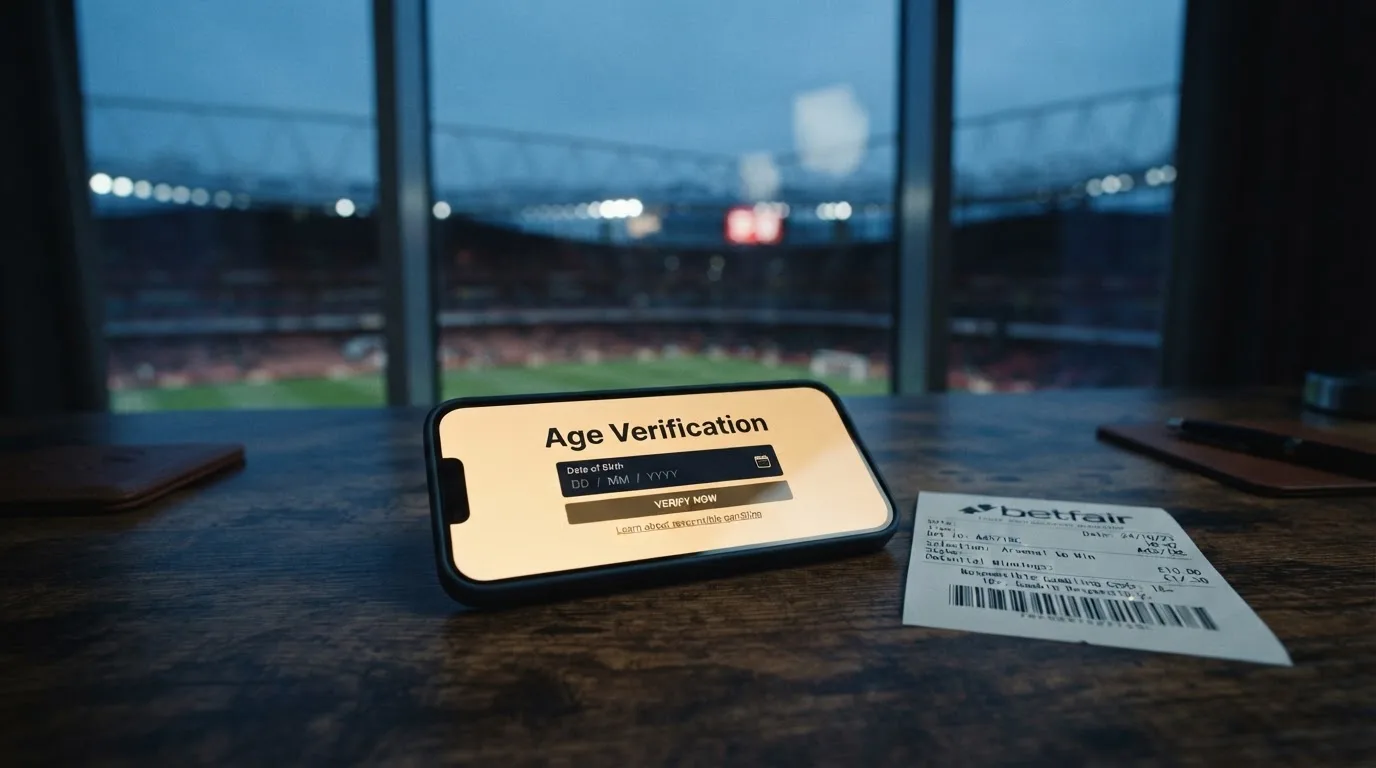
Three names a punter in Great Britain should know. GamCare runs the National Gambling Helpline. GambleAware funds treatment and education. The NHS runs gambling clinics in several cities. Self-exclusion through GAMSTOP, GAMSTOP itself, and the support services are free, confidential, and exist whether or not the punter is currently betting. A punter who notices the betting starting to crowd out something else — sleep, work, the rest of the week — has not yet done anything that cannot be undone. The later the call, the harder the call. That said, the bookmaker is the source of the controls on the betting account itself; the support services are the next step if the controls are not enough.
A final point the rest of this page keeps in mind: safer gambling is not a moral position this article takes. It is a structural feature of every GB-licensed product described below. A bookmaker that holds a remote general betting licence cannot legally ignore a customer showing signs of harm, and the conditions of that licence are the same for every brand on the list. The control is the licence’s, not the page’s.
Betting without identity checks — what crypto and anonymity actually look like in the UK market
“Boxing betting with bitcoin” and “crypto boxing betting sites” are search terms that already exist in this market. They refer to two quite different things, and the difference is the licence. A GB-licensed bookmaker verifies name, address and date of birth before the first deposit or first bet, including a free bet, and the rule has been in force since 7 May 2019. The bookmaker can still accept payment in any method its banking rails support, but the account behind the payment is named, and the bookmaker may ask where the money came from at higher spend. There is no anonymous play at a licensed site, and the Commission’s position on cryptocurrency is not a blanket ban but a recognition that the operator’s source-of-funds duty still applies: crypto funds pass through the same checks as any other deposit. A punter who wants to deposit in bitcoin has to pass identity checks, the same as a punter who pays by debit card.

The “crypto boxing betting sites” half of the search is the other thing. Brands that accept crypto and market themselves as anonymous usually sit outside the GB framework, hold a Curaçao or Anjouan licence, and accept customers in Great Britain without applying for a Commission licence. The page does not list those brands — they are not on the Commission’s public register against a remote general betting standard licence — and the reason is not moral. A bettor who opens an account with one of them loses the protections that come with a GB licence: no GAMSTOP coverage, no Commission complaints route, no approved alternative-dispute-resolution body, no British consumer recourse if funds are withheld, no application of the 10x bonus cap, no application of the £150 vulnerability-check threshold. The bet itself is a private contract with an operator the Commission does not regulate. The legal exposure is the operator’s, not the punter’s — providing gambling facilities in Great Britain without the licence the Gambling Act requires is an offence under section 33 of that Act — but the practical loss of protection is the punter’s, and it sits beside the bet rather than in the bet’s odds.
The honest comparison is between two trade-offs, not two products. A GB-licensed brand accepts crypto deposits where its banking supports them, runs the standard KYC and source-of-funds checks, and pays out under British consumer law. An unlicensed brand accepts crypto with no KYC, no GAMSTOP, and no Commission backstop, and pays out under its own house rules. The price quoted on a bout can be similar between the two; the protection sitting behind the price is not.
A punter who wants bitcoin and a British bookmaker, and a punter who wants anonymity and is willing to leave the British framework, are not on the same page. Each route is real. This page describes the first.
Bonuses and free bets on boxing — what the marketing words hide
The headline on a boxing welcome offer is rarely the cost. A “free £40” headline with a £20 qualifying bet, a “100% bonus” with a 10x turnover cap, a “risk-free first bet” that pays the stake back as a free bet rather than cash — each one is a real offer with a real cost, and the cost is the part the headline does not show. The Commission has spent the last two years tightening what the headline is allowed to look like, and the changes are visible on every promotional banner a GB-licensed bookmaker runs.
The cap that changed the picture came in on 19 January 2026. Wagering requirements on bonuses are now capped at 10x — meaning a £10 bonus with a 5x turnover can never need more than £100 of qualifying bets, and an offer above that line is not lawful. Mixed-product promotions — an offer that requires gambling on two or more product types, such as betting, casino, bingo and lottery, in the one package — are banned. “Bet on boxing to get free spins” is the kind of phrasing that is no longer permitted at a GB-licensed brand. A second, less visible change sits inside welcome offers that gate the bonus on a minimum odds threshold: a qualifying bet at minimum odds of 2.0 (1/1) is now the norm, and the qualifying bet usually has to be on a single selection, not an each-way or a system bet, for the bonus to be earned. None of these changes is a small thing. The 10x cap flattens what was once a free-for-all on the rollover; the mixed-product ban cuts a category of promotion out of the market.
The free-bet side of the same picture is its own trap. A “free £40 in free bets when you bet £20” is the kind of line a GB welcome offer now usually carries, and the £40 pays the punter the winnings only — the £40 stake is not returned with a winning free bet, the way a real £40 cash bet would have been. That is the standard free-bet rule on this market, and it is the rule most punters do not know until they see the settled slip. A second free-bet rule is the expiry: the £40 typically expires seven days from issue, and an unused free bet at the end of the window is forfeit. Boxing cards come on a weekend, and a free bet issued on a Wednesday can expire before the next Saturday’s card.
The bonus the punters see on the boxing pages is often the small print’s own territory. The “boosted odds” on a headline fight are usually capped to a maximum stake — £5 is common — and the boost is paid as winnings, not as a free bet that pays winnings only. The acca-insurance offer is the opposite: it refunds one leg of a losing accumulator as a free bet if one selection lets the punt down, the qualifying acca needs a minimum number of legs and a minimum odds per leg, and the refund sits inside the 7-day expiry rule. The “best odds guaranteed” offer on horse racing does not apply to boxing; it is a racing-only product and any boxing equivalent is a one-off price boost, not a standing rule.
A punter who reads the offer as written gets closer to its real shape. The headline is a number, the conditions are the offer, and the conditions are the part of the offer the punter pays for. The same is true of every other marketing word on the licensed side of the market.
Boxing on a phone — what an app actually adds
A betting app and a mobile browser reach the same bookmaker, but they do not reach it the same way. The app sits on the phone’s home screen, has its own log-in flow, and pushes notifications when a price moves or a fight goes in-play. The browser is a tab the punter opens when the punter chooses to. The functional gap is small for a settled card bet — the price, the stake, the slip, the result, the withdrawal — and the functional gap is large for anything the bookmaker wants the punter to do quickly. Cash-out is the obvious case: an in-play cash-out button on the app is two taps from a push notification, an in-play cash-out on a browser is the punter remembering to reload a tab.
Three features are app-shaped and worth a paragraph each. Live streaming — the ability to watch a fight on the bookmaker’s own player while the in-play market is open — is offered by most of the larger GB-licensed brands on selected events, usually with a funded account or a recent bet as the gate. A punter who bets in-play on the undercard of a card not on British TV gets more from a streaming app than from a browser tab. Bet Builder — combining markets from one event into a single bet — is more useful in boxing than in many sports because the markets are narrow: method of victory, round of stoppage, total rounds, fight to go the distance. A bet-builder that lets a punter combine the method and the round is a different product from a single market, and the price is computed as one accumulator with all the legs multiplied. A punter who does not understand that a 1.60 / 1.80 bet builder is a 2.88 accumulator has not understood what they are being offered.
The third feature is the partial cash-out, where the bookmaker offers a price for closing part of the stake early. The price is the bookmaker’s, and the rule is that the punter sees the same price whether they take the cash-out on the app or in a browser — but on the app, the cash-out arrives in the few seconds after a significant round ends, when prices move sharply. The punter on a browser will not see the move as quickly. None of this changes the price; all of it changes when the punter acts on the price.
The thin edge of the app is biometric login, deposit limits set from the account menu, and the safer-gambling tools that are one tap away at any time. A punter who treats the app as a small portal to the same bookmaker is closer to the truth than a punter who treats the app as a different product entirely. The bookmaker is the same. The reach into it is faster.
Live boxing and cash-out — what a fight is worth mid-round
In-play boxing is the market that opens once the first bell rings and closes when the result is announced. The market depth is a function of the bookmaker’s trading desk and the event’s profile: a pay-per-view heavyweight unification gets a deeper market, with prices updated between rounds, than a four-rounder on an undercard, where the in-play market may not exist at all. Most GB-licensed bookmakers will let the punter back a fighter in-play on a main card; many will not on a sub-main card. A punter expecting a deep in-play book on a four-rounder is reading the wrong sport.
Cash-out is the bookmaker’s offer to settle a bet before the result. The price the bookmaker quotes is its own — it is not derived from the live odds in the way a betting exchange’s price is — and the price moves with the fight. A punter who has backed a fighter at 1.80 and is watching that fighter take every round will see the cash-out price climb round by round, or see the price collapse if the fighter ships a knockdown. The cash-out is the bookmaker’s offer, and the punter’s choice is whether to take it.
Two live-betting mechanics that catch punters out. The first is the suspension of the in-play market between rounds. Most books pause the in-play market during the one-minute rest interval, which is also when most of the meaningful action happens — a corner stoppage, a cut over the eye checked by the doctor, a fighter staying on the stool. The punter who wants to trade the round is the punter who finds the market frozen exactly when the market should be moving. The second is the partial cash-out already described: a bookmaker that offers a partial cash-out offers it on a stake the punter chooses, and the punter’s exposure to the result changes in proportion. A punter who does not see the partial button has not seen the full in-play offering.
The bettor who wants to bet in-play on boxing is choosing between a bookmaker’s in-play book and a betting exchange’s back-and-lay book. The exchange’s depth depends on other customers having the opposite view; the bookmaker’s depth depends on the bookmaker’s own risk team. On a high-profile bout the exchange can have a deeper book at the sharpest prices; on a low-profile bout the bookmaker is often the only in-play market in town. The exchange charges commission on net winnings; the bookmaker embeds its margin in every price. The price and the depth are the comparison; the punter’s own tolerance for counterparty risk is the second-order choice.
Predictions and strategy — what analysis is worth, and what it isn’t
Boxing has more “tips” content than most sports. The reason is structural: a fight has two outcomes (sometimes three with the draw), a small number of relevant variables, and a long lead time for the story to fill. A punter reading a tip list before a card is reading the same shape of content a punter would read before a horse race, and the same warning applies: a tip is somebody’s view, not a fact about the bout. A tipster who went 30 from 40 on a card is somebody who picked 40 fights, picked the favourite in most of them, and got lucky; that is not the same as somebody who went 30 from 40 because their model was right. The way to read a tipster’s record is over a long enough sample, on fights of the same profile, against a published benchmark. The way most tipster records are published is on a small, self-selected sample with no benchmark.
The variables that matter in a boxing model are well known: reach, record, age, recent activity, weight, style. The reach differential — usually a couple of inches, sometimes six — is the single variable most strongly correlated with underdog upsets, and a long, accurate jab is the variable that most often decides close bouts on the cards. The age curve is the second: a boxer past 34 is past the curve, and the curve is sharper for boxers who carry their mileage in the legs. The style match-up is the third: a pressure fighter against a boxer is a different fight from a boxer against a pressure fighter, and a model’s expectation of the first fight is not the same as its expectation of the rematch. None of this is a prediction. It is a vocabulary for reading the tipsters and the odds.
The punter who bets boxing seriously uses one of two strategies. The first is value betting — backing the underdog when the bookmaker’s price is too long, or the favourite when the bookmaker’s price is too short, in a sample large enough for the edge to show through the variance. The second is the acca strategy — combining legs of different fights into one bet, accepting a long price and a long losing run for the chance of a large payout on the rare win. The acca strategy is the one the bookmaker’s welcome offer is designed around, and the punter who chases accas for the welcome bonus is paying the bookmaker’s margin on every leg of every accumulator, with the welcome bonus as the only return on a long enough losing run. The punter who does not understand that is the punter the offer was written for.
The honest summary: a punter who treats boxing tips as one input among several — alongside the odds, the model, the bankroll — is in a different position from a punter who treats tips as the input. The model is not the prediction, the tip is not the prediction, the odds are not the prediction. The bet is a position, sized to the bankroll, and the position is what the punter is taking, not the tip. Anything that promises a “sure” pick on a boxing bout is selling a story, not a position.
Bet types and how the odds are formed on a boxing bout
A boxing bout has a small set of bet types, and most of them are derivatives of one another. The starting point is the match-bet market — the straight bet on fighter A or fighter B to win. Most bookmakers add the draw as a third outcome, in which case the bet is a 1X2 — a punter betting on A, on the draw, or on B. The draw market exists on boxing where it does not exist on most team sports, and a fight that the odds suggest is roughly 50/50 is a fight where the draw is a real outcome and a real part of the price.
The method-of-victory market is the second layer. A punter can bet on fighter A to win by knockout, by technical knockout (referee stoppage, doctor stoppage or corner stoppage), by decision on the judges’ scorecards, or by disqualification. The KO/TKO price is shorter than the decision price, because a knockout is a more concentrated outcome. The round-of-stoppage market is the third layer: a punter bets on the round in which the fight ends, with a price for each round and a price for the decision. A bout priced at 2.20 to end in round 6, 1.80 to end in round 7, and 3.00 to end in round 8 is a market where the bookmaker has built an expectation about the pace of the fight and the durability of each fighter. The “fight to go the distance” market is the binary version — yes or no on the fight reaching the final bell and going to the cards.
The accumulator is the bet the welcome offer is built around. Each leg multiplies into the next, so a four-leg acca of 1.50 / 1.60 / 1.80 / 2.00 is a 8.64 single bet, with the punter’s stake at risk on all four fights. The bookmaker’s margin compounds leg by leg, so the margin on the 8.64 is higher than the margin on any of the four singles — the same price as four singles is not the same as four singles at one bet. A punter who thinks the bookmaker’s margin on a single is 5% and is paying 5% on the acca is paying more than 5%. The bet builder is the same shape with all the legs from one event, and the same compounding applies.
Each-way betting is rarer on boxing than on horse racing but is offered on some bookmakers for selected events. The each-way is two bets of equal stake — one on the win, one on the place — so a £10 each-way is £20 of stake. The place terms are the bookmaker’s, and on boxing a place is usually the win only, so an each-way bet is a single bet at double the stake. The punter who places an each-way on a boxing bout thinking it is a safer bet than the win is paying for a place bet the bookmaker is unlikely to settle. The spread-bet version, offered by the firms regulated by the FCA for spread betting, is a different product again: a punt on the round of stoppage, with losses that can exceed the deposit and a financial-conduct regime rather than a gambling one. That side of the market is its own world.
The deep comparison is between betting on a price and betting on a market. A punter who bets the 1.50 on fighter A is betting that fighter A wins. A punter who bets the 2.20 on fighter A in round 6 is betting that fighter A wins in round 6, which is a narrower bet with a longer price. The bookmaker’s margin on the round market is usually higher than the margin on the match market, because the round market has more outcomes and a wider spread of plausible prices. A punter who shops for value on boxing usually shops on the match market first, then on the round market only when the price on the match market looks correct.
The sport of boxing — what gets bet on, and where it sits in a British bookmaker
Boxing’s professional structure is built around the four sanctioning bodies — the WBA, the WBC, the IBF and the WBO. Each body crowns a world champion in each weight class, sometimes a “super” champion and a “regular” champion at the same time, and a unification bout between the holders of two or more belts is the highest-profile fight in any class. A bout contested for a single belt is still a world title fight; a unification is a rarer event. The belts sit beside the sport’s main product, which is a professional bout of ten or twelve rounds, with four-round fights common for newer fighters and each round lasting three minutes with a one-minute rest between rounds. The amateur and Olympic boxing scene is its own product, contested under different rules, and most GB-licensed bookmakers offer a thinner market on Olympic boxing than on the professional version.
The result of a professional bout is one of four shapes. A knockout ends the fight in the round it happens and the winner is the fighter who lands the blow. A technical knockout is a stoppage by the referee, doctor or corner, and the winner is the fighter whose opponent is stopped. A decision is a verdict on the judges’ scorecards after the scheduled distance, with three judges scoring each round on a ten-point-must system; a split decision is two judges for one fighter, one for the other; a unanimous decision is three judges for the same fighter; a majority decision is two judges for one fighter with the third scoring a draw. A disqualification is the referee removing a fighter for a foul, with the other fighter winning on the cards. A draw is the scorecards reading even across all three judges — a rare outcome in professional boxing and the third price on the 1X2.
The tournaments and events a British punter sees on a bookmaker’s boxing page are the headline bouts, with the undercard at a price that gets smaller the further down the card. A pay-per-view heavyweight unification, a 50/50 light-heavyweight fight, a domestic title fight, an undercard on a small card in a small hall — each is a different shape of market, and the depth of the in-play book is roughly proportional to the size of the event. A British bookmaker will offer deep prices on the first bout of a pay-per-view and shallow prices on a Tuesday-night club show. A punter comparing bookmakers on boxing usually compares them on a specific card rather than on the sport in general.
The gap between the British betting market and the wider boxing calendar is geographic. A world-title fight is contested under one of the four bodies’ rules, with the judges appointed by the body, and the result is recorded on the body’s record. A British bookmaker does not need to be licensed in the country of the fight to take bets on it, but the punter’s bet is settled on the official result. A fight that ends in a no-contest — for a foul in the early rounds, for example — is settled on the bookmaker’s rules, and the rules vary. A punter who wants to know how a no-contest is settled reads the bookmaker’s own settlement rules before the fight. The bookmaker’s rules are the bet’s rules.
Comparing the GB-licensed bookmakers on boxing
The ten operators below each hold a remote general betting standard licence from the Gambling Commission and are the brands the page covers. Several brands run under one licensee — Ladbrokes and Coral are owned by the same parent, Paddy Power and Betfair share a stack — and they are not listed as separate operators here. The list is a comparison, not a ranking. The columns below are the things a punter comparing bookmakers on boxing actually compares: the licence number and the licence holder that sits behind the brand, the bookmaker’s own terms on the sport, and the things the terms do and do not cover.
| Brand | Gambling Commission licence | Licence holder | What the operator’s terms say about boxing |
|---|---|---|---|
| BoyleSports | Remote general betting standard, account 39469 | Boylesports Enterprise | Sports welcome offer: a £10 qualifying bet yields £20 in free bets (GB customers); the offer’s headline is the simple version, the conditions live in the small print. |
| Hollywoodbets | Remote general betting standard, account 53028 | Hollywoodbets International UK Limited | Sports welcome offer: a losing first accumulator of three or more legs at 4/1 or greater returns the stake as a free bet of up to £30, settled within seven days; one free bet per customer. |
| Bet600 | Remote general betting standard, account 44731 | Tyche Tech Limited | Best Odds Guaranteed on horse racing — the SP replaces the early price if the SP is larger; the offer does not extend to boxing. |
| Tote | Remote general betting standard, account 54779 | TDCO Limited | Pool-betting heritage with a sportsbook bolted on; prices on boxing are written by the trading team, and the welcome offer sits on the racing product. |
| Unibet | Remote general betting standard, account 45322 | Platinum Gaming Limited, Gibraltar | Sports welcome offer: a £20 qualifying bet at minimum odds of 2.0 (1/1) returns £40 in free bets within seven days of issue, expiring within seven days of issue; a debit card or instant bank transfer is the qualifying deposit method for new GB customers. |
| Coral | Remote general betting standard (real events) and remote betting intermediary, account 54743 | LC International Limited | Sports welcome offer: a £20 qualifying bet at minimum odds of 2.0 (1/1) returns £40 in free bets within seven days and expiring seven days after issue, for new GB customers who opt in. |
| DragonBet | Remote general betting standard, account 64908 | DragonBet Ltd | Welsh-focused bookmaker with an app published by the licence holder; racing, American football, in-play and bet-builder markets are listed on the app description. |
| DAZN Bet | Remote general betting standard, account 48756 | DZBT Limited | Deposits start at £5 by debit card, Apple Pay, Paysafecard, Trustly or Skrill, and at £20 by PayPal, with no processing fees; the welcome offer sits on the sportsbook. |
| Matchbook | Remote general betting standard (real events) and remote betting intermediary, account 39504 | Triplebet Limited | Betting exchange where customers bet against each other; bet builder, multiples, in-play and live streaming of horse racing and greyhounds are on the offering. |
| Betfred | Remote general betting standard, account 39544 | Petfre (Gibraltar) Limited | Sports, casino and games app from a long-established high-street bookmaker; the sportsbook covers twenty-one sports with a separate casino product. |
The list reads as a comparison of licences rather than a comparison of offers, and the asymmetry is deliberate. A punter who has chosen a brand on the welcome offer has made the offer the comparison; a punter who has chosen a brand on the depth of the in-play book has made the book the comparison. The licence is the same shape on every row. The offer is not.
A small note on the second column. Every licence number above is the number that appears on the Commission’s public register against the named account. A punter who wants to check the licence is on the Commission’s register can search by the licence holder, the trading name or the domain; the search result will show the licence categories, the licence status, and any conditions attached to the licence. The search is the test; the row above is a transcription.
What the odds say when you read them properly
A bookmaker’s price is the bookmaker’s view, but it is not a clean view. Every price carries a margin — the slice of every pound staked that the bookmaker keeps on average, no matter which outcome the punter backs. The arithmetic that surfaces the margin is simple, and the page earns the rest of the comparison by showing the calculation rather than naming the result. The worked example below is illustrative and not a price quoted on a real fight.
Take a two-way market at decimal odds of 1.90 on each side — the kind of book you would see on a fight the bookmaker prices as 50/50, with no draw. The implied probabilities, taken at face value, are 1 ÷ 1.90 and 1 ÷ 1.90, which is roughly 52.6% each — adding to an overround of 105.3% rather than 100%. The excess of 5.3% over 100% is the overround, and the bookmaker’s payout share (Quotenschlüssel) is approximately 94.7%. A two-way market at 1.85 / 1.85 carries a higher overround of roughly 8.1%, and a market at 1.95 / 1.95 carries a lower overround of roughly 2.6%. The tighter the bookmaker’s prices around the true 50/50, the lower the overround and the fairer the market to the punter.
The margin is a property of one market on one event at one moment — not a property of the bookmaker across the whole site. A bookmaker that runs a 3% margin on a Manchester derby 1X2 can run a 9% margin on a four-rounder in a small hall. The margin compounds when the punter takes an accumulator: each leg carries its own margin, and the legs multiply into one price with a higher total margin than any one leg. The bet builder carries the same compounding, with all the legs from one event. The punter comparing bookmakers on boxing is comparing margins on the fights they actually bet, not on the headline fights the bookmaker prices tightest.
The result of the calculation is a band, not a single number, and the band sits inside the rest of the page’s comparison. A punter who prices a market at 1.85 / 1.85 is paying an 8% margin on that fight; a punter who prices a market at 1.95 / 1.95 is paying a 2.6% margin. The same fight, the same bookmaker, two different reads on the price. The reading is the punter’s, and the margin is the cost.
How boxing betting is regulated in Great Britain
The Gambling Commission is the regulator, and the framework is the Gambling Act 2005, which covers Great Britain — England, Scotland and Wales. Northern Ireland is outside the Act and runs under older legislation, so the rules described here apply to a GB-licensed bookmaker serving customers in Great Britain, not to a Northern Irish bookmaker serving customers in Northern Ireland. The Commission is a non-departmental public body sponsored by the Department for Culture, Media and Sport, and its public register is the test of whether a brand holds a licence. The register is searchable by business name, trading name, domain or account number, and the search result carries the licence categories, the status and any attached conditions. A punter who wants to check a licence runs the search; a punter who does not check the licence is trusting the bookmaker’s own claim.
The framework is a licence-by-category system. The relevant categories for a boxing bet are remote general betting standard (real events) — the standard remote sports-betting licence — and remote betting intermediary, the licence that covers betting exchanges. A bookmaker can hold one or both. A bookmaker that holds neither cannot legally take a remote bet from a customer in Great Britain. The 2014 amendment to the Act brought remote operators into the Commission’s reach: from that point an operator whose remote facilities are used in Great Britain needs a Commission licence wherever it is based. A Curaçao, Maltese or Gibraltar licence is not a substitute; the relevant question is whether the operator also holds a Commission licence, and the register is the place to check.
The licence categories do not list the sports or markets the operator may offer. The list of permitted bets is not a statutory list — there is no rule that says which sports a Commission licensee may or may not take bets on. Boxing sits inside a real-events category and the markets a bookmaker offers are the bookmaker’s, governed by the Licence Conditions and Codes of Practice (LCCP) and the operator’s own house rules. The Commission has not published a list of permitted markets; it has published a list of licence categories, and the categories the bookmaker holds are the categories the bookmaker operates in. In-play betting, acca insurance, bet builder, cash-out — each is offered under the bookmaker’s licence and the bookmaker’s own controls. The Commission’s intervention is the licence condition; the operator’s intervention is the trading rule.
A separate regime covers financial spread betting, which is regulated by the Financial Conduct Authority rather than the Commission. Spreadex, for example, is regulated by the FCA for spread betting and by the Commission for fixed-odds betting, and the spread side of the book is a different product with different rules. The losses on a spread bet can exceed the deposit; the losses on a fixed-odds bet cannot. The punter who treats the two as the same product has misread the licence.
The player-protection side of the framework is the part most punters feel. GAMSTOP is mandatory for online operators since 31 March 2020, and the periods run from six months up to five years, with the option of a five-year auto-renewal and a seven-year tail. A punter who self-excludes through GAMSTOP is excluded from every participating operator; the exclusion is the punter’s, not the operator’s. The financial vulnerability check is the second layer: a public-record check that applies once a customer’s deposits minus withdrawals exceed £150 in a rolling 30 days. The check has been in force since 30 August 2024, with the £150 threshold coming into force on 28 February 2025. A third layer — the financial risk assessments the press has called affordability checks — has been announced in a staged plan, with no start date. The terms “vulnerability check” and “risk assessment” are different; the first is in force, the second is announced.
The bonus side of the framework has tightened in 2026. From 19 January 2026 the wagering requirement on a bonus is capped at 10x and mixed-product promotions are banned. The cap flattens what was once a free-for-all on rollovers. The ban cuts a category of promotion — “bet on boxing to get free spins” — out of the market. A free bet with no wagering condition is a separate question and it is not clear whether the cap applies to that case. The Commission’s deposit-limit rules (RTS 12) have applied in part since 31 October 2025, with a second phase postponed to 30 September 2026, and whether the second phase is live is not established. The limits that are in force are the customer’s to set; the limits that are coming are the bookmaker’s to offer.
The advertising rules run on a parallel track. The CAP Code (non-broadcast) and BCAP Code (broadcast) are enforced by the Advertising Standards Authority, and the LCCP marketing conditions add a gambling-specific layer on top. Section 16 of the CAP Code is the most visible part: marketing must be socially responsible, must not be of strong appeal to under-18s, and no one who is or seems to be under 25 may be featured gambling or play a significant role. The “whistle-to-whistle” rule — no betting advertisements on TV from five minutes before to five minutes after a live sporting event before the 9pm watershed — is an industry code, not law, and excludes horse and greyhound racing. The Premier League clubs’ withdrawal of gambling sponsorship from the front of matchday shirts from 2026/27 is voluntary, not law. The bookmaker is responsible for the marketing run by its affiliates; the affiliate’s marketing is the bookmaker’s to police.
The tax position is the part that surprises most punters. The player pays no tax on betting winnings in Great Britain. The operator pays General Betting Duty on its gross profits at 15%, with a new remote rate of 25% from 1 April 2027 within the same duty, and remote bets on UK horse racing, self-service betting terminals, pool betting and in-person betting staying at 15% under the policy paper of 26 November 2025. Spread betting has its own rates — 3% financial, 10% other. Whether the operator passes the duty on through the odds is not established. The Commission’s statutory levy is a separate charge, not a tax, and the punter does not see it. The punter’s only tax position is that there is no tax position on a winning bet.
The unlicensed side of the market is the part the page describes without recommending. A bookmaker that takes a remote bet from a customer in Great Britain without a Commission licence is committing an offence under section 33 of the Gambling Act 2005; the offence is the operator’s, not the punter’s. The punter who uses an unlicensed site loses the protections the licence carries: no GAMSTOP, no Commission complaints route, no approved alternative-dispute-resolution body, no British consumer recourse if funds are withheld, no application of the 10x bonus cap, no application of the £150 vulnerability-check threshold. The bet itself is a private contract with an operator the Commission does not regulate. The Commission’s enforcement powers are disruption, not blocking: cease-and-desist notices, search-engine referrals, work with registrars, hosts and payment providers. Court-order DNS blocking powers are about to be granted or have been granted; ISP blocking is not in operation.
The honest summary is that the licensed side and the unlicensed side are not “safe” and “unsafe” by default. The licensed side is verification, limits, GAMSTOP and the bonus cap; the unlicensed side is none of those. The bet is the same on both sides, and the protection is the difference.
BoyleSports — for the punter who reads the small print
BoyleSports is an Irish-legacy bookmaker with a long UK presence, and the GB welcome offer is straightforward: a £10 qualifying bet yields £20 in free bets. It holds remote general betting standard licence 039469-R-319383-025 (account 39469), with Boylesports Enterprise as the holder. The offer’s structure is the standard shape on this market: a deposit, a qualifying bet at minimum odds, and a free-bet return on the same terms. A punter who reads the small print on the free-bet expiry — seven days is the standard window — gets the offer as it is written; a punter who does not, finds the free bet forfeit at the end of the window. The trading side of the brand is competitive on boxing without being the deepest in the list, and the in-play book on a main card sits in the middle of the field. A punter who wants a familiar welcome offer on a Commission-licensed site and is happy with the standard expiry will find what they came for; a punter looking for a deep in-play book on a four-rounder is not the target.
Hollywoodbets — for the acca chaser who reads the conditions
Hollywoodbets’ GB sports welcome offer is built around the accumulator: a first losing acca of three or more legs at cumulative odds of 4/1 or greater returns the stake as a free bet of up to £30, settled within seven days, with one free bet per customer. Licence 053028-R-330019-013 (account 53028) is held by Hollywoodbets International UK Limited. The offer is an acca-insurance product in welcome form, and a punter who places a small first acca as a matter of routine gets the free bet back if the acca loses. A punter who places the first acca to qualify and then forgets to use the free bet inside seven days loses the value. The free bet is paid back as a free bet rather than cash, so the stake is not returned with a winning free bet — a punter who has not seen the rule before will see it on the first settled slip. The brand’s site is built for the GB and South African markets side by side, and the boxing offer sits on the GB side.
Bet600 — for the racing-led punter who wants a Commission licence
Bet600’s headline product is Best Odds Guaranteed on horse racing — the SP replaces the early price if the SP is larger, on singles and multiples. It operates under remote general betting standard licence 044731-R-323941-016 (account 44731), held by Tyche Tech Limited. The BOG offer does not extend to boxing; a punter who reads the BOG banner and assumes it covers the Saturday night card is misreading the small print. The boxing side of the book is a smaller operation, and the prices sit inside the standard remote bookmaker range. A punter who wants BOG on the racing and a Commission-licensed site for an occasional boxing bet will find a suitable platform; a punter looking for the deepest boxing book on the market is not the target.
Tote — for the punter who wants a pool-betting heritage
Tote is the legacy pool-betting brand, with a sportsbook bolted on. It holds remote general betting standard licence 054779-R-331321-008 (account 54779), with TDCO Limited as the holder. The pool side of the product is the Tote’s own — a punter bets into a pool on selected events, with dividends declared on the result — and the sportsbook side is a separate fixed-odds book. The boxing offer is on the sportsbook rather than the pool, and the welcome offer sits on the racing product. A punter who is drawn to the brand by the pool heritage and wants an additional sportsbook under the same licence will get exactly that; a punter who wants the deepest fixed-odds book on boxing is not the target.
Unibet — for the punter who wants a long-established name on the GB side
Unibet has operated since 1999, and the UK site is run by Platinum Gaming Limited, Gibraltar, under Gambling Commission account 45322. The sports welcome offer is “Get £40 in Free Bets when you bet £20”: a deposit and a sports bet of £20 or more at minimum odds of 2.0 (1/1) returns £40 in free bets within seven days of issue, expiring within seven days, for new GB customers using a debit card or instant bank transfer. The offer is the standard shape — qualifying bet at minimum odds, free-bet return with seven-day expiry — and a debit card or instant bank transfer is the qualifying deposit method, with other methods excluded from the welcome offer. The in-play book on boxing is broad on the main cards and thinner on the undercard, in line with the wider market. A punter who wants a long-established Commission-licensed brand with a familiar welcome offer and is happy with the deposit-method restriction will find what they came for; a punter who wants to deposit by Skrill and still claim the welcome is not the target.
Coral — for the punter who wants a big-brand welcome with a betting-exchange option
Coral is one of the long-established British high-street names, and the GB sports welcome offer is “Get £40 in Free Bets when you bet £20”: a £20 qualifying bet at minimum odds of 2.0 (1/1) returns £40 in free bets within seven days and expiring seven days after issue, for new GB customers who opt in. The licence is remote general betting standard (real events) and remote betting intermediary, with the betting-intermediary category marking Coral’s exchange-style product. The account number is 54743, with LC International Limited as the holder — the same parent that holds the Ladbrokes licence, which is why the two brands are not on this list as separate operators. The in-play book on boxing sits in the middle of the field, and the welcome offer is competitive. A punter who wants a long-established GB brand with a familiar welcome offer and the option of an exchange-style product on the same licence will find what they came for.
DragonBet — for the punter who wants a Welsh-focused book
DragonBet is a Welsh-focused bookmaker, with the app published by DragonBet Ltd and remote general betting standard licence 064908-R-339041-003 (account 64908). The brand’s distinctive offering is Welsh football and rugby, with racing, American football, in-play and bet-builder markets on the app. The boxing side of the book is smaller than the major brands, and the in-play book on a Saturday-night card is narrower. A punter who wants a Welsh-focused Commission-licensed brand with a bet-builder on the app and is happy with a smaller boxing book will be well served; a punter looking for the deepest in-play book on a heavyweight unification is not the target.
DAZN Bet — for the punter who wants low deposit minimums
DAZN Bet’s deposit minimums are unusually low: £5 by debit card, Apple Pay, Paysafecard, Trustly or Skrill, and £20 by PayPal, with no processing fees. It holds remote general betting standard licence 048756-R-327274-019 (account 48756), held by DZBT Limited. The low minimums are the brand’s distinctive offering; a punter who wants to bet small — a fiver on a Saturday-night undercard, for example — gets to do so without a £10 floor. The welcome offer sits on the sportsbook. A punter who wants a Commission-licensed brand with low deposit minimums and is happy with the standard sportsbook offer will be well served; a punter looking for the highest welcome offer on the market is not the target.
Matchbook — for the punter who wants a betting exchange
Matchbook is a betting exchange, with customers betting against each other rather than against the bookmaker. The licence is remote general betting standard (real events) and remote betting intermediary, under account 39504, with Triplebet Limited as the holder. The product is different from a fixed-odds book: the price is the market’s, the depth depends on the other side of the book, and the exchange charges commission on net winnings. The offering includes bet builder, multiples, in-play and live streaming of horse racing and greyhounds. A punter who wants a Commission-licensed betting exchange for boxing and is comfortable with commission and exchange mechanics will find what they came for; a punter who wants a fixed-odds bookmaker is on the wrong product entirely.
Betfred — for the punter who wants a sports-and-casino combination
Betfred is a long-established British high-street bookmaker, with the app published by Done Brothers (Cash Betting) Ltd and the licence remote general betting standard under account 39544, with Petfre (Gibraltar) Limited as the holder. The sportsbook covers twenty-one sports, and the casino side of the product carries more than two thousand games. The welcome offer sits on the sportsbook. A punter who wants a Commission-licensed brand with a combined sports and casino offering under one licence will find what they came for; a punter who wants a sportsbook-only product is not the target.
Frequently asked questions
How do I bet on boxing?
Open an account with a GB-licensed bookmaker, pass the standard identity check (name, address, date of birth), deposit by a permitted method, and place a bet on the bout. The minimum age is 18. The main markets are the match bet, the method of victory, the round of stoppage, and the fight to go the distance, plus accumulators across multiple bouts. The price on each market carries the bookmaker’s margin, which is the slice of every pound staked the book keeps on average.
How does boxing betting work in the UK?
Boxing betting in the UK is regulated by the Gambling Commission under the Gambling Act 2005. Every bookmaker that takes a remote bet from a customer in Great Britain must hold a Commission licence, and the Commission’s public register is the test of who holds one. Punters can self-exclude through GAMSTOP, the multi-operator scheme that every licensed online bookmaker takes part in. The player pays no tax on betting winnings in Great Britain; the operator pays General Betting Duty on its gross profits.
How do I bet on boxing online?
Pick a GB-licensed bookmaker, register an account, verify your identity, deposit by debit card, instant bank transfer or another permitted method (credit cards are banned for gambling in Great Britain), and place a bet on a bout. The welcome offer, if you take one, is usually gated on a minimum deposit and a qualifying bet at minimum odds, with a free-bet return carrying a seven-day expiry. Read the small print on the free-bet stake: it is usually not paid back with a winning free bet.
How can I check that a bookmaker holds a Gambling Commission licence?
Search the Commission’s public register by business name, trading name, domain or account number. The search result shows the licence categories, the licence status and any conditions attached. The Commission’s register is the test; a bookmaker’s own claim that it is licensed is not. The search is free and takes a few seconds.
How is the return on a bet worked out from the stake and the odds?
For a single bet at decimal odds, the return is the stake multiplied by the odds, and the profit is the stake multiplied by the odds minus one. A £10 bet at 2.50 returns £25 (£10 × 2.50), with a profit of £15. For a combination bet, the odds of the legs multiply into one price, so a four-leg acca of 1.50, 1.60, 1.80 and 2.00 is a single bet at 8.64, and the stake is multiplied by that figure. The bookmaker’s margin is built into each leg.
What is the bookmaker’s margin and how can it be seen in the odds?
The margin is the slice of every pound staked the bookmaker keeps on average, and it shows up in the odds as the gap between the implied probabilities of the outcomes and 100%. A two-way market at 1.90 / 1.90 implies roughly 52.6% on each side, adding to 105.3%; the excess of 5.3% is the margin. Tighter prices mean a smaller margin, and a punter comparing bookmakers is comparing the margin each bookmaker takes on the fights they actually bet.
Combat & motorsport – UK betting
Content created by the «UK betting» team
