
Online cycling betting in 2026 — what the price actually buys
 Available in US
Cycling has a shape no other betting sport can copy. A Grand Tour runs three weeks across one country; the favourite may be priced at 3/1 after winning two stages, and a domestique can be 500/1 the day a domestique wins a time trial. Markets exist for stage winners, GC standings, head-to-head matchups, jersey classifications and King of the Mountains — and the odds on each of those markets carry their own margin, which is the slice of every pound staked that the bookmaker keeps whatever the outcome. Knowing how the price is built matters more on cycling than on most sports, because a single 21-stage race can swallow a betting bank if a punter backs the wrong type of market at the wrong moment. This page covers the sport, the markets, the licensed UK bookmakers that price them, and the arithmetic underneath the odds. Current as of 27 October 2026; licensing details checked against the Gambling Commission’s public register.

Cycling as a betting sport
The Union Cycliste Internationale (UCI), based in Switzerland, has governed road cycling since 1900 and runs the men’s and women’s road world championships every year. The UCI WorldTour — created in 2005 as the ProTour, renamed the WorldTour in 2011 — sits at the top of the professional calendar and pulls in the Grand Tours plus the major one-week stage races. The sport is built around races that last days rather than hours, and that changes what a betting market is.
The Grand Tours
Three races count as the Grand Tours: the Giro d’Italia (first held 1909), the Tour de France (1903) and the Vuelta a España (1935). UCI rules cap a Grand Tour at 15 to 23 days, and the three together cover most of the European summer. Each race has its own leader’s jersey — pink at the Giro, yellow at the Tour, red at the Vuelta — and a Grand Tour usually includes two rest days, the only days on which a stage does not run. The shape is three weeks of stages, with the GC (general classification) decided on cumulative time and points, mountains and sprints settled in parallel competitions.

For a bettor the consequence is straightforward. A pre-race outright on the Tour winner is one bet over three weeks. A stage winner market is 21 separate bets in three weeks, each tied to a specific day and a specific course. An each-way wager splits into two bets of equal stake. The volume of bets a cycling calendar produces is far higher than the calendar’s race count suggests, and the markets multiply accordingly.
The 2026 calendar
The 2026 Tour de France ran from 4 to 26 July, starting in Barcelona with a team time trial and finishing on the Champs-Élysées in Paris — 21 stages over 3,245 km with 23 teams. Tadej Pogačar (UAE Team Emirates, Slovenia) won his fifth Tour. The Giro and Vuelta round out the rest of the summer; the Classics (Milan–San Remo, the Tour of Flanders, Liège–Bastogne–Liège and so on) sit in spring, and the World Championships close the road season in autumn.
Other cycling markets a UK bettor will meet
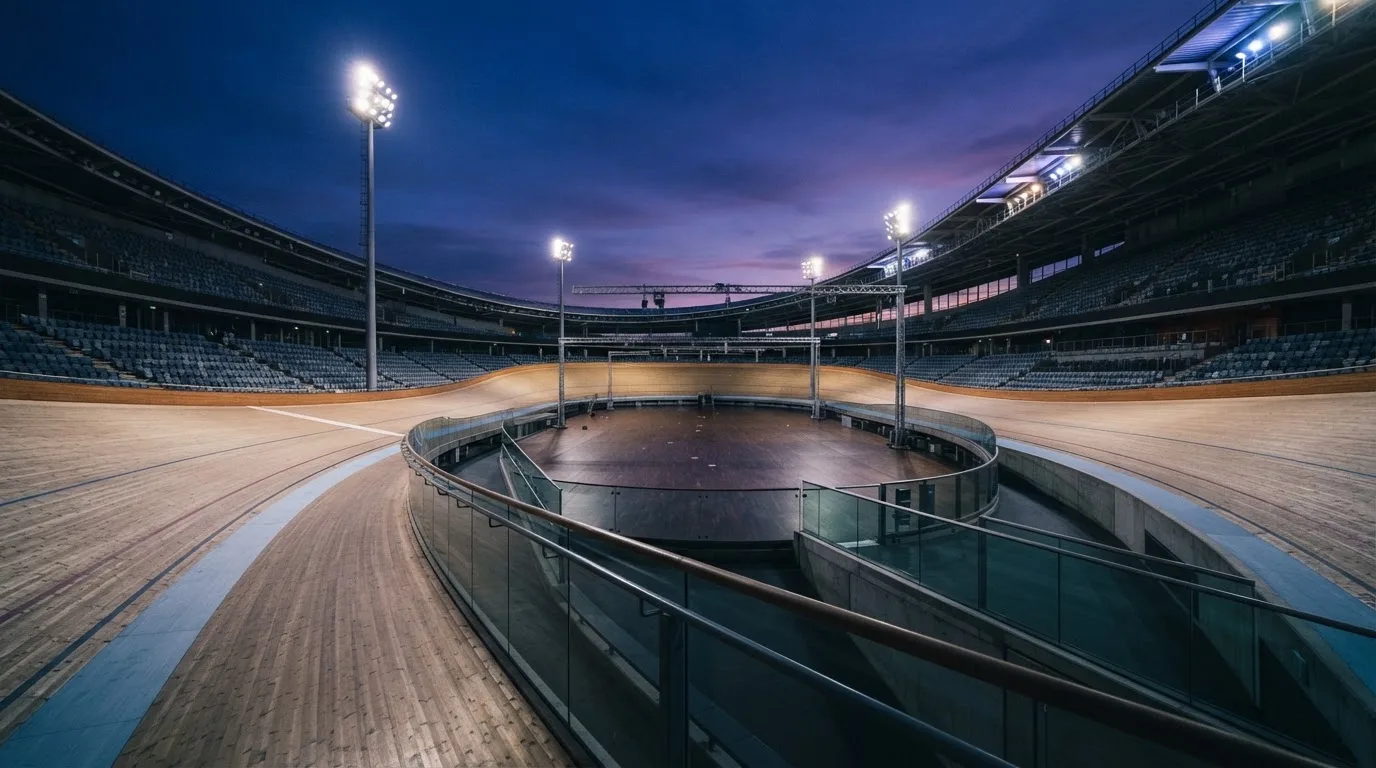
Road cycling is the dominant betting market, but a licensed bookmaker’s cycling menu usually covers track cycling, cyclocross, BMX and the Olympic cycling programme as well. The volume of events is thin outside the road season, and in-play markets on a single track race can be sparse. A bettor looking at cycling more than on the Grand Tours is checking a single bookmaker’s Wettprogramm — the German word for the betting programme that the trade uses to mean “the full list of markets and prices an operator carries” — for the calendar it actually prices, because two GB-licensed operators can carry very different race lists.
What kinds of cycling bets are priced
The markets divide into a few families, and each family carries its own margin and its own way of moving.
Outright (race winner). One bet, one outcome: who wins the Tour, the Giro, the Vuelta, Paris–Nice or any one-day Classic. The market opens weeks or months ahead and contracts sharply once the race starts. Outrights are typically the largest-priced market in cycling because the field is large and the favourite’s price drifts upward as the race begins.
Stage winner and stage-specific markets. Each stage is its own event. A stage winner market settles one day; an in-play market settles one sprint or one climb. The favourites are priced tighter than the outright because the field narrows to a handful of riders who can win a specific stage on a specific course.
General classification (GC). Bets on the rider who finishes lowest on cumulative time across the whole race. The market overlaps heavily with the outright — in most Grand Tours the GC winner is the race winner — but a bookmaker will offer a separate GC market with a slightly different margin.
Points and mountains classifications. The green jersey at the Tour and the maglia ciclamino at the Giro go to the rider with the most sprint points; the polka-dot jersey at the Tour and the maglia azzurra at the Giro go to the King of the Mountains. These are classification markets, settled over three weeks, and they reward consistency over a single peak effort.
Head-to-head. Two named riders; the bet settles on who finishes ahead in the GC, on a stage, or on points. The market is binary and the margin is the thinnest on the cycling board because there are only two outcomes to price.
Matchups (which legs do these matchups draw from? — the legs are the named riders). Same idea as head-to-head but with three or four riders grouped together, settled on the same conditions. Useful when a punter has a view on a small group rather than a binary.
Team classification and team winner. Settled on cumulative team time (Tour, Giro, Vuelta all run a team classification) or on which squad wins a stage. Less liquid than the GC market; margins are wider.
How the price moves
Cycling odds move with news the way any market does — a crash, a withdrawal, a route change — but the move is faster than in team sports because the field is small and a single injury can shorten the favourite’s price from 4/1 to 9/2 in an hour. A punter watching the outright should expect the price to shorten into the race and to widen on bad news. The same dynamic does not hold on stage markets, where the favourite’s price often drifts into the day as the peloton’s tactics firm up.
Cash-out and in-play on cycling
Most major UK bookmakers offer cash-out (settling a bet before the race settles it) on outright and stage markets when the race is live. Cash-out is a tool of last resort rather than a feature, because the price the bookmaker offers to close the bet is built with its own margin — closing early usually returns less than the fair value of the position. In-play markets on a flat stage settle fast; in-play markets on a mountain stage can stay live for two hours and move a great deal, which is where a bettor who has watched the breakaway form finds the market worth a closer look.
Combination bets (accas)
A combination bet multiplies the prices of several selections into one. The more legs, the longer the combined price and the larger the margin built into the combined price — because each leg carries its own margin and the margins multiply. A four-fold across four stage winners on the same Tour is a long-priced bet for a reason: the margin of the combined price is the margin of the four underlying prices compounded, and the bookmaker keeps a larger slice than the headline odds suggest. Cycling accas should be small and should name stage winners on different days — adding legs to the same day’s race multiplies the outcome’s variance more than it multiplies the price.
How the bookmaker’s margin sits inside the price
A bookmaker’s margin is the slice of every pound staked that the operator keeps regardless of the outcome. It is built into the odds — every market on a UK bookmaker’s site has one — and it is the reason a “fair” price on a two-way market never reaches evens.
Take an illustrative two-way match at decimal odds 1.90 / 1.90. The payout share of that market is the harmonic mean of the implied probabilities:
1 / (1/1.90 + 1/1.90) = 1 / (0.5263 + 0.5263) = 1 / 1.0526 = 0.9500
So 95% of stakes would be returned in winnings at true probabilities, and the margin — what the bookmaker keeps — is 1 − 0.9500 = 0.0500, or 5%. The decimal odds 1.90 / 1.90 (9/10 in fractional form, the British bookmaker’s odds-on) build in a 5% margin; the same two-way outcome priced at 1.85 / 1.85 would build in roughly 7.6%. A market at 2.00 / 2.00 would be margin-free — and that price is rarely seen, because no operator leaves a market free of charge.
The calculation is a statistical estimate, not a guaranteed return, and the 5% is the average over many bets at that price. A single bet at 1.90 / 1.90 pays back £1.90 per £1 staked if it wins, minus the stake to give £0.90 net profit, and the margin is what the bookmaker keeps of every unit bet on the market over the long run. Margins move by market: an outright on a 150-rider Tour carries a margin well into the double digits because the field is large and the bookmaker has to balance hundreds of prices, while a head-to-head market on two riders sits closer to 3% because the binary outcome is cheap to price.
What the margin looks like to a punter
The margin is what makes the difference between a price that looks generous and a price that is. A punt on the outright at 50/1 looks like a long-priced flutter; a punt on a four-fold acca at 200/1 looks longer still but carries a compounded margin that takes a meaningful cut. The larger the field and the more legs in the bet, the wider the margin, and the more the headline price overstates the value of the position.
Fractional to decimal — a quick conversion
UK bookmakers price in fractions; decimal odds are quoted for clarity. The conversion is:
decimal = (a / b) + 1, where a/b is the fractional form
5/1 in fractions = 5 + 1 = 6.00 in decimals. 11/4 = 11 ÷ 4 + 1 = 2.75 + 1 = 3.75. Evens (1/1) = 2.00. A price of 9/10 — odds-on, the favourite — = 0.9 + 1 = 1.90. Decimal odds express the total return per unit stake; fractional odds express the profit per unit stake. A £10 bet at 6.00 returns £60; a £10 bet at 5/1 returns £60 (£10 stake + £50 profit). Same payout, two notations.
The UK licence frame for online cycling betting
There is no statutory list of permitted sports or markets in Great Britain. A bookmaker serving customers in Great Britain needs a Gambling Commission (UKGC) licence wherever it is based; the Commission’s public register is the whole test of who holds one, and every operator detail comes from its own terms.
What a Gambling Commission licence covers
Since the Gambling (Licensing and Advertising) Act 2014, an operator whose remote facilities are used in Great Britain needs a Commission licence wherever it is incorporated. A Curaçao, Maltese or Gibraltar licence does not substitute. The licence categories a cycling bookmaker holds are remote general betting standard (real events), with the licence holder named on the register. A betting exchange runs under a separate remote betting intermediary licence. Financial spread betting is regulated by the Financial Conduct Authority, not the Commission, and the two regulatory frames do not overlap.
Identity verification before the first deposit
GB-licensed operators verify name, address and date of birth before a customer can deposit or gamble (since 7 May 2019), including with a free bet or bonus. There is no anonymous play at a licensed site, and source-of-funds questions at higher spend are normal under money-laundering rules. For a cycling bettor this means the first deposit triggers a check, and any subsequent large deposit may trigger another. The protection it offers the punter is a real one: a regulated book holds customer funds in segregated accounts and answers to the Commission if a payout is withheld.
In-play on cycling
GB bookmakers offer in-play on cycling outrights and on stage markets where liquidity exists. The controls are the operator’s licence conditions and customer-protection duties; nothing in statute treats in-play on cycling differently from in-play on football. A bettor looking at in-play on a mountain stage should expect the market to stay live for two hours and to move substantially.
Bonuses and wagering
Promotion rules in force since 19 January 2026 cap wagering requirements on bonuses at 10x (a £10 bonus at 50x would need £500 of bets; under the cap no more than £100) and ban mixed-product promotions. Whether the cap applies to free bets with no wagering condition is not established; describe any bonus by its terms. The “free bet” a bookmaker offers is a bet credit — the stake is usually not returned with a win — and its expected value is the free-bet amount × (odds − 1) ÷ odds × payout share of that market, averaged over many bets at the stated price.
What a GB licence does not do
A GB licence does not set a state ceiling on stakes or deposits; the operator sets its own. It does not stop a customer from betting on the outright Tour winner. It does not require a bookmaker to price cycling at all — a GB-licensed operator may carry no cycling markets, and the register’s presence says nothing about the depth of an operator’s cycling book. The licence test is “is this brand permitted to take bets from a customer in Great Britain?”, not “is this brand a good cycling book?”.
Bonuses, free bets and what they cost
A “free bet” is a bet credit, and the stake is usually not returned with a win. A £10 free bet at odds of 4/1 (5.00 decimal) returns £40 if it wins (£50 total return minus the £10 stake that is not given back); the expected value of the free bet, at a market with a 95% payout share, is £10 × (5.00 − 1) / 5.00 × 0.95 = £10 × 0.80 × 0.95 = £7.60, on average over many bets at that price. A “risk-free” bet refunded as a free bet is not a refund in money — the refund is another bet credit, with the same stake-not-returned rule. A “boosted odds” offer prices a specific outcome above the market; the boost is a marketing cost, and the headline price usually carries a tighter wagering requirement or a stake cap. A “100% bonus” matches a deposit in bet credits; a £100 deposit at a 100% match produces £100 in bet credits, and the credits clear under the operator’s wagering terms. Each of these offers is described in the operator’s own terms; a punt should read those terms before claiming, because the headline is rarely the cost.
Payment methods at GB-licensed operators
Credit cards are banned for gambling in Great Britain (since 14 April 2020), including credit-card-funded payments through an e-wallet; debit cards and bank-based payments are not covered by that ban. A British named-account rule, a state list of permitted payment methods and any rule for or against cryptocurrency deposits at licensed operators are not established; describe payments qualitatively and from each operator’s terms. DAZN Bet’s deposit minimums are an example: £5 by debit card, Apple Pay, Paysafecard, Trustly and Skrill; £20 by PayPal, with no processing fees. Other operators set their own minimums.
Tax on winnings
A UK bettor pays no tax on betting winnings in Great Britain. The General Betting Duty is the operator’s tax on gross profits (currently 15%, with a 25% remote rate from 1 April 2027), and it is not charged to the customer. A professional gambler — someone whose betting is a trade — should ask HMRC or an adviser, because the line between punter and professional is one the law draws by facts rather than by self-description.
Offshore and unlicensed sites
A GB licence is compulsory at the point of consumption. Providing gambling facilities in Great Britain without the licence the Act requires is an offence aimed at the operator; a customer who bets on an unlicensed site commits no offence under that section, but loses the protections a licence brings — no GAMSTOP coverage, no Commission complaints route, no approved dispute-resolution body, no British consumer redress if funds are withheld, no bonus cap, no vulnerability check. Honest framing: a GB-licensed site costs the bettor a verified identity and a tighter bonus; an unlicensed site costs the bettor any meaningful recourse if a payout is withheld. Neither is “the safe choice” by default.
Responsible gambling on cycling betting
Cycling is a long-season sport with a long season of betting attached. A bettor following the Tour over three weeks has 21 stages, multiple classifications and an outright running for the duration — the volume of bets the calendar produces is the highest of any betting sport outside football. The protections around that volume matter.
Self-exclusion
GAMSTOP is the national multi-operator online self-exclusion scheme and a mandatory licence condition for online operators since 31 March 2020. A GB-licensed cycling bookmaker participates in GAMSTOP. Self-exclusion periods are six months, one year, five years, or five years with auto-renewal, and after the minimum period the exclusion stays in place for a further seven years unless the customer asks GAMSTOP to remove it. Betting shops use a separate service; GAMSTOP covers online sites and apps.
Vulnerability and financial checks
A financial vulnerability check applies to licensed remote betting when a customer’s deposits minus withdrawals exceed £150 in a rolling 30 days (since 28 February 2025). The check is a public-record check (for example bankruptcy or county court judgments), not an income check and not a credit reference check. A financial risk assessment — what the press calls “affordability checks” — has been announced in a staged plan with no start date; the rule is “announced, staged, no start date”, not “in force”.
Deposit limits
Operators must offer a gross deposit limit on a fixed time frame; the first changes have applied since 31 October 2025, with a second phase postponed to 30 September 2026 and whether it is live not established. There is no state-set deposit or loss ceiling for betting. A bettor who wants a ceiling sets one with the operator or through GAMSTOP.
Where help sits
GamCare runs the National Gambling Helpline. GambleAware publishes information and treatment signposting. The NHS runs specialist gambling clinics. Gamblers Anonymous runs peer-led meetings. A cycling bettor who finds the three-week Tour a particular pressure point — because the volume of markets is high and the gaps between stages invite impulsive bets — should know that the help is at the other end of those numbers.
The top 10 UK-licensed bookmakers for cycling
The ranking below covers ten bookmakers licensed by the Gambling Commission for remote betting in Great Britain. Each holds a remote general betting standard (real events) licence unless stated otherwise, and each takes part in GAMSTOP. Each entry looks at what the bookmaker’s terms actually offer a cycling bettor, and what the offer costs.
| Brand | Licence number and holder | What the operator’s own terms state on cycling |
|---|---|---|
| Kalooki Sportsbook | 57730 — Kalooki Sportsbook Limited | A small GB-licensed sportsbook operated by Kalooki Sports Book Ltd (company number 12938274); cycling is offered under its general sports menu and the licence categories on the register are remote general betting standard (real events). |
| 888sport | 39028 — 888 UK Limited | A full-feature GB-licensed bookmaker offering pre-match and in-play betting, Cash Out, Bet Builder, racing streams, daily boosted odds and a live bet feed; cycling is carried under the standard sports menu. |
| DAZN Bet | 48756 — DZBT Limited | A GB-licensed bookmaker tied to the DAZN sports platform; cycling appears under its sports menu, with deposit minimums from £5 on most methods and £20 by PayPal. |
| Bet Ahoy | 100094 — Bet Ahoy Ltd | A GB-licensed bookmaker; cycling is carried under its sports menu alongside its welcome offer of a £5 sports bet and a £5 acca on a £10 qualifying bet. |
| Matchbook | 39504 — Triplebet Limited | A GB-licensed betting exchange (remote betting intermediary) where customers bet against other users; offers Bet Builder, multiples, in-play betting and live streaming of horse racing and greyhounds, with cycling markets priced against other users rather than against the house. |
| Bar One Racing | 56516 — Bar-One Racing Limited | An Irish independent bookmaker (rebranded from Bar One Racing to BAR 1 Betting) with shops across Ireland and horse racing sponsorships; cycling is offered under its general sports menu and listings report the brand’s GB-licensed status without naming a cycling-specific market list. |
| Sporting Index | 27343 — Sporting Index Limited | A GB-licensed operator that lets customers switch between fixed odds and spread betting, with in-play betting, Bet Builder for football, auto cash-out and Multi-Markets; cycling appears under fixed odds, with spread markets available on selected events. |
| BoyleSports | 39469 — Boylesports Enterprise | A GB-licensed bookmaker offering £20 in free bets for UK players on a £10 qualifying bet, alongside its full sports menu; cycling is priced under the standard menu with the bonus applying to the broader sportsbook. |
| Midnite | 101839 — Midnite Limited | A GB-licensed bookmaker showing in-play events, an acca builder, popular accas and price boosts with maximum-stake limits; the welcome offer is £25 in free bets and 50 free spins on a £5+ pre-match qualifying bet at EVS (2.0) or greater within 14 days, valid 7 days. |
| Swifty Sports | 58957 — Swifty Global (UK) Ltd | A GB-licensed bookmaker offering Best Odds Guaranteed, Cash Out, daily price boosts, live streaming and in-play betting; Bet Builder is listed as coming soon, and cycling is carried under the standard sports menu. |
Kalooki Sportsbook
Kalooki Sportsbook is a small GB-licensed bookmaker operated by Kalooki Sports Book Ltd, with the company number 12938274 carried on the Commission register. The licence categories are remote general betting standard (real events), and the operator is a GAMSTOP member. A cycling bettor comparing the brand will not find a marketing-led cycling product — the menu runs under the standard sports list — but will find a Commission-licensed book with the consumer protections that licence brings. For a bettor who values the licence frame more than the depth of the cycling menu, the brand sits inside the licensed set without competing on volume of markets.
888sport
888sport is a long-established GB-licensed bookmaker with a feature set built around football and horse racing, and that feature set — Cash Out, Bet Builder, racing streams, daily boosted odds, live bet feed — applies to cycling as it applies to every other sport on the menu. The cycling menu carries the standard outright and stage markets without a cycling-specific product layer. The bettor comparing 888sport against a smaller book is comparing depth of features rather than depth of cycling, because the cycling menu is the standard one. The features a horse-racing or football bettor expects — Cash Out, Bet Builder, boosted odds — are present and apply.
DAZN Bet
DAZN Bet is the betting arm of the DAZN sports platform, and the GB licence is held by DZBT Limited. The deposit minimums are an unusual point of detail: £5 by debit card, Apple Pay, Paysafecard, Trustly and Skrill; £20 by PayPal, with no processing fees. The cycling menu sits inside the standard sportsbook. A bettor who watches DAZN’s cycling coverage and wants a book that pairs with the platform will find one here; a bettor who is choosing on cycling menu depth will find the standard offering rather than a cycling-led product.
Bet Ahoy
Bet Ahoy is a GB-licensed bookmaker whose welcome offer is “Bet £10 & Get £10 in Free Bets”, made up of a £5 sports bet and a £5 acca. The offer is deposit-gated in the sense that it requires a £10 qualifying bet; the £10 free bet is split across a sports single and an accumulator, which is a structure worth noting because it forces the bettor to use one leg as an acca. The cycling menu sits inside the standard sportsbook. The brand sits in the licensed set without competing on cycling depth, and the welcome offer is the cycling bettor’s main reason to look at it.
Matchbook
Matchbook is the outlier of the set — a betting exchange rather than a traditional bookmaker, running under a remote betting intermediary licence held by Triplebet Limited. Customers bet against other users, and the operator runs Bet Builder, multiples, in-play betting and live streaming of horse racing and greyhounds. A cycling bettor comparing an exchange against a traditional book is looking at a market where the price is set by other users rather than by the operator, and where the back offer is built from the lay side of the book. The cycling market on an exchange is typically thinner than on a major traditional book, and the bettor who wants the exchange’s standard tools — backing and laying, in-play on a selected race — finds them; the bettor who wants a deep outright market at competitive margins finds a thinner field of price-makers and a wider spread.
Bar One Racing
Bar One Racing — rebranded as BAR 1 Betting — is an Irish independent bookmaker with shops across Ireland and horse racing sponsorships at Dundalk, Fairyhouse, Navan, The Curragh, Curraheen Park and Cork. The GB licence is held by Bar-One Racing Limited. The cycling offering is reported in listings only, and the brand’s GB presence is built around its retail racing business more than its online sportsbook. A cycling bettor looking at Bar One is looking at a licensed book with an Irish racing identity, not a cycling-led product.
Sporting Index
Sporting Index is a GB-licensed operator that lets customers switch between fixed odds and spread betting, with in-play betting, Bet Builder for football, auto cash-out and Multi-Markets. The dual-mode offering is the brand’s distinguishing feature — fixed odds and spread on the same event — and a cycling bettor can choose the format. Spread betting on cycling is a small market and the bettor should expect a thinner selection of events under the spread book than under the fixed-odds book. The auto cash-out and Bet Builder apply to the fixed-odds side; spread positions settle on the operator’s spread at the race’s end.
BoyleSports
BoyleSports is a GB-licensed bookmaker offering £20 in free bets for UK players on a £10 qualifying bet (€30 in free bets for a €10 qualifying bet for Irish players). The cycling menu sits inside the standard sportsbook. A bettor comparing BoyleSports against a smaller licensed brand is comparing a longer-established sportsbook with a more aggressive welcome offer; the offer’s wagering terms are the standard 10x cap set by the Commission’s promotion rules, and the free bet is the usual bet-credit form. The cycling bettor’s reason to look at BoyleSports is the welcome offer, not the depth of the cycling menu.
Midnite
Midnite is a GB-licensed bookmaker whose site shows in-play events, an acca builder, popular accas and price boosts with maximum-stake limits. The welcome offer is £25 in free bets and 50 free spins on a £5+ pre-match qualifying bet at EVS (2.0) or greater within 14 days of sign-up, with the free bets valid for 7 days. A cycling bettor looking at Midnite is looking at a bookmaker whose product is built around the in-play experience and the price-boost mechanic; the acca builder applies to cycling combinations, and the price boosts apply to selected outrights and stage markets. The brand’s GB licence is held by Midnite Limited.
Swifty Sports
Swifty Sports is a GB-licensed bookmaker offering Best Odds Guaranteed, Cash Out, daily price boosts, live streaming and in-play betting; Bet Builder is listed as coming soon. The BOG (best odds guaranteed) is a horse-racing-led feature, and its application to cycling outrights depends on the operator’s specific terms — typically BOG applies to horse and greyhound racing in the UK and Ireland, not to cycling outrights. The cycling menu sits inside the standard sportsbook. A bettor comparing Swifty against a smaller licensed brand is comparing a sportsbook with the standard feature set (Cash Out, boosts, in-play, streams) and a Bet Builder product in development.
How the top 10 compares on what matters
The top 10 divides into three rough groups by what they offer a cycling bettor:
Traditional full-feature books — 888sport, BoyleSports, Midnite, Swifty Sports — carry the standard feature set (Cash Out, in-play, price boosts, Bet Builder or a variant) and price the standard cycling menu. The cycling bettor’s choice between them is on the welcome offer and the depth of the in-play book, not on a cycling-specific product.
A small licensed book — Kalooki Sportsbook — carries the standard menu and the GB-licensed frame without competing on features.
A platform-tied book — DAZN Bet — pairs with the DAZN sports platform and carries the standard menu. The bettor who watches DAZN’s cycling coverage finds the pairing useful; the bettor choosing on menu depth does not.
An Irish independent book — Bar One Racing — carries the GB licence and the Irish racing identity. The cycling offering sits inside a racing-led sportsbook.
A spread and fixed-odds book — Sporting Index — offers the dual-mode product and a cycling bettor can choose fixed or spread.
An exchange — Matchbook — runs under a betting intermediary licence, and the cycling market is priced against other users rather than against the house.
A cycling bettor comparing these ten is comparing ten licensed books with similar cycling menus, and the differentiator is the operator’s feature set, welcome offer and product identity rather than the cycling menu itself. None of the ten competes on the depth of its cycling book in the way that, for example, a football-led book competes on its football book.
The cycling bettor’s checklist
A few practical points a UK-licensed cycling bettor runs through before placing a bet.
Check the licence. The Gambling Commission’s public register is searchable by business name, trading name, domain or account number, and a brand’s presence on the register is the test of whether it holds a licence for Great Britain. The register’s categories — remote general betting standard (real events) for a traditional book, remote betting intermediary for an exchange — tell the bettor what kind of licence the brand holds.
Check the calendar. Two GB-licensed operators carry different cycling calendars. The Giro, Tour and Vuelta are widely priced; the Classics and the World Championships are widely priced; one-week stage races and track cycling are thinly priced. The cycling bettor choosing a brand checks the calendar the brand prices, not the calendar the sport runs.
Check the in-play product. In-play on a flat stage settles fast; in-play on a mountain stage stays live for two hours and moves substantially. A bookmaker with a deep in-play book on cycling is one a bettor watches through the three-week race; a bookmaker with a thin in-play book is one a bettor uses for pre-race outrights and accas only.
Read the bonus terms. A welcome offer is a marketing cost paid by the operator, and the cost is recovered through the bonus’s wagering terms. The promotion rules in force since 19 January 2026 cap wagering at 10x of the bonus base and ban mixed-product promotions; a £10 bonus at the cap needs £100 of qualifying bets to clear. A free bet’s expected value, at a 95% payout share, is the free-bet amount × (odds − 1) ÷ odds × 0.95; a £10 free bet at 5.00 is worth £7.60 on average.
Check the deposit and withdrawal methods. Credit cards are banned for gambling in Great Britain. Debit cards, bank transfers, e-wallets and a range of alternative methods are accepted; the operator sets the minimums. A bettor with a preferred method should check the operator’s payment page before signing up.
Set a deposit limit. There is no state ceiling on deposits at a GB-licensed bookmaker, and the bettor sets the ceiling. GAMSTOP and the operator’s own deposit-limit tools are the two routes to a ceiling.
Watch the margin. A two-way head-to-head market at 1.90 / 1.90 carries a 5% margin; a 150-rider outright market carries a margin well into the double digits. The wider the field and the more legs in an acca, the wider the margin and the more the headline price overstates the position.
Expect identity verification before the first deposit. The Commission requires name, address and date of birth before a customer can deposit or gamble at a GB-licensed bookmaker, and source-of-funds questions at higher spend are normal under money-laundering rules.
Frequently asked questions
How do you bet on cycling?
A bettor at a GB-licensed bookmaker opens an account, completes the identity check before the first deposit, and selects a cycling market — outright (race winner), stage winner, GC, points or mountains classification, head-to-head, team winner — from the operator’s menu. A single bet settles on one outcome; an accumulator combines several outcomes into one bet whose price is the product of the legs. The bet settles when the race settles it, or when the operator offers cash-out.
Can you bet on cycling?
Yes. Cycling is offered at GB-licensed bookmakers under their remote general betting standard (real events) licence, and the markets cover road, track, cyclocross, BMX and the Olympic cycling programme. The volume of events is thin outside the road season, and the depth of the cycling book varies from operator to operator.
How can it be checked that a bookmaker holds a Gambling Commission licence?
The Commission’s public register is searchable by business name, trading name, domain or account number, and the register’s entry lists the licence categories (remote general betting standard (real events), remote betting intermediary, etc.) and the licence holder’s name. A brand’s presence on the register is the test; a brand’s marketing material is not. The register’s access date matters — a licence can change category or be revoked — and a bettor checking a brand should record the date the check was made.
How is the return on a bet worked out from the stake and the odds?
Return = stake × odds. A £10 bet at decimal odds of 4.00 returns £40; a £10 bet at fractional odds of 3/1 returns £40 (£10 stake + £30 profit). Net profit is stake × (odds − 1) — the return minus the stake. For a combination bet, the odds of the legs multiply into one price. The calculation is statistical: the bookmaker’s margin means a winning bet returns less than a “fair” price would over many bets, and the margin is what the operator keeps.
What is the bookmaker’s margin and how can it be seen in the odds?
The margin is the slice of every pound staked that the bookmaker keeps regardless of the outcome. It is built into the odds and is calculated as 1 minus the payout share (the harmonic sum of the implied probabilities of all outcomes of the market). A two-way market priced at 1.90 / 1.90 (9/10 fractional) has a 5% margin; the same market at 1.85 / 1.85 has a margin of roughly 7.6%. Margins are wider on large-field outrights and on accumulators, and narrower on head-to-head matchups.
How do fractional odds such as 5/1 convert to decimal odds such as 6.00?
Decimal odds = (a ÷ b) + 1, where a/b is the fractional form. 5/1 = 5 ÷ 1 + 1 = 6.00; 11/4 = 11 ÷ 4 + 1 = 3.75; evens (1/1) = 2.00; 9/10 (odds-on) = 0.9 + 1 = 1.90. Decimal odds express the total return per unit stake; fractional odds express the profit per unit stake. A £10 bet at 6.00 returns £60; a £10 bet at 5/1 returns £60 (£10 stake + £50 profit). Same payout, two notations.
Combat & motorsport – UK betting
Content created by the «UK betting» team
