
Online futsal betting in Great Britain — markets, odds and what the licence really buys
 Available in US
Snapshot current as of 27 October 2026 · checked against the Gambling Commission’s public register and each operator’s own terms.

Futsal is not a fringe sport for the books anymore. FIFA’s first Women’s Futsal World Cup ran in the Philippines in 2025, the men’s tournament has been running since 1989, and the major UK bookmakers carry match result, totals, handicaps and outrights on the better-followed leagues. The game is short, the goals come quickly and the clock stops at dead-ball situations — three reasons an in-play market is more honest here than in the outdoor game. There are also three reasons it is not always on the slip: the British book runs on demand, futsal fixtures cluster around Spanish, Portuguese and Brazilian competitions, and what gets priced at 8 pm on a Saturday depends on whether your bookmaker bothered to staff the match.
This page is about that practical picture. It walks through how a futsal bet is built (markets, settlement, prices, accumulators), how the bookmaker’s margin sits inside every number you see, which sites among the GB-licensed set actually carry a working futsal product, and what the law, the licence and the bonus rules really mean for a punter in Great Britain. The angle throughout is choice: not which bookmaker to use, but which path through the market suits which reader.
How live futsal betting and cash out actually unfold
Futsal moves faster than football and the in-play product is shaped by that. A live market that updates every ten seconds is closer to the action than the equivalent on an outdoor match, and the bookmaker’s job — keeping prices close to true without bleeding on a single late goal — is correspondingly harder. That is the live trading floor in miniature, and the punter sits on the same side of it as the trader.
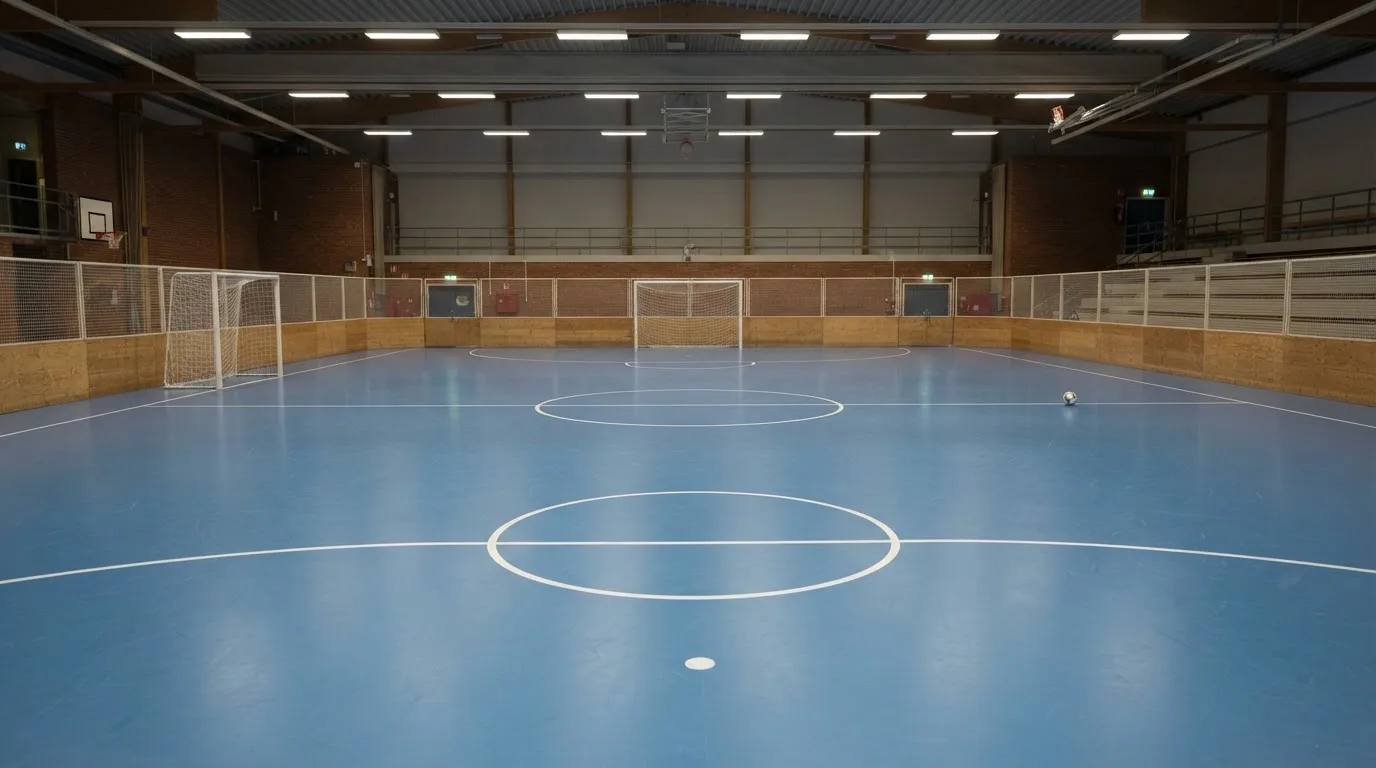
Why the game suits in-play
Two halves of twenty minutes, with the clock stopping at dead-ball situations and one timeout per side per period, make for a sport that compresses momentum into tight bursts. A 3-1 scoreline in football is rarely recoverable; in futsal the clock allows three or four possessions a minute, so a one-goal deficit is recoverable inside a single power play. A bookmaker that prices live futsal well reflects that — the draw drifts as the favourite goes a goal up, but it does not drift as far as it would in the outdoor game. The market reads like a football match’s younger, twitchier cousin.
For the punter this changes the calculus of in-play betting. A £10 stake at 2.10 in-running on a home team to come back from a goal down is not the same bet as in football, because the favourite’s recovery probability is materially higher. The price on offer reflects that — but only at bookmakers that have priced the recovery probability correctly. A thin in-play line where the trader has not bothered to model futsal-specific patterns will give the punter either too little or too much, depending on direction.

What cash out does on a fast game
Cash out on a futsl bet is essentially the same product as cash out on a football bet — the bookmaker offers to settle the bet early at a price that reflects the current in-running probability. But because the clock stops and starts, and because a futsal goal can come in clusters, the cash-out price can move further between updates than it does in football. A punter using it needs to read the offer as a snapshot, not as a price that will be honoured for any meaningful length of time: by the time the cash-out button has been pressed, two attacks may have passed.
The honest read is that cash out on futsal is most useful as a hedge when something has gone wrong early — a red card, a goalkeeper injury — and least useful as a “lock in profit” tool in a tight match. The bookmaker’s spread on the cash-out price is wider than the spread on the equivalent football market, because the underlying market is thinner, and a wider spread means the punter is selling at a lower price than they think.
Reading live markets without overpaying
The temptation in live futsal betting is to back every goal as it goes in. Resist it. A bookmaker’s margin on a live two-way market typically runs higher than its pre-match equivalent, because the trading desk has less time to rebalance the book as the game moves. A punter who shops the live price across two books — say Betway and Betfred — and backs only when the spread is tight is paying closer to the true probability than one who takes the first live price that appears.
Three habits keep a live futsal betting bank disciplined. First, decide the maximum stake per match before the whistle, and write it down. Second, log every bet with the price at the time, not the price you remember. Third, treat cash out as a tool for emergencies, not as a default exit. The bookmaker does not need a punter who fires on every price tick; the bookmaker needs a punter who overpays, and overpaying is what live markets invite.
Predictions, strategy and the limits of a tip
Futsal betting tips sell well because the game is opaque to most British punters. The books on Spanish, Portuguese and Brazilian leagues are thinner than their football equivalents, the stats databases are shallower, and the surface area for a confidently-stated “lock” looks larger than it is. None of that makes the tips wrong, but it makes the tipster’s job easier, and that is the wrong way round for a punter paying for the service.
What a tip actually buys
A futsal tip is one of three things, and a serious punter can tell which. It is either a value call — a price that is higher than the tipster’s model says it should be, in which case the tipster is publishing their model’s output and the punter can check the reasoning — or it is a play call — a name on a side, with no price attached, in which case the punter is buying opinion rather than analysis. The third thing is the worst: a “guaranteed” pick that pretends to be the first and is actually the second.
The honest framing is that there is no model that beats the closing line on futsal consistently. There is also no model that cannot be beaten by a careful reader of a price. Between those two sits the actual work of a futsal punter: learning the leagues well enough to spot a price the book has mispriced, and never paying for a tip that does not show its working.
Stats software and where it helps
Futsal stats software is a thinner category than its football equivalent. A handful of outfits publish per-fixture expected goals, per-fixture shot zones and per-fixture foul data for the Spanish and Portuguese top flights; below that level the data gets unreliable. A punter using a stats package should know what its inputs are, how often the model is retrained, and how it handles promotion and relegation — three places where a small dataset can quietly age out.
The bigger payoff for a stats-led punter is in the markets the bookmakers price less carefully. Handicap lines and totals on lower-tier Spanish futsal are priced from models that are not sports-specific, and a punter who knows the league’s per-fixture goal average can find prices that drift ten or fifteen per cent from the model’s expectation. That is the work. It is also slow, unglamorous work that does not fit a tipsheet.
Bankroll as the strategy that actually matters
The bankroll rules that apply to any betting — set a unit size, never risk more than two per cent of the bank on a single play, log every bet — apply harder to futsal than to football, because the variance is higher. A small-league Spanish fixture can produce a five-goal first half out of nowhere, and a staking plan that looks reasonable in a thirty-bet sample will look stupid in a single bad week. Treat the bank as if a bad week is coming, because one is.
For most British punters the bankroll answer is to play less rather than more. A punter who bets one per cent of bank on a curated set of well-priced futsal fixtures will outlast, and usually outearn, a punter who bets five per cent on every televised match. The bookmaker’s edge is in volume; the punter’s edge is in selectivity.
Bet types and the way futsal odds are built
Futsal betting odds look like football odds at first glance, and the construction is the same — three outcomes on a 1X2 match result (home, draw, away), totals over and under a goal line, handicaps to balance the teams, outrights on tournament winners. The difference is in the margin, and the margin is where the punter either pays for the market or beats it.
The shape of the odds on a typical match
The “best futsal betting odds” are the prices on the match result market that sit closest to the true probability across all three outcomes. Because there are three possible results and the prices must reflect probabilities that add up to more than one, the bookmaker’s margin is the excess over one. A market priced at 1.90 / 1.90 — fractional 9/10 — is the kind of example used later on this page to show the maths; it gives a payout share of 1 ÷ (1/1.90 + 1/1.90) = 0.95, or 95%, with the bookmaker keeping 5% of every unit staked across the two outcomes. That 5% is the cost of betting on this market, before the punter has made any other choice.
The same margin principle applies to the other markets. A totals market priced at 1.91 / 1.91 has the same 5% margin; a handicap market priced tighter (1.95 / 1.95) has a 2.5% margin and a more punter-friendly book. Knowing which market the bookmaker has priced loosely is half the work of finding value.
Single, double, treble and accumulator
A single is one selection. A double is two selections, both of which must win, at combined odds that multiply. A treble is three; an accumulator — the British “acca” — is four or more. The price of an accumulator is the product of the legs’ odds, and the bookmaker’s margin compounds with it. A four-fold acca whose each-way legs all sit at 1.91 carries an effective margin of roughly twenty per cent, against the five per cent of any single leg. That is the cost of the bigger ticket, and a punter chasing a longshot should know it before placing the bet.
Bet builders — same-game multiples on one fixture — apply the same compounding margin. LiveScore Bet’s Bet Builder takes up to ten selections from one match, and the price shown is the product of the legs adjusted for correlation. A “both teams to score, over 3.5 goals, red card in the match” builder at 12/1 is a real price, but it is a price that includes the bookmaker’s margin on each leg and an additional correlation adjustment. It is fun; it is also expensive.
Each-way on outrights
Each-way betting — two equal-stake bets, one on the win and one on the place — applies most often in horse racing, but it has a futsal equivalent on outright tournament markets. A £10 each-way bet on a national team at 33/1 is in practice a £10 win bet at 33/1 plus a £10 place bet at a fraction of those odds (typically a quarter or a fifth). The place terms are set by the bookmaker and vary by tournament; the punter should read them. The cost of an each-way bet is the doubled stake, and the upside is the place payout even if the team finishes third.
For most punters each-way on a futsal outright is the wrong shape: the place market is not deep enough to give the place bet a meaningful edge, and the doubled stake eats the value. Win-only is usually correct, unless the bookmaker is offering enhanced each-way terms for a specific tournament.
Sports and tournaments — what gets priced and where
Futsal as a betting sport sits in tiers. At the top, the Spanish Liga Nacional de Fútbol Sala, the Portuguese Liga Placard and the Brazilian Liga Futsal carry full coverage at the major British books, with match result, totals, both teams to score and outrights. Below that, the UEFA Futsal Champions League and the FIFA Futsal World Cup get outright markets on the men’s and women’s sides. Below that, the second tiers and the smaller national leagues appear intermittently — at some books, on some nights, sometimes not at all.
The men’s professional ladder
The Spanish top flight is the highest-profile futsal league in the world and the one the books price most carefully. The Portuguese top flight sits a step behind in coverage but a step ahead in trading discipline. The Brazilian top flight is where the goals come from in volume — Brazilian futsal averages well above five goals a match — and that volume is part of why totals markets on the league are worth a serious look. Beyond these three, the Russian, Kazakh, Argentine and Iranian leagues carry partial lines; the second tiers of Spain and Portugal carry sparse lines at the bigger books and almost nothing at the smaller ones.
The point for a British punter is to bet where the book has bothered. A Spanish Liga match on Bet365 or Betway at 1.91 / 3.40 / 4.50 is a market that has been worked; the same match at a smaller book at 1.80 / 3.20 / 4.20 is a market that has been copied from a screen. The first is bettable. The second is not, because the price is wider than the wider book and the punter is paying the difference.
The international cycle
The men’s FIFA Futsal World Cup runs every four years; the next edition is in Uzbekistan in 2024 and the one after in 2028. The Women’s Futsal World Cup ran for the first time in the Philippines in 2025 and sits on a four-year cycle from there. The UEFA Futsal Champions League runs annually and gets outright markets from the bigger books throughout its group stage. The continental championships — UEFA Futsal Euro, the South American, the Asian — carry outrights at the major books and very little in-play.
Outrights on these tournaments are usually priced with a wide margin — 25 to 35 per cent is common — because the bookmaker has priced the draw of the group before the squads are confirmed. A punter who waits until the squad lists are announced and the first match is priced can find outrights that have tightened materially from their opening number. Patience is the outright punter’s edge.
The shape of the sport on the betting slip
Futsal’s structure changes what the slip looks like. With five-a-side play, unlimited substitutions, a smaller court and a heavier ball, the goals-per-match average is well above football’s — most top-flight matches sit between 4.5 and 6.5 goals. That affects both totals markets and handicap markets: the favourite’s handicap line is wider than in football, the totals line is higher, and a punter used to football lines should reset their expectations before placing a bet. The bookmaker has priced for this; the punter who has not will misjudge the spread.
The six-foul rule also matters for in-play. From the sixth accumulated foul in a period the opposing team gets a direct free kick from the second penalty mark at ten metres with no wall formed. In a tight match in the second half, that rule changes how the live market should read — a team at four or five fouls is a team one foul away from giving up a high-probability chance, and the live price on the next goal moves accordingly. A punter who knows the rule reads the live market better than one who doesn’t.
Top 10 online futsal betting sites in Great Britain
The bookmakers below all hold a remote general betting standard (real events) licence from the Gambling Commission for Great Britain, and all run a futsal product of some kind. The list is not a ranking — a single number cannot capture a bettor’s preferences, and a brand that is best for one kind of play is rarely best for another. The licence numbers below are the Commission’s account numbers as they appear on its public register; the licence holder is the company named on the licence, which may differ from the trading name customers see.
| Bookmaker | Gambling Commission licence | Licence holder | Futsal position |
|---|---|---|---|
| NetBet | 39170 | Netbet Enterprises Limited | Daily Boosts, Profit Boosts, Bet Builder with dynamic odds, sports stats for major leagues |
| Kwiff | 44448 | Eaton Gate Gaming Limited | GB-licensed sportsbook with surprise-price mechanics on selected markets |
| LiveScore Bet | 56859 | LiveScore Betting and Gaming (Gibraltar) Limited | Bet Builder up to ten selections, match result, BTTS, corners, total goals, player scoring and card markets |
| BetTom | 64959 | Bet Tom Limited | Sports welcome offer framed around free bets and matching slot funds |
| Octobet | 62545 | Octopus Game Limited | Sports welcome offer framed around a free bet and a small casino bonus |
| Betway | 39372 | Betway Limited | Free Bet Club running weekly, broad sportsbook pricing |
| Coral | 54743 | LC International Limited | Sports welcome offer framed around free bets, exchange activity via a related intermediary licence |
| Betfred | 39544 | Petfre (Gibraltar) Limited | Sportsbook, casino and games in a single app, twenty-one sports covered |
| BetUK | 39198 | LeoVegas Gaming PLC | Sports welcome offer framed around four free bets on accumulator and multiple formats |
| DAZN Bet | 48756 | DZBT Limited | Deposits from £5 across multiple methods, sportsbook alongside DAZN’s streaming product |
NetBet
NetBet runs the kind of sportsbook that prices a market and lets the punter get on. The site carries Daily Boosts and Profit Boosts on selected events, a Bet Builder whose price updates as selections are added, and sports statistics for the major leagues. NetBet is run by Netbet Enterprises Limited under Gambling Commission account 39170. The futsal product sits inside the broader sportsbook; on a typical Spanish Liga fixture the match result, totals and outrights are present, and on smaller fixtures the book varies.
A solid all-rounder for the punter who wants a mix of boosted prices and a functional bet builder; more demanding for those seeking niche futsal stats or deep live-trading liquidity.
Kwiff
Kwiff positions itself differently from the conventional sportsbook, with a “surprise price” mechanic on selected markets that can pay out at much higher odds than the displayed price. The brand is operated by Eaton Gate Gaming Limited under Gambling Commission account 44448, and the App Store rating reflects a 17+ classification. Futsal coverage is a function of which markets the surprise-price engine selects on a given day; it is not a deep in-play product on the smaller leagues.
A distinctive choice for the punter who values the chance of a surprise price on their selection; less optimal for those who rely on conventional pre-match pricing for lower-tier fixtures.
LiveScore Bet
LiveScore Bet’s bet builder is the headline. The product takes up to ten selections from one match, across match result, both teams to score, corners, total goals, player scoring and card markets, and the price updates as each leg is added. The brand is run by LiveScore Betting and Gaming (Gibraltar) Limited under Gambling Commission account 56859. The bet builder’s depth — particularly the corners and cards legs — is well-suited to futsal, where fouls run high and card counts run correspondingly.
A strong choice for the bet builder specialist who prioritises depth in stats-heavy markets; it is less efficient for a punter who prefers a clean, straightforward match-result price.
BetTom
BetTom is a smaller GB-licensed sportsbook whose sports welcome offer is structured around a free bet and a matching casino bonus. The brand is operated by Bet Tom Limited under Gambling Commission account 64959. The futsal product runs on the broader sportsbook engine and is sized for the major leagues rather than the second tier.
A straightforward entry point for the punter looking to combine sports betting with a casino bonus; the limited futsal depth may be a hurdle for the serious niche bettor.
Octobet
Octobet’s positioning is similar to BetTom’s: a GB-licensed sportsbook with a welcome package built around a free bet and a small casino bonus. The brand is operated by Octopus Game Limited under Gambling Commission account 62545. The sportsbook pricing is conventional, the in-play coverage is mainstream, and the futsal product mirrors that.
A focused option for the mainstream bettor who values a simple welcome package; price-focused punters will find better value at the larger, margin-competitive books.
Betway
Betway is one of the bigger GB-licensed sportsbooks, with a Free Bet Club that runs weekly after opt-in and a broad sportsbook across twenty-plus sports. The brand is operated by Betway Limited under Gambling Commission account 39372. On futsal, the match result and totals markets on the Spanish and Portuguese top flights are present; on the second tier the coverage is patchy. The Free Bet Club pays up to £10 in free bets each week after the qualifying spend, which makes the book worth a look for a bettor who plays weekly rather than casually.
A reliable pick for the punter who bets on a weekly schedule and wants to leverage a recurring free bet club; it is less suitable for those who demand granular, sports-specific stats.
Coral
Coral is part of the LC International Limited group that also runs the Ladbrokes brand, under Gambling Commission account 54743, and the licence covers both remote general betting and remote betting intermediary activity. The sports welcome offer is structured around a free bet package; the sportsbook pricing is mainstream; and the futsal product sits inside the broader book.
A familiar destination for the punter who already has an account in the group and wants a consistent experience; price-conscious shoppers may prefer the tighter margins of independent specialists.
Betfred
Betfred’s sports, casino and games app is published by Done Brothers (Cash Betting) Ltd, with Petfre (Gibraltar) Limited as the licence holder under Gambling Commission account 39544. The app covers twenty-one sports plus over two thousand casino-style games; the sportsbook pricing is mainstream and the in-play product is broader than at the smaller books.
Worth it for a bettor who wants sports, casino and games in a single app and is happy with mainstream pricing; less compelling for a bettor whose priority is the deepest possible futsal pricing.
BetUK
BetUK’s sports welcome offer is structured around four £10 free bets (two football accumulators of four or more selections, and two multiples of two or more), issued after a qualifying deposit and bet within seven days of registering, with the free bets valid for seven days from issue. The brand is operated by LeoVegas Gaming PLC under Gambling Commission account 39198. The four-free-bet split is suited to a bettor who plays accumulators rather than singles; it is wasted on a bettor who only plays match-result singles.
Worth it for an accumulator player who will use the four free bets in their stated formats; less compelling for a singles-only bettor, who should look at a different welcome shape.
DAZN Bet
DAZN Bet’s deposit policy is the most accommodating at the smaller end: deposits start at £5 by debit card, Apple Pay, Paysafecard, Trustly or Skrill, with a £20 floor for PayPal. The brand is operated by DZBT Limited under Gambling Commission account 48756. The sportsbook sits alongside DAZN’s streaming product, which is the brand’s wider bet. Futsal pricing on the bigger leagues is mainstream.
Worth it for a bettor who likes the DAZN streaming bundle and wants a low-deposit entry; less compelling for a bettor comparing only on sportsbook depth.
Futsal betting — what the market actually is
Futsal as a sport and as a betting market are not the same thing. The sport is played across more than a hundred national federations, with professional leagues in Spain, Portugal and Brazil at the top and amateur structures in many smaller markets. The betting market is what licensed British bookmakers choose to price, and the two overlap only partially. A league that gets a hundred televised matches a year at home may get nothing in the British sportsbook, while a smaller competition that gets streamed online and tracked by a single trading desk may get full match-result, totals and outright markets.
What the British punter sees
Open Bet365 or Betway on a Tuesday night in the Spanish Liga season and the futsal tab shows the day’s fixtures with match result, totals, both teams to score and outrights. Open the same book on a Wednesday in the second-tier Portuguese and the tab may show nothing, or may show a single fixture with a market limited to match result. The variation is not random: it tracks the size of the betting public and the liquidity of the trading model. The bigger books staff a Spanish-Liga trading desk and let the second tier ride; the smaller books copy a screen and let everything ride.
That is the practical landscape. A British punter looking for consistent futsal coverage will end up at one or two of the bigger books, with the smaller books used opportunistically for a price on a specific fixture.
Why the bookmaker’s margin matters
The bookmaker’s margin is the cut they take on every market, and it is the single number that determines whether a price is beatable. A market with a 2.5% margin is much closer to fair than a market with a 7% margin, and the difference compounds across an accumulator’s legs. The punter who knows how to read a margin — by adding the implied probabilities and reading the excess over one — is the punter who knows whether a price is worth taking.
Two examples of the same match, one priced at 1.91 / 3.50 / 4.50 and the other at 1.85 / 3.40 / 4.20, look similar at a glance. The implied probabilities of the first add to 1.06, a 6% margin. The implied probabilities of the second add to 1.075, a 7.5% margin. The difference is one and a half percentage points; over a season of betting on that bookmaker’s prices, it is the difference between a small edge and no edge. The punter who reads the margin pays attention to the second book.
Working out a return
The return on a bet is the stake multiplied by the decimal odds. A £10 stake at 2.50 returns £25, of which £15 is profit (the stake returned plus £15 of winnings). A £10 stake at 1.50 returns £15, of which £5 is profit. A £10 accumulator at combined odds of 25.00 returns £250, all profit if it lands. The math is straightforward; the difficulty is finding prices whose combined probability is higher than the implied probability the bookmaker has built in. That is the work of a futsal punter.
Fractional odds convert to decimal by dividing the numerator by the denominator and adding one. Five-to-one fractional is 5 ÷ 1 + 1 = 6.00 decimal. Eleven-to-four fractional is 11 ÷ 4 + 1 = 3.75 decimal. Evens is 1/1, which is 2.00 decimal. The conversion is mechanical; the comparison between prices is what matters, and that comparison is done in decimal form across all four books.
The arithmetic of a margin, illustrated
Take a simple two-way market at decimal odds of 1.90 against 1.90 — fractional 9/10 on each side, a coin-flip in the bookmaker’s pricing. The implied probability of each side is 1 ÷ 1.90, or roughly 52.6%. The two probabilities add to 105.3%, which is the overround; the bookmaker’s margin is 5.3%, because 105.3% minus 100% is 5.3 percentage points. Put another way, the punter’s payout share on this market is 1 ÷ 1.053, or about 95%, and the bookmaker keeps 5% of every unit staked on the market across both outcomes.
That 5% sits inside every price on the market. It is the cost of placing the bet. A punter betting on this market at these prices will, over many bets, lose 5% of total stakes to the margin before any consideration of whether they picked the right side. The bettor who picks the right side more often than the bookmaker’s model expects can overcome it. The bettor who picks at the book’s implied rate cannot. Knowing this is what separates a price shopper from a name shopper.
The law in Great Britain — what a Gambling Commission licence actually buys
In Great Britain, betting on futsal is regulated by the Gambling Commission under the Gambling Act 2005. The framework is permissive in scope: there is no statutory list of permitted sports or markets, the Commission licenses the operator rather than the activity, and the question of whether a market is offered is a commercial decision by the operator within its licence conditions. The question of whether an operator is licensed to offer it is a regulatory one, and the public register is the only place that question gets answered.
The licence and what it covers
A remote general betting standard (real events) licence is the licence a British punter meets most often. It covers real-world sporting events — football, tennis, horse racing, futsal — offered to customers remote from the operator’s premises, which is to say online or via an app. The licence is held by the operating company named on the Commission’s public register, which may differ from the brand name a customer sees. Bet365 is operated by Hillside (Sports) ENC; Betway is operated by Betway Limited; Coral is operated by LC International Limited, the same group that operates Ladbrokes. The trading brand and the licence holder are not always the same name, and a serious punter checks the licence holder before depositing, not the trading name.
The Commission’s register can be searched by business name, trading name, domain or account number. It is the only authoritative test of whether a brand holds a licence. The punter who does not check the register before depositing is punting blind; the punter who checks it once before the first deposit is punting with the protections the licence brings.
In-play, virtuals, esports and the rest
In-play betting on a real event — including futsal — is offered by every GB-licensed remote bookmaker on this page, under the same remote general betting standard (real events) licence that covers the pre-match product. The trading desk is the operator’s, the controls are the operator’s, and the Commission’s role is to set the licence conditions and codes of practice that bind the operator. There is no statutory cap on stakes in futsal in-play; the operator sets its own maximum stakes and may restrict a customer whose pattern of play falls outside those limits.
Virtual sports — computer-simulated events priced on the same model as real events — are a separate licence category (remote general betting standard (virtual events)) and are not the same product as real-event in-play. Esports are treated like any other event under the real-events licence. Bets on politics, TV shows and novelty markets are offered by GB bookmakers; no statutory prohibition was found.
Spread betting and financial products
Spread betting on sporting indices is a separate product from fixed-odds betting, and it is regulated by the Financial Conduct Authority, not the Gambling Commission. The reason that matters for a futsal punter is that losses on a spread bet can exceed the stake — a feature of the product that does not apply to fixed-odds betting, where the worst case is the loss of the stake. Spreadex, for instance, is regulated by both the FCA for spread betting and the Gambling Commission for fixed-odds betting, and its own homepage states that spread betting losses can exceed the deposit. A punter using Spreadex should know which product they are using.
Northern Ireland
The Gambling Act 2005 covers Great Britain — England, Scotland and Wales. Northern Ireland is governed by separate, older legislation, and a GB-licensed bookmaker may or may not accept customers from Northern Ireland depending on its own commercial position. A punter in Northern Ireland should check the operator’s own terms rather than assuming a GB licence covers them.
Responsible gambling — what the licence obliges the operator to do
A GB-licensed bookmaker is bound by the Licence Conditions and Codes of Practice (LCCP) and by the Commission’s Remote Technical Standards (RTS), and several of those obligations are directly visible to the punter. The framework is not optional, and the punter who knows what to expect is the punter who can hold the operator to it.
Identity verification
Since 7 May 2019 a licensed operator must verify the customer’s name, address and date of birth before the customer can deposit or gamble, including with a free bet or bonus. This is the rule that ends anonymous play at a licensed site. It is also the rule that makes the licensed route slower than the unlicensed route for the punter who wants to bet without sharing documents. The trade-off is real: a licensed book asks for a passport and a utility bill; an unlicensed book does not. The licensed book also has to keep the customer’s funds segregated, offers the GAMSTOP route out, and answers to the Commission if it fails.
GAMSTOP
GAMSTOP is the national multi-operator online self-exclusion scheme and a mandatory licence condition for online operators since 31 March 2020. A punter who registers with GAMSTOP is excluded from every GB-licensed online operator for the chosen period — six months, one year, five years, or five years with auto-renewal — and the exclusion stays in place for a further seven years after the minimum period unless the customer asks GAMSTOP to remove it. GAMSTOP covers online sites and apps; betting shops use a separate service.
For a punter whose gambling has got out of hand, GAMSTOP is the single most effective route, because it covers every licensed book at once. For a punter trying to keep play under control without full self-exclusion, GAMSTOP is heavier than required; deposit limits and timeouts are the lighter tools, and every licensed book offers them.
Vulnerability and financial checks
A financial vulnerability check applies to licensed remote betting when a customer’s deposits minus withdrawals exceed £150 in a rolling 30 days; it is a public-record check (bankruptcy, county court judgments), not an income check and not a credit reference check. Financial risk assessments — heavier affordability checks that look at income and outgoings — have been announced in a staged plan from the Commission, with no start date at the time of writing. A punter who hits the £150 threshold should expect to be asked about their financial position, and the book is bound to make the ask.
Deposit limits are also mandatory: an operator must offer a gross deposit limit on a fixed time frame, with the first phase in force since 31 October 2025 and a second phase postponed to 30 September 2026. There is no state-set ceiling on what a punter may deposit; the limit is the customer’s choice, and a punter who sets one and sticks to it has done more for their own protection than any number of licence conditions can do for them.
Help when the gambling has gone wrong
GamCare runs the National Gambling Helpline; GambleAware publishes advice and directs to treatment; the NHS runs gambling clinics across Great Britain; Gamblers Anonymous runs peer-support meetings. The links are at the bottom of every licensed operator’s safer-gambling page, and a punter who needs them should not be put off by the formality of the page. Help is free, confidential and effective.
Credit cards
Credit cards have been banned for gambling in Great Britain since 14 April 2020, and the ban applies to credit-card-funded payments through an e-wallet as well as to direct credit-card deposits. A punter who tries to deposit with a credit card at a GB-licensed book will be declined; the same punter at an unlicensed book may not be. The ban is a customer protection, not a marketing tool, and the punter who wants to use a credit card for gambling is a punter who wants a product the regulator has decided is too dangerous to offer.
Bonuses, free bets and what an offer really costs
A welcome offer is paid by the bookmaker to attract the punter; a free bet pays the bookmaker a chunk of margin in exchange for the privilege of betting with the operator’s money; and the punter who reads the terms carefully pays less than the punter who reads the headline. The shape is the same across the British market; the size varies.
The shape of a welcome offer
Coral’s sports welcome offer is structured as “get £40 in free bets when you bet £20”: deposit and place a sports bet of £20 or more at minimum odds of 2.0 (1/1), and £40 in free bets is issued within seven days and expires seven days after issue. The shape is “qualifying bet at the customer’s money, rewarded in free bets at the bookmaker’s money.” The cost of the offer to the bookmaker is the free-bet liability; the cost to the punter is the qualifying stake they have to place before the reward arrives.
BetUK’s sports welcome offer follows the same shape, with four £10 free bets (two football accumulators of four or more selections, two multiples of two or more) issued after a qualifying deposit and bet within seven days of registering, with the free bets valid for seven days from issue. BetTom’s sports welcome offer is structured around a free bet and a matching casino bonus; Octobet’s around a free bet and a smaller casino bonus. The variations are in the size, the form and the qualifying conditions.
The free bet’s actual value
A free bet whose stake is not returned with the win is worth less than its face value. The arithmetic: a £10 free bet at decimal odds of 3.00 returns £20 in winnings (the £10 stake is not paid back), which is £20 of value for a £10 ticket. The expected value depends on the market’s payout share — the share of stakes the market returns to winning punters, which is one minus the margin. On a market with a 95% payout share, the £10 free bet is worth £10 × (3.00 − 1) ÷ 3.00 × 0.95, or about £6.33 of expected return. On a market with a 90% payout share, the expected return drops to £6.00.
The point is that a £10 free bet is not a £10 windfall. It is a ticket that pays out at the published odds, with the stake forfeited on a win, and the expected return is determined by the market the punter uses it on. A punter who saves the free bet for a market with a tight margin gets closer to face value than a punter who uses it on the first price they find.
The promotional cap
Since 19 January 2026, wagering requirements on bonuses at GB-licensed operators have been capped at 10x. A £10 bonus at 50x wagering requires £500 of bets to clear; under the cap no more than £100 is required. The cap does not apply to free bets with no wagering condition, and the position on free bets that carry a wagering condition is not established — write it as “the position is not established”, not as “the cap applies to free bets” or “the cap does not apply to free bets”.
Mixed-product promotions — offers that require gambling on two or more product types such as betting, casino, bingo and lottery, for example “bet on football to get free spins” — are banned at GB-licensed operators. A welcome offer that includes both a sportsbook free bet and a casino bonus is still legal; an offer that requires the punter to use the sportsbook free bet to earn the casino bonus is not. The line is in the structure.
What to read in the terms
Four clauses matter. First, the minimum odds on the qualifying bet (Coral sets 2.0 or 1/1; other books set higher). Second, the expiry on the free bet (seven days from issue is common; longer is better). Third, the markets on which the free bet can be used (some books exclude certain sports; some exclude in-play). Fourth, the wagering condition on any bonus funds, where one applies. A punter who reads these four before claiming the offer is a punter who knows what they have agreed to.
Payments, withdrawals and the practical book
The licensed books differ on payment methods, deposit minimums and withdrawal times. The differences are small, but for a punter with a particular banking set-up they matter.
Minimum deposits and methods
DAZN Bet sets the floor at £5 for debit card, Apple Pay, Paysafecard, Trustly and Skrill, and at £20 for PayPal. Most other GB-licensed books sit at £5 or £10 across the common methods, with PayPal sometimes higher. Apple Pay and the bank-based methods (Trustly, Open Banking) clear fastest on deposits; debit card and PayPal clear within seconds; Paysafecard and Skrill are instant. Withdrawals go back to the original method in most cases, with debit card and bank transfer taking one to three working days, PayPal within hours, and Skrill and Neteller within hours.
The British named-account rule — a requirement that withdrawals go back to a payment method in the customer’s name — applies at every licensed book. A punter depositing with a friend’s card will be asked for the friend’s documents as well as their own. The rule is anti-money-laundering, not punitive, but it is the reason a licensed book asks for source-of-funds documents at higher spend.
Cryptocurrency, e-wallets and the licensed picture
Whether GB-licensed bookmakers accept cryptocurrency deposits is unclear; the punter should check the operator’s terms before depositing. E-wallets (Skrill, Neteller, PayPal) are accepted at most GB-licensed books, sometimes with restrictions — bonus eligibility is the common one, with deposits via Skrill and Neteller sometimes excluded from the welcome offer.
What the punter should not do is deposit via a method that complicates the withdrawal. A deposit by debit card or Trustly is the cleanest route in and out; a deposit by Skrill may take a withdrawal back to Skrill within hours, but at a cost of bonus eligibility. The trade-off is the punter’s.
Verification at the cashier
Identity verification happens before the first deposit at a licensed book, not at the first withdrawal. The punter who has uploaded a passport and a recent utility bill at sign-up will not be asked again; the punter who has not will be asked at the first withdrawal, which is when the cash is held until the documents arrive. Upload early. It is the single best way to keep the withdrawal from getting in the way.
Tax, advertising and the wider frame
Three pieces of the wider frame matter for a British punter: the duty on betting, the advertising rules that bound how a book can market to the punter, and the position of an unlicensed book at the edge of the market.
Duty and what the punter pays
The player pays no tax on betting winnings in Great Britain. The General Betting Duty is the operator’s tax on gross profits, currently 15%; from 1 April 2027 a new remote betting rate of 25% applies within it, while remote bets on UK horse racing, bets on self-service betting terminals in licensed premises, pool betting and in-person betting stay at 15%. Until 1 April 2027 the remote rate is 15%, and whether operators pass the duty on through their odds is not established — write it as “not established”, not as “operators absorb the duty” or “operators pass the duty on”. Spread betting carries its own rates (3% financial, 10% other).
A punter who treats the duty as the operator’s problem is right; a punter who treats it as their own is wrong. The duty is reflected in the margin, which the punter pays through the price, not as a separate line item.
Advertising and the CAP Code
Advertising for gambling in Great Britain is not licensed by the Commission; it runs through the CAP Code (non-broadcast) and BCAP Code (broadcast), enforced by the ASA, alongside the Commission’s marketing conditions. Marketing must be socially responsible, must not be of strong appeal to under-18s, and no one who is or seems to be under 25 may be featured gambling or play a significant role, with an exception for marketing placed where a bet can be made directly. “Whistle-to-whistle” is an industry code, not law: since 1 August 2019 betting advertisements are not shown on TV from five minutes before a live sporting event to five minutes after it, before the 9pm watershed. The Premier League clubs’ withdrawal of gambling sponsorship from the front of matchday shirts from the 2026/27 season is voluntary, not law.
For the punter this means the marketing is bound by rules stricter than the marketing in most other consumer categories, and the punter who finds an advertisement pushing harder than the rules allow can complain to the ASA. The ASA route is slower than the Commission’s, but it is real.
Offshore and the unlicensed book
An unlicensed book operating into Great Britain is committing an offence under section 33 of the Gambling Act 2005, which is aimed at the operator, not the customer. The customer’s loss is the loss of the protections a licence brings — no GAMSTOP coverage, no Commission complaints route, no approved dispute-resolution body, no British consumer redress if funds are withheld, no binding by the 10x bonus cap, no binding by the £150 vulnerability check, no binding by the credit-card ban. Honest framing: licensed means checks, limits, GAMSTOP, bonus cap, plus verification before the first bet; unlicensed means none of those, and the loss of funds is on the punter if the operator fails.
A punter tempted by an unlicensed offer should ask one question: if the operator stops paying out, what route back to the money do I have? If the answer is “the operator’s customer service”, the punter is the loser in any dispute.
Reading the licence, reading the offer, reading the price
Three habits make a British futsal punter better than the bookmaker’s marketing intends.
The licence check
Check the Commission’s public register before the first deposit. The register is searchable by business name, trading name, domain or account number. The bookmaker on this page all sit on the register under the account numbers in the table above; the bookmaker a punter meets on a comparison site or a search engine may not. The check takes thirty seconds; the consequences of skipping it are measured in pounds.
The offer check
Read the offer’s four clauses: minimum odds on the qualifying bet, expiry on the free bet, eligible markets, wagering condition on bonus funds. If any of the four is unclear, do not claim. The offer is a marketing tool, and the marketing is built to obscure the cost; the terms are the cost, and the punter who does not read them pays more than the offer’s headline.
The price check
Add the implied probabilities on a market, read the excess over one, and know the margin. Two and a half per cent is a tight book; five per cent is a normal book; seven and a half per cent is a loose book. The punter who bets on the tight book pays half the long-run cost of the punter who bets on the loose book, before any skill at picking sides. The price is the edge.
Frequently asked questions
How does betting on a futsal league actually work?
Pick the league you want to bet on (Spanish Liga, Portuguese Liga Placard, Brazilian Liga Futsal are the deepest at the British books), open the match market at your licensed bookmaker, choose a selection (match result, totals, both teams to score, handicap, outright), enter the stake, and confirm the bet on the betting slip. Settlement follows the result: the book settles once the official result is confirmed by the governing body, and the return (stake plus profit, or stake alone on a loss) goes back to the account balance.
How can it be checked that a bookmaker holds a Gambling Commission licence?
Open the Commission’s public register and search by the bookmaker’s trading name, business name, domain or account number. The register lists every licence the operator holds (remote general betting standard, remote betting intermediary, and so on), the licence holder’s company name, and the registered domain. A punter who cannot find the bookmaker on the register should not deposit. The register is the only authoritative test.
How is the return on a bet worked out from the stake and the odds?
The return is the stake multiplied by the decimal odds. A £10 stake at decimal odds of 2.50 returns £25 in total, of which £15 is profit (the £10 stake is returned plus £15 of winnings). A £10 stake at decimal odds of 1.50 returns £15 in total, of which £5 is profit. A losing bet returns nothing. The profit on a winning bet is the stake multiplied by (odds minus one).
What is the bookmaker’s margin and how can it be seen in the odds?
The margin is the cut the bookmaker takes on every market, expressed as a percentage of total stakes. It is the excess over 100% when the implied probabilities of all outcomes are added together, while the margin itself is the ratio of that excess to the sum of probabilities. A two-way market at 1.90 / 1.90 has implied probabilities of 52.6% on each side, which add to 105.3%; the overround is 5.3%, and the margin is 5.0%. The punter’s payout share is 1 minus the margin, or 95% on this market.
How do fractional odds such as 5/1 convert to decimal odds such as 6.00?
Fractional odds convert to decimal by dividing the numerator by the denominator and adding one. 5/1 fractional becomes 5 ÷ 1 + 1 = 6.00 decimal. 11/4 fractional becomes 11 ÷ 4 + 1 = 3.75 decimal. Evens (1/1) is 2.00 decimal. The conversion is mechanical; the comparison between prices is done in decimal across all books, regardless of how each book displays its odds.
Which tools for controlling play does a licensed bookmaker have to offer?
A GB-licensed bookmaker must offer GAMSTOP self-exclusion (six months, one year, five years, or five years with auto-renewal), deposit limits on a fixed time frame, timeouts, and reality checks. A punter whose deposits minus withdrawals exceed £150 in a rolling 30 days is subject to a financial vulnerability check (a public-record check, not an income check). The punter who wants help beyond what the book offers is directed to GamCare, GambleAware, NHS gambling clinics and Gamblers Anonymous.
Football – UK betting
Content created by the «UK betting» team
