
Online chess betting in Great Britain — the markets, the odds and the choice of bookmaker
 Available in US
Current as of 27 October 2026 and checked against the Gambling Commission’s public register.

Chess is one of the more unusual lines on a British bookmaker’s site. It is played between two named opponents, the result has only three possible outcomes (a White win, a Black win or a draw) and there is no clock counting down the last minute of injury time to spark a market. What it shares with every other sport on the site is a margin sitting inside every price. This page looks at what licensed bookmakers actually offer for chess in Great Britain, how the odds are built, which markets a bettor is most likely to meet, and where each of the ten brands in the comparison below is the better choice.
Live betting and cash out on chess
Chess is a slow game, but the betting screen is not. A long world championship match can run to twenty-one classical games over three weeks; a rapid or blitz online event finishes in minutes. The markets a bookmaker opens, and the way it lets the bettor walk out of a position mid-game, depend on that tempo.
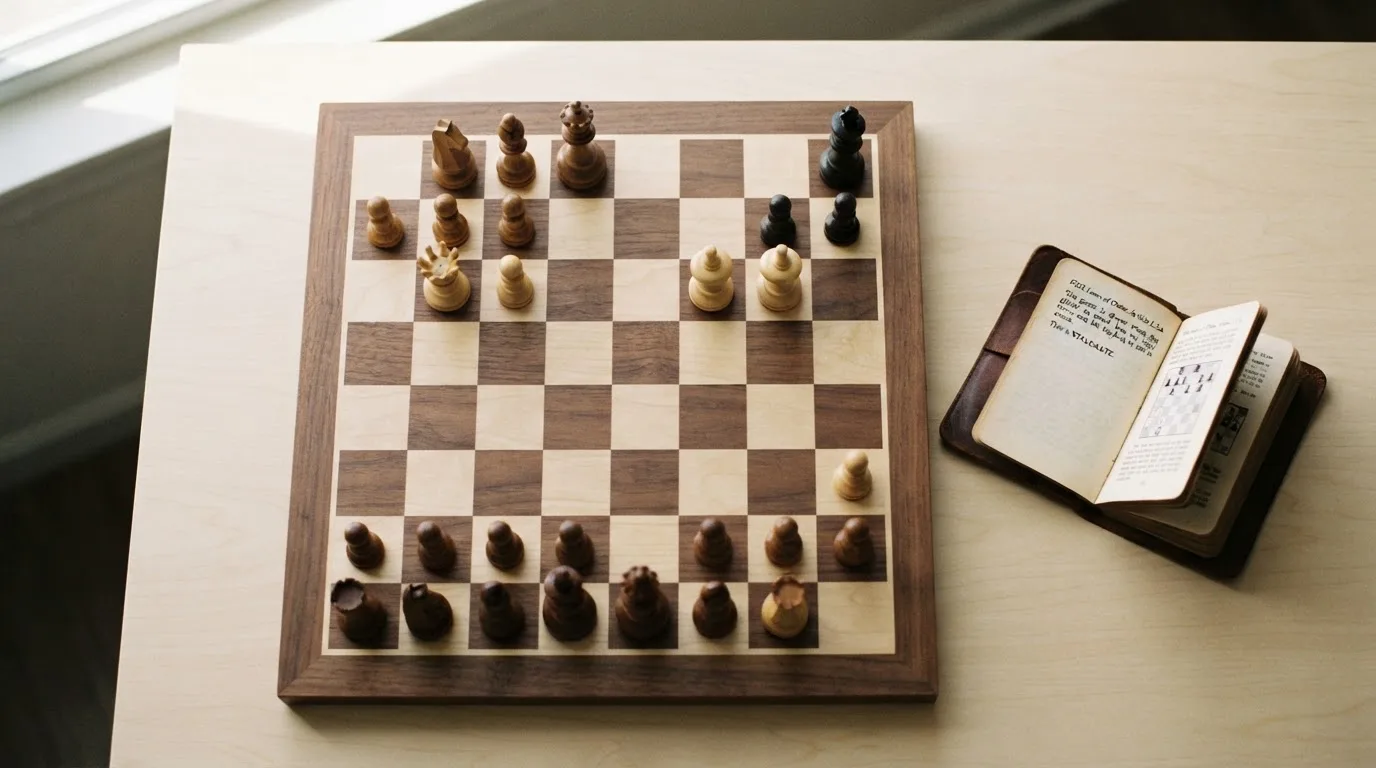
In-play markets on chess are rare. The handful of British bookmakers offering chess at all tend to price it before the game starts — the outright winner of a tournament, the winner of an individual round, the method of victory (1–0, 0–1 or ½–½) when the format allows a draw, and the length of the match in games. In-play pricing during a single classical game is not a settled product at most licensed operators, because the legal moves that decide a game do not have a price ladder the way a football corner count does. A rapid or blitz event with frequent decisive results is closer to what an in-play screen expects, and a few of the larger sportsbooks do carry live markets on those events when they sit in their fixtures list.
Cash out behaves the same way: where it exists, it is on a pre-match outright, not on a live game. The cash-out figure is the bookmaker’s own re-priced offer on the bet, and that re-price carries a wider margin than the price the bettor took originally — which is the whole point of cash out for the bookmaker. On chess, where the board state changes every move, the bookmaker’s re-pricing model is necessarily conservative, and the cash-out offer at most operators sits below the fair value of the position by a margin that varies with the remaining time on the clock and the score of the match.
What this means in practice is that the bettor looking for action during a chess game is more often looking at the next game of the match than at the current position. The screen at most licensed operators gives pre-match outrights by default; an in-play tab, where one exists, runs the rapid and blitz events that finish quickly, and the larger the operator’s chess coverage the more likely it is that something is live.
Predictions and strategy in chess betting
The marketing copy around chess betting loves the word “analysis”. Every bookmaker that covers the Candidates or a World Championship match wants to be photographed next to a grandmaster’s quote. The arithmetic of taking their tips is less flattering.
A chess betting tip is somebody’s prediction of a result with a number attached. The number is the price the bookmaker offers, and that price contains a margin. To beat the bookmaker over a series of bets the bettor’s predictions have to be accurate enough, across enough bets, to overcome the margin baked into every price. The honest framing is that nobody can do this reliably. The honest framing is also that it is occasionally possible for a specialist who follows a small set of players closely enough to know when a price is wrong, and that the margin is the gap the specialist has to clear.
Bankroll management matters more in chess betting than in most markets the comparison covers. The reasons are structural. Chess is a low-scoring game: a single classical match produces a handful of decisive results over weeks, and a tournament produces fewer still. A bettor staking a fixed percentage of a bank on each tip is exposed to long runs of draws, and draw prices in well-matched championship matches are short — the kind of price that looks tempting until the draw comes in and the bank has not moved. The discipline of treating the bet as one of a series rather than a single opportunity is the difference between a bankroll that survives a month of draws and the total that does not.
For the casual bettor, the practical question is what to back. Outright winner markets on a tournament are the easiest entry point, and they are also the worst-priced: the bookmaker’s margin on a tournament outright is wider than on a single-game match, because the bookmaker takes more positions and more uncertainty. Single-game markets, where they exist, are tighter, and the method-of-victory market on a knockout match is the tightest of the three because the outcomes are few and the prices simple to set. A bettor who picks the bet by the tightness of the price rather than by the size of the marketing budget attached to it is doing the only piece of work that an outside tipster cannot do for them.
Chess bet types and how the odds are built
Chess betting odds work the same way every other market works: the bookmaker sets a price on each outcome, the prices imply a payout share, and the gap between the implied payout share and 100 % is the bookmaker’s margin.
The basic price on a single chess game is a three-way price: White to win at one number, Black to win at another, and the draw at a third. Where the format guarantees a result — a knockout match with tie-breaks — the draw is replaced by the tie-break and the market has two outcomes. Where the format allows a draw, the three-way market is the one to look at, and the prices on offer reveal how the bookmaker sees the match. A favourite on around 1.60 with the outsider on 4.50 and the draw on 4.00 says the bookmaker thinks the favourite wins most of the time but not as often as the favourite’s price implies. The draw being shorter than the outsider says the same: the match is expected to be tight enough that a draw is at least as likely as an outsider win.
The decimal price on a bet is the total returned per unit staked. A £10 bet at 3.50 returns £35 if it wins — £25 of profit on top of the £10 stake. A £10 bet at 1.50 returns £15 if it wins — £5 of profit on top of the stake. The arithmetic is the same on every market, on every sport, at every licensed operator in Great Britain; only the price changes, and the price is set by the bookmaker’s view of the probabilities plus the margin the bookmaker wants to keep.
The margin is the second number to look at. A two-way market priced at 1.90 / 1.90 implies a payout share of about 105.3 % when the two prices are turned into probabilities (1 ÷ 1.90 = 0.526, doubled = 1.053), and a margin of about 5.3 % of every unit bet. A three-way market priced at 1.80 / 4.50 / 4.00 implies a payout share of 0.556 + 0.222 + 0.250 = 1.028, an overround of 2.8 %. The narrower the margin the more of every pound bet the bookmaker returns, on average, across a large series of bets at those prices. The page later returns to the margin calculation with a worked example.
Combination bets work as on every other sport. The prices of the legs multiply into one price, the stake is multiplied by that single price, and the return is the result. A £10 double on two chess games at 2.00 and 2.50 returns £10 × 5.00 = £50 if both legs win. The catch is that combination bets multiply the margin in the same way — every leg’s price carries its own margin, and the combined price carries the combined margin.
Each-way betting is offered on outright winner markets the same way it is offered on horse racing, with place terms set by the operator. The each-way stake is two bets at the unit stake: a win bet at the price offered and a place bet at a fraction of that price on the horse — here, the player — finishing in a place. The fraction (one quarter, one fifth, one third) varies by the operator and the field size, and the bettor should treat the each-way terms as part of the price, because the place odds are not the same as the win odds and the place fraction is the operator’s choice.
Chess tournaments and the fixtures a British bookmaker covers
The chess betting calendar at a British licensed bookmaker runs on the tournament schedule set by the governing bodies. FIDE — the International Chess Federation — runs the World Championship cycle and the major team events; the national federations and the professional tours run the rapid and blitz events; the online platforms run a near-continuous schedule of titled-player events. A bookmaker’s coverage depends on which of these it has priced into its feed.
The World Chess Championship sits at the top of the cycle. The 2024 match in Singapore was won by Gukesh Dommaraju, who became champion at 18, the youngest undisputed World Chess Champion in the history of the title. The next match in the cycle is the one to look at for outright betting, and the candidates tournament that decides the challenger runs in the year before it. British licensed operators priced both sides of that 2024 match and price the cycle that follows; the prices shift as the cycle develops.
The Candidates Tournament is the eight-player knockout that decides who plays the champion. Its markets are tighter than the championship match because the field is wider and the format allows draws; the draw is the dominant outcome of any single game, and outright markets on the tournament reflect that with the favourite’s price rarely shorter than 3.00 in a competitive field. British licensed bookmakers priced the 2024 Candidates and price the 2026 edition in the run-up to its start.
Below the World Championship cycle sit the major open tournaments: Tata Steel, Norway Chess, the Sinquefield Cup, the GRAND Style Relay of similar elite round-robins, the Grand Prix series, the speed and blitz championships. These events carry outright markets at the larger British operators, with the method-of-victory market on a knockout format and the outright winner on a round-robin. The smaller tournaments and the rapid and blitz events are covered by a smaller set of operators, and the in-play coverage is concentrated on the events that finish quickly.
What may not be bet on is a question that comes up more often in chess than in other sports because the game has so many formats. No statutory list of permitted bets exists in Great Britain; the operator’s licence covers a category of betting, and the markets it offers sit within that category. A bookmaker running chess events under its remote general betting standard (real events) licence may price those events under its own rules and the LCCP, and the markets on offer reflect the bookmaker’s reading of what its customers will bet on.
The licensed bookmakers in the comparison
The ten operators below all hold a Gambling Commission remote licence for general betting on real events in Great Britain, verified against the Commission’s public register on 27 October 2026. The order is not a ranking of which is best for chess — chess coverage varies, and the more relevant question is what each one offers and at what price.
Midnite
Midnite runs under Commission account 101839, held by Midnite Limited, and its site shows in-play events, an acca builder, popular accas and price boosts with maximum-stake limits. The chess line at Midnite is not the headline feature of the site, and the brand sits more often in the esports and football markets than in classical chess — but it carries chess outrights on the major events it prices into its fixtures.
The verdict is that Midnite suits a bettor who already uses the site for football or esports and who wants a chess bet on the side without switching operators. The acca builder is the piece of kit to look at for a multi-leg chess bet, and the maximum-stake limits on the price-boost markets are worth checking before staking any meaningful amount.
Tote
Tote runs under Commission account 54779, held by TDCO Limited, and is the pool-betting arm of The Tote Group. Tote’s product is pool betting on horse racing as its main line, and its sportsbook sits beside that. Where Tote carries chess, it tends to price it on the events that overlap with the pool-betting calendar.
The verdict is that Tote is a second-line choice for chess — the pool-betting heritage gives it a clear product on racing and an unsettled product on a sport it covers less often. A bettor whose main interest is chess outrights is better served elsewhere, and a bettor who combines racing with chess may find Tote’s pool products a reason to keep an account.
BetGoodwin
BetGoodwin runs under Commission account 2927, held by Goodwin Racing Limited, and is the online brand of the long-running independent bookmaker Goodwin Racing. The sports welcome offer at BetGoodwin is “Bet £10 & Get £15 in Free Bets”, split across a £5 sports bet, a £5 acca and a £5 Sub-Cover bet, with the usual minimum odds and qualifying bet rules that apply at licensed operators.
The verdict is that BetGoodwin sits in the smaller end of the licensed sportsbook market, and its chess line is thinner than the larger brands’. Where it has a price, the price is competitive against the larger operators on the events it covers, and the welcome package is sized for a bettor who wants to try the site on a small initial outlay rather than a large first deposit.
Sky Bet
Sky Bet runs under Commission account 67370, held by SBG Sports Limited, and is the betting arm of Sky plc. Free bets at Sky Bet expire 30 days after they are credited, can be used only on single or each-way markets and not on multiples, are non-withdrawable, and the stake does not come back with winnings. Those are the headline terms the bettor checks first when reading a Sky Bet free-bet offer.
The verdict is that Sky Bet is a high-volume generalist sportsbook with a chess line that runs alongside its football and racing business. The 30-day expiry on free bets is on the longer side of the licensed market, which suits a bettor who takes a chess outright a few weeks before a tournament and forgets about it; the single-and-each-way restriction cuts the bettor who wants to roll a free bet into a chess accumulator.
Unibet
Unibet has been operating since 1999 and runs its UK site under Commission account 45322, held by Platinum Gaming Limited, Gibraltar. The sports welcome offer at Unibet is “Get £40 in Free Bets when you bet £20” — a deposit and a sports bet of £20 or more at minimum odds of 2.00 (1/1), with the free bets expiring within 7 days of issue, for new GB customers funding their account with a debit card or instant bank transfer. The 7-day expiry is shorter than the 30 days at Sky Bet, and the qualifying minimum odds at 2.00 set a floor that excludes some outright chess bets at short prices.
The verdict is that Unibet is a deep generalist sportsbook with a more developed chess line than most of its British competitors, and the welcome package suits a bettor who is happy to settle a qualifying bet at 2.00 within a week. The 7-day expiry cuts against a bettor whose chess outright sits weeks out from a tournament, and the bettor should check the site for a chess-specific promotion before staking the qualifying bet.
bet365
bet365 runs under Commission account 55148, held by Hillside (UK Sports) ENC, and is the official global betting partner of the UEFA Champions League. Its app is the most-downloaded sports betting app in the UK, and the product on offer covers Bet Builder+ (markets from one event into a single bet, pre-match and in-play), Super Boosts, Winnings Boosts on Bet Builders and selected singles, and daily Bet Boosts, plus in-play betting with live streaming and Bet Track, Match Live and a Live Golf Tracker for following bets in play.
The verdict is that bet365 is the deepest product on the British licensed market and the place a chess bettor ends up when the chess line they want is not carried elsewhere. The depth of the football and racing markets is the headline of the site, and the chess line rides on the same in-play infrastructure; a bettor looking for a single-game chess in-play market at a British licensed operator finds more of them at bet365 than anywhere else.
10bet
10bet runs under Commission account 43173, held by Blue Star Planet Limited, and its sportsbook covers football, tennis and horse racing as its main lines, with cash out, a bet builder and live streaming as the in-product features. The chess line at 10bet is lighter than the major generalist sportsbooks, and the brand is better known for football and tennis markets.
The verdict is that 10bet suits a bettor whose main interest is football or tennis and who wants a chess bet on the side. The bet-builder and cash-out features are the headline of the site, and the bettor who wants to combine a chess leg with a football leg in a bet-builder combination should check whether the site allows it before staking.
Betfred
Betfred runs under Commission account 39544, held by Petfre (Gibraltar) Limited, and is one of the longest-established names on the British high street. The Betfred Sports, Casino & Games app covers 21 sports plus over 2,000 casino-style games, and the sportsbook is the larger part of the product. Betfred’s pricing on outright markets in major British sports is competitive, and its football acca insurance is one of the better-known features of the brand.
The verdict is that Betfred is a generalist sportsbook with a chess line that sits within a wider product on football, racing and the rest. The bettor who likes a multi-leg acca on chess outrights finds the bet-builder less developed than at bet365, and the headline feature for the chess bettor is the depth of outright markets on the major events rather than the in-play product.
BetMGM
BetMGM runs under Commission account 39198, held by LeoVegas Gaming PLC, and is the British arm of the MGM Resorts brand. The sports welcome offer for new UK customers who deposit £10 or more and place a sports bet within 7 days is four £10 free bets (two football accumulators of four or more selections and two sports multiples of two or more), valid for 7 days with minimum odds and opt-in required. The structure of the welcome package — football accas and sports multiples rather than singles — cuts against a bettor whose first bet is a single-game chess outright.
The verdict is that BetMGM is a newer entry to the British licensed market and a brand a chess bettor comes to for the welcome package’s headline rather than for the depth of its chess line. The 7-day validity on the free bets and the football-accumulator structure of two of the four free bets mean a chess-only bettor reads the small print before claiming.
NetBet
NetBet runs under Commission account 39170, held by Netbet Enterprises Limited, and its sportsbook offers Daily Boosts, Profit Boosts and free bet offers as its headline promotions, with a bet builder carrying instant dynamic odds and sports stats for the major leagues. The chess line at NetBet is a smaller part of the product than the football line, and the brand’s depth sits on European football.
The verdict is that NetBet suits a bettor who combines chess bets with European football accumulators and who reads the daily-boost and profit-boost pages for value. The bet-builder carries the dynamic-odds feature that lets the bettor see how the price moves as legs are added, and a chess bettor adding a chess leg to a football accumulator watches that leg’s margin stack on top of the football legs’ margin.
The fundamentals of online chess betting
Chess is a contest between two players, played on an 8×8 board of 64 squares with each player controlling 16 pieces at the start. The result of a single game is recorded as 1–0 for a White win, 0–1 for a Black win and ½–½ for a draw, and the three possible outcomes are the basis of every betting market on the sport. Under FIDE rules a game is drawn by stalemate, by agreement, or by claim of threefold repetition or the fifty-move rule; since 2014 fivefold repetition or a 75-move rule end the game automatically.
The piece of information that matters most for the bettor is the result format. A knockout match with tie-breaks is a two-way market — one of the two players wins the match, by classical rules or by tie-break. A round-robin or a single classical game is a three-way market — one player wins, the other wins, or the game is drawn. The draw is the dominant outcome of a single classical game at elite level, and outright markets on a tournament reflect that with draw prices that are not afterthoughts. A knockout tournament with rapid or blitz tie-breaks is closer to a two-way market than a three-way market, and the prices reflect it.
The World Chess Championship has been contested since 1886, when Wilhelm Steinitz claimed the title as the first universally recognised champion. The title has changed hands twenty-two times since, with Gukesh Dommaraju winning the title in 2024 as the youngest undisputed champion in the history of the title at 18. The Candidates Tournament decides the challenger for the next match in the cycle, and the cycle is the structure of the chess betting calendar at the larger bookmakers.
Legality and regulation of online chess betting in Great Britain
Chess betting in Great Britain is regulated the same way every other sport is regulated: by the Gambling Commission under the Gambling Act 2005 and the Gambling (Licensing and Advertising) Act 2014. The 2014 Act made a Commission licence compulsory for any operator whose remote facilities are used in Great Britain, wherever the operator is based. A Curaçao, Maltese or Gibraltar licence is not a substitute, and an operator offering facilities to British customers without a Commission licence is committing an offence under section 33 of the 2005 Act — aimed at the operator, not at the customer.
The Commission’s public register is the whole test of whether a brand holds a licence. It can be searched by business name, trading name, domain or account number, and any of the ten brands in the comparison above can be checked against it. The licence categories on the register include remote general betting standard (real events), under which chess is offered at every brand in the comparison, plus remote general betting standard (virtual events), remote general betting limited, remote pool betting and remote betting intermediary for betting exchanges. The ten brands above all hold the real-events category.
What may be bet on is not set by a statutory list. The operator’s licence covers a category, the markets sit within it, and the operator’s terms and the LCCP govern how those markets are priced. There is no statutory cap on stakes: operators set their own maximum stakes and may restrict individual customers. There is no state-set deposit or loss ceiling for betting; deposit limits are the customer’s choice within the operator’s deposit-limit product. The minimum age is 18, and identity verification — name, address and date of birth — has to be completed before a customer can deposit or gamble, including with a free bet or a bonus, since 7 May 2019. That rule applies to chess betting the same way it applies to any other sport.
Financial spread betting on chess is regulated by the Financial Conduct Authority, not the Commission, and a brand offering spread betting on chess is operating under both an FCA authorisation (for the spread product) and a Commission licence (for the fixed-odds product). The two regimes are different, and the consumer protections are not the same. Spread betting losses can exceed the deposit, and a customer of a spread-betting brand needs to know which product is the FCA’s and which is the Commission’s.
The player pays no tax on betting winnings in Great Britain. General Betting Duty is the operator’s tax on gross profits, currently 15 % under the existing rate, with a new remote betting rate of 25 % applying within it from 1 April 2027 while remote bets on UK horse racing, bets on self-service betting terminals in licensed premises, pool betting and in-person betting stay at 15 %. A bettor asking whether the duty is paid by them can be told it is not, and a professional gambler should ask HMRC or a tax adviser.
The credit-card ban that took effect on 14 April 2020 applies to gambling in Great Britain, including credit-card-funded payments through an e-wallet. Debit cards and bank-based payments are not covered. Crypto deposits at licensed operators are not established by the framework as either permitted or banned, and operators describe them in their own payment terms. The bettor reads the operator’s payment page before depositing.
Responsible gambling, the protection framework and where a bettor gets help
The protection framework that sits on top of chess betting at a British licensed operator is the same framework that sits on top of any other sport, and it is the reason the licence matters.
GAMSTOP is the national multi-operator online self-exclusion scheme and a mandatory licence condition for online operators since 31 March 2020. A customer who signs up to GAMSTOP self-excludes from every GB-licensed online operator for six months, one year, five years, or five years with auto-renewal, and after the minimum period the exclusion stays in place for a further seven years unless the customer asks GAMSTOP to remove it. GAMSTOP covers online sites and apps; betting shops use a separate service. A brand not on GAMSTOP is not a GB-licensed online operator.
The financial vulnerability check applies to licensed remote betting under LCCP condition 3.4.4 when a customer’s deposits minus withdrawals exceed £150 in a rolling 30 days, and has been in force since 28 February 2025. It is a public-record check — bankruptcy or county court judgments — not an income check and not a credit reference check, and it is run by the operator. Financial risk assessments — the “affordability checks” of the press — were announced in a staged plan by the Commission on 7 July 2026 with no start date, and the bettor should treat the announced check as something that may yet change before it is in force.
Deposit limits at licensed operators are a customer-set tool, not a state-set ceiling. Operators have to offer a gross deposit limit on a fixed time frame, the first changes have applied since 31 October 2025 and a second phase was postponed to 30 September 2026, and whether it is live at any particular operator is not established. The practical effect for a chess bettor is that the operator offers a deposit-limit product the bettor can set on their own account, and the bettor who wants a ceiling on their chess betting sets it themselves.
Promotion rules since 19 January 2026 cap wagering requirements on bonuses at 10x — a £10 bonus at 50x needed £500 of bets; under the cap no more than £100 — and ban mixed-product promotions that require gambling on two or more product types, such as an offer that gives free spins for a sports bet. Whether the cap applies to free bets with no wagering condition, and any cap on the money value of a bonus, are not established. The advertising rules run through the CAP Code for non-broadcast and the BCAP Code for broadcast, both enforced by the ASA. CAP Code section 16 says marketing must be socially responsible, must not be of strong appeal to under-18s, and no one who is or seems to be under 25 may feature gambling or play a significant role, with an exception for marketing placed where a bet can be made directly. That rule concerns who may appear in an advertisement, not who may bet.
The help a chess bettor turns to if gambling stops being fun is the same help any other bettor turns to. GamCare runs the National Gambling Helpline; GambleAware funds treatment and education; NHS gambling clinics run in several regions; Gamblers Anonymous runs peer-support meetings. Fitzwilliam Sports — a brand outside the comparison but representative of how the licensed operators link to these services — shows links to GambleAware, GAMSTOP and Gamblers Anonymous from its safer-gambling page, and the pattern is the same at every GB-licensed brand.
The other side of the framework is what it costs. Verification before the first deposit means there is no anonymous play at a licensed site, and a bettor who wants that is not buying it. Source-of-funds questions at higher spend are normal under the money-laundering rules. The verification is the price of the protection, and the bettor who decides the protection is worth it accepts both.
Mobile and apps for chess betting
The chess betting screen at a British bookmaker lives on a phone for most of the day. The product on offer depends on the brand.
bet365’s app is the most-downloaded sports betting app in the UK, and the depth of the in-play product carries across to the chess line. The bet builder, the Bet Track, the Match Live and the Live Golf Tracker sit inside the same shell, and a bettor who follows a chess tournament through a week of play uses the same app for the chess outrights, the in-play football at the weekend and the racing on Saturday afternoon. The depth of the wider product is the reason the app sits at the top of the British download charts, and the chess line rides on the same infrastructure.
Midnite’s site shows an acca builder, popular accas, price boosts with maximum-stake limits and in-play events, and the app carries the same product. The structure of the price-boost markets with their maximum-stake limits is the piece to check before staking any meaningful amount, and the bettor who reads the boost page avoids the surprise of a stake being capped below the size they wanted.
Unibet has been running a UK site since 1999, and the app carries the same depth as the desktop product. The 7-day expiry on its welcome-offer free bets is enforced in the app the same way it is enforced on desktop, and a bettor staking a qualifying bet at 2.00 within seven days of deposit sees the offer the same way on either screen.
Sky Bet, Betfred, BetMGM, NetBet, 10bet, BetGoodwin and Tote all run GB-facing apps, and the chess line at each sits within a wider product on football, racing and the rest. The bettor comparing the apps is really comparing the wider product and reading the chess line as part of it. The differences between the apps are the differences in the wider product — the bet builder at bet365 versus the bet builder at 10bet, the acca insurance at Betfred versus the football acca boost at Sky Bet, the daily boosts at NetBet versus the profit boosts at the same brand.
A bettor who bets only on chess and never opens the football tab uses a small part of any of these apps. The relevant comparison is which of them carries chess outrights on the events the bettor wants, and the price those outrights sit at. The wider app product is the fallback the bettor turns to when chess is not on.
How the margin sits inside the odds — the calculation
A two-way chess market priced at 1.90 / 1.90 — White wins on 1.90, Black wins on 1.90 — is the cleanest worked example. The implied probability of each outcome is 1 ÷ 1.90 = 0.5263, the two probabilities add to 1.0526, and the payout share (the share of every unit bet the bookmaker returns on average across a large series of bets at those prices) is 1 ÷ 1.0526 = 0.95. The margin is 1 − 0.95 = 0.05, or about 5.3 % of every unit bet.
The figure the bettor keeps in mind is the margin: a 5 % margin means the bookmaker keeps about 5p of every pound bet, on average, before the operator’s other costs. A 3 % margin is a tighter market; a 7 % margin is a looser one. A bookmaker’s headline price is not the headline number — the headline number is the implied probability the price represents, and the gap between the implied probabilities and 100 % is the cost of betting at that bookmaker.
The same arithmetic works on a three-way market. A chess game priced at 1.80 / 4.50 / 4.00 carries implied probabilities of 0.5556, 0.2222 and 0.2500, adding to 1.0278, giving a payout share of 0.9729 and a margin of 0.0271 or about 2.7 %. The three-way market is tighter than the two-way example because the three outcomes let the bookmaker spread the margin more thinly across the price list, and a three-way chess market at 1.80 / 4.50 / 4.00 is a good price by the standards of a typical British licensed sportsbook.
The arithmetic is an estimate. It says what the bookmaker keeps on average across a large series of bets at the stated prices; it does not say what any single bet returns. A winning bet returns stake × odds regardless of the margin, and a series of bets at a 5 % margin returns, on average, 95 % of the total stake across the series. The arithmetic is the kind of measurement that sharpens over weeks of betting rather than over a single weekend, and it is the measurement the bettor reads when comparing two bookmakers’ prices on the same event.
How to read the comparison table below
The comparison table below carries the Gambling Commission licence number and licence holder for each of the ten brands, plus the headline feature of each brand’s product on chess. The licence data is the brand’s registration on the Commission’s public register, and the bettor who wants to check any of them against the register can search by the account number. The product feature is the piece of each brand’s offer that matters most for a chess bettor — the acca builder, the in-play depth, the bet builder, the welcome package, the cash-out product or the pool-betting heritage — and is not a ranking of which brand is best for chess.
| Brand | Gambling Commission licence | What the operator’s own terms say on chess |
|---|---|---|
| Midnite | Account 101839, held by Midnite Limited | Acca builder, in-play events, price boosts with maximum-stake limits; chess outrights on priced fixtures |
| Tote | Account 54779, held by TDCO Limited | Pool-betting heritage; chess coverage varies by event and sits beside the pool-betting product |
| BetGoodwin | Account 2927, held by Goodwin Racing Limited | Smaller generalist sportsbook; welcome offer of £15 in free bets on a £10 qualifying bet |
| Sky Bet | Account 67370, held by SBG Sports Limited | 30-day free-bet expiry; free bets usable on single or each-way markets only, stake not returned |
| Unibet | Account 45322, held by Platinum Gaming Limited | Welcome offer of £40 in free bets on a £20 qualifying bet at minimum odds of 2.00, 7-day expiry |
| bet365 | Account 55148, held by Hillside (UK Sports) ENC | Bet Builder+, Super Boosts, Winnings Boosts, daily Bet Boosts, in-play with live streaming |
| 10bet | Account 43173, held by Blue Star Planet Limited | Cash out, bet builder, live streaming on a football-tennis-racing-led sportsbook |
| Betfred | Account 39544, held by Petfre (Gibraltar) Limited | 21 sports covered; football acca insurance is the headline feature |
| BetMGM | Account 39198, held by LeoVegas Gaming PLC | Welcome offer of four £10 free bets, two on football accas and two on sports multiples, 7-day expiry |
| NetBet | Account 39170, held by Netbet Enterprises Limited | Daily Boosts, Profit Boosts, bet builder with instant dynamic odds, sports stats for major leagues |
The licence number is the way to verify a brand against the Commission’s public register. The Commission’s register can be searched by account number, and the bettor who enters the account number from the table sees the brand’s full registration details. The product feature is not a verdict; the verdict on each brand sits in the section above the table, and the verdict answers the question the comparison was set up to answer — which brand, and for what kind of bettor.
Frequently asked questions about online chess betting
Where can chess be bet on in Great Britain?
Chess is offered by a number of Gambling Commission-licensed online bookmakers, including bet365, Unibet, Sky Bet, Betfred, BetMGM, NetBet, 10bet, Midnite, Tote and BetGoodwin, and the depth of the chess line varies by brand. The Commission’s public register is the place to check any brand’s licence status before depositing, and the comparison table above carries each brand’s account number for that check.
Is online chess betting legal in Great Britain?
Online chess betting is legal at any operator that holds a Gambling Commission remote licence for general betting on real events. The Gambling (Licensing and Advertising) Act 2014 made a Commission licence compulsory for any operator whose remote facilities are used in Great Britain, wherever the operator is based, and an unlicensed offshore brand is committing an offence under section 33 of the Gambling Act 2005. The offence is aimed at the operator, not the customer, but the customer of an unlicensed site loses the consumer protections the licence provides.
How does a bet on a chess game actually work?
A bet on a chess game is a stake on one of the three possible outcomes of the game — White to win, Black to win, or the draw — at a price set by the bookmaker. A winning bet returns the stake multiplied by the decimal price; the stake comes back with the profit. A combination bet multiplies the prices of the legs into one price, and the stake is multiplied by that single price. Bets settle when the game is over and the result is recorded under FIDE rules.
How can a bookmaker’s Gambling Commission licence be verified?
The Commission’s public register can be searched by business name, trading name, domain or account number at the Commission’s website, and each entry shows the licence categories the operator holds, the licence holder’s name, and any active actions against the licence. The licence numbers in the comparison table above are the account numbers to enter into the register search, and the entry confirms the brand’s status. A brand not on the register is not licensed to take bets from customers in Great Britain.
How is the return on a bet worked out from the stake and the odds?
A £10 bet at decimal odds of 3.50 returns £35 if it wins — the £10 stake plus £25 of profit. A £10 bet at 1.50 returns £15 — the stake plus £5 of profit. The arithmetic is stake multiplied by the decimal odds for the return, and stake multiplied by the decimal odds minus the stake for the profit. The same arithmetic works on a combination bet, with the prices of the legs multiplied into one price before the stake is applied.
What is the bookmaker’s margin and how can it be seen in the odds?
The margin is the gap between the implied probabilities of the outcomes in a market and 100 %. A two-way market priced at 1.90 / 1.90 implies 0.5263 of probability on each outcome, adding to 1.0526, and the overround is the 5.26 % gap. The narrower the margin the more of every pound bet the bookmaker returns, on average, across a series of bets at those prices. A 3 % margin is a tight market; a 7 % margin is a loose one; the margin is the headline figure to read when comparing two bookmakers’ prices on the same event.
Tennis, darts & cue sports – UK betting
Content created by the «UK betting» team
