
Reading darts betting the long way: a UK guide to value, markets and bookmakers
 Available in US
Darts is one of the few televised sports in which the entire scoreboard is visible at all times. The leg is short, the format is repetitive, and the same two players meet again and again across a calendar that runs from January’s World Championship at Alexandra Palace to the Premier League play-offs at the end of spring and on through the summer’s Players Championship grind. Every match produces a stream of data that any bookmaker feeds directly into its in-play product, and every televised match produces a screen full of marketing alongside it. The reader’s task, when the two meet, is to keep one and ignore the other.

This page is a guide, not a tip sheet. Nothing here names a winner, no system promises a return, and no tip is offered as a “lock”. What follows is how a darts price is built, what a bookmaker’s margin does to that price, what in-play betting changes, what an offer really costs after its small print, and which of the ten licensed bookmakers most often mentioned in the UK market is worth a serious look for which kind of punter. The article is current as of 27 October 2026 and the licence numbers below were checked against the Gambling Commission’s public register.
Live darts betting and cash out
Watching a leg of 501 is watching an odds feed update every throw. That is the product, and it has matured to the point where almost every licensed UK bookmaker now shows a market before the first dart has been thrown in the third set. In-play is also where the bookmaker’s margin does its quietest work: the price is already built to keep a slice of every pound bet, and live pricing has to leave the operator room to react when a player breaks throw or lands a 170 checkout.
The mechanics are simple. A bookmaker’s trader watches the same stream the punter does and updates the match odds, the next-leg odds, the total 180s line, the highest checkout and any player-specific markets as the leg plays out. A short-delay broadcast feed sits between the event and the betting screen, typically five to ten seconds, so the price you see has already moved once by the time you click. Cash out is the second layer. It lets the punter settle the bet before the leg finishes, at a price the operator recalculates continuously from the in-running odds. The offer looks like insurance; the arithmetic is just a fresh margin applied to the price the moment you press the button.
For the punter this means two things. First, in-play prices are tighter than pre-match prices only if you watch the screen and act on the moment a checkout lands, because the operator does the same. Second, cash out is most useful when a bet has gone wrong and the recovery price still pays something back. It is least useful when the bet has gone well and the temptation is to lock in a profit before a favourite throws for the match. In that moment, “cash out” is a marketing word — it gives the punter less than letting the bet run, because the new price carries its own margin.
A practical note for televised nights at Ally Pally or for Premier League play-off weekends: the in-running product is at its heaviest right after a break of throw and thinnest mid-leg, when one player is on a finish and the other is waiting. The bookmaker does not have to offer a market on every leg, and during a three-dart visit in a deciding set the price can briefly disappear. That is normal, and pushing a bet in during those dead seconds is the same kind of mistake as chasing a loss on a slot machine.
Predictions and strategy: building a tip without one
A “tip” is the punter’s word for an opinion priced into a market. A useful one sits on top of three inputs: form, statistics and the price. Form is the eye test, the run of form over the last six to twelve months, the head-to-head between two players who meet often on the floor, and the difference between a player’s floor game and their stage game. Statistics are the public record — three-dart average, checkout percentage, 180s per leg, first-nine average — and the betting-relevant slice of it: how often a player breaks throw in a deciding leg, how often they win the leg after falling behind, what their average is when they throw first in a set. Price is what the bookmaker offers.
A value bet is the third step. The price on the screen is what the bookmaker offers, but the question a punter asks is what the bet is actually worth. Take a player priced at 3.00 (2/1) on the match winner market. The decimal odds say a £10 stake returns £30 if the player wins, for a £20 profit. The implied probability is 1 ÷ 3.00, which is 33.3%. If the punter’s model — the form read, the averages, the head-to-head — gives the player a 40% chance, then 33.3% is below the model’s estimate and the bet has positive expected value at the offered price. If the model’s estimate is 25%, the price is short and the bet is a loss on average. The mechanism is the same on every sport and every market.
Three rules follow, and they are the ones a tipster column never quite manages to say plainly. First, no tip is ever certain — the bookmaker’s margin is built in, the model is built on past data, and darts in particular has upset runs (a debutant at the World Championship can knock out a top-eight seed; it happens every Christmas). Second, the model that gives a tip its value is the punter’s own work, not the tipster’s column. A tip arrived at by reading one tweet is a guess; a tip arrived at by watching the head-to-head across a season is a value bet. Third, bankroll discipline is the part of the method that decides whether any of it matters. A punter who bets 5% of the bank on every tip will be wiped out long before their model turns a profit, because the bookmaker’s margin and the variance of short-form darts will both have their say. The staking plan — flat stakes, or Kelly stakes sized as a fraction of the edge — is where the strategy actually lives.
Bankroll discipline also covers when not to bet. A televised Premier League night with two matches and four markets each offers sixteen opportunities, and the right number of bets is usually zero. The punt is on the match-up the punter has watched, not on every televised event.
Bet types and odds: the markets that pay the bills
The match winner market is the headline, but it is rarely the one a serious darts punter lives on. The full list of markets on a televised World Championship match is longer than most punters realise, and the choice between them is the choice the punter actually makes.
Match winner. A single price on the player to win the match. The market is two-way (no draw in darts) and the margin is built into both sides. This is the cleanest market to read value against, because two prices sum to over 100% and the over-round is the operator’s take.
Set betting / correct score. A bet on the exact set score, paying higher prices because there are more outcomes. The margin is higher and the model has to be more precise. Useful only when the punter has a strong read on a blowout or a tight finish.
Most 180s. A player-specific market on who scores the most maximums in a match. Top-tier players average around one 180 every three to four darts, so over a long match the count adds up; the market rewards a punter who has watched recent form, because a player on a hot streak throws more maximums than their season average would suggest.
Highest checkout. A bet on the highest single finish in the match. This is a high-variance market — one 170 checkout skews the result for the whole match, and a player who has thrown three in a season is not a favoured player just because they have done it before.
Handicap. The favourite starts the match a set or a leg down on the line. A −1.5 sets handicap means the favourite must win by two clear sets; a +1.5 handicap on the underdog means the underdog wins the bet if they lose by one set or win. This is the closest darts gets to an Asian handicap, and it works for matches where the favourite is too short to back straight.
Total 180s / total legs. A line set by the operator, over or under. The model has to forecast the count over the whole match rather than picking a winner.
Player specials. Markets on a single player’s tournament performance: to reach the final, to win a quarter, top of the averages. These markets stay open for days and the price moves slowly, which suits a punt placed early.
Outright winner. A bet on the tournament winner before it starts, paid out at the end. The market carries a wide over-round because of the field size, and a small stake has a real chance of returning a large number — which is also why the operator’s take is high. The 2026 PDC World Darts Championship had a £5,000,000 prize fund with £1,000,000 to the winner; the outright market priced it accordingly.
Settlement rules matter. Most bookmakers settle a darts match on the player who throws first in the deciding set, on the player who lands the winning dart, or on the result of the official PDC scoring — and the difference between two operators’ settlement is sometimes where the punter loses a winning bet. Read the rules in the betting slip help before staking.
Sports and tournaments: the calendar that drives the markets
The PDC World Darts Championship is the centre of the calendar. It runs from mid-December to early January at Alexandra Palace, with 128 players at the 2026 edition (up from 96), and the format stretches from first to three sets in the early rounds to first to seven in the final. The 2026 final saw Luke Littler beat Gian van Veen 7–1, and the £5,000,000 prize fund makes the outright market the largest single darts market of the year. Bookmakers price the tournament for the six weeks it runs, and the in-play product is at its heaviest of the season.
The Premier League Darts runs from February to May across venues in the UK and Europe. Sixteen players compete, with eight seeded into the league and the rest joining on challengers’ nights. The format is shorter than the Worlds — legs, not sets — and the markets are tighter, with the bookmaker leaning on each player’s televised form to set prices that move quickly.
The World Matchplay, the World Grand Prix, the Grand Slam and the Players Championship Finals fill out the autumn calendar. The European Championship and the World Series events take the field around the world during the summer. Through all of it, the daily Players Championship floor events are the workhorse tournaments: short fields, no frills, with odds offered through most bookmakers’ outright products.
Two governing bodies sit above the calendar. The Professional Darts Corporation (PDC) is the highest-profile body and runs the televised tour. The World Darts Federation (WDF) runs the amateur and the regional circuits. Most licensed UK bookmakers price the PDC events; the WDF events are priced more thinly.
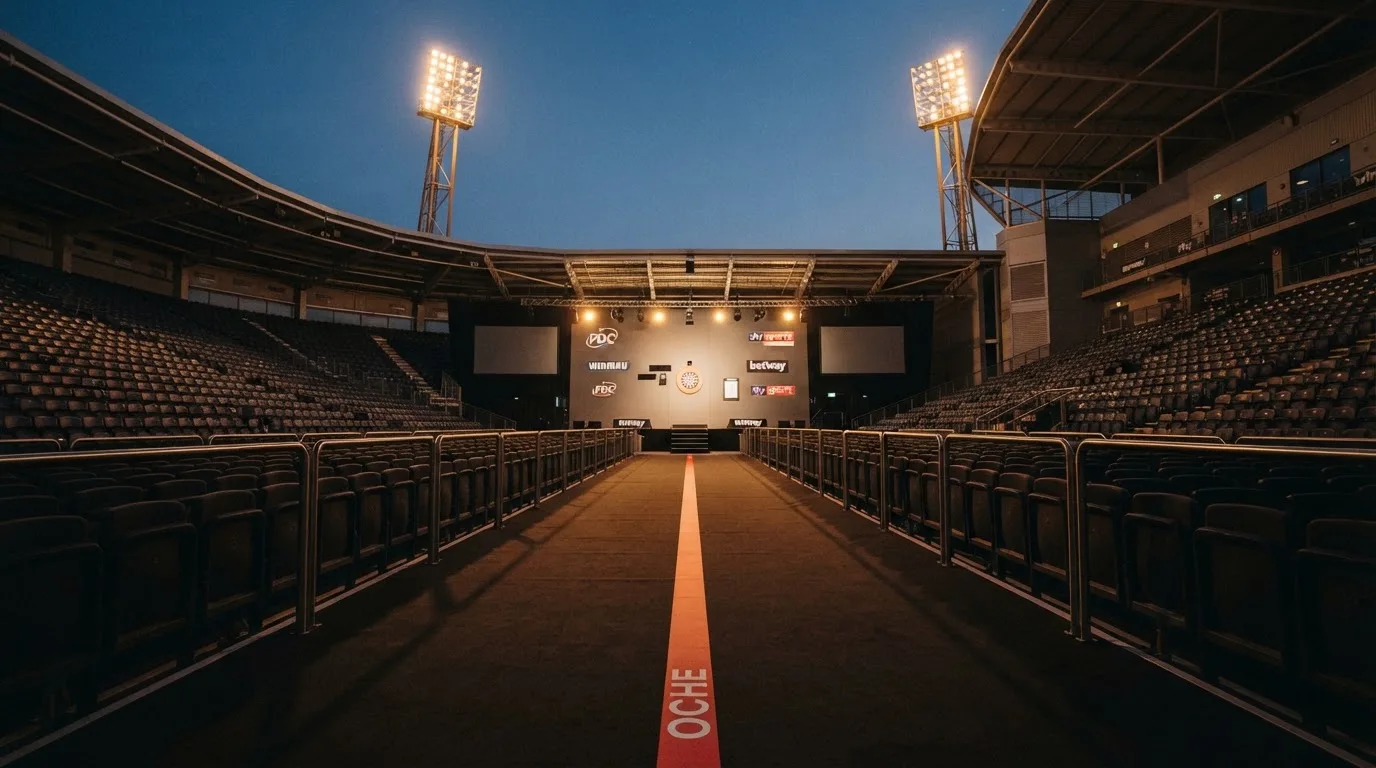
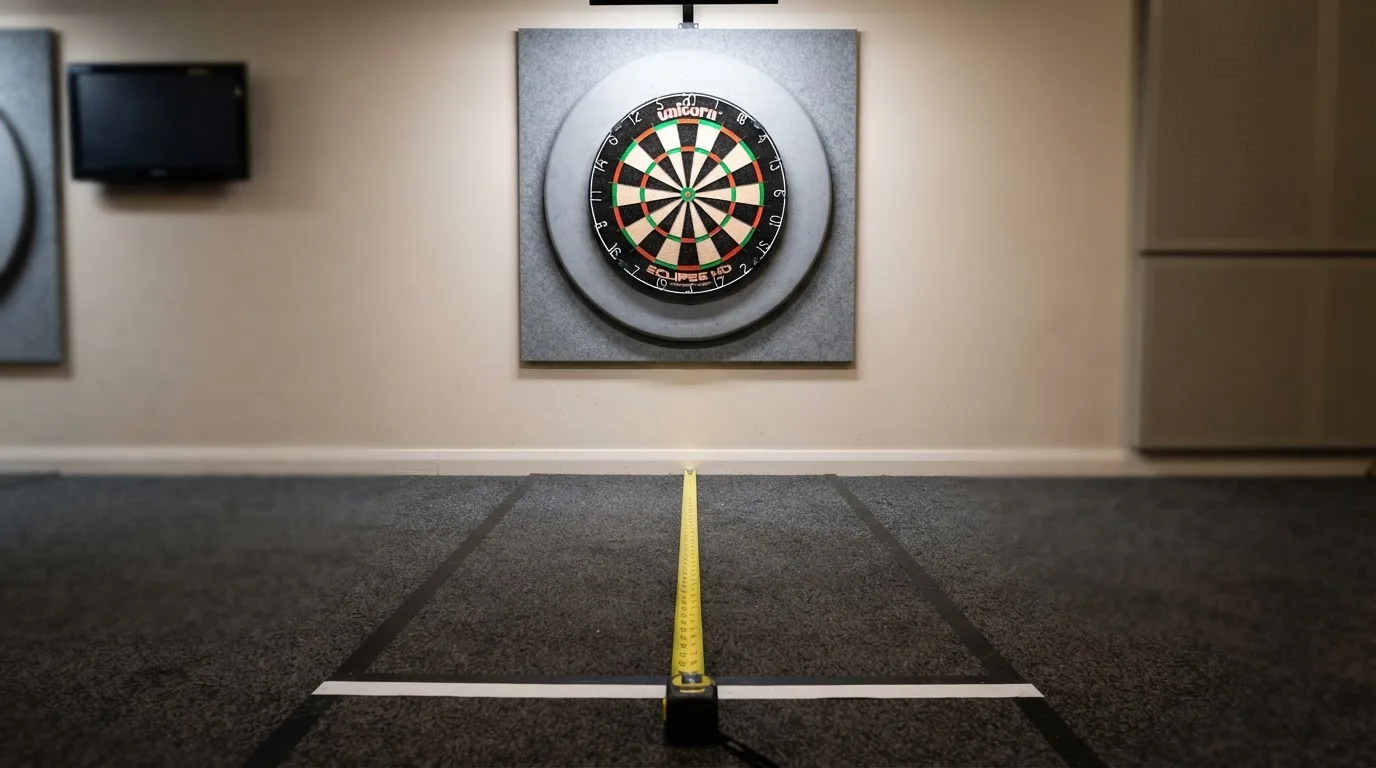
A note on the format itself. Players start at 501 and must end on a double or the bullseye. The highest possible three-dart finish is 170 (treble 20, treble 20, bullseye), and the minimum possible leg is nine darts — three perfect visits. The standard throw distance is 2.37 metres (7 ft 9 in) and the bullseye sits 1.73 metres above the floor. The dartboard has 20 numbered segments with single, double and treble areas; the bullseye is worth 50 and the outer bull 25. None of that changes the price, but it explains why the highest-checkout market and the 180s market are priced the way they are: the scoring ceiling is fixed.
Top 10 darts bookmakers in the UK: a comparison
The list below is built around the Gambling Commission’s public register, not around marketing. Each brand named here is operated by a licensee that holds a remote general betting standard licence for Great Britain, and each is presented with the feature that most distinguishes it from the other nine. The comparison is the page’s view, not an endorsement.
| Brand | Gambling Commission remote licence and holder | What the operator’s own terms state |
|---|---|---|
| Paddy Power | 039439-R-319330-013, PPB Counterparty Services Limited | Bet Builder+, Super Sub (a bet rolls over to a substitute if a player is replaced), expanded Win More markets, ACCA and player stats |
| Betmaster | 065699-R-339929-002, BM Solutions GB Ltd | Operated by an Malta-registered company holding a UK remote licence |
| BetGoodwin | 002927-R-327985-008, Goodwin Racing Limited | Best Odds Guaranteed on all UK and Irish horse and greyhound racing, capped at £1,000 |
| Sporting Index | 027343-R-308898-011, Sporting Index Limited | Spread-betting and fixed-odds fixed odds free bets; FCA-regulated for financial spread betting |
| LiveScore Bet | 056859-R-332720-005, LiveScore Betting and Gaming (Gibraltar) Limited | Debit cards, Apple Pay, PayPal, Pay by Bank (Open Banking) and Revolut Pay accepted |
| Midnite | 101839-R-342850-001, Midnite Limited | In-play events, acca builder, popular accas and price boosts with maximum-stake limits |
| DAZN Bet | 048756-R-327274-019, DZBT Limited | Minimum deposit £5 by debit card, Apple Pay, Paysafecard, Trustly and Skrill; £20 by PayPal; no fees |
| Lottoland | 038991-R-319408-020, EU Lotto Limited | Casino, lottery betting, sports betting and scratchcards under one Gambling Commission licence |
| Fitzwilliam Sports | 048760-R-335434-009, SBKI Limited | Phone and live chat with the office open 09:00 to 21:00, seven days a week |
| William Hill | 039225-R-319373-015, WHG (International) Limited | Best Odds Guaranteed on UK and Irish horse racing from 8 AM on race day |
Paddy Power. The standout feature is the Super Sub rule on Bet Builder+ — if a player the punter has selected is replaced before the event starts, the bet rolls over to the substitute without being voided. For a sport like darts, where late withdrawals are rare, the value of the rule is the rare time it kicks in, not the regular case. Verdict: the product depth (Bet Builder+, popular bet builders, ACCA stats) makes Paddy Power the brand for a punter who builds accumulators and wants the safety net of Super Sub.
Betmaster. A licensed brand that keeps a low marketing profile. The Malta-registered operating company holding a UK remote licence is a standard structure in the modern market. Verdict: a competent second-line bookmaker for punters who already have an account and want a quieter in-play product.
BetGoodwin. The Best Odds Guaranteed on all UK and Irish horse and greyhound racing up to £1,000 is the headline. Darts is not the brand’s main sport, but the racing offer is unusually generous and useful for the punter who bets both sports. Verdict: a horseracing-first bookmaker that does darts on the side — worth a look if the racing offer is the draw.
Sporting Index. A spread-betting brand, which is a different product from fixed-odds. The FCA regulates the financial spread side and the Gambling Commission regulates the fixed-odds side, and losses on spread bets can exceed the deposit — that line is in the operator’s own home-page text and is the single most important thing a punter reads before opening an account. Verdict: for the punter who wants spread betting on darts totals (180s, highest checkout) alongside a fixed-odds book, this is the brand. For the punter who only wants fixed-odds match winner, the spread product is a distraction.
LiveScore Bet. The payment-method range is the cleanest of the ten: debit cards (Visa, Mastercard), Apple Pay, PayPal, Pay by Bank (Open Banking) and Revolut Pay. For a punter who pays from a current account and wants no fees, this is the brand. Verdict: the right bookmaker for a punter whose payment method is Open Banking or Revolut and who wants the betting pages to behave like a banking app.
Midnite. The price-boost mechanic with maximum-stake limits is the unusual feature — boosts are common, but a maximum-stake cap on the boosted price is less so, and it tells a punter how much the operator will let them take at the new price. The in-play product, the acca builder and the popular accas are all in place. Verdict: a brand that has built its reputation on short-list in-play markets, suited to the punter who lives on the in-play product during the televised nights.
DAZN Bet. Minimum deposit £5 by most methods, with PayPal starting at £20 and no processing fees. The fee-free deposit line is the standout. Verdict: a brand for the punter with a small bankroll who wants to test the product without committing to a £10 minimum.
Lottoland. A combined casino, lottery betting, sports betting and scratchcards site under one UK licence. Darts is on the sportsbook alongside the lottery products, which is the brand’s selling point and its limitation. Verdict: for the punter who wants lottery, scratchcards and a sportsbook on one account, this is a one-stop shop. For the punter whose interest is darts-only, the wider product range is noise.
Fitzwilliam Sports. Phone and live chat support from 09:00 to 21:00 every day, with messenger replies typically inside 90 seconds. Customer service is the differentiator here — most online bookmakers run a chat bot and a small team, and a staffed phone line is unusual. Verdict: the right bookmaker for a punter who wants to talk to a person before staking.
William Hill. Best Odds Guaranteed on UK and Irish horse racing from 8 AM on race day, on both single and multiple bets. Not ante-post, not the tote, not pari-mutuel. Darts sits on the same sportsbook, and the brand’s long odds-comp history means the in-play product is mature. Verdict: the bookmaker for a punter who wants a full-service brand with a long track record and is happy to use a product where horse racing, not darts, is the headline offer.
Darts betting in the UK: what the licence covers and what it does not
A bookmaker serving customers in Great Britain needs a Gambling Commission licence wherever it is based — that is the point-of-consumption rule brought in by the Gambling (Licensing and Advertising) Act 2014. Sections 33 and 36 of the Gambling Act 2005 (as amended) carry the requirement. A Gibraltar or Malta licence does not substitute. The Commission’s public register lists every licensed operator and can be searched by business name, trading name, domain or account number, and it is the only test of whether a brand holds a licence. No state monopoly exists and no cap applies to the number of licences issued.
The Commission issues several licence categories. The one that matters for a darts bookmaker is the remote general betting standard (real events) licence, which is what every brand named above holds. Other categories cover virtual events, pool betting, betting intermediaries (the exchanges) and limited licences. Bets on politics, TV shows and novelty markets are offered by GB bookmakers and no statutory prohibition was found. Esports are treated like any other event and virtual events sit under a separate licence.
Financial spread betting is regulated by the Financial Conduct Authority, not by the Commission — which is why Sporting Index carries two regulators on its home page. The Commission’s age and identity checks apply to fixed-odds betting and apply equally to a free bet or a bonus: customers are 18 or over, and name, address and date of birth are verified before the first deposit or stake (since 7 May 2019). The credit-card ban for gambling (since 14 April 2020) covers credit-card-funded e-wallet deposits as well as direct card payments; debit cards and bank-based payments are not affected.
There is no statutory cap on stakes. Operators set their own maximum stakes and may restrict individual customers. In-play betting is offered by every GB bookmaker and the controls are the operator’s licence conditions, not a statute. Spread betting on non-financial events sits inside General Betting Duty.
The customer pays no tax on betting winnings in Great Britain. General Betting Duty is the operator’s tax on gross profits — currently 15% — and from 1 April 2027 a new remote betting rate of 25% applies within it, while remote bets on UK horse racing, self-service betting terminal bets, pool betting and in-person betting stay at 15%. Whether the new rate will pass through to the price the punter sees is not established.
Responsible gambling in a darts betting account
Every brand on this page is a GAMSTOP member, because participation in GAMSTOP has been a mandatory licence condition for online operators since 31 March 2020. GAMSTOP is the multi-operator online self-exclusion scheme: a customer registers, picks a period (six months, one year, five years, or five years with auto-renewal), and is blocked from opening new accounts at participating operators while the exclusion is in force. After the minimum period the exclusion stays in place for a further seven years unless the customer asks GAMSTOP to remove it. GAMSTOP covers online sites and apps; betting shops use a separate self-exclusion service.
A second layer sits above GAMSTOP. The financial vulnerability check (LCCP condition 3.4.4, in force since 30 August 2024) applies to licensed remote betting when a customer’s deposits minus withdrawals exceed £150 in a rolling 30 days (since 28 February 2025). It is a public-record check (bankruptcy, county court judgments, similar), not an income check and not a credit reference check, and it is meant to flag customers who may be in a difficult financial position before the next deposit is taken. Financial risk assessments (the affordability checks reported in the press) are announced, staged, with no start date — write “announced, no start date”, not “in force”.
Deposit limits are a third layer. Operators must offer a gross deposit limit on a fixed time frame; the first changes have applied since 31 October 2025 and a second phase has been postponed. The Commission has published the framework, and a punter who wants to set a hard ceiling on what they deposit in a week or a month can do so at any licensed brand.
Help exists outside the operator. GamCare runs the National Gambling Helpline. GambleAware funds treatment and education. The NHS runs specialist gambling clinics across Great Britain. Gamblers Anonymous runs peer-support meetings. A punter who feels the betting has stopped being entertainment can reach any of them directly, without going through the operator’s customer service.
The offer on the operator’s safer-gambling page is a useful but incomplete guide. Unibet, for one, lists deposit limits, a Player Profile test, product restrictions and self-exclusion as built-in tools, alongside live chat support and links to BeGambleAware, GamCare, GAMSTOP, Gambling Therapy and the Betting and Gaming Council. The list is real and the tools work; what the list does not say is that the punter has to turn the tools on.
Bonuses and free bets on darts: what the marketing word is worth
The marketing of a darts bonus is built around one number and one rule. The number is the headline — “£30 in free bets”, “100% deposit match” — and the rule is the small print. A punter who reads only the headline and not the rule has read a marketing word, not an offer.
The clearest example on the UK market sits in the welcome offer mechanic itself. A £10 fixed-odds bet at minimum odds of 1/2 (1.50) unlocks three £10 fixed-odds free bets and a handful of spread-bet tokens at one operator. Another operator gives £25 in free bets and 50 free spins on a £5+ pre-match qualifying bet at EVS (2.0) or greater, valid for seven days. The headlines differ; the small print is the same kind of small print: a qualifying bet at a minimum price, a deadline, free bets whose stake is not paid back on a win, a stake cap on the boosted price.
Three rules apply to every welcome bonus at a UK-licensed bookmaker.
The wagering cap. Since 19 January 2026, wagering requirements on bonuses are capped at 10x. A £10 bonus at 50x turnover would have needed £500 of qualifying bets; under the cap, no more than £100 of qualifying bets are needed. The cap is the headline reform of the bonus market.
No mixed-product offers. A promotion that requires gambling on two or more product types — “bet on football to get free spins” — is banned. The rule kills a class of cross-sport bonus.
Stake not returned. A free bet is a token whose stake is not paid back when the bet wins. The punter keeps the profit, not the stake, and a £10 free bet at 3.00 returns £20 of profit, not £30 of return. The mechanism is built into the offer and is not negotiable.
The promotional landscape below the welcome bonus is built around price boosts, accumulator insurance, enhanced odds and acca refunds. Each carries the same caveat: read them. A price boost that looks generous often carries a maximum-stake cap; an accumulator insurance that refunds a losing leg when one selection fails usually refunds in free bets, not in cash; an enhanced odds offer usually has a stake cap and a settlement rule that voids the offer if the punter cashes out before the event settles. The mechanical effect of every one of these terms is to shrink the headline number the marketing puts forward. None of them is hidden; all of them are in the offer’s small print.
The honest framing is that a welcome bonus is a marketing spend, not a profit opportunity. The bookmaker is buying a new account, and the wagering cap is the regulator’s response to a market that had drifted into bonus terms a customer could not clear. The free bet is still worth taking — the value of a £10 free bet at 3.00 is around £10 of expected value, less the margin of the market it is placed on — and a punter who places it on a market they were going to bet on anyway has captured real value. The punter who rearranges the staking plan to chase the bonus has not.
What the bookmaker’s margin actually does to a price
A bookmaker does not set prices by guessing. The price on a match-winner market is built from the operator’s estimate of the probability of each outcome, with a margin added on top so the book is over-round. The simplest way to see the margin is in a two-way market at decimal odds 1.90 and 1.90 — an example price, not a quoted price. The implied probabilities sum to 1 ÷ 1.90 + 1 ÷ 1.90, which is 0.5263 + 0.5263, or 1.0526. The payout share — the proportion of every pound bet that comes back to the punter on a true-pricing market — is the reciprocal of that sum, or about 95.0%. The margin is 100% minus the payout share, or about 5.0% of every pound bet on the market.
A 5% margin is the kind of margin a UK bookmaker runs on a popular football match-winner market. Darts markets sit around the same band on Premier League nights and on televised World Championship matches, and they sit higher on smaller events where the bookmaker’s risk model is less confident. A 5% margin means a punter pays about 5p of every £1 bet as the cost of the service, in the long run. On an outright winner market with twenty runners, the margin is closer to 30% — the book has to cover more outcomes and the bookmaker’s take per runner is correspondingly higher.
The mechanism is the same on every market, and it explains three things a punter sees. First, the favourite’s price in a darts match-winner is rarely longer than 1.50 against a top player in a short match, and the underdog is rarely shorter than 5.00; the over-round has to fit somewhere. Second, a price that looks too good — the top seed at 2.20 against an unseeded opponent — usually carries the margin’s hidden offset on the other side. Third, a price boost at one operator is not a free lunch: it is the operator’s price minus some of the margin, and the value depends on the size of the cut.
The right use of the margin figure is to compare two markets rather than to moralise about it. A punter who sees a darts match at 1.85 / 2.10 at one bookmaker and 1.90 / 2.00 at another is looking at two different margins and two different payout shares — the question is which one leaves more value on the table for the punter who has done the form work. The arithmetic is the same one a spread-betting firm runs on its own book; the difference is that the bookmaker’s product is the price and the punter’s product is the bet.
Building a tip from the data that is actually available
The data the punter actually has on a televised darts match is wider than it has ever been. The PDC publishes season averages; the broadcast graphics show three-dart average and checkout percentage during the match; the major bookmakers publish their own statistics pages for the regular events; the head-to-head record is available from the floor-event databases. A punter who is going to bet with a model has more inputs than they have time to use.
A practical method for a punter with a small bankroll runs like this. Pick one market per match — match winner is the cleanest. Pick one match per televised session. Pick the player whose three-dart average over the last six months on the same stage is at least three points higher than the opponent’s, OR whose head-to-head against that opponent is decisively in their favour over the last four meetings. Look at the price. If the price on the chosen player implies a probability below the punter’s model, place it; if it is above, walk away. Bankroll stake is fixed at 1–2% of the bank per bet. Stop betting for the session after one bet, regardless of outcome. The model is not a winning model — it loses more bets than it wins, and the short-form variance of darts will punish it more than once — but the value mechanism works in the long run if the punter has done the form work and the staking plan is intact.
A practical method for a punter with a large bankroll is the same method with Kelly-sized stakes instead of flat stakes, capped at a quarter-Kelly to protect against the model being wrong. The mathematics is well known and the calculators are freely available; what matters is that the punter does not increase the stake after a loss and does not decrease it after a win. The staking plan is the model.
The mechanical difference between this kind of tipping and the kind a tipster column sells is that the tipster column sells picks and the punter’s model sells value. A pick is a name; a value bet is a price. The pick is right or wrong in the moment; the value bet is right or wrong over many moments. The punter’s job is the second one.
A short note on payment methods and the rules around them
The credit-card ban applies to gambling in Great Britain and covers credit-card-funded e-wallet deposits as well as direct card payments. Debit cards are not covered, and bank-based payments (Open Banking, Trustly) are not covered either. The e-wallets most UK bookmakers accept (PayPal, Skrill, Apple Pay, Revolut Pay, Paysafecard) are debit-card-funded in most cases, and the operator’s deposit screen helps the brand’s own position.
Identity verification is the gate. A licensed UK bookmaker will not let the punter deposit or stake until name, address and date of birth are verified, and the verification may pull a public-record check on the way. The verification is the operator’s anti-money-laundering duty and the punter’s protection from stolen-card deposits. It is the reason no anonymous play exists at a licensed site, and it is the reason an unlicensed site, which skips the check, also skips the protection that comes with it.
Minimum deposits sit between £5 and £20 across the ten brands reviewed here. Minimum stakes on a darts match-winner are typically £0.05 or £0.10 at the smartphone end of the market, with maximum stakes set by the operator and by the market. Withdrawal times are typically same-day to 48 hours, with bank-based methods at the fast end.
Frequently asked questions
How do I bet on darts?
Pick a licensed UK bookmaker from the Commission’s public register, open an account, pass the age and identity check (18+, with a UK address and a verified payment method), and deposit by debit card, bank transfer or e-wallet. Choose a televised match on the PDC calendar, pick a market from the match-winner list (match winner, handicap, total 180s, highest checkout, set betting), and place a single bet at a price that sits within your staking plan. In-play markets are available throughout the match and cash out settles the bet at a running price. Settlement follows the PDC’s official result, and a winning bet pays the stake plus the profit at the agreed decimal odds.
What is darts betting?
Darts betting is wagering on a Professional Darts Corporation (PDC) event — most often a televised match on the World Championship, the Premier League, the World Matchplay, the Grand Slam, the Players Championship Finals or a World Series event — by selecting a market on a licensed UK bookmaker and staking on the outcome. The common markets are match winner (a two-way market, no draw), correct-score set betting, handicap, total 180s, highest checkout, player specials and the outright tournament winner. The odds are decimal by default, with a fractional toggle for British punters. A licensed bookmaker adds a margin to every market, which is the operator’s long-run take.
How does darts handicap betting work?
A handicap line on a darts match gives the favourite a negative head start or the underdog a positive one. A favourite at −1.5 sets must win the match by two clear sets for the handicap bet to pay; a −2.5 legs line means the favourite must lead by three legs at any point the punter has chosen to settle. A +1.5 handicap on the underdog pays if the underdog wins the match or loses by exactly one set. The handicap gives the punter a way to back the favourite at a longer price or the underdog at a shorter one, and it works best when the favourite is too short to back straight on the match-winner market.
What is a value bet and why is no tip ever certain?
A value bet is a price whose implied probability — calculated as 1 divided by the decimal odds — is below the punter’s own estimate of the chance the outcome happens. A tip is never certain because the model that gives a value bet its edge is built on past data and on the bookmaker’s market, both of which carry error. Darts in particular is high-variance — a debutant at the World Championship can knock out a top-eight seed — so even a model that is correct on average will pick losers more often than it picks winners. The value bet pays over many bets, not on any single bet, and the staking plan is what turns the long-run edge into a bankroll.
What is the bookmaker’s margin and how can it be seen in the odds?
The margin is the proportion of every pound bet that the bookmaker keeps in the long run. It is built into every price and it is visible when the implied probabilities of all outcomes in a market are added together. A two-way market at decimal odds 1.90 / 1.90 gives implied probabilities of about 52.6% on each side, summing to 105.3%. The payout share is about 95.0%, making the margin about 5.0% of the stake. The smaller the margin, the more of the stake comes back to the punter; a market at 1.95 / 1.95 has a margin closer to 2.5%, and a twenty-runner outright winner market has a margin closer to 30%. The punter’s job is to find the lowest-margin market on the bet they want to place.
How is the return on a bet worked out from the stake and the odds?
The return on a winning single bet is the stake multiplied by the decimal odds. A £10 stake at 3.00 returns £30, of which £10 is the original stake and £20 is the profit. A combination bet multiplies the odds of the legs into a single price, and the return is the stake multiplied by the combined odds — a £10 stake across two legs at 2.00 and 3.00 prices returns £10 × 6.00, or £60, of which £50 is profit. A free bet works the same as a stake, except the stake is not returned with a win: a £10 free bet at 3.00 returns £20 of profit, not £30 of return. The arithmetic is the same in fractional odds if the conversion is right: 5/1 fractional is 6.00 decimal, and a £10 stake at 5/1 returns £60.
Tennis, darts & cue sports – UK betting
Content created by the «UK betting» team
