
Heinz bet explained: the 57-bet full cover on six selections
 Available in US
Data current as of 27 October 2026 and cross-checked against the Gambling Commission’s public register.
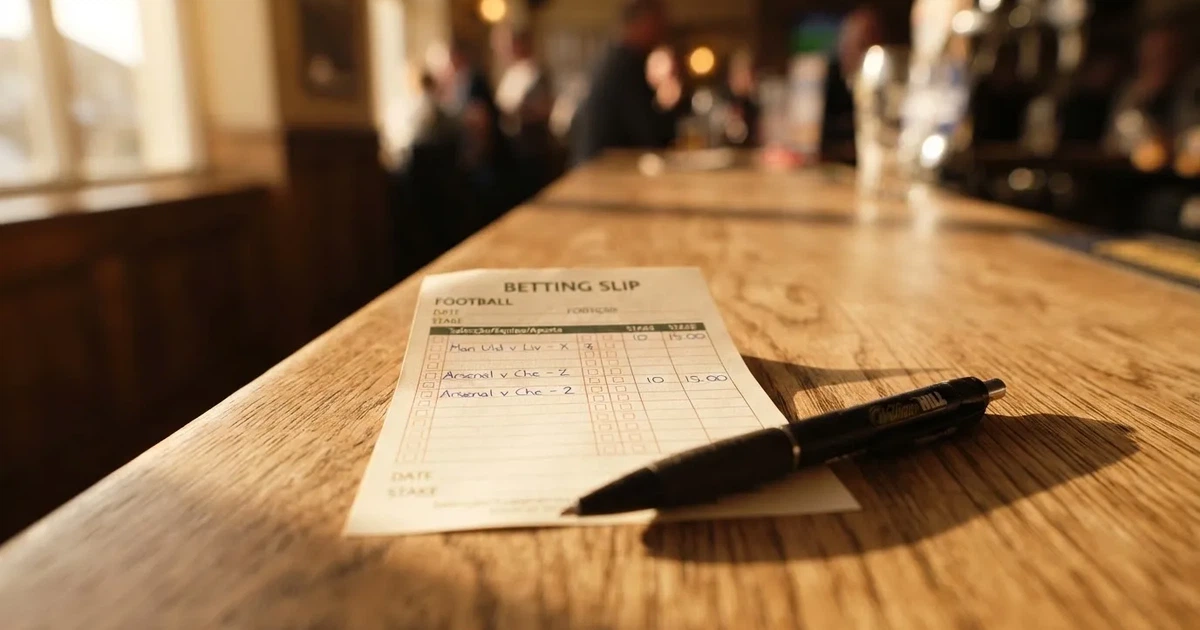
A Heinz is a full-cover multiple bet, the kind of wager that turns six football teams, horses, or tennis players into a single betting slip covering every possible combination of two, three, four, five and all six. Six selections generate 57 separate bets; a £1 unit stake costs £57 to place in full. There are no singles in a Heinz, so every one of the 57 lines needs at least two of the six picks to win, and the bet as a whole returns something only when at least two selections come in. The structure has been on British high-street slips since the 1970s, named after the 57 varieties slogan rather than the baked-bean manufacturer, and the same shape still sits inside most UK bookmakers’ multiple-bet tabs in 2026.
That is the headline. What follows looks at how the Heinz is actually built and priced, where it sits in the family of full-cover bets, how it settles when a selection is void, what its stake and margin cost a punter, and which ten UK-licensed bookmakers handle it on terms a reader can compare.
Heinz bet selection: how six picks become fifty-seven bets
A Heinz is a full-cover bet, which is a name for a bet that covers every multiple that can be drawn from a set of selections without including any singles. Take six selections labelled A through F. The full list of multiples that can be built from six things taken two, three, four, five or six at a time runs to 57. The breakdown is fixed and verifiable by hand: 15 doubles (any pair from AB to EF), 20 trebles (any triplet), 15 four-folds (any quartet), 6 five-folds (one for each selection left out), and 1 six-fold accumulator covering everything. Every multiple on the slip pays from its own price; a winning double pays at the product of its two legs’ odds, a winning treble at the product of its three, and so on up to the six-fold.
The mechanic matters because it changes what “winning” means. A punter does not need all six selections to come in, only enough of them. A bet that lands five out of six still pays out: the six five-folds each settle, the four-folds and trebles that include only the winning five settle, and the doubles that pair any two of them settle as well. A bet that lands four out of six is paid on the four-folds, the trebles built from those four, and every double. The shape means a Heinz is a long-tail structure: every additional winner that comes in multiplies the lines that pay and adds new ones at the higher multiples.
The 57 total is a count, not a price. A unit stake of £1 costs £57; a unit stake of 10p costs £5.70. Every operator prices the bet the same way because the count is the count; what differs between bookmakers is the price on each leg and the margin folded into those prices, which determines what the same 57 lines actually pay when they win.
Heinz bet fundamenta: what the bet does not include and what that costs
A Heinz has no singles, so the 57 bets are all multiples. That single fact sets the Heinz apart from a Lucky 15, the four-selection full-cover-plus-singles bet that contains four singles among its 15 lines, and from a Patent, the seven-bet cover on three selections that runs three singles alongside three doubles and a treble. The Lucky 15 and the Patent are designed to give a return even when only one selection wins, because the singles pay out. The Heinz is not. A punter who backs six selections and gets only one right collects nothing on a Heinz, where a Lucky 15 on the same six — which is not a standard offer, since Lucky 15s are sold on four selections — would at least pay the single.

The absence of singles is also a stake question. A Lucky 15 on four selections at £1 a line costs £15; a Heinz on six at £1 a line costs £57. The unit stake is the same, but the total outlay is nearly four times higher for two more selections, because every new selection adds not just singles but every additional combination. The trade is straightforward: a Lucky 15 gives a small return on a single winner; a Heinz gives no return on a single winner but pays more sharply when several selections come in together. Punters who back short-priced favourites and want a single-selection parachute tend to prefer the Lucky 15 family. Punters who back outsiders and want a big payout from a small stake tend to prefer the Heinz.
A related point sits in the void-selection rule. When a selection in a multiple is void — a non-runner, a match postponed past the operator’s cutoff — the bet drops to the next lowest multiple. A void leg in a treble turns it into a double on the two remaining runners; a void leg in a six-fold turns it into a five-fold. A void leg in a single inside a Lucky 15 refunds that single’s stake without dropping the rest of the bet. Because the Heinz has no singles, a void leg in a Heinz does not cost a stake; it only shrinks the multiples it appears in. A Heinz where one of six selections is void effectively becomes a Super Heinz 5, which is a five-selection full cover with no settled name in the trade but a countable structure of 26 bets (5 doubles, 10 trebles, 10 four-folds and 1 five-fold), and the operator’s settlement engine works it out the same way.
Heinz bet statute: where the Heinz sits in the family of full-cover bets
The Heinz is one entry in a small family of full-cover bets that runs from the three-selection Trixie to the eight-selection Goliath. Each name covers every multiple of every size from its selections, with no singles:

| Family member | Selections | Bets |
|---|---|---|
| Trixie | 3 | 4 |
| Yankee | 4 | 11 |
| Lucky 15 | 4 | 15 (includes 4 singles) |
| Heinz | 6 | 57 |
| Super Heinz | 7 | 120 |
| Goliath | 8 | 247 |
The Lucky 15 is the odd one out: it sits in the table because it is the four-selection bet most readers will compare a Heinz against, but it is not strictly a full cover because it includes singles. The rest of the list is full cover in the strict sense. A Super Heinz is a Heinz plus a seventh selection and 63 more bets; a Goliath is a Heinz plus two selections and 190 more bets. The names are not statutory, they are trade names, and they sit alongside the smaller covers on every major UK bookmaker’s bet-type menu. The Trixie, the Yankee and the Lucky 15 were already standard in British betting shops by the time Heinz was added in the 1970s; the Super Heinz and the Goliath came later as the size of the multiple-legs punters were willing to fill grew.
The growth in the count is what makes the Heinz a different proposition from the Trixie, not just a bigger version. A Trixie at £1 a line costs £4 and pays on any two winners; a Heinz at £1 a line costs £57 and pays on any two winners but with a much wider set of lines paying. A punter who has nailed three short-priced favourites and is debating between a Trixie and a Lucky 15 on the same picks is choosing between a 4-bet cover with no singles and a 15-bet cover with four of them. A punter who has six picks and is debating between a Heinz and six separate accumulators is choosing between a structure that pays something on partial winners and a structure that pays nothing until all six win. The Heinz is the multi-selection full cover; the six-fold accumulator is the all-or-nothing version of the same six picks.
Heinz bet payout: what a winning line returns and what the total stake costs
The arithmetic of a Heinz is the same arithmetic as any other multiple bet, applied 57 times. For each line, the return is the unit stake multiplied by the product of the odds on the legs in that line. The total return from a Heinz is the sum of the returns on every winning line. The profit is the total return minus the total stake, which for a unit stake of £1 is £57. Most operators let a punter set the unit stake in 1p steps; the £1 line is the convention used in most worked examples, but a Heinz at 10p a line is a real bet that costs £5.70 to place.
A worked example with three illustrative selections at 1/2 (1.50), evens (2.00) and 6/4 (2.50) is the kind of teaching example a bookmaker’s help page uses, and it is the kind the Heinz’s own mathematics rewards. On a single-line basis, the three prices multiply to 7.50 — a treble at £10 returns £75, a profit of £65. As a Heinz on six selections including those three, the £10 stake per line is a heavy total outlay: £570 across the 57 bets, with the 57 lines drawing on six selections. The number that matters is the band of possible returns, not one figure: a Heinz that lands only two of six pays whatever the 15 doubles pay on the winning pair, which for any two selections at short prices is a small return on a £570 outlay; a Heinz that lands all six pays the full six-fold plus every other line, and that figure is the product of all six prices multiplied by the unit stake, summed across the 57 lines.
The band is the point. A Heinz on six selections at 2.00 a leg — even money across the board — has a six-fold price of 64.00; the six-fold alone pays 64 × £1 = £64, and the rest of the 56 lines add smaller multiples on top. The same six selections at 5.00 a leg have a six-fold of 15,625; even the doubles are at 25, and the total return from a winning Heinz is several thousand times the unit stake. The Heinz rewards longer prices on the legs, because each extra unit of decimal odds multiplies through every line that contains that leg. That is also why a Heinz is a high-variance bet: the small-stake, all-six-win payout is the dream, and the realistic two-or-three-winner outcome is a small fraction of the stake back.
The bookmaker’s margin sits inside every price. The margin is the share of every pound bet that the bookmaker keeps on average across all outcomes of a market, calculated as 1 minus the payout share. A 1X2 market priced at 1.80, 3.40, 4.50 has a payout share of 1 ÷ (1/1.80 + 1/3.40 + 1/4.50) ≈ 0.953, so a margin of about 4.7%. A Heinz’s total margin is the average of the margins on the 57 lines, weighted by how often each line is expected to win. Because the longer multiples in a Heinz have a lower probability of winning, the short-margin doubles and trebles do most of the paying in the realistic scenarios, and the effective margin of a Heinz is closer to the margin of those small multiples than to the margin of the six-fold. A bookmaker quoting 5% on the singles is not quoting 5% on a Heinz on the same selections, because the bookmaker keeps the same per-line margin and the lines that win most often are the ones whose margin bites.
Heinz betting tips and staking: how a punter sizes a Heinz in practice
A Heinz staking plan starts with the unit stake, not the total outlay. A punter who decides to risk £5 on a Heinz is deciding to risk 5p a line, because the 57-bet count multiplies whatever unit stake is set. The other side of the staking decision is the selection count: a punter who has narrowed a Saturday card to four strong picks is buying a Yankee, not a Heinz, and the difference is the £1-a-line cost of the structure. A punter who has six picks and a £5 budget is buying 5p lines; a punter who has six picks and a £50 budget is buying 50p lines and the difference in the worst-case return is the difference between 5p and 50p on every line that pays.
The “bankroll” framing in most heinz betting tips pages amounts to two rules. First, the Heinz is a long-shot structure, so the bankroll fraction risked on a single Heinz should be small. Second, the bet is settled in one go, so the punter cannot cash out part of it as selections come in: a Heinz does not have a partial cash-out the way a winning single does. The bookmaker settles the whole bet on the final leg, and the punter sees one return figure, not a running total.
The selection logic most system betting guides push is to keep prices short enough that several legs are likely to win. A Heinz on six favourites at 1.50 is a different bet from a Heinz on six outsiders at 5.00: the favourites’ version pays less per line but pays on more lines, the outsiders’ version pays more per line but pays on fewer. A common pattern is to combine three strong favourites with three moderate-priced picks, accepting that the long-priced legs inflate the six-fold while the short-priced legs keep the doubles and trebles ticking over.
A few practical points on staking and settlement:
- A void selection reduces the bet. A Heinz on six with one void becomes a 26-bet cover on five (a five-selection full cover with no settled trade name, equivalent to a Super Yankee). The bookmaker’s terms apply, and the punter should check the operator’s non-runner page before placing.
- Each-way Heinz bets double the unit stake, because each-way is two bets of equal stake (win and place) on every line, and the place terms vary by race and operator.
- The minimum stake on a Heinz is set by the operator, not by the count: a bookmaker with a 1p minimum accepts a 57p Heinz; a bookmaker with a 10p minimum accepts a £5.70 Heinz.
- Ante-post selections in a Heinz follow the same void rule as in any other multiple, with a few operators treating withdrawals differently. The non-runner page is the place to check.
Heinz free bet calculator and offer mechanics: how a free bet applies to a Heinz
A free bet calculator super heinz page exists because punters want to know what a free bet is worth when it is staked across 57 lines instead of one. The arithmetic is straightforward. A free bet whose stake is not paid back with a win has a value of free-bet amount × (odds − 1) ÷ odds, multiplied by the payout share of the market it is placed on. For a free bet of £10 on a single at 5.00 (4/1), the value is 10 × 4 ÷ 5 × payout share. For a free bet used as the unit stake of a Heinz, the same arithmetic applies line by line, summed across the winning lines: the punter is placing 57 separate free bets, and only the winning ones return anything, and only the profit (not the stake) is paid back.
The practical consequence is that a free bet used on a Heinz returns a fraction of what the same free bet returns on a single. A £10 free bet on a single at 5.00 with a 95% payout share is worth about £30.40 in expected value. A £10 free bet on a Heinz, where the 57 lines pay at their own prices and the free-bet stake is not returned, returns whatever the profit is on the winning lines, and the bookmaker’s free-bet terms usually set a cap on what can be won from the free bet. Most UK bookmakers cap free-bet winnings at a few hundred pounds regardless of the lines that pay, which clips the upside of a Heinz on long-priced legs.
Wagering requirements on bonuses are capped at 10x in Great Britain from 19 January 2026: a £10 bonus at 50x turnover needs £500 of qualifying bets; under the cap, no bonus can demand more than £100 of turnover per £10 of bonus. The cap does not change the math of a Heinz — the wagering still has to be done — but it limits how punishing a bonus can be on a multi-leg structure where every line costs a unit stake. Mixed-product promotions, including offers that require betting on football to get free spins or bingo tickets, are banned under the same rule.
Heinz bet explained: the legal and regulatory frame around the bet
A Heinz is not a regulated bet type: the Gambling Commission licenses operators, not bets. The Commission licenses the operator for a category — remote general betting standard (real events) for a sports bookmaker, remote betting intermediary for an exchange, and so on — and the operator offers the Heinz under its own terms, with the LCCP’s social responsibility and anti-money-laundering conditions applying to the operator as a whole. The Heinz’s 57 bets, its stake and its payout are settled under the operator’s house rules, and the Commission’s public register is the only place to check that a brand holds a licence to take the bet in the first place.
The Commission’s register is searchable by business name, trading name, domain or account number. Each operator’s card in this guide lists the Gambling Commission account number a reader can search for. A brand’s use of a .co.uk domain is not proof of a licence; licensed operators also use .com domains. The Northern Ireland point is small but real: the Gambling Act 2005 covers Great Britain (England, Scotland and Wales), not Northern Ireland, and a GB licence does not regulate Northern Ireland.
Two points on identity and money sit inside the Heinz’s frame, not because the bet demands them but because the licence does. Since 7 May 2019, name, address and date of birth are verified before a customer can deposit or gamble, including with a free bet or bonus, so anonymous play is not on the menu at any of the ten bookmakers below. A financial vulnerability check applies once a customer’s deposits minus withdrawals exceed £150 in a rolling 30 days, in force since 28 February 2025; it is a public-record check (bankruptcy, county court judgments) rather than an income check, and it is a check the operator runs, not the punter. Financial risk assessments have been announced in a staged plan from the Commission, with no start date; this guide writes “announced, staged, no start date” rather than “in force”.
A Heinz settled at a UK-licensed bookmaker is, for the customer, tax-free in the sense that betting winnings are not charged to the player. General Betting Duty is the operator’s tax on gross profits, currently 15%, and from 1 April 2027 a new remote betting rate of 25% applies within the duty while UK horse racing, pool betting and in-person bets stay at 15%. The remote rate stays at 15% until 1 April 2027, and whether operators pass the duty on through their odds is not established. A professional gambler should ask HMRC or an adviser, because the player-side tax position changes once gambling is a trade.
Heinz bet strategy: where the Heinz sits in a punter’s toolkit
Heinz system betting is the practice of treating a set of selections as a structured bet rather than a single accumulator. The logic is that a six-fold accumulator at 5.00 a leg prices at 15,625, and the punter is paid only if all six win. A Heinz on the same six selections at £1 a line pays 15,625 on the six-fold and pays something on the smaller multiples whenever two or more come in. The trade is a smaller upside on the all-six scenario in exchange for a return on the partial-winner scenarios.
A few patterns recur in heinz betting strategy pages:
- Strong-favourite core with a value tail. Three short-priced picks that the punter expects to win and three longer-priced picks the punter expects to add value. The Heinz pays a small return when the favourites come in alone and a much larger one if the tail comes in too.
- Same-event or cross-event. A Heinz can be built from a single match (six markets on one game, such as result, both teams to score, total goals, corners, player to score, cards), or from a set of races or matches across a day. The cross-event version spreads variance; the same-event version concentrates it.
- Each-way on a racing-only Heinz. Each-way doubles the unit stake and the place terms vary by race, so the each-way Heinz is a real bet type with its own settlement.
- Bonuses applied to the stake. A free bet used as the unit stake on a Heinz pays only the profit on winning lines, and the cap on free-bet winnings clips the long-price upside. The strategy is to use free bets on shorter-priced Heinzes where the cap is less binding.
A Heinz is not a strategy for finding winners, and no system can know an outcome in advance. It is a structure for paying out on partial winners, and its value to a punter is that one of the 57 lines is more likely to win than the six-fold alone.
Heinz bet settling: how the bookmaker pays the winning lines
A Heinz settles line by line, and the bookmaker’s engine works through every multiple that contains only winning selections. The punter sees one total return figure once the last leg is settled, with a per-line breakdown on the bet history page. The settlement order follows the settlement of the underlying events: as each leg is settled, the lines that contain only settled-and-winning legs are added to the return; lines that still contain an unsettled leg wait; lines that contain a losing leg drop out and pay nothing.
The void rule is the same as for any multiple. A non-runner in a horse race, a postponed match past the operator’s cutoff, a selection that is made void by the operator’s trading team — any of those reduces the bet to the next lowest multiple on the remaining selections. A void leg in a six-fold leaves a five-fold on the other five; a void leg in a treble leaves a double; a void leg in a double voids the line. A Heinz with one void selection of six is settled as a five-selection full cover of 26 bets, the same structure as a Super Yankee / Canadian.
A winning Heinz pays the return as a single cash credit to the punter’s account, and the bookmaker’s withdrawal terms apply. Cash-out is a separate question: a bookmaker that offers cash-out on singles and accumulators may not offer it on a Heinz, because cash-out on a 57-line structure is harder to price. Where cash-out is offered, it is a single figure offered on the whole bet, not a per-line cash-out.
Heinz bet and the rest of the full-cover family: Super Heinz, Goliath, Lucky 15
A Super Heinz is a seven-selection full cover of 120 bets: 21 doubles, 35 trebles, 35 four-folds, 21 five-folds, 7 six-folds and 1 seven-fold. The structure adds 63 more lines to a Heinz, the unit stake multiplies the total outlay by 120, and the seven-fold is the all-or-nothing top line. A Goliath on eight selections runs to 247 bets: 28 doubles, 56 trebles, 70 four-folds, 56 five-folds, 28 six-folds, 8 seven-folds and 1 eight-fold. The count climbs sharply with each new selection: from 57 to 120 to 247, on a unit stake of £1, costs rise from £57 to £120 to £247. The relationship is not linear — every new selection adds more lines than the previous one did, because every new selection can be paired with every existing combination.
The Lucky 15 is a four-selection bet of 15 lines: 4 singles, 6 doubles, 4 trebles and 1 four-fold. The singles are the difference: a Lucky 15 pays a return on a single winner, a Yankee does not. Punters who want a single-selection parachute prefer the Lucky 15; punters who would rather push the same £1 unit stake into the multiples alone prefer the Yankee. The Lucky 15 is the bet most often offered as a free-bet or bonus promotion by UK bookmakers, because a single-winner return is a small but real payout that keeps the punter playing.
The Patent is a three-selection bet of 7 lines: 3 singles, 3 doubles and 1 treble. It is the smallest full-cover-plus-singles bet. The Trixie, by contrast, is a three-selection bet of 4 lines with no singles: 3 doubles and 1 treble. The Trixie is the smallest pure full cover.
The bet-type menu at most UK bookmakers lists all of these by name, with a click-through to a per-brand explanation of how the brand settles voids, places each-way, and treats withdrawals.
Top 10 UK bookmakers reviewed for Heinz betting in 2026
The list below is the ten brands the page reviews for Heinz betting in Great Britain. Each holds a Gambling Commission remote licence for fixed-odds betting or, in Smarkets’ case, a betting intermediary licence, and each settles Heinz bets under its own terms. The order follows the order research has set; the table below sets out the licence details and the per-brand position on Heinz, multi-line free bets, and any feature a Heinz punter is likely to want to know about (cash-out, acca insurance, bet builder, best-odds-guaranteed). The list is not a ranking by quality: the Commission’s public register is the test of who holds a licence, and several brands here operate under the same kind of licence. The order is the order research assigned, and the difference between brands is in the offers, the bet-type menu and the terms on which each one settles.
1. Midnite
Midnite’s UK site is run by Midnite Limited under Gambling Commission account 101839, which covers remote general betting on real events. The site lists in-play events, an acca builder, popular accas and price boosts with maximum-stake limits, and the new-customer offer is a £5-or-more qualifying bet at EVS (2.0) or greater within 14 days of sign-up returning £25 in free bets and 50 free spins, valid for 7 days. Heinz bets are accepted under the standard full-cover bet-type menu, with the same void rule that applies across the brand’s multiples, and the acca builder covers singles and small multiples on a single event rather than full-cover Heinzes. Midnite provides a Commission-licensed platform featuring a familiar structure, an in-play product separate from pre-match betting, and a free-bet welcome offer linked to a single qualifying stake.
2. Smarkets
Smarkets is a betting exchange, not a sports bookmaker, and its Commission licence is a remote betting intermediary licence under account 39173, run by Smarkets (Malta) Limited. The exchange’s standard commission on eligible bets is 2%, and new customers have been offered 0% commission for 60 days on a minimum first deposit of £10. A Heinz on an exchange is built by backing each of the 57 lines individually rather than as a single “Heinz” button, and the exchange’s cash-out and partial-cash-out features apply per line. There is no acca insurance, no best-odds-guaranteed and no free-bet welcome offer of the sportsbook kind, because the exchange’s commission model replaces the bookmaker’s free-bet marketing. A Heinz punter at Smarkets gets an exchange where each line is priced by other punters, with a Commission-licensed intermediary taking 2% on winnings and a 60-day commission-free window for new accounts.
3. 888sport
888sport’s UK site is run by 888 UK Limited under Gambling Commission account 39028, holding a standard remote general betting licence for real events. The site offers pre-match and in-play betting, Cash Out, Bet Builder, racing streams, BetFinder form tools, a live bet feed and daily boosted odds. Heinz bets are part of the standard bet-type menu, settled under 888sport’s house rules, and the Bet Builder is a same-game multi product that does not substitute for a Heinz across events but can sit alongside one. The daily boosted odds apply to singles and small multiples, not to a 57-line Heinz. 888sport is a UK-licensed operator that provides Cash Out on singles and accumulators, alongside a Bet Builder feature and a menu that offers full-cover bets like the Heinz, Trixie, and Yankee.
4. BoyleSports
BoyleSports’ UK site is run by Boylesports Enterprise under Gambling Commission account 39469, authorised for remote general betting on real events. The brand’s Acca Insurance requires opt-in, a minimum stake of £5, minimum odds of 1/2, pays a maximum refund of £20 as a free bet that expires in 7 days, and the qualifying bet and refund must be placed and settled on the same day. A Heinz at BoyleSports is a 57-line bet at the unit stake of the punter’s choice, and the Acca Insurance applies to accumulators rather than to full-cover Heinzes, so a Heinz that lands only five of six does not trigger the £20 refund; the insurance is the wrong shape for a Heinz punter. BoyleSports delivers a Commission-licensed sportsbook with a Cash Out feature and Acca Insurance, though the latter does not extend to the Heinz structure.
5. William Hill
William Hill’s UK site is run by WHG (International) Limited under Gambling Commission account 39225, with an operating licence for remote general betting on real events. The brand’s Best Odds Guaranteed applies to UK and Irish horse racing from 8 AM on the day of the race, on both single and multiple bets, but not to ante-post, tote or pari-mutuel bets. A Heinz that includes a horse-racing leg covered by BOG benefits from the price upgrade on that leg, and the multiple-bet product on the racing side is well-developed. William Hill provides a Commission-licensed sportsbook with a long-established multiple-bet product and BOG on UK and Irish racing, offering the standard full-cover menu.
6. LiveScore Bet
LiveScore Bet’s UK site is run by LiveScore Betting and Gaming (Gibraltar) Limited under Gambling Commission account 56859, holding a remote general betting licence for real events. The brand’s Bet Builder allows up to 10 selections and covers match result, both teams to score, corners, total goals, player scoring and card markets. A Heinz is a separate structure from the Bet Builder, but a punter who wants to use a Bet Builder as one of the six Heinz legs can do so where the operator allows it. The Bet Builder’s 10-selection cap is generous, and a Heinz on six Bet Builder legs on the same match is technically possible at LiveScore Bet. This operator offers a robust Bet Builder paired with a live-scores backbone, alongside the standard menu of full-cover betting options.
7. Betboro
Betboro’s UK site is run by Webmedia Development N.V. under Gambling Commission account 44181, maintaining a licence to offer remote general betting on real events. The brand offers in-play markets and cash-out on football, racing and tennis, boosted odds on selected singles from £10 stakes, and responsible gambling tools (deposit limits, reality checks, self-exclusion). A Heinz at Betboro is settled under the standard house rules, with cash-out available on the bet as a whole rather than per line. Betboro offers a Commission-licensed service featuring boosted odds on singles and a Cash Out feature, and it includes the standard full-cover bet menu.
8. Spreadex
Spreadex is a spread-betting and fixed-odds bookmaker, regulated by the FCA for spread betting and by the Gambling Commission for fixed-odds betting, under account 8835, and it holds a remote general betting licence for real events. The brand’s new-customer offer is £60 in free bets for a £10 fixed-odds bet, with the free bets usable across fixed odds and spread betting, and the qualifying bet must be placed within 28 days of opening the account. Spreadex states that spread betting losses can exceed the deposit, which is a different risk from a fixed-odds Heinz, where the loss is capped at the stake. A Heinz at Spreadex is a fixed-odds multiple, settled as a fixed-odds bet, while the spread-betting product sits on a separate platform. The operator provides both a free-bet fixed-odds service and a separate spread-betting product, with the Heinz available on the fixed-odds side.
9. Lottoland
Lottoland’s UK app is run by EU Lotto Limited under Gambling Commission account 38991, with regulatory approval for remote general betting on real events. The app combines casino, lottery betting, sports betting and scratchcards, and the sportsbook includes the standard full-cover bet-type menu, including the Heinz. Mixed-product promotions are banned under the Commission’s LCCP rules from 19 January 2026, so an offer that requires sports betting to unlock a lottery or casino reward cannot be marketed by a Commission-licensed operator. Lottoland provides a Commission-licensed platform that hosts a sportsbook alongside a lottery product, with standard fixed-odds terms for its full-cover betting menu.
10. Paddy Power
Paddy Power’s UK site is run by PPB Counterparty Services Limited under Gambling Commission account 39439, with a remote general betting standard (real events) licence. The brand’s app offers Bet Builder+, Popular Bet Builders, Super Sub (a bet rolls over to the replacement if a selected player is substituted), expanded Win More markets and player and ACCA stats. A Heinz is a separate structure from the Bet Builder+, and a Heinz punter can use a Bet Builder+ as one of the six Heinz legs where the operator allows it. Super Sub is a same-game-multi feature rather than a Heinz feature, and the bet-type menu at Paddy Power includes the full family of full-cover bets. A Heinz punter at Paddy Power gets a Commission-licensed brand with a deep same-game multi product, a strong accumulator offering, and the standard full-cover bet-type menu.
Heinz bet licence table: ten UK bookmakers at a glance
| Brand | Gambling Commission account and licence holder | What the operator’s own terms state on the Heinz |
|---|---|---|
| Midnite | Account 101839; Midnite Limited | Standard full-cover menu; void rule applies per leg; new-customer offer tied to a single qualifying bet, not a Heinz |
| Smarkets | Account 39173 (betting intermediary); Smarkets (Malta) Limited | Each Heinz line is placed individually; standard 2% commission on winnings, 0% for 60 days on new accounts; no bookmaker free-bet welcome offer |
| 888sport | Account 39028; 888 UK Limited | Standard full-cover menu including Heinz; Cash Out on singles and accumulators; Bet Builder for same-game multis |
| BoyleSports | Account 39469; Boylesports Enterprise | Standard full-cover menu; Acca Insurance applies to accumulators, not to Heinz 5-of-6 winners; opt-in, £5 minimum stake, 1/2 minimum odds, £20 free-bet refund, 7-day expiry |
| William Hill | Account 39225; WHG (International) Limited | Standard full-cover menu; BOG on UK and Irish racing from 8 AM on race day, on singles and multiples, not ante-post |
| LiveScore Bet | Account 56859; LiveScore Betting and Gaming (Gibraltar) Limited | Standard full-cover menu; Bet Builder up to 10 selections, can be used as a Heinz leg where allowed |
| Betboro | Account 44181; Webmedia Development N.V. | Standard full-cover menu; Cash Out on the bet as a whole; boosted odds on selected singles from £10 |
| Spreadex | Account 8835; Spreadex Limited | Fixed-odds Heinz settled as a fixed-odds multiple; spread-betting product separate, losses can exceed deposit; £60 free-bet welcome offer for a £10 qualifying fixed-odds bet, 28 days |
| Lottoland | Account 38991; EU Lotto Limited | Standard full-cover menu alongside casino, lottery and scratchcards; no mixed-product promotions allowed under LCCP from 19 January 2026 |
| Paddy Power | Account 39439; PPB Counterparty Services Limited | Standard full-cover menu; Bet Builder+ and Super Sub for same-game multis; ACCA stats and popular builders on the app |
Heinz bet responsible gambling: tools, limits and where to get help
Every UK-licensed bookmaker on this page is bound by the Commission’s social responsibility code and is a member of GAMSTOP, the national multi-operator online self-exclusion scheme. GAMSTOP lets a customer exclude from every Commission-licensed online operator at once, with periods of six months, one year, five years, or five years with auto-renewal. After the minimum period, the exclusion stays in place for a further seven years unless the customer asks GAMSTOP to remove it. GAMSTOP covers online sites and apps; betting shops use a separate self-exclusion service.
A customer can also set a deposit limit with the operator directly, under the Commission’s Remote Technical Standards (RTS 12). The first changes have applied since 31 October 2025, with a second phase postponed to 30 September 2026, and the deposit limit is the customer’s choice rather than a state-set ceiling. The financial vulnerability check applies once deposits minus withdrawals exceed £150 in a rolling 30 days, in force since 28 February 2025, and the operator runs a public-record check rather than an income check. Financial risk assessments have been announced in a staged plan with no start date; the picture is “announced, staged, no start date” rather than “in force”.
The help lines a punter can call are independent of the operators. GamCare runs the National Gambling Helpline. GambleAware funds treatment and education. The NHS runs gambling clinics. Gamblers Anonymous runs peer-support meetings. The Commission’s public register is the place to check a brand’s licence, and a customer who has a dispute with a Commission-licensed operator can use the operator’s complaints route and, if that does not resolve it, an approved alternative dispute resolution (ADR) provider. A customer of an unlicensed operator has none of these routes.
Heinz bet offshore: what a GB licence does and does not do
A GB licence is compulsory at the point of consumption, and an operator whose remote facilities are used in Great Britain needs a Commission licence wherever it is based. A Curaçao, Maltese or Gibraltar licence is not a substitute. Providing gambling facilities in Great Britain without the licence the Act requires is an offence under section 33 of the Gambling Act 2005, and the offence is aimed at the operator, not at the customer who merely bets on an unlicensed site. No offence aimed at the customer was found in the Gambling Act or related rules.
The customer-side risk of an unlicensed operator is the loss of British protections. There is no GAMSTOP coverage, no Commission complaints route, no approved ADR provider, no British consumer redress if funds are withheld, and the operator is not bound by the 10x bonus cap or the £150 vulnerability check. Honest framing: licensed = checks, limits, GAMSTOP, the bonus cap, and identity verification before the first bet; unlicensed = none of those, and possible loss of funds. Neither is “the safe choice” by default, and the choice is the reader’s, made with the protections in view.
Enforcement against unlicensed operators is disruption, not blocking. The Commission issues cease-and-desist notices, refers sites to search engines, and works with registrars, hosts and payment providers. The Commission has been given, or is about to receive, court-order DNS blocking powers, and ISP blocking is not in operation. None of that changes the licensed-versus-unlicensed point above.
Heinz bet in summary: when the structure is the right one
A Heinz is a 57-bet full cover on six selections, with no singles, settled line by line under the operator’s terms, paid as a single cash credit, and the right structure for a punter who wants a return on partial winners rather than the all-or-nothing payout of a six-fold accumulator. The arithmetic rewards longer prices on the legs, because every unit of decimal odds multiplies through every line that contains the leg, and the bookmaker’s margin sits inside every price the same way it does on a single. The free-bet math on a Heinz is the same free-bet math applied 57 times, with the cap on free-bet winnings clipping the long-price upside.
The right UK-licensed operator for a Heinz is the one whose terms the punter can read and accept. A punter who wants a free-bet welcome offer picks a brand with one. A punter who wants same-game multi legs picks a brand with a Bet Builder that allows it. A punter who wants BOG on a racing leg picks a brand that offers it. A punter who wants an exchange model picks Smarkets and accepts the 2% commission in place of a free-bet welcome offer. The Heinz itself does the same thing at every brand; what changes is the terms, the offers and the product around it.
The 10 brands reviewed above all hold a Gambling Commission remote licence for fixed-odds betting or, in Smarkets’ case, a betting intermediary licence, and all settle Heinz bets under their own published terms. The Heinz’s structure is the same on every slip; the choice between brands is a choice about which set of terms best suits the punter’s pattern of betting.
Frequently asked questions
What is a Heinz bet?
A Heinz is a full-cover multiple bet on six selections, made up of 57 separate bets: 15 doubles, 20 trebles, 15 four-folds, 6 five-folds and 1 six-fold. There are no singles, so the bet only pays out when at least two of the six selections win, and the unit stake multiplied by 57 is the total stake. The structure is named after the 57 varieties slogan rather than the baked-bean manufacturer.
What is a Super Heinz bet?
A Super Heinz is a full-cover multiple bet on seven selections, made up of 120 separate bets: 21 doubles, 35 trebles, 35 four-folds, 21 five-folds, 7 six-folds and 1 seven-fold. It is the Heinz with a seventh selection added, and the unit stake multiplied by 120 is the total stake. The seven-fold is the all-or-nothing top line, and the same void rule that applies to a Heinz applies to a Super Heinz.
How many bets are in a Super Heinz?
A Super Heinz contains 120 bets on 7 selections: 21 doubles, 35 trebles, 35 four-folds, 21 five-folds, 7 six-folds and 1 seven-fold. The count is a fixed combinatorial: every multiple of every size from 2 to 7 that can be drawn from 7 selections, with no singles.
How can a bookmaker’s Gambling Commission licence be checked?
The Commission’s public register is searchable by business name, trading name, domain or account number at the Commission’s website. Each operator’s card in this guide lists the Gambling Commission account number a reader can search for. A .co.uk domain is not proof of a licence, and a brand’s use of a .com domain is also compatible with a Commission licence. The Northern Ireland point is that the Gambling Act 2005 covers Great Britain only, and a GB licence does not regulate Northern Ireland.
How is the return on a bet worked out from the stake and the odds?
For a single bet, the return is the stake multiplied by the decimal odds, and the net profit is the stake multiplied by (odds minus 1). For a multiple, the odds of the legs multiply into one price, and the return is the stake multiplied by the product. A Heinz is 57 separate multiples, and the total return is the sum of the returns on the winning lines, with the total stake equal to the unit stake multiplied by 57. Decimal odds are used throughout this page; fractional odds convert by dividing the numerator by the denominator and adding 1.
What is the bookmaker’s margin and how can it be seen in the odds?
The bookmaker’s margin is the share of every pound bet that the bookmaker keeps on average across all outcomes of a market, calculated as 1 minus the payout share. The payout share is 1 divided by the sum of the reciprocals of the decimal odds on every outcome. A 1X2 market priced at 1.80, 3.40, 4.50 has a payout share of about 0.953 and a margin of about 4.7%. A Heinz’s effective margin is the average of the margins on its 57 lines, weighted by how often each line is expected to win, and is closer to the margin of the doubles and trebles than to the margin of the six-fold.
Bet types & in-play – UK betting
Content created by the «UK betting» team
