
Value Betting in 2026: What "Best Value" Actually Means and Where to Find It
 Available in US
Updated 27 October 2026 · Verified against the Gambling Commission’s public register of remote operating licences
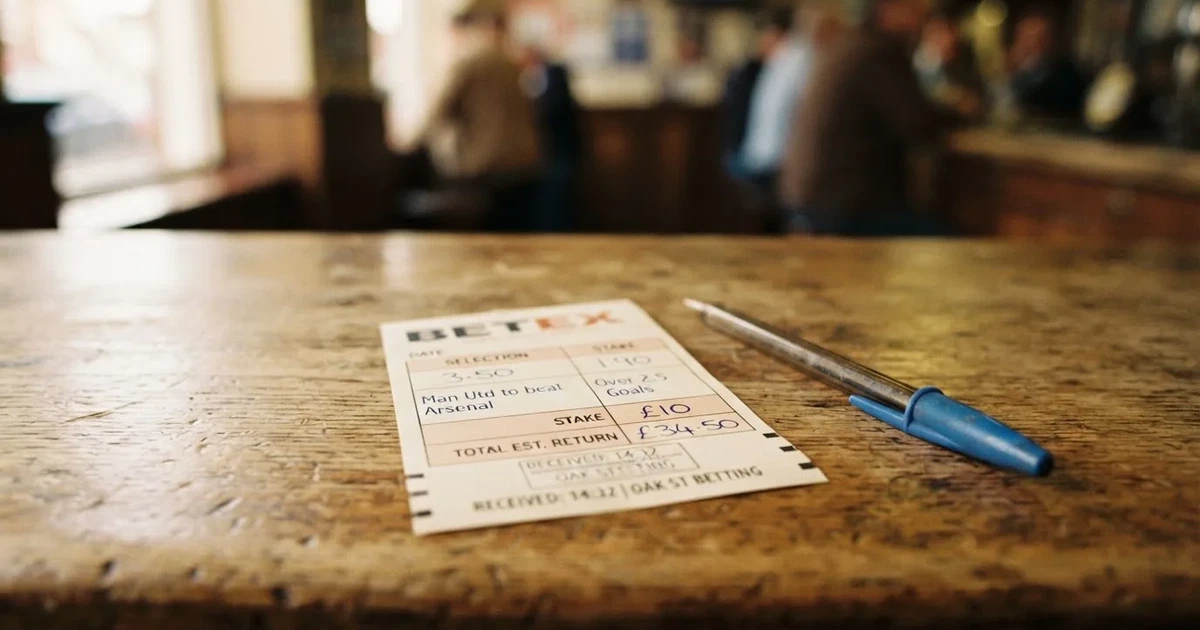
A punter who wants the best value is a punter who understands that the price on the screen is not the same thing as the probability of the outcome. The two move in opposite directions. When a bookmaker offers 5.00 about something that has a one-in-five chance of happening, that price is fair. When the same outcome is offered at 4.00, the punter pays for the difference; when it sits at 7.00, the punter is paid for it. Almost every market in the book carries an inbuilt margin that pulls prices below their true probability. Spotting the gaps where the price is above what it should be — that is the entire game of value betting. The pages that follow explain how the price is built, where the margin hides, how to read the closing line, and which licensed bookmakers serve the British market in 2026.
The fundamentals of a betting price
Every odds format rests on the same idea: the price is the reciprocal of the probability. Fair decimal odds of 5.00 imply a probability of one in five, or 20%. Fair fractional odds of four to one against imply the same one in five, because the bottom number divided by the sum of both numbers is the implied probability, and 1 divided by 5 is 20%. The decimal version is the price plus one, so four-to-one against in fractions is 5.00 in decimals. The punter can move between the two formats at will; the underlying probability does not change.

Bookmakers do not sell fair odds. They sell odds that, taken across every outcome of a market, total more than 100% in implied probability. That excess is the bookmaker’s margin — sometimes called the overround, sometimes the juice, sometimes the vig — and it is what the operator keeps from every pound staked on that market. Take a three-way football market with true probabilities of 50%, 40% and 10%. A bookmaker might offer prices that imply 60%, 50% and 20%. The three numbers sum to 130%, and the 30-point gap between 100% and 130% is the overround. The larger the gap, the more the bookmaker keeps, and the harder the punter has to work to find value.
Fair price is a clean number with a one-step calculation behind it. The margin is what turns a clean number into the noisy, two-sided market a punter actually meets. To beat the market, the punter has to beat the margin. The rest of this page is about how.
Why every price carries the bookmaker’s signature
Two operators can offer 2.10 and 2.10 about the same outcome on the same afternoon, and the two prices still carry different margins. The reason is that the margin is set across the whole market, not on a single price. A bookmaker who offers tight margins on Premier League football may run wider margins on League Two, on tennis Challenger events, on a Korean baseball league no one has heard of. The headline price the punter sees is one number; the market the punter is reading is a small book of related numbers, each pulled in the same direction by the same margin.
A value punter does not ask “is 2.10 a good price?” The punter asks “is 2.10 a good price for THIS market, at THIS margin, against MY estimate of the true probability?” The distinction matters. A 2.10 about a home win at a tight bookmaker can be poor value if the true probability is 50% (which would suggest a fair price of 2.00). The same 2.10 about a long shot at a wide-margin bookmaker can be excellent value if the true probability is 40% (which would suggest a fair price of 2.50). The price is half the question. The margin is the other half.
Reading the margin in a price
A useful first move when a punter lands on an unfamiliar market is to back-calculate the overround. Take a two-way market at 1.90 and 1.90: the reciprocal of 1.90 is 0.5263, or 52.63%, and the two reciprocals sum to 105.26%. The five-and-a-bit per cent gap above 100% is the bookmaker’s margin on that market. Tighter markets run closer to 102%; wider markets sit nearer 108% or higher for outrights and novelty bets. The punter who knows the typical margin for a sport can tell at a glance whether a bookmaker is competing hard or coasting.
That is also why the punter’s reading of a price changes when the bookmaker changes. A football match at 1.95 / 1.95 from a tight bookmaker is one reading; the same match at 2.10 / 2.10 from a bookmaker with a 10% margin on the Premier League is a different reading, even though the prices look similar in shape. The first bookmaker is asking the punter to beat a 2.5% edge. The second is asking the punter to beat a 5% edge — about the difference between a working week and a working month for the punter’s bankroll.
The statute the market runs under
In Great Britain, the Gambling Commission licenses the whole commercial market under the Gambling Act 2005. The Commission’s public register is the test of whether a brand holds a licence. A Curaçao, Maltese or Gibraltar licence is not a substitute for a Commission licence when the operator is taking remote bets from customers in Great Britain. Since the Gambling (Licensing and Advertising) Act 2014, an operator whose remote facilities are used in Great Britain needs a Commission licence wherever it is based. The point of consumption is what the regulator regulates.

Northern Ireland sits outside the 2005 Act and runs under older law, so a “Great Britain licence” never reaches Northern Ireland. The licensed brands in this comparison are licensed to take bets from customers in Great Britain. A punter in Belfast reading this guide is reading about the wrong jurisdiction.
The Commission licenses by category. The categories that matter for this page are remote general betting standard (real events), remote general betting standard (virtual events), remote general betting limited, remote pool betting, and remote betting intermediary (the licence for betting exchanges). Each operator in the comparison below holds a remote licence for the category they operate in, and the Commission’s register shows the licence holder and the trading domain. Licensed operators use .com as well as .co.uk, so the domain proves nothing — the register is the whole test.
What the licensing does and does not give the punter
A GB licence gives the punter several things the punter cannot get from an unlicensed site. The punter can use GAMSTOP to self-exclude across every licensed online operator at once. The punter can complain to the Commission if an operator fails to pay out. The punter can rely on approved dispute-resolution bodies when a market settles against the punter’s reading. The punter is protected by the 10x cap on bonus wagering requirements that came into force on 19 January 2026, so a £10 bonus at 50x no longer needs £500 of bets — the cap puts the ceiling at £100 of qualifying wagering. The punter is also caught by the £150 rolling-30-day financial vulnerability check that came into effect on 28 February 2025, which is a public-record check, not an income check or a credit reference check.
A GB licence also takes things from the punter. The punter cannot deposit or gamble without name, address and date of birth verified, which has been the rule since 7 May 2019. The punter cannot pay for gambling with a credit card — that ban has been in force since 14 April 2020 and covers credit-card-funded e-wallet deposits too. Mixed-product promotions — an offer that asks the punter to bet on football to get free spins — are banned. There is no state-set ceiling on stakes, no state-set ceiling on losses, and no statutory list of permitted markets: the operator offers markets under its own rules and the LCCP conditions.
The licensed environment is not the safe choice by default and the unlicensed environment is not the dangerous choice by default. Each punter weighs the protections against the verification and decides. The honest framing is: licensed means checks, limits, GAMSTOP and the bonus cap, plus verification before the first bet; unlicensed means none of those protections and the risk of having funds withheld without a British complaints route to call on. Neither label removes the punter’s responsibility to read the terms.
Bonuses and free bets under the new cap
The 10x wagering cap and the mixed-product ban reshape what a bookmaker can offer. A £10 bonus at 50x wagering would have needed £500 of qualifying bets — the rule puts the ceiling at £100 of qualifying wagering. A bonus that bundles sports betting with casino play is no longer permissible. Free bets with no wagering condition sit in a less certain position: the Commission’s published material does not settle whether the cap applies when no turnover is required. The punter who reads a free bet offer with a wagering multiple above ten reads an offer that no longer complies, and the punter who reads a bundled offer reads an offer that no longer complies. The licensed market in 2026 is a smaller market than the licensed market in 2024, by design.
Wellbeing and the punter’s own safeguards
The licensed British market takes safer gambling seriously in a way that shows up in the punter’s day-to-day experience. Every online operator takes part in GAMSTOP, which is the national multi-operator self-exclusion scheme. A punter can sign up for six months, one year, five years, or five years with auto-renewal. After the minimum period, the exclusion stays in place for a further seven years unless the punter asks GAMSTOP to remove it. GAMSTOP covers online sites and apps; the high-street betting shop uses a separate service.
The financial vulnerability check is the other everyday safeguard. When a punter’s deposits minus withdrawals cross £150 in a rolling 30 days, the operator runs a public-record check — bankruptcy, county court judgments, similar entries — not a credit reference check. The check is part of the licence conditions, not a marketing choice. Operators must also offer a gross deposit limit on a fixed time frame, with the first changes in force since 31 October 2025 and a second phase that was postponed to 30 September 2026. The punter can set a lower limit and the operator can enforce a lower limit, but no state-set ceiling caps either number from above.
The help the punter can reach outside the operators sits with GamCare (which runs the National Gambling Helpline), GambleAware, the NHS gambling clinics and Gamblers Anonymous. The punter in distress can reach any of them without going through the bookmaker. That is the whole point of having them sit outside.
What the punter controls versus what the regulator controls
The split is sharp. The regulator sets the licence conditions, the LCCP rules and the cap on bonus wagering. The punter sets the deposit limit, the time limit, the session limit, and the choice of whether to use GAMSTOP at all. Operators set their own maximum stakes, their own market margins, and their own customer-protection thresholds beyond the floor the regulator sets. The punter who reads the operator’s safer-gambling settings reads a more useful document than the punter who reads the operator’s marketing.
The point is not to recite the rules at the punter. The point is that value betting — finding prices above true probability — is only worthwhile if the punter can afford to play the long game. The bankroll has to be the punter’s, set by the punter, and protected by the punter. The market’s edge compounds against the punter’s mistakes; the market’s edge does not compound against a bankroll the punter cannot afford to lose.
Incentives, rollovers and the real cost of a free bet
The bonus is the easiest place for the bookmaker to obscure what it is selling. A “free bet” sounds like a gift. A £20 free bet at minimum odds of 1.50 with no wagering requirement looks, on the surface, like twenty pounds of value. It is not. The stake is usually not returned with a win, so a winning £20 free bet at 5.00 pays £80, not £100. The expected value of the free bet sits below £20 on most markets because the market’s margin eats the difference. On a tight market with a 2.5% margin, the expected value of a stake-not-returned free bet at fair odds is the free-bet amount multiplied by the reciprocal of the odds minus one, scaled by the payout share — the arithmetic lands around 95% of the stake for a fair-price bet at 5/1, and much lower at odds-on prices.
The rollover is the other quiet cost. A bonus of £10 at 10x wagering, on or near the cap, asks the punter to place £100 of qualifying bets. A bonus of £10 at 50x, the kind that was standard in 2024, asked the punter to place £500 of qualifying bets and is no longer permitted under the new cap. The punter who claims the £100-of-bets bonus at minimum odds of 1.50, on a market with a 5% margin, can work out the expected cost of clearing the bonus by multiplying the turnover by the margin. Five per cent of £100 is £5. The bonus paid £10; the expected cost of clearing it is £5; the net is £5 of expected value if nothing else changes. Multiply that by the number of bonuses the punter claims in a year and the cost adds up — the marketing plants the expectation that the punter is being paid, and the arithmetic says the punter is being charged for the privilege of moving money through the bookmaker.
The “best odds guaranteed” offer on horse racing is the cleanest example of a price boost that pays out at the starting price when the starting price is bigger than the price the punter took. William Hill pays it from 8 AM on the day of the race on UK and Irish racing, on singles and multiples, with no application to ante-post, tote or pari-mutuel bets. Octobet offers it on UK and Irish racing with a cap of £150 per customer per race. The offer pays out the difference when the starting price beats the punter’s price; it pays nothing when the starting price does not. The offer’s value to the punter depends on how often the starting price beats the taken price at the operator’s typical margin on the meeting, which is a number the punter can estimate from a sample of past results.
Cash-out and the price the bookmaker offers to buy the bet back
Cash out is a price the bookmaker offers to settle the open bet early. The price is built around the current market, the current margin and the bookmaker’s own assessment of the live probability. The punter who cashes out takes a smaller expected value than the punter who holds the bet to settlement, except in the rare case where the live margin is so wide that the cash-out price is actually above the live fair value. Most of the time the cash-out price sits below the live fair value by a margin that ranges from a few per cent to ten per cent or more, depending on the market and the moment.
The 888sport app offers cash out alongside the bet builder, racing streams and daily boosted odds. Paddy Power’s app offers expanded Win More markets and the Super Sub feature that rolls a substituted player over to the replacement. bet365 offers Bet Builder+ that combines markets from one event into a single bet pre-match and in-play. The mechanics differ; the underlying arithmetic is the same. The bookmaker names the price, the punter takes it or leaves it, and the expected value of taking it almost always sits below the expected value of holding the bet. The exception is when the live market has moved far enough against the punter that the cash-out price is the only thing keeping the punter in the game.
The mobile and app experience
The British punter in 2026 bets on a phone more than on a desktop, and the app shapes the experience as much as the market does. The bet365 app pairs Bet Builder+ with Super Boosts, Winnings Boosts on selected singles and Bet Builders, and daily Bet Boosts. The Paddy Power app carries Bet Builder+, Popular Bet Builders, the Super Sub replacement, and player and ACCA stats. The 888sport app pairs pre-match and in-play with Cash Out, the Bet Builder, racing streams, BetFinder form tools, a live bet feed and daily boosted odds. Each app presents the same market with its own reading.
The Fitzdares app is the exception in shape rather than quality. It offers cash out, accumulators, Lucky 15s, specials and ante-post markets on horse racing, football, tennis, rugby, cricket, golf and American football, with in-play live odds. The mid-tier bookmakers tend to lead with the bet builder and the price boost; the smaller books tend to lead with the racing product and the specials. The punter’s choice of app is partly a choice of feature mix and partly a choice of how the bookmaker reads the same fixture list.
The financial verification that comes with a GB-licensed app — name, address and date of birth before the first deposit — runs through the same flow on every app, because the rule is the same on every app. The punter who values anonymity has already decided that a licensed app is the wrong tool, and that decision is taken earlier in the process than the choice of bookmaker.
The browser-versus-app question
The browser version of a licensed bookmaker carries the same markets and the same prices as the app, with two operational differences. The browser version does not push notifications, which is the punter’s gain when the punter wants to stop being prompted and the punter’s loss when the punter wants a price alert on a specific horse. The app version lives on the home screen, opens with a thumb, and stays signed in across days, which is a convenience the browser does not match. The punter who bets once a month on the Grand National uses the browser; the punter who bets twice a day on the football uses the app. The value of the product does not change between the two; the cost of attention does.
Live betting and the in-play market
Live betting is where the bookmaker’s edge gets harder to read and where the punter’s edge gets harder to keep. The in-play market updates with every goal, every booking, every break of serve, and the bookmaker’s margin updates with it. A tight pre-match Premier League book at 105% might run at 108% in-play for the first ten minutes after kick-off, then tighten again once the market has settled. The punter’s window for value narrows in-play because the bookmaker’s trading team reads the same information the punter does, often faster.
The 888sport app pairs the in-play product with a live bet feed; bet365 offers Bet Builder+ in-play as well as pre-match; Paddy Power offers expanded Win More markets in-play. The Fitzdares app offers in-play live odds on its core sports. The mechanics differ but the value question is the same: at what margin is the bookmaker trading this market, and does the punter’s estimate of the live probability beat that margin by enough to make the price worth taking?
Cash out is the bookmaker’s offer to settle the bet at the live price rather than at the price at the whistle. The punter who cashes out at half-time is the punter who has decided that the live price is a better outcome than the live probability multiplied by the final price. The arithmetic usually says the punter is wrong — the cash-out price sits below the live fair value by a margin the bookmaker sets — but the punter who has bet on the late underdog and now leads by a goal will take the cash-out price because the cash-out price protects an unrealised profit, and the value of that protection is not the same as the expected-value loss of taking the cash-out price on a single bet.
Momentum markets and the risk of over-reading the price
The bookmaker’s in-play trading desk sets the price. The punter reads the price and the live action. The punter who reads the action faster than the trading desk wins; the punter who reads the action at the same speed as the trading desk pays the trading desk’s margin. Most punters read the action at the same speed, which is why most live betting produces a small loss over many bets. The punter who wins at live betting wins by holding a model the trading desk does not run — a model of expected goals from low-quality chances, a model of serve speed on a fast indoor surface, a model of how a specific horse handles a tight turning track. The model does not have to be sophisticated; it has to be different from the model the trading desk is already running, which is the same model the bookmaker’s other customers are running.
Forecasts, bankroll and the Kelly criterion
The punter who finds value at a steady rate still has to size the stake. The Kelly criterion is the formula that turns an edge into a fraction of bankroll: the fraction to wager is the win probability minus the loss probability multiplied by the reciprocal of the net fractional odds. For a binary bet with a 60% chance of winning at even money, the formula gives a stake of 20% of bankroll. The punter who bets more than 20% of bankroll on the same bet is betting too much; the punter who bets less is leaving value on the table.
The Kelly criterion is a theoretical maximum, not a working target. A working punter bets a fraction of Kelly — half-Kelly or quarter-Kelly — to absorb the variance of the real-world estimate. The punter whose model says 60% and whose true probability is 50% has overestimated the edge and would over-bet at full Kelly; the punter who bets at quarter-Kelly makes a smaller mistake. The arithmetic is unforgiving: an edge estimate that is too high by ten percentage points produces a stake that is too large by a factor that compounds across the punter’s bankroll.
Bankroll management is the second half of the value game. The punter who finds value at 55% on a tight market at minimum odds of 1.85 has an edge of about 1.7% per bet. At a flat stake of 1% of bankroll, the punter’s expected profit over 1,000 bets is 17 units of bankroll — modest, positive, and achievable. At a flat stake of 5% of bankroll, the same edge produces 85 units of expected profit, but the variance balloons, and the punter who hits a 10-bet losing streak loses 50% of bankroll before the edge has time to play out. The punter who bets a fixed small fraction of bankroll survives the variance; the punter who varies the stake to chase losses gives the variance the bankroll.
The closing line and the punter’s most-watched number
The closing line is the last price the bookmaker offers before the market closes. Sharp money moves the closing line because the sharp bettor’s bets are large and the bookmaker has to take them to balance the book. A punter who consistently beats the closing line — who takes a price and then watches the market close at a higher price — has, by construction, found value, because the closing line is the most efficient estimate of the true probability the market produces.
The closing line is the punter’s score. The punter’s edge is the gap between the punter’s estimate of true probability and the closing line’s implied probability. The punter who beats the closing line at 55% across a thousand bets has, on average, found the same edge the sharp money found. The punter who loses to the closing line at 55% across a thousand bets has not. The closing line does not say which punter is right about a single fixture; it says which punter is right about the average over many fixtures, which is the only size that compounds.
Selections, staking and the bet types the value punter meets
The value punter bets singles, doubles, trebles and accumulators for the same reasons every other punter does, but the arithmetic of value is different on each. A single is one bet on one outcome: the punter’s edge is the difference between the punter’s estimate of true probability and the market’s implied probability. A double is two bets whose prices multiply into one: the punter’s edge is the difference between the punter’s estimate of the joint probability and the joint probability implied by the multiplied prices. The multiplied price carries the two markets’ margins and adds a correlation term that is almost always unfavourable to the punter; the punter who prices a double has to beat both markets plus the correlation.
An accumulator (“acca”) is the same arithmetic at greater length. A four-fold acca carries four margins plus the correlations between every pair of legs, which is six unfavourable terms. The acca is a high-variance product; the value punter plays it rarely and only when the legs offer individual prices that look long by enough to overcome the multiplied margin and the multiplied correlation. A Lucky 15 on four selections is 15 bets in four sizes — four singles, six doubles, four trebles and a four-fold — at a unit stake that the punter chooses; the total stake is the unit stake multiplied by 15, which is the cost the punter pays for the insurance of getting some of the legs right.
Each-way betting is two bets of equal stake: one on the win, one on the place. The place terms vary by race and by operator, and the punter who prices an each-way bet has to price both legs separately. A horse at 10.00 each-way at one-fifth the odds for the first three places is, in place terms, a bet on a place finish at odds of 3.00, which is a different value question from a bet on the win at odds of 10.00. The punter who prices only the win leg has priced half the bet.
The bet builder, the price boost and the customised price
A bet builder combines markets from one event into a single bet. bet365’s Bet Builder+ is available pre-match and in-play; Paddy Power’s Bet Builder+ carries the same product under a different label; 888sport offers a Bet Builder with racing streams; NetBet’s Bet Builder comes with instant dynamic odds that recompute as the punter adds legs. The bet builder’s price is a multiplied price across the chosen legs, with a margin that is wider than the multiplied margin would suggest because the bookmaker cannot hedge a multi-leg custom bet across other customers — every bet builder is a one-off price between the punter and the bookmaker.
A price boost raises the price on a specific outcome or a specific combination for a limited window. Paddy Power offers Super Sub that rolls the bet over to a substitute player; bet365 offers Super Boosts and Winnings Boosts on selected singles and Bet Builders; NetBet offers Daily Boosts and Profit Boosts alongside free bet offers. A price boost is the bookmaker paying the punter to take a position the bookmaker wants balanced; the punter who reads the boost against the underlying price knows what the bookmaker is paying for.
Tournaments, fixtures and where the value hides
The English Premier League sits at the centre of the British market and carries the tightest margins, because every licensed bookmaker offers it and the competition is fierce. The Championship, the Scottish Premiership and the EFL leagues carry wider margins because the competition is thinner and the trading desks are smaller. The punter who finds value on the Premier League is finding value against the sharpest market the bookmaker runs; the punter who finds value on League Two is finding value against a softer market, but at a lower liquidity, and the punter’s stake may be capped by the bookmaker’s own limit.
Horse racing carries a different value profile. The starting price on a big-field handicap at a tight bookmaker carries a margin of about 20% on the place market and 25% on the win market; the place market is softer than the win market because fewer punters price the place. The punter who has a model for place probabilities finds more value than the punter who has a model for win probabilities, because the place market’s edge is wider. Best Odds Guaranteed pays out the difference between the taken price and the starting price when the starting price is bigger, which converts a long-priced loser into a smaller loser, or a long-priced winner into an even bigger winner, depending on how the market moved.
Tennis carries the smallest margins at the top of the game — the men’s tour at the Grand Slams is one of the tightest markets in the world — and wider margins at Challenger level. The punter who has a model for serve speed and break-point conversion at the Challenger level finds more value than the punter who has the same model at the ATP level, for the same reason as football: the softer market is softer, and the punter’s edge against the soft market is wider.
Esports, virtual sports and the novelty markets
Esports are treated like any other event under GB licensing; virtual sports are a separate licence category and are excluded from several bookmakers’ free bet offers. BetUK’s free bets exclude virtual sports, esports and non-UK/IE horse racing, with minimum odds applying. The exclusion is the bookmaker’s hedge against markets the bookmaker is not as sharp on. The punter who takes a free bet offer on the Premier League and the punter who takes the same free bet offer on a Korean esports final are not getting the same product; the second punter is playing on a market the bookmaker has chosen not to subsidise.
Novelty markets — politics, TV shows, the next Pope — sit at the wide end of the margin range, often above 20%. The punter who has a serious view on the next Pope or the next series winner can find value, but the value comes with the bookmaker’s full edge and the bookmaker’s lack of trading depth. A novelty market on a small political party at 100.00 is a price the bookmaker would not offer if the bookmaker expected to pay out often; the punter who takes it is buying a long-shot at a price that almost certainly contains more than 90% margin.
A worked example of value on a single market
Take a two-way market at decimal odds of 1.90 and 1.90 — a coin-toss priced as a coin-toss, with the bookmaker’s edge baked in. The reciprocal of 1.90 is 0.5263, or 52.63%. The two reciprocals sum to 105.26%. The bookmaker keeps the 5.26-point gap above 100% — that is the overround, also called the margin. The expected cost to the punter of betting on this market at random across the two outcomes is 5.26% of stake per bet, before any punter skill.
The punter who estimates the true probability of one outcome at 55% — a 2.5-point edge over the market — needs the price to reflect that edge. The fair decimal price for a 55% probability is 1.818. The bookmaker is offering 1.90, which is above fair by 0.082, or 4.5%. That is the punter’s price edge on top of the probability edge. The two edges compound: the punter’s expected profit per £100 staked is the stake multiplied by the probability edge multiplied by the fair decimal odds plus the stake multiplied by the price edge, in the right order; the arithmetic works out to a few pounds per hundred staked, repeated across many bets. A punter who finds that edge consistently turns a losing market into a winning one.
The Kelly stake for the same bet, at the same edge, is the win probability minus the loss probability multiplied by the reciprocal of the net odds. The net decimal odds are 0.90, so the reciprocal is 1.111. The Kelly fraction is 0.55 minus 0.45 multiplied by 1.111, or 0.111, or 11.1% of bankroll. A working punter who bets at half-Kelly stakes 5.6% of bankroll; a working punter who bets at quarter-Kelly stakes 2.8%. The arithmetic rewards the punter who finds the edge and penalises the punter who overestimates it, because Kelly’s full stake is the maximum stake a rational punter would place on the bet, and anything above that is a gift to the variance.
The closing-line beat as a measure of edge
The closing line for the same market, with sharp money flowing in, would close at the market’s most-informed estimate of the true probability. If the closing line on the favourite sits at 1.85, the closing implied probability is 54.05%, and the punter who took 1.90 has beaten the closing line by 0.05 in decimal terms. Across a thousand bets, a punter who beats the closing line at 55% of bets by an average of 0.02 in decimal terms has an edge of about 1.1% per bet — small, positive, and the difference between a punter who makes a living at the bookmaker’s expense and a punter who makes a donation to the bookmaker’s profit.
The top ten licensed bookmakers in the comparison
The ten operators below are licensed by the Gambling Commission to take remote bets from customers in Great Britain, and each one is a real candidate for the punter who values price, market depth, or feature mix. The list is not a ranking of which bookmaker is “best” — every punter has a different answer to that question. The list is a comparison of what each bookmaker offers, so the punter can match the bookmaker to the punter’s own priorities. The angle is choice: ten different products, ten different readers.
| Brand | Gambling Commission licence | Licence holder | Operator terms on value |
|---|---|---|---|
| Fitzdares | 000400-R-103839-030 (account 400) | Fitzdares Limited | Cash out, accumulators, Lucky 15s, specials and ante-post on horse racing, football, tennis, rugby, cricket, golf and American football, with in-play live odds |
| NetBet | 039170-R-319343-032 (account 39170) | Netbet Enterprises Limited | Daily Boosts, Profit Boosts, free bet offers, a Bet Builder with instant dynamic odds, and sports stats for major leagues |
| BetUK | 039198-R-319450-029 (account 39198) | LeoVegas Gaming PLC | Free bets exclude virtual sports, esports and non-UK/IE horse racing, with minimum odds applying |
| bet365 | 055148-R-331498-002 (account 55148) | Hillside (UK Sports) ENC | Bet Builder+ pre-match and in-play, Super Boosts, Winnings Boosts on Bet Builders and selected singles, daily Bet Boosts |
| Paddy Power | 039439-R-319330-013 (account 39439) | PPB Counterparty Services Limited | Bet Builder+, Popular Bet Builders, Super Sub on substituted players, expanded Win More markets, player and ACCA stats |
| London Bet | 066162-R-340278-004 (account 66162) | Thistle Bet Limited | UK-licensed, 17+ App Store rating, casino and sports combined |
| 888sport | 039028-R-319297-014 (account 39028) | 888 UK Limited | Pre-match and in-play, Cash Out, Bet Builder, racing streams, BetFinder form tools, live bet feed, daily boosted odds |
| Smarkets | 039173-R-319366-011 (account 39173) | Smarkets (Malta) Limited | Betting exchange under a betting intermediary licence; 2% standard commission on eligible bets |
| Octobet | 062545-R-337248-006 (account 62545) | Octopus Game Limited | Best Odds Guaranteed on UK and Irish horse racing, up to £150 per customer per race |
| Tote | 054779-R-331321-008 (account 54779) | TDCO Limited | Best Odds Guaranteed on UK and Irish horse racing from 8 AM on the day of the race, on singles and multiples; does not apply to ante-post, tote or pari-mutuel bets |
Fitzdares: racing depth and a long-form product
Fitzdares Limited holds the Commission’s account 400 and is licensed by the Gambling Commission for real events. The Fitzdares app offers cash out, accumulators, Lucky 15s, specials and ante-post markets on horse racing, football, tennis, rugby, cricket, golf and American football, with in-play live odds. The product is a long-form bookmaker’s product: racing and football at the centre, with the smaller sports and the specials as the differentiators. The punter who wants ante-post on the Grand National, Lucky 15s on the Saturday card, and a specials market on the next manager to leave the Premier League finds all three at Fitzdares; the punter who wants daily Bet Boosts on the Champions League finds fewer.
The licence is old — account 400 is one of the earlier remote licences on the register, and the holder has been operating under Commission supervision for long enough that the operator’s compliance record is visible. The punter who values tenure values Fitzdares. The punter who values price-edge on the Premier League needs to check the margin on the markets the punter plays; Fitzdares is not a discount bookmaker, and the punter who treats it as one reads the wrong product.
The feature set suits a racing-led punter. Ante-post is offered, the Lucky 15 is built into the bet slip, and specials run on the smaller sports. The in-play product covers the core sports but not the long tail. The verdict for this brand is racing and specials over football depth, and the reader who wants the racing product finds it well built.
NetBet: boosts, builders and the major-league product
NetBet Enterprises Limited holds the Commission’s account 39170 and is a licensed operator. The NetBet Sport product offers Daily Boosts, Profit Boosts and free bet offers, a Bet Builder with instant dynamic odds, and sports stats for major leagues. The brand’s product mix is the mid-market bookmaker’s product mix: enough boosts to keep the casual punter engaged, a Bet Builder that recomputes as the punter adds legs, and stats for the leagues the punter actually follows.
The instant dynamic odds on the Bet Builder are the differentiator. Most bookmakers set the Bet Builder price at the moment the punter adds the last leg and do not recompute; NetBet’s dynamic odds recompute as the punter works, which lets the punter see how each leg moves the price. The punter who prices a Bet Builder carefully gets a tool most other bookmakers do not offer. The punter who treats the Bet Builder as a one-click product does not notice the difference.
The verdict for NetBet is the punter who plays the major leagues, wants a Bet Builder with a sharp price read-out, and reads the boost terms before claiming. The punter who wants the deepest racing product finds it elsewhere; the punter who wants a daily price-boost calendar on the Premier League finds a useful product here.
BetUK: free bets with a defined exclusions list
BetUK is operated by LeoVegas Gaming PLC under the Commission’s account 39198, with a remote general betting licence for real events. The free bet terms exclude virtual sports, esports and non-UK/IE horse racing, with minimum odds applying. The exclusion list is the operator’s hedge against the markets the operator does not want to subsidise, and the list itself is a piece of information the punter can use.
A free bet that excludes esports is a free bet the punter cannot use on the markets the punter prefers if the punter prefers esports. The punter who reads the exclusion list before claiming reads a more useful document than the punter who reads the headline bonus number. The minimum odds clause is the second piece of information: a £10 free bet at minimum odds of 1.50 is not a £10 free bet at minimum odds of 2.00, and the punter who plans the bet around the minimum gets a different expected value.
The verdict for BetUK is the punter who plays the sports the operator wants to subsidise — UK and Irish horse racing, the major football leagues, the in-play markets — and reads the exclusion list before clicking claim. The punter who plays esports or virtual sports reads the wrong product.
bet365: the feature-dense bookmaker with the deepest product
Hillside (UK Sports) ENC holds the Commission’s account 55148 and operates in Great Britain under a remote licence. The bet365 product offers Bet Builder+ pre-match and in-play, Super Boosts, Winnings Boosts on Bet Builders and selected singles, and daily Bet Boosts. The feature set is the deepest on this list, and the depth comes from the operator’s size: the trading team is large enough to maintain live markets on a long tail of sports, the boost calendar is full enough to offer something every day, and the Bet Builder+ product combines markets from one event into a single bet pre-match and in-play.
The punter who treats bet365 as the default British bookmaker is treating it as a working tool, not as a discount bookmaker. The margin on the Premier League is competitive but not the tightest on the market, and the punter who values price-edge above feature-mix finds tighter margins elsewhere. The punter who values the in-play product, the Bet Builder+ product, and the streaming coverage finds the deepest product at bet365.
The verdict for bet365 is the punter who wants the deepest product on the British market and accepts a competitive rather than tight margin. The punter who plays one sport and prices it carefully may find a sharper bookmaker; the punter who plays a long tail of sports and wants a single app for all of them finds the right tool here.
Paddy Power: features, markets and the price-boost calendar
PPB Counterparty Services Limited holds the Commission’s account 39439 and is licensed by the Gambling Commission. Paddy Power’s app offers Bet Builder+, Popular Bet Builders, Super Sub, expanded Win More markets and player and ACCA stats. Super Sub is the differentiator: a bet on a selected player rolls over to the replacement if the player is substituted, which is a feature the punter cannot get elsewhere under the same name.
The price-boost calendar is full. The punter who values a daily boost on a specific market finds it here; the punter who treats the boost as the only reason to play at Paddy Power reads the wrong product, because the underlying margin on the rest of the book is the cost of the boost. The Win More markets are the brand’s expanded price grid on specific match outcomes; the punter who reads them finds a wider set of markets than the standard 1X2.
The verdict for Paddy Power is the punter who plays football heavily, wants Super Sub and a daily price boost, and reads the boost terms before claiming. The punter who wants the tightest racing product finds it elsewhere; the punter who wants the deepest feature set on football finds the right tool here.
London Bet: a smaller brand with a UK licence
Thistle Bet Limited holds the Commission’s account 66162 and is a licensed betting operator. The London Bet app has a 17+ App Store age rating, which is the App Store’s standard age gate for gambling apps in the UK. The brand is smaller than the others on this list, and the smaller size shows up in the market depth and the feature set.
The punter who plays at London Bet plays at a licensed British bookmaker with a small market depth and a relatively narrow product. The product covers the core sports and the core bet types; the punter who wants daily Bet Builder+ on a long tail of sports reads the wrong product. The punter who values a smaller brand with a UK licence and a narrower product reads the right product.
The verdict for London Bet is the punter who wants a licensed British bookmaker without the feature density of the larger brands, and reads the product limits before betting. The punter who wants daily boosts on the Premier League finds them thinner here than at Paddy Power or bet365.
888sport: the racing-stream bookmaker with the form tools
888 UK Limited holds the Commission’s account 39028 and runs a remote general betting licence for real events. The 888sport app offers pre-match and in-play, Cash Out, Bet Builder, racing streams, BetFinder form tools, a live bet feed and daily boosted odds. The racing streams and the BetFinder form tools are the differentiators: a punter who watches the racing on the app gets a tool most other bookmakers do not bundle, and a punter who reads the form on the app gets a tool that sits next to the bet slip.
The product mix is a balanced mid-market bookmaker’s product mix. The punter who wants a single app for football, horse racing and the core sports finds a useful product; the punter who wants the deepest in-play product on a long tail of sports reads a thinner product. The daily boosted odds are a price boost on a specific outcome for a limited window, and the punter who reads the terms reads a more useful product than the punter who reads the headline.
The verdict for 888sport is the punter who plays horse racing and wants the streams and the form tools in the same app, and reads the boost terms before claiming. The punter who plays football finds a useful product; the punter who plays a long tail of sports finds the product thinner.
Smarkets: the betting exchange with a commission model
Smarkets (Malta) Limited holds the Commission’s account 39173 and runs a remote betting intermediary licence, which is the licence for a betting exchange. The standard commission is 2% on eligible exchange bets, with new customers offered 0% commission for 60 days against a minimum first deposit of £10. The exchange model is the opposite of the bookmaker model: the punter backs or lays against other punters, and the exchange takes a commission on the punter’s net winnings rather than a margin on every price.
The exchange punter pays 2% of net winnings, which on a £100 profit is £2 — a fraction of the bookmaker’s margin on a typical market. The exchange punter can also lay outcomes the punter thinks are over-priced, which is a tool the bookmaker model does not offer. The commission model rewards the punter who wins more often than the punter who wins bigger, because the commission is taken on net winnings, not on stake.
The verdict for Smarkets is the punter who wants to lay as well as back, accepts the liquidity constraints of an exchange, and reads the commission terms before trading. The punter who wants the daily price boost and the Bet Builder reads the wrong product, because Smarkets is an exchange rather than a bookmaker, and the product mix is different.
Octobet: Best Odds Guaranteed with a per-race cap
Octopus Game Limited holds the Commission’s account 62545 and runs a remote general betting licence for real events. The Octobet product offers Best Odds Guaranteed on UK and Irish horse racing, up to £150 per customer per race. The cap is the differentiator: a punter who bets £200 on a single race and gets BOG pays out £150 of the upgrade; a punter who bets £50 on the same race pays out the full £50. The cap matters at higher stakes.
The punter who plays UK and Irish horse racing heavily reads the cap before staking. The cap protects the operator from a single large bet moving the starting price against the operator’s interest; the cap also limits the punter’s upside on a race where the taken price is far below the starting price. The cap is published; the punter who reads it reads a more useful product.
The verdict for Octobet is the punter who plays UK and Irish horse racing at moderate stakes and reads the BOG cap before staking. The punter who stakes £200 on a single race reads the wrong product; the punter who stakes £20 reads the right one.
Tote: pool betting with a published BOG window
TDCO Limited holds the Commission’s account 54779 and runs a remote general betting licence for real events. Tote pays Best Odds Guaranteed on UK and Irish horse racing from 8 AM on the day of the race, on singles and multiples. The offer does not apply to ante-post, tote or pari-mutuel bets, which is the part of the BOG the punter needs to read. The 8 AM window is the cut-off; bets taken before 8 AM qualify, bets taken after do not.
The Tote brand has a long history in British pool betting, and the pool product sits alongside the fixed-odds product on the same app. The punter who plays pool betting plays a different product from fixed-odds: the punter backs into a pool with other punters and is paid out at the declared dividend after the race, which carries a different expected value from the fixed-odds price. The fixed-odds BOG is the offer the punter can compare to other bookmakers; the pool product is the offer the punter compares to other pool operators.
The verdict for Tote is the punter who wants the pool product and a published BOG window, and reads the ante-post exclusion before staking. The punter who wants a daily price boost on the Premier League reads the wrong product; the punter who plays pool betting finds the right tool here.
The choice the punter actually makes
The licensed bookmaker is the entry ticket, not the destination. The punter who has a Commission licence, a verified identity and a self-set deposit limit still has to find the price edge, manage the variance and read the terms. The ten operators above are ten different products for ten different punter profiles, and the punter’s task is to match the profile to the product.
The punter who plays racing heavily reads Fitzdares for the ante-post and specials, 888sport for the streams and form tools, Octobet for the BOG with a moderate stake, Tote for the pool product and the published BOG window, and the punter who plays football heavily reads bet365 for the feature depth, Paddy Power for Super Sub and the boost calendar, 888sport for the balanced product, and the others for the daily boost. The punter who wants to back and lay reads Smarkets, and the punter who wants a smaller brand with a UK licence reads London Bet. The choice is not “best” — it is “best for me”.
The arithmetic the punter cannot avoid is the arithmetic of value. The market carries a margin, the punter estimates the true probability, the punter takes the price when the price exceeds the probability, and the punter sizes the stake to the edge. The arithmetic does not care which bookmaker the punter plays at; the arithmetic cares only that the prices and the probabilities are real. The licensed bookmaker is the vehicle; the punter’s edge is the engine.
How the licensed market compares to the offshore alternative
The licensed market gives the punter GAMSTOP, the Commission’s complaints route, the approved dispute-resolution bodies and the 10x bonus cap. The licensed market takes the punter’s anonymity and the punter’s ability to pay with a credit card. The unlicensed market gives the punter anonymity and, sometimes, looser verification; the unlicensed market takes the punter’s access to GAMSTOP, the Commission’s complaints route, the dispute-resolution bodies and the bonus cap.
A Curaçao, Maltese or Gibraltar licence is not a substitute for a Commission licence when the operator is taking remote bets from customers in Great Britain. The point of consumption is what the regulator regulates. The punter who plays at an unlicensed site from Great Britain does not commit an offence under section 33 of the Gambling Act 2005; the operator does, and the punter’s protection when funds are withheld is whatever the operator chooses to give. The licensed market is not the safe choice by default; the unlicensed market is not the dangerous choice by default. Each punter weighs the protections against the verification and decides.
The Commission’s enforcement is disruption, not blocking. Cease-and-desist notices, search-engine referrals, work with registrars, hosts and payment providers, and court-order DNS blocking powers that have been given or are about to be given. ISP-level blocking is not in operation. The licensed market is the regulator’s market; the unlicensed market is the regulator’s problem.
How the operator makes its margin
The bookmaker’s margin is the gap between 100% and the sum of the reciprocals of every price on a market. On a tight Premier League 1X2 market the gap is about 2.5%; on a wider market it can exceed 10%. On a three-way football market the bookmaker’s edge is about three per cent of stake per bet at random across the three outcomes; on a two-way market with a 5% margin it is 5%. The punter pays the margin on every bet, and the punter who plays at random pays the margin forever.
The punter who finds value pays the margin and beats it. The punter who estimates true probability at 55% on a market priced at 52.63% beats the margin by 2.37 percentage points, and the punter’s edge per bet is 2.37% of stake multiplied by the fair price. The arithmetic is the same on every market; the size of the margin differs.
The bookmaker’s margin is not a secret; it is a property of the prices the bookmaker offers. The punter who back-calculates the margin on every market the punter plays reads the bookmaker’s edge, and the punter who finds a bookmaker with a 2.5% margin on the Premier League and a 6% margin on League Two reads a bookmaker that prices the Premier League tighter than League Two, which is what every other bookmaker does.
A punter’s week, walked through
A punter with a £500 bankroll, a value model on the Premier League and a half-Kelly staking plan starts the week with a deposit limit set at £100 and a session limit set at 90 minutes. The punter opens the licensed app of choice, checks the price on the weekend’s matches, and prices each match against the closing line from the previous week. The punter finds three matches where the punter’s estimate of true probability beats the market by enough to overcome the margin.
The punter stakes half-Kelly on each match, which works out to about 3% of bankroll per match. The total stake is 9% of bankroll, or £45, on three matches. The punter’s expected profit is the stake multiplied by the probability edge, which works out to a few pounds, and the punter’s variance is the standard deviation of three binary bets at the chosen odds. The punter either wins £90 or loses £45 on each match, and the week’s bankroll either grows or shrinks by a similar amount.
The punter does not chase losses. The punter does not increase the stake on a losing streak. The punter does not claim a bonus to chase back the week’s losses. The punter closes the app at the session limit and opens it again the next day. The arithmetic works over many weeks, not over one weekend.
What the closing line tells the punter at the end of the week
At the end of the week the punter checks the closing line on each of the three matches. Two of them closed at higher prices than the punter took; one closed at a lower price. The punter beat the closing line on two out of three, which is a small-sample result that says nothing definitive but which the punter will track across the next hundred weekends. The punter who beats the closing line at 55% across a hundred weekends has an edge; the punter who beats it at 45% does not.
The closing line is the punter’s score. The bookmaker’s margin is the punter’s cost. The punter’s stake is the punter’s risk. The punter’s bankroll is the punter’s tool. The licensed bookmaker is the punter’s vehicle. The arithmetic is the punter’s edge, and the arithmetic is the same on every bookmaker, on every sport, on every market. The punter’s job is to find the price, take it when the edge is there, and walk away when the edge is not.
The complete picture in one reading
The best value betting sites in 2026 are the licensed British bookmakers who offer the markets the punter wants at the margins the punter can beat, with the features the punter uses and the safer-gambling tools the punter needs. The ten operators above offer ten different combinations of those four things, and the punter’s choice is which combination fits the punter’s profile. The punter who plays racing heavily reads Fitzdares, 888sport, Octobet and Tote. The punter who plays football heavily reads bet365 and Paddy Power. The punter who wants to back and lay reads Smarkets. The punter who wants a smaller brand reads London Bet. The punter who wants a mid-market product with a Bet Builder reads NetBet or BetUK.
The licensed market gives the punter GAMSTOP, the Commission’s complaints route, the dispute-resolution bodies, the 10x bonus cap and the £150 financial vulnerability check. The licensed market takes the punter’s anonymity and the punter’s ability to pay with a credit card. The punter’s stake is the punter’s risk, the punter’s bankroll is the punter’s tool, the punter’s edge is the punter’s edge, and the licensed bookmaker is the punter’s vehicle.
The arithmetic the punter cannot avoid is the arithmetic of value. The punter estimates true probability, the market offers a price, the punter takes the price when the price exceeds the probability by enough to overcome the margin, and the punter sizes the stake to the edge. The arithmetic is the same on every market; the punter’s choice of bookmaker is the punter’s choice of vehicle. The licensed bookmaker is the entry ticket. The punter’s edge is the engine.
Frequently asked questions about value betting in 2026
How does a punter find value bets?
A value bet is a price that is higher than the punter’s estimate of the outcome’s true probability. The punter builds a model — expected goals, serve speed, race fitness, anything that produces a number between zero and one — and the punter compares the model’s number to the market’s implied probability. When the model’s number is bigger, the price is value. The closing line is the punter’s score: a punter who consistently takes prices above the closing line has, on average, found value. The model does not have to be sophisticated; it has to be different from the model the market is already running.
What is value betting?
Value betting is the practice of taking a price only when the price is higher than the punter’s estimate of the true probability of the outcome. The price carries the bookmaker’s margin, which is the gap between 100% and the sum of the reciprocals of every price on the market. The punter who beats the margin by enough to cover the punter’s own estimation error has found value. Value betting is not predicting outcomes; it is pricing outcomes against the market.
What is a closing line value in betting?
The closing line is the last price the bookmaker offers before the market closes. Sharp money — bets from professional and well-informed punters — moves the closing line because the bookmaker has to take those bets to balance the book. A punter who consistently takes prices above the closing line has, by construction, found value, because the closing line is the market’s most-informed estimate of the true probability. The closing line value is the gap between the punter’s price and the closing line.
How can a punter check that a bookmaker holds a Gambling Commission licence?
The Gambling Commission’s public register is searchable by business name, trading name, domain or account number. A punter enters the bookmaker’s name or domain and the register shows the licence holder, the account number and the licence categories. The register is the whole test; a Curaçao, Maltese or Gibraltar licence is not a substitute for a Commission licence when the operator is taking remote bets from customers in Great Britain. Licensed operators use .com as well as .co.uk, so the domain proves nothing.
How is the return on a bet worked out from the stake and the odds?
The return on a winning bet is the stake multiplied by the decimal odds. A £10 stake at decimal odds of 5.00 returns £50, and the net profit is £40. The return on a losing bet is zero, and the loss is the stake. For an accumulator the odds of the legs multiply into one price, and the return is the stake multiplied by the multiplied price. For an each-way bet the punter places two bets of equal stake, one on the win and one on the place, and the return is the sum of the two payouts at the place terms the operator publishes.
What is the bookmaker’s margin and how can it be seen in the odds?
The bookmaker’s margin is the gap between 100% and the sum of the reciprocals of every price on a market. On a two-way market at 1.90 and 1.90 the reciprocals are 52.63% each, summing to 105.26%, and the margin is the 5.26-point gap. The margin is what the bookmaker keeps on average from every pound staked on the market. A punter who back-calculates the margin on every market the punter plays reads the bookmaker’s edge, and a punter who finds a bookmaker with a 2.5% margin on the Premier League reads a bookmaker that prices the Premier League tighter than the wider market.
Betting sites & exchanges – UK betting
Content created by the «UK betting» team
