
High stakes betting sites in Great Britain: who takes a large stake and what changes when you do
 Available in US
Data current as of 27 October 2026: figures verified against the Gambling Commission’s public register and each operator’s own published terms.
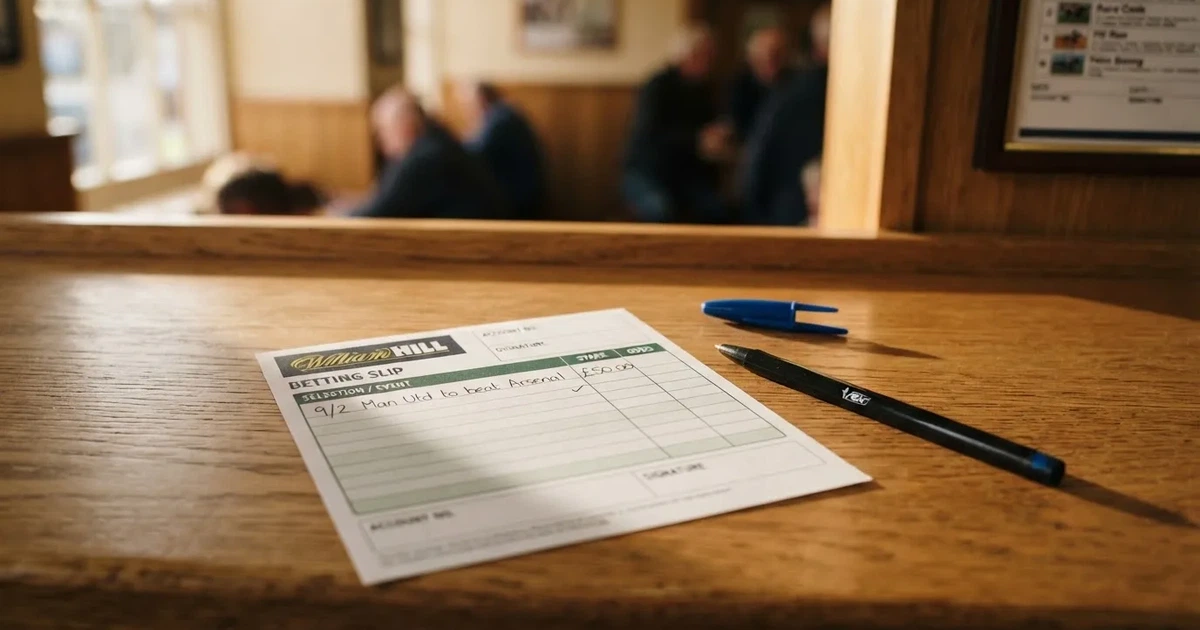
A high-stakes betting site is, in plain terms, a UK-licensed online bookmaker that will actually accept, settle and pay out a four-figure stake without quietly trimming it back to a few pounds. That is a narrower description than it sounds. Almost every operator on the Commission’s register will *try* to take a large bet once and never let a second one through; the brands that genuinely serve large-stake customers are the ones whose terms, account structure and the way their betting slip enforces limits line up with a punter who bets at this scale. This page is about those, written through the consequences that show up in practice — what it costs, when it shows, and the rule the reader checks before handing over a £5,000 stake.
It is not a recommendation to place one. Nobody can predict an outcome, and a large stake loses just as visibly as a small one when the selection drifts.
Selection, settling and staking: how a large bet is built
What changes when the stake gets bigger
A bet of £5 on a Saturday accumulator is a different kind of object from a £5,000 single on a Premier League match. The selection is identical, but three things shift around it. The bookmaker’s own decision about whether to accept the stake at all (a *stake limit* is set per market per customer, not by law). The mechanic of how the return is calculated and what the return looks like in the betting account. And the set of controls the operator is legally required to apply before the stake is even matched — verification, deposit limits and source-of-funds questions in particular.
That second layer is not optional. Since 7 May 2019 every GB-licensed site has to verify the customer’s name, address and date of birth before the first deposit, including when the first product a new account uses is a free bet or a bonus credited on registration. That is the floor, not the ceiling. A higher-spend account will face further questions as a matter of routine: where the money comes from, whether the spend fits the customer’s pattern, and whether a flag from the operator’s own monitoring triggers a more formal check. These are operator-led, not state-set ceilings — the Gambling Commission does not cap stakes or losses, but the licence holder’s own social-responsibility duties push the questions upward as deposits accumulate.
A punt at £5,000 also moves the conversation about *odds* and *margin*. The price the betting slip shows is the same number whoever is betting — a 5/1 shot is 6.00 in decimal for a £5 punter and for the same customer staking £5,000 — but the negotiated price, where the firm lets a customer request a better number, and the size of stake the operator will accept at the published price, are both set per account. So is the *overround*, the slice the bookmaker keeps on every market. None of that erases at higher stakes.
How the return and the margin are read off a price
Decimal odds turn the stake and the price into a return with one multiplication: return = stake × odds; profit = stake × (odds − 1). A £100 single at 4.50 returns £450 and pays £350 of profit; a £1,000 single at the same price returns £4,500 and pays £4,000 of profit; the percentage return is the same and the absolute number is twenty-five times larger. There is no scaling bonus and no surcharge on the larger stake that the operator will quote openly — the shift, where it lives, is in whether the bet is taken and at what price once the slip is submitted.
The margin is the same thing looked at from the bookmaker’s side. For a market with two outcomes priced at 1.90 / 1.90 (fractional 9/10) the implied probabilities sum to 1/1.90 + 1/1.90 = 1.0526, and the operator is paying out 1 ÷ 1.0526 = 0.9500 of every £1 staked. The difference, 1 − 0.9500 = 0.0500, is the *overround* — the slice of every pound bet that the bookmaker keeps on this market on average. That works out to a margin in the band roughly 4.8–5.0 % on a symmetrically priced two-way market, depending on how the implied sums are rounded. A 1X2 football market at 2.10 / 3.40 / 3.40 will sit higher, often 7–8 %; an outright market on a major league winner is routinely double that. The figure is an average: a margin of 5 % means the operator keeps 5p of every pound across many bets, not that every customer loses exactly 5 %.
A selection at a tighter price carries a smaller margin. A heavy favourite at 1.20 will take in more bets and lose fewer of them, and the implied probability alone (1/1.20 = 0.8333) shows that the operator only needs to find an outside shot to keep the book.
Combination bets and the same-game multi
A bet builder, also called a *same-game multi*, lets one customer combine markets from a single match — match result, total goals, both teams to score, a goalscorer — into one price. The bookmaker multiplies the legs together for the new price, applies its own margin to the combination, and offers the resulting number as a single bet. *bet365*’s Bet Builder+ works on this model and is available pre-match and in-play. *Coral*’s Bet Builder covers match result, goalscorers, total goals and corners across more than 100 football leagues and competitions, with cash out on selected legs. *Kwiff*’s separate Supercharge feature is a different mechanism: it boosts an existing price — a 2/1 shot becomes a 20/1 shot — for no extra stake and applies to singles or multis on any sport.
Accumulator mechanics are the same with no surprise. A four-fold acca prices each leg and multiplies them; a *Bet Builder* is structurally an accumulator whose legs all sit on one event, which is why the same-games rule sits as a check against correlated selections. The returns compound: a £100 stake on a four-fold at combined odds 25.00 returns £2,500 with £2,400 of profit, but only if every leg wins. Cash out, where it is offered, settles the bet early at a derived number the operator posts in-play and is a separate market on the same selection — the cash-out figure is not a refund of the stake.
Each-way and settlement mechanics
Each-way is two bets of the same stake: one on the win, one on the place. The stake doubles. Place terms are set per race and per bookmaker — a third of the odds for the places in a big field, a quarter in a small one are typical — and the *Rule 4 deduction* adjusts place returns when a runner is withdrawn. Best Odds Guaranteed, where it is offered on UK and Irish horse racing, pays the higher of the price taken and the *starting price* (SP) on the race. *William Hill* runs BOG from 8 AM on the day of the race, on single and multiple bets, and excludes ante-post, tote and pari-mutuel bets. *Ladbrokes* and *Coral* carry equivalent terms on UK and Irish racing and greyhounds. None of this changes at high stakes; what changes is the size of the bet the operator will allow through once the price is taken.
Shortlist and assessment: ten licensed operators, compared
What “licensed” actually buys a high-stakes customer
A GB licence is the only thing that makes the customer a Commission-protected consumer. No statutory market list exists: an operator holds a licence category — remote general betting standard (real events) being the relevant one for football, racing and most of what high-stake customers bet on — and offers markets under its own rules and the LCCP. The Commission’s public register is searchable by business name, trading name, domain or account number. It is the whole test of who holds a licence, and it is worth checking before a large deposit changes hands. The table below pulls together what each operator’s own terms state on the subject this page is built around; the licence line shows the Commission’s account number and the licence holder named against it on the register today.
The comparison table
A high-stakes bettor choosing between ten licensed operators is choosing between ten different house rules. The columns the table tracks are licence holder and account number on the public register, and what each operator’s own published terms state on the subject of accepting, settling and paying out a large bet. The format and the columns follow the matters the spec named; one column was added on the question of stake limits and price negotiation, where it changes the comparison at large stakes.
| Brand | Gambling Commission licence holder (account number) | What the operator’s own terms say on large stakes |
|---|---|---|
| Betfred | Petfre (Gibraltar) Limited — Commission account 39544 | Large stake accepted subject to per-customer limit; Bet Builder, Sub Switch and Extra Places available on football and racing; price-boosted markets carry their own maximum-stake limit |
| Midnite | Midnite Limited — Commission account 101839 | In-play events, acca builder, popular accas and price boosts with maximum-stake limits displayed per market on the slip |
| Sky Bet | SBG Sports Limited — Commission account 67370 | First single or each-way bet from 5p at 1/1 or greater; credit issued as three £10 free bet tokens; large-stake customers face the same per-customer limit framework |
| Kwiff | Eaton Gate Gaming Limited — Commission account 44448 | Supercharge can boost a taken price instantly (a 2/1 can become a 20/1) on singles or multis on any sport; standard large-stake acceptance with per-account limits |
| Ladbrokes | LC International Limited — Commission account 54743 | Best Odds Guaranteed on UK and Irish racing, Acca Boosts, in-play markets; large stakes accepted per market and per customer |
| William Hill | WHG (International) Limited — Commission account 39225 | Football Acca Boost covers 2-plus-leg accas at 1/5 or bigger, with a 3 % boost on a double up to 200 % on 20-plus legs, capped at £10,000 per online bet, running until 30 May 2027 |
| BetGoodwin | Goodwin Racing Limited — Commission account 2927 | Welcome package credited as three separate free bet tokens (£5 sports, £5 acca, £5 Sub-Cover); large-stake acceptance set per market |
| BetVictor | BV Gaming Limited — Commission account 39576 | Best Odds Guaranteed on UK and Irish racing, BetFinder for racing bets with Smart Stats; large-stake acceptance per market and per customer |
| QuinnBet | QuinnBet (Gibraltar) Limited — Commission account 61011 | Free bets valid 7 days from credit, usable on any market at odds of 1/2 (1.5) or greater, with maximum odds 50/1; straight accas allowed, Trixies, Patents and Yankees not eligible |
| Swifty Sports | Swifty Global (UK) Ltd — Commission account 58957 | Best Odds Guaranteed, Cash Out on horse racing and football, daily price boosts, live streaming and in-play; Bet Builder listed as coming soon, so absent on the comparison today |
The columns that show up on every line are operator, licence holder, account number and the operator’s own published rule on the subject. Anything the operator’s terms do not state explicitly — a precise maximum stake per market, for example — is deliberately left out: a number nobody has put in writing reads as invented once it is in a column.
Reading the table
The headline of the table is that *every* brand in this set holds the right kind of licence to take a large bet, and none of them *guarantees* to take one. The right kind of licence is *remote general betting standard (real events)*; the guarantee is a per-customer, per-market decision the operator makes on a case-by-case basis and never publishes in advance. So the consequence for the reader is that the question “will they take £5,000?” is one the slip answers, not the marketing page — and the prudent move is to ring the operator’s high-stake desk or build the bet on a trial stake to see what number comes back before committing a five-figure bankroll.
Two patterns are worth noting. The first is that several brands on the register are run under the *same* licensee — Ladbrokes and Coral through LC International, William Hill and 888 through WHG-related entities — and that a punt at scale settles into a single account-management decision on that licensee’s side, regardless of which brand name appears on the slip. The second is that the welcome offer lines on the sites above are deliberately light. A larger-stake customer is, in practice, more interested in whether the existing-customer price on the bet they actually want is the one the table can verify, than in whether a £30 credit is sitting on a new account.
Fundamentals and landscape: who the market is, in numbers the reader can verify
The size of the licensed market
There is no published number of how many GB-licensed remote betting operators are live today that this page could quote without an access date stamped on it. The Commission’s public register lists every active account, and it changes weekly — accounts are added, surrendered, varied. What can be said without a number being invented is that the set of remote general betting standard (real events) licence holders is materially larger than any ten-name shortlist; the Commission’s role here is not to choose between brands but to register them.

A high-stakes customer is not, in the Commission’s framework, a separate class of customer. The framework is the same for every punter on the register, and the consequences at higher spend are operator-led duties — verification, source-of-funds questions, deposit-limit options — rather than Commission-set limits on stake size or winnings. A £150-a-month punter and a £150,000-a-month punter sit inside the same licence; what differs is the social-responsibility work the operator is required to do for each.
Spread betting, and the separate FCA regime
The brands on the Commission’s register handle fixed-odds betting. *Spread betting* on financial markets is regulated by the Financial Conduct Authority, not the Commission, and a spread bet that loses can exceed the original deposit — a £1,000 stake on a market that moves 5 points against the customer posts a £5,000 liability, settled in cash. That is the FCA regime at work, with the different risk profile it admits. Spreadex carries *both* regulators — the FCA for spread betting, the Commission for fixed-odds — and the consequence is that the terms on each side of the same account are read against different rule books, not against one.
The licence and what it costs the customer
A GB licence is compulsory at the point of consumption. An operator whose remote facilities are used in Great Britain needs a Commission licence wherever it is based, since the Gambling (Licensing and Advertising) Act 2014 took effect (sections 33 and 36 of the Gambling Act 2005 as amended). A Curaçao, Maltese or Gibraltar licence is not a substitute in itself; the relevant question is whether the same firm also holds a Commission account. There is no state monopoly and no statutory cap on licences; what limits the field is competition, marketing cost and the Commission’s own enforcement record.
The cost the *customer* pays for this regime is the verification step — name, address and date of birth checked before the first deposit, including on accounts opened for a free bet — and the further customer-due-diligence work as spend climbs, which is normal under anti-money-laundering rules. The benefit is GAMSTOP coverage, the Commission’s complaints route, approved alternative-dispute-resolution, the 10x bonus wagering cap (from 19 January 2026, capped at 10x) and the protection of source-of-funds questions being run by a licensed operator rather than by no one. A customer who uses an unlicensed offshore site loses each of those on its own and is on the wrong side of a fact no marketing line refutes.
Statute and enforcement: what the law fixes and what it leaves to the operator
What is and is not set by statute
No UK statute names what may be bet on. An operator holds a licence for a category and offers markets under its own rules and the LCCP. The categories matter: *remote general betting standard (real events)* is the licence for sports; *remote general betting standard (virtual events)* is a separate category for computer-generated events; *remote betting intermediary* is the licence for betting exchanges — *Betfair*’s exchange runs under it, alongside the sportsbook which runs under the general betting standard licence. *Pool betting* is its own category — off-course pool betting on horse or dog racing is on a separate licence and duty under the Act. *Esports* are treated like any other real-event sport for licensing; novelty markets on politics, TV shows and the like are offered by GB bookmakers with no statutory bar in sight.

In-play betting is offered and is not, on the Commission’s own published position, *unrestricted* as a legal conclusion: every in-play market is run under the operator’s licence conditions and customer-protection duties. Spread betting that is not a financial product — sports spread betting, for instance — falls inside General Betting Duty. The Commission’s powers include cease-and-desist notices, search-engine referrals, work with registrars and payment providers, and statutory DNS blocking powers for which court orders are required; ISP blocking at scale has not been declared in operation. Enforcement is disruption, not a state block.
The two things this law means at high stakes
The first is the 10x cap on bonus wagering. From 19 January 2026 the wagering requirement attached to a bonus is capped at 10x — a £10 bonus at 50x requires £500 of bets to clear, and a £10 bonus at 10x requires £100. The cap sits at the bonus value; the position on free bets whose only condition is a minimum-odds selection is not pinned down in the published Commission position. Mixed-product promotions — an offer tied to betting plus casino plus bingo, for example — are banned at the same time. The consequence for a high-stake welcome offer: the headline credit is real, the playthrough is bounded by statute, and the fine-print terms on minimum odds, expiry and eligible markets still move the picture inside that statutory cap.
The second is the *financial vulnerability check*. From 28 February 2025 the operator must run a public-record check — bankruptcy, county-court judgments, similar registers — once a customer’s deposits minus withdrawals exceed £150 in a rolling 30 days. This is *not* an income check and *not* a credit-reference check; it is a discrete, narrow step that runs against public data. The broader *financial risk assessment* — the affordability check that the press has been writing about — is announced in a Commission article of 7 July 2026 with a staged plan and no start date; the right wording for now is *announced, staged, no start date*. The Commission has not published it as in force.
Tax and the change coming in April 2027
The customer pays no tax on betting winnings in Great Britain. General Betting Duty is the operator’s tax on gross profits, currently 15 %; from 1 April 2027 a new remote betting rate of 25 % applies within it, on remote bets generally, while remote bets on UK horse racing, bets on self-service betting terminals in licensed premises, pool betting and in-person betting stay at 15 % (HM Government policy paper of 26 November 2025). Until 1 April 2027 the remote rate holds at 15 %. Spread betting carries its own rates of 3 % financial and 10 % other. None of this is a charge the customer pays. Whether, and to what extent, operators pass duty on through odds is not established: customers see prices, not duties, and the published margin is the only signal of how the book has moved.
The Commission’s statutory levy is a separate charge on operators, not a tax on customers.
Advertising and the rule on who may appear
The Commission does not license advertising. *CAP Code* section 16, enforced by the ASA on non-broadcast media, requires marketing to be socially responsible, of no strong appeal to under-18s, and free of anyone who is or seems to be under 25 gambling or playing a significant role (with an exception for marketing placed where a bet can be made directly). That rule concerns who *appears* in the advertisement, not who can bet; the minimum age is fixed by statute at 18. The *whistle-to-whistle* ban on betting advertisements around live sport before the 9 pm watershed has been in operation since 1 August 2019, with horse and greyhound racing excluded. The Premier League clubs’ voluntary withdrawal of gambling sponsorship from the front of matchday shirts runs from the 2026/27 season onward; sleeves and perimeter hoardings remain.
Payments and the credit-card ban
Credit cards are banned for gambling in Great Britain since 14 April 2020 under LCCP condition 6.1.2, and the ban covers credit-card-funded payments through an e-wallet as well as direct credit-card use. *Debit* cards are not covered by the ban. Anonymous play is not possible at a licensed site because of the pre-deposit identity check. Source-of-funds questions follow at higher spend under the anti-money-laundering rules. None of the wider payment questions — a state list of permitted methods, a named-account rule, a settled position on cryptocurrency deposits at licensed sites — is established in the public register; payments are a question of each operator’s terms.
Safeguard and wellbeing: the controls a high-stake account is required to have
GAMSTOP and the gambling shops service
GAMSTOP is the national multi-operator online self-exclusion scheme and a mandatory licence condition for every online operator since 31 March 2020. Periods are six months, one year, five years or five years with auto-renewal; after the minimum period the exclusion stays in place for a further seven years unless the customer asks GAMSTOP to remove it. Coverage is online sites and apps. The shops service is separate — the multi-operator self-exclusion for high-street betting shops is a different scheme run by the same set of operators and registered through the shop. The consequence for a high-stake customer who has self-excluded is that the exclusion binds across every brand on a single Commission register, not across the one the customer happens to be on.
Deposit limits and the customer’s choice
There is no state-set deposit or loss ceiling for betting. Operators must offer a gross deposit limit on a fixed time frame under RTS 12 of the LCCP; the first changes have applied since 31 October 2025, a second phase was postponed to 30 September 2026, and whether that second phase is now live is not established. The limit is the customer’s choice. A £150-a-month punter and a £15,000-a-month punter are both offered the full set of limit options, with the *effective* ceiling set by the customer’s own choice; what changes with spend is the *monitoring* of the chosen ceiling, not the ceiling itself.
Stake limits, cash-out and the bet-level controls
The Commission fixes the broader protective frame; the firm sets the per-market maximum-stake number and the in-play cash-out availability. Midnite’s price-boosted markets carry a maximum-stake limit on the betting slip itself; William Hill’s Cash Out is not available on each-way bets and is not guaranteed on accumulators; Coral’s Bet Builder runs to more than 100 football leagues and competitions with cash out on selected legs; Swifty Sports’s Bet Builder was listed as coming soon at research date. Each of these is the firm’s own policy, published in the help pages, and the consequence at large stakes is that *which* build of an offer is taken is at the operator’s discretion, even on the slip.
Where a high-stake customer reads the rule
The conditions are: licence type and account number on the Commission’s public register; bonus wagering cap of 10x on any bonus (from 19 January 2026); financial vulnerability check at deposits minus withdrawals above £150 over a rolling 30 days (from 28 February 2025); GAMSTOP registration optional but binding across all licensed online operators once invoked; minimum age 18 and identity verification before the first deposit (since 7 May 2019). That is the floor.
Above the floor sit the operating rules each firm publishes, and the rules sit in two places. The general help pages cover the firm’s own policy on stake acceptance, cash-out eligibility and free-bet expiry. The slip itself carries the actual stake cap on the market and price the customer is looking at, often described as a *maximum stake* in the bet panel. Where the slip carries no maximum, the firm’s own trading desk decides on a per-bet basis; large-stake customers who treat that as the answer rather than as a marketing line avoid the surprises.
A high-stake customer sits inside the framework but is not exempted from it. The verification ran before the first deposit, the GAMSTOP opt-in is one click away, the £150 trigger for the public-record vulnerability check is set in statute not in policy. The help available outside the operator is run by *GamCare* (the National Gambling Helpline), *GambleAware*, *NHS gambling clinics* and *Gamblers Anonymous*, all listed on the Commission’s register of support bodies.
The ten licensed operators, in detail
The brands below are the ten licensed operators featured on this page. Each one holds a *remote general betting standard (real events)* licence on the Commission’s public register. Where the operator’s own terms name a stake cap, a feature with a stake limit, or a non-standard rule on a Bet Builder or in-play market, it is reproduced here exactly as published.
1. Betfred — Petfre (Gibraltar) Limited, Commission account 39544
Betfred carries *Bet Builder*, *Sub Switch* on football, *Racing Post* data, *Extra Places*, live casino and bingo. The two features that interact with high stakes directly are Extra Places — each-way place terms pushed past the standard each-way fraction on selected races — and the bet-builder roll-up that lets a customer combine markets from a single match into one price. The maximum stake sits in the bet panel; the firm’s own framework for a large-stake customer is the high-stake desk, not the slip. A punter looking to push an each-way stake around a major racing fixture runs into the Extra Places offer first and the per-customer acceptance second.
The verdict: Betfred is built around horse racing as the spine, and the features that suit a large-stake customer — Extra Places, racing-specific market depth — sit on that spine. Football is a strong second string, and the Bet Builder roll-up gives it weight.
2. Midnite — Midnite Limited, Commission account 101839
Midnite shows in-play events, an *acca builder*, *popular accas* and *price boosts*, with each price-boosted market carrying a *maximum-stake limit* on the slip. The sports welcome offer is a *£5-or-more pre-match bet at EVS (2.0) or greater within 14 days of sign-up* for £25 in free bets plus 50 free spins valid for 7 days. The maximum-stake limit on the slip is the practical high-stakes answer from this operator — the build of the offer is consumer-facing, and the cap on a single boosted market is the firm’s signal on what it will take.
The verdict: Midnite is best suited to the acca and the boost rather than the standalone large single. A high-stake customer who knows the boosted markets on a given day can place a stake the slip will accept; outside those markets the per-customer limit framework takes over.
3. Sky Bet — SBG Sports Limited, Commission account 67370
Sky Bet’s welcome offer for new customers is £30 in free bets, credited as three £10 free bet tokens, after a deposit of at least £5 and a first single or each-way bet of at least 5p at odds of 1/1 or greater. The mechanics — minimum 5p at 1/1, a multi-token credit — are consumer-facing and small-stake friendly; they do not describe the firm’s behaviour at high stakes, which is set on the slip and on the trading desk. Sky Bet is one of two brands on the Commission’s register alongside Sky Casino and Sky Bingo, all under SBG Sports Limited.
The verdict: Sky Bet’s published welcome offer is built for the smaller end of the customer base; the operator’s deep market on football and racing carries larger stakes per market, and the limit on a specific bet resolves at the slip.
4. Kwiff — Eaton Gate Gaming Limited, Commission account 44448
Kwiff’s *Supercharge* feature boosts a taken price instantly — a 2/1 becomes a 20/1 — on a single or multi bet on any sport. The brand is licensed, the help pages describe Supercharge mechanics, and the standard large-stake framework applies on top. The published age rating on the App Store is 17+; the firm itself describes itself as a trademark operated by Spryme Ltd. A £5,000 stake on a Supercharged price is the kind of bet the firm’s settlement desk takes at its discretion; a £5 stake on the same price is one the slip will clear.
The verdict: Kwiff’s distinct offering is the Supercharge — a price upgrade applied to an existing selection with no extra stake — and a high-stake customer approaching the brand for that reason has a single question to resolve with the firm before placing the bet.
5. Ladbrokes — LC International Limited, Commission account 54743
Ladbrokes carries *odds boosts* on horse and greyhound bets, *Best Odds Guaranteed* on UK and Irish horse races, *in-play betting* and *Acca Boosts*. The licensee is LC International Limited, the same company that runs *Coral* — Ladbrokes and Coral run as a single operation on the Commission’s register, and a customer opening either brand lands on the same compliance team. The BOG offer runs from 8 AM on the day of the race and applies to UK and Irish horse racing; ante-post and pool bets are excluded, as on every BOG product.
The verdict: Ladbrokes and Coral run the same shop window with different front ends, and a high-stake customer looking for the best BOG terms will find equivalent policies on each. The larger-stake decision is whether the offer on the bet the customer actually wants sits at one or the other brand, not which firm to use.
6. William Hill — WHG (International) Limited, Commission account 39225
William Hill’s *Football Acca Boost* covers accas of 2-plus legs with each selection at 1/5 or bigger, the boost running 3 % on a double up to 200 % on 20-plus legs, with a maximum boost of £10,000 per online bet, in operation until 30 May 2027. The Acca Boost interacts directly with a high-stake customer’s stake: the £10,000 cap is the maximum boost the firm pays, not the maximum stake the firm will accept — the actual stake limit is set by the firm’s trading framework. *Best Odds Guaranteed* runs from 8 AM on the day of the race, on single and multiple bets, and excludes ante-post, tote and pari-mutuel bets. *Cash Out* is not available on each-way bets and is not guaranteed on accumulators.
The verdict: William Hill’s published offer is most relevant for the existing-customer large-stake acca, where the £10,000 boost cap interacts with a stake that approaches it. The BOG core around UK and Irish racing is the daily offering a high-stake racing customer reads on the slip.
7. BetGoodwin — Goodwin Racing Limited, Commission account 2927
BetGoodwin’s sports welcome offer is *Bet £10 & Get £15 in Free Bets*, made up of a £5 sports bet, a £5 acca and a £5 *Sub-Cover* bet. The split-token structure is unusual and reflects the racing-led nature of the firm. The licensee is Goodwin Racing Limited; the brand’s roots are in on-course bookmaking, and the published product leans into horse racing.
The verdict: BetGoodwin is built around racing more than football, and the Sub-Cover token — refund cover on a single losing selection in an acca — is the brand’s specific high-stake-relevant feature for existing customers.
8. BetVictor — BV Gaming Limited, Commission account 39576
BetVictor carries *Best Odds Guaranteed* on UK and Irish horse racing, enhanced live race streaming, a *BetFinder* feature for finding racing bets and *Smart Stats*. The licensee is BV Gaming Limited, which also runs *Heart Bingo* and other related brands. The racing-led structure and the dedicated BetFinder tool make the brand a focused option for a high-stake racing punter.
The verdict: BetVictor sits closest to racing research and BOG terms for a customer whose book is on UK and Irish racing. Football is supported but is not the firm’s lead product.
9. QuinnBet — QuinnBet (Gibraltar) Limited, Commission account 61011
QuinnBet’s free bets are valid for 7 days from credit and can be used on any market at odds of 1/2 (1.5) or greater, with maximum odds of 50/1; straight accas are allowed but Trixies, Patents and Yankees are not. The exclusion of named multi-leg structures from the free-bet eligibility is the kind of detail a high-stake free-bet customer reads first; the maximum-odds cap of 50/1 is the second. The licensee is QuinnBet (Gibraltar) Limited; Gibraltar-licensed firms holding a Commission account here run the Gibraltar structure inside the GB licence.
The verdict: QuinnBet’s published terms are the brand’s main feature for a high-stake customer approaching a free bet — the maximum-odds cap and the eligible-bet structures together narrow where the credit goes, and the choice sits with the customer before the bet is placed.
10. Swifty Sports — Swifty Global (UK) Ltd, Commission account 58957
Swifty Sports carries *Best Odds Guaranteed*, *Cash Out* on horse racing and football markets, daily price boosts, live streaming and in-play betting; *Bet Builder* is listed as *coming soon*. The brand’s published feature set is racing-led; the absent Bet Builder is the one piece of the modern feature set the firm does not yet ship. The licensee is Swifty Global (UK) Ltd, a UK-registered firm.
The verdict: Swifty Sports suits a racing- and price-boost-led approach. The absent Bet Builder narrows the football offer — a high-stake customer placing a same-game multi sits elsewhere.
Frequently asked questions
How can it be checked that a bookmaker holds a Gambling Commission licence?
The Commission’s public register is searchable by business name, trading name, domain or account number, and is the only test of who currently holds a GB licence. Each licence has an account number, a category and a licence-holder name; the category tells the reader whether the brand holds a *remote general betting standard (real events)* licence, which is the relevant one for sports. A brand with no entry on the register is not licensed for Great Britain, and the consequence for a customer is the loss of every consumer protection that flows from the licence. Verification is on the brand itself.
How is the return on a bet worked out from the stake and the odds?
The decimal-odds formula is return = stake × odds, with profit the same minus the stake. A £100 single at 4.50 returns £450 (a profit of £350); a £100 accumulator whose four legs combine to 25.00 returns £2,500 (a profit of £2,400). Fractional odds of 5/1 mean every £1 staked returns £5 of profit plus the £1 stake, i.e. 6.00 in decimal odds; the formula is the same on both sides of the conversion. A selection that loses returns the stake only — there is no partial payout on a single unless the bet was each-way.
What is the bookmaker’s margin and how can it be seen in the odds?
The margin, also called the overround, is the slice of every pound bet that the bookmaker keeps on a market on average. For a market with two outcomes priced at 1.90 / 1.90, the implied probabilities sum to 1.0526 — that is, the book pays out 0.9500 of every £1 staked across many bets, and the margin is the difference, 0.0500 in this case, or roughly 5 %. A 1X2 football market at 2.10 / 3.40 / 3.40 carries a margin in the 7–8 % band; an outright market on a major league winner is routinely double that. The margin is a statistical estimate across many bets, not a guarantee on any single bet. The customer only sees it once they read the prices together.
How do fractional odds such as 5/1 convert to decimal odds such as 6.00?
The conversion is decimal = a/b + 1, where a/b is the fractional form. So 5/1 becomes 5 + 1 = 6.00; 11/4 becomes 11/4 + 1 = 3.75; *evens*, written 1/1, becomes 2.00. Decimal prices are quoted in the form a punter in Great Britain will see in-app on most modern operators, with the older fractional form still appearing in shop-window marketing and on some racing markets. The actual calculation of return and profit is the same on both sides of the conversion: stake × decimal odds gives the return.
Which tools for controlling play does a licensed bookmaker have to offer?
A licensed operator offers *GAMSTOP* self-exclusion across all online operators from 31 March 2020, a deposit limit the customer sets, time-out and reality-check reminders, and the *financial vulnerability check* above the £150-deposits-minus-withdrawals-over-30-days threshold from 28 February 2025. The *financial risk assessment* is announced and staged but is not yet in force at the date research was gathered. The minimum age is 18 and identity is verified before the first deposit. Outside the operator, *GamCare* (the National Gambling Helpline), *GambleAware*, *NHS gambling clinics* and *Gamblers Anonymous* are listed on the Commission’s register of support bodies.
Are betting winnings taxed in Great Britain, and who pays General Betting Duty?
The customer pays no tax on betting winnings in Great Britain — that is general information, not tax advice, and a professional gambler should ask HMRC or a tax adviser about their own circumstances. General Betting Duty is the operator’s tax on gross profits, currently 15 %; from 1 April 2027 a new remote betting rate of 25 % applies within it, on remote bets generally, while remote bets on UK horse racing, bets on self-service betting terminals in licensed premises, pool betting and in-person betting stay at 15 % (HM Government policy paper of 26 November 2025). The Commission’s statutory levy is a separate charge on operators, not a tax on customers.
Betting sites & exchanges – UK betting
Content created by the «UK betting» team
