
Cycling Betting Odds — Reading the Price Behind the Peloton
 Available in US
Cycling betting odds in Great Britain are built the same way as every other sport that the licensed bookmakers quote: a margin is folded into the price, an in-play market shifts with the road, and the long futures market on a Grand Tour opens months before the first team time trial. Reading those numbers well is the difference between staking on a name and staking on a price. This guide works through how cycling markets are constructed, who is licensed to take your money on them, where the rulebook sits in 2026, and what each of the ten operators on the shortlist actually offers a punter who wants to back a rider, a stage or the general classification.
The data shown below was checked against the Gambling Commission’s public register on 27 October 2026, and operator-level terms were taken from each brand’s own site on the same day.
Cycling Betting Odds Fundamentals: From the Peloton to the Price
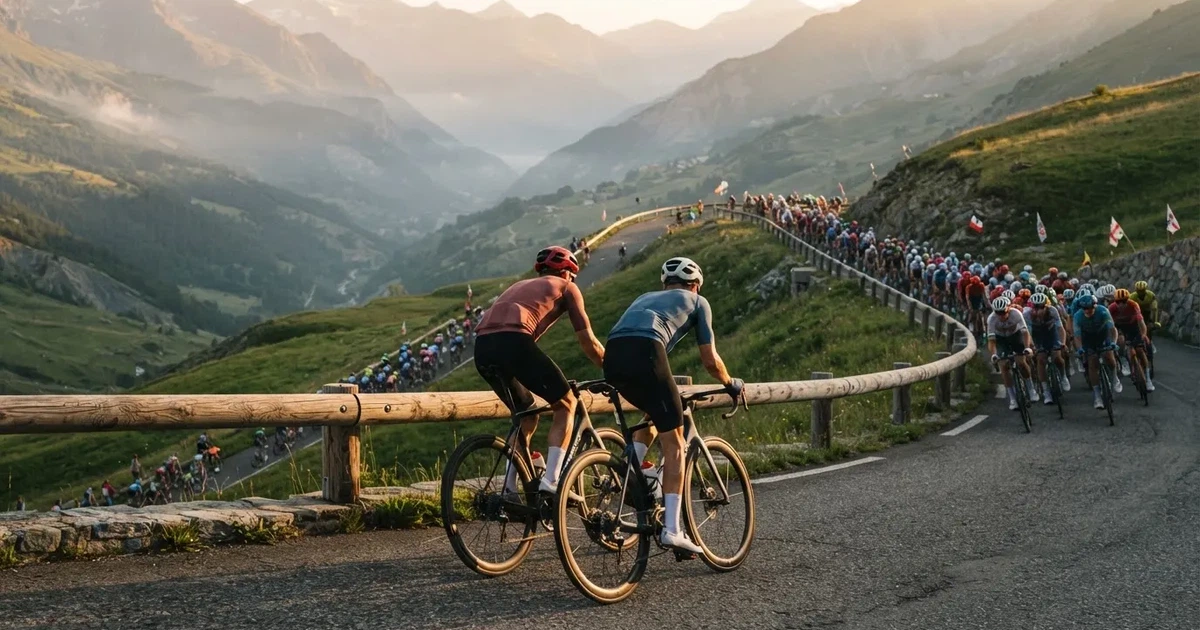
The UCI (Union Cycliste Internationale), based in Switzerland, has governed road cycling since 1900 and holds annual men’s and women’s road world championships. Almost every professional race a UK bookmaker quotes — from the spring Classics to the Tour de France — sits under the UCI umbrella, and the bigger ones sit one rung higher in the UCI WorldTour, which was created in 2005 as the ProTour and renamed the WorldTour in 2011. The three Grand Tours sit at the top of that ladder: the Giro d’Italia (first held 1909), the Tour de France (1903) and the Vuelta a Espana (1935). UCI rules allow Grand Tours to last between 15 and 23 days, and each race usually includes two rest days. Grand Tour leaders wear a pink jersey in the Giro, a yellow jersey in the Tour and a red jersey in the Vuelta — those colours are the visual shorthand the bookmakers borrow when they draw their ante-post markets.
Knowing the calendar matters because the price of a rider changes with the season. The general classification market for the Tour opens while the previous year’s Vuelta is still running, narrows through the spring Classics, and tightens again as the first mountain stages approach. Stage markets behave differently: they are open only in the days before each stage, and they are reshaped by the day’s start list, the weather on the climbs and the breakaway that forms in the first thirty kilometres. Inside a Grand Tour, the race leader’s price for overall victory is usually shorter than it was at the start, because the leader has already cleared the time-cut risk; the price of the second-placed rider may also shorten if the team looks strong in the mountains. A stage price, by contrast, can swing from 8/1 the night before to 33/1 an hour before the flamme rouge if the rider has been distanced on a climb.
The bookmaker’s margin sits inside every one of those prices. To see how, take an illustrative two-way match market at decimal odds 1.90 / 1.90 (fractional 9/10 each way). The payout share on a one-unit stake at fair prices would be 1 ÷ (1/1.90 + 1/1.90) = 1 ÷ 1.0526 = 95.0 %, which leaves the bookmaker a margin of about 5.0 %. That is the floor of what a quoted price means: roughly 95 pence of every pound staked is paid back across all outcomes, and the other 5 pence is the bookmaker’s take — independent of who wins. A three-way race (the outright winner of a stage, where dead heats for second still produce three paying places) carries a wider margin still, typically somewhere between 6 % and 10 % at major races and rather higher on smaller one-day events. The band, not a single figure, is the honest answer: the margin a punter actually pays depends on which race, which market and which bookmaker is being quoted, and it moves with the liquidity of the event.
A short price on a Grand Tour favourite is not the same animal as a short price on a Saturday afternoon stage. The first is a futures market with months of news behind it; the second is settled within hours and may move several times during the stage itself. The punters who get the best long-run return are the ones who treat the two as different jobs.
The Grand Tours in 2026: A Fixed Calendar the Bookmakers Already Know
The 2026 Tour de France ran from 4 to 26 July 2026, starting in Barcelona with a team time trial and finishing on the Champs-Elysees in Paris, over 21 stages and 3,245 km with 23 teams. Tadej Pogacar (UAE Team Emirates, Slovenia) won the 2026 Tour de France, his fifth Tour victory. The Giro and the Vuelta sat on either side of it on the calendar, and the Classics ran through the spring — the bunch sprints, the Ardennes, the cobbles, and then Liège–Bastogne–Liège close to the first rest day of the Giro.
For a punter, three things follow from that fixed shape. First, the ante-post book on every Grand Tour opens months in advance, and the price you take on the day the market opens is rarely the price you take on the day the race starts — the rule-4 and non-runner deductions apply once a name is pulled from the start list, and the field’s condition through the spring is what moves the line. Second, the in-play markets only exist during a stage; pre-match prices are not carried forward, and the cash-out value on a stage bet depends on the live feed a bookmaker subscribes to. Third, women’s road cycling now has its own WorldTour calendar and its own World Championships, and the bigger operators quote both — the depth of that quote varies sharply from one bookmaker to another.
The Classics and the World Championships fill the rest of the road season. One-day races like Milan–San Remo, the Tour of Flanders, Paris–Roubaix and Liège–Bastogne–Liège are quoted with a winner market, a podium market and often a head-to-head, and the bookmaker’s margin on those races tends to be wider than on the Grand Tours because liquidity is thinner. Stage races outside the WorldTour — the Dauphine, the Tour de Suisse, Paris–Nice, the Volta a Catalunya — sit in the middle: smaller fields, narrower markets, prices that move more on team news than on form.
What Markets a UK Bookmaker Actually Quotes on Cycling
The standard menu on a Grand Tour is straightforward. Outright winner, podium (top two or three), top finisher by nationality, the points classification, the King of the Mountains, the young rider classification, the team classification, and stage winner for each of the twenty or so stages. Head-to-head match bets between two named riders — who finishes higher in GC, who scores more points on a given stage — are common on every major event. Each-way terms are usually a quarter of the win odds for the first three places in stages and a fifth of the win odds for the first four in the general classification, but those fractions are operator decisions and should be checked on the betting slip before staking.
Outside the Grand Tours the menu narrows. On the Classics, outright and head-to-head are the bread and butter, and the long tail of under-25, top-5, first-over-the-line-from-a-named-country markets is offered more patchily. On smaller stage races the outright winner market may be the only one priced at any depth.
In-play on the road is technically possible and bookmakers do offer it, but the price is tied to a live feed and to the bookmaker’s view of the gap to the next rider. Liquidity on in-play cycling is thin compared with in-play football or tennis, so the margin is wider and the suspension of the market during a crash or a key attack is the rule rather than the exception. Cash out on cycling markets exists where the bookmaker’s terms allow it, but the value the punter sees during a race reflects the bookmaker’s own model of what’s likely to happen next, not the prevailing pre-match price.
How Cycling Betting Odds Are Built — and What the Bookmaker Keeps
A bookmaker’s price on a two-way market with two equally fancied riders looks, on the surface, like 1.90 / 1.90. The arithmetic behind it is the small paragraph above: the two implied probabilities sum to 1.0526, the overround, and the gap between that sum and 1.00 is the margin. Anything the bookmaker does not pay back to customers, the bookmaker keeps on every unit staked, regardless of the result. A wider margin is a tax on every bet on that market, not just on losing ones.
Three things move the margin. First, liquidity: a heavily bet market — the Tour de France winner, the day’s headline stage — is priced tighter because the bookmaker has offset a lot of the risk. Second, information: a market where the bookmaker’s traders know less — a small one-day race, a lower-tier stage race — is priced wider to compensate for the model error. Third, market type: combination markets, where two or more riders must both finish in a given position, carry a built-in correlation cost that the bookmaker passes on as a wider margin.
That is also why a price boost on a cycling market is worth treating with the same scepticism as a price boost anywhere else. The “boosted” price is the bookmaker’s headline number, not the bookmaker’s usual price; the usual price is what the margin is built on, and the boost is the marketing spend that goes with it. The arithmetic behind the offer is unchanged.
The UCI Tour Framework: Governance, Teams and the Calendar a Punter Markets On
The UCI runs road cycling from its base in Switzerland, and the WorldTour under it is the top tier of the sport — twenty-three teams in this calendar year, including the trade teams that race every major stage race and most of the Classics. The trade teams outside the WorldTour — the ProTeams — race a lot of the same calendar but at a lower ranking, and their riders can be promoted at the end of a season. The calendar the bookmaker markets on is the UCI calendar: the WorldTour races, the ProSeries races below them, and the national championships and World Championships that close the season.
For a punter, the practical consequence is that ante-post prices on WorldTour events are anchored to a deeper information set than prices on ProSeries events, and the bookmaker’s own traders price accordingly. The price of a podium finisher in the Tour is also a model output in a way that the price of the third favourite in a lesser stage race is not, and the wider margin on the lesser race is the bookmaker’s acknowledgement of the difference.
How to Read a Cycling Odds Board: Decimals, Fractions and the Starting Price
UK bookmakers write prices in two forms. Fractional odds — 5/1, 11/4, evens (1/1) — are the older British form; the first number is the profit per unit stake if the bet wins, and a shorter price than evens is “odds-on”. Decimal odds — 6.00, 3.75, 1.50 — express the total return per unit stake, including the returned stake. The conversion is mechanical: a/b in fractions is a ÷ b + 1 in decimals, so 5/1 = 5 ÷ 1 + 1 = 6.00 and 11/4 = 11 ÷ 4 + 1 = 3.75. Either form returns the same money; the decimal form is the easier one to multiply when a combination bet stacks several legs.
Best Odds Guaranteed (BOG) is a horse-racing concession paid by most UK bookmakers, where the price taken at the time of the bet is compared with the starting price (SP) at the off, and the bigger of the two is paid. BOG is not the same thing on a cycling market. On a road race there is no off-course SP, and the price taken at the time of the bet is the one that settles. Each-way terms on cycling follow a similar pattern: the place fraction is set by the bookmaker’s race rules, usually a quarter of the win odds on stages and a fifth of the win odds on the general classification, and the place part of an each-way bet pays independently of the win part.
Ten UK Bookmakers on Cycling: The Shortlist and What Each One Offers
Ten licensed operators sit on the shortlist for cycling in 2026. Each is a Gambling Commission remote licence holder checked against the Commission’s public register on 27 October 2026, and each carries the categories of remote licence that permit a quote on real-world cycling events. The write-ups below say what each operator brings to a cycling punter; the table that follows collects the licence details and the brand’s own published terms on the key features.
DragonBet
DragonBet’s app is published by DragonBet Ltd and is built around Welsh football and rugby, racing, American football, in-play betting and bet-builder markets. Cycling sits alongside those as a quoted sport, and the bet-builder is the feature a punter chasing combination prices on a single stage will want to check before staking. DragonBet Ltd holds the Gambling Commission remote licence 064908-R-339041-003 (Commission account 64908), which covers remote general betting on real events.
For a punter who follows Welsh sport and wants a bookmaker that bundles that with the Grand Tours, the platform fits the bill. The trade-off is the menu outside its core sports: cycling is offered, but the depth of in-play quote on a mid-week stage is narrower than at a specialist major.
Fafabet
Fafabet pays Best Odds Guaranteed on UK and Irish horse racing win and each-way bets from 9am on race days: if the starting price is bigger than the original price, the bigger odds are paid. That horse-racing concession does not extend to cycling outright prices, where the time-of-bet price settles. Taichi Tech Limited is licensed by the Gambling Commission under remote licence 057385-R-333191-006 (Commission account 57385) for remote general betting on real events.
Cycling sits inside Fafabet’s general sportsbook with the usual outright and stage menu at the bigger events. The book is a fair fit for a punter who backs a lot of racing and wants the same app to carry a Grand Tour bet on the side.
Betboro
Betboro’s sports welcome offer is a 100% matched free bet of up to £25 on the first qualifying wager, requiring a debit-card deposit of at least £10 and a first bet of £5 to £25 with at least three selections each at 3/5 (1.60) or higher. Webmedia Development N.V. holds Gambling Commission remote licence 044181-R-324363-007 (Commission account 44181), authorising remote general betting on real events.
The free bet carries the usual UK cap on wagering, and the structure is straightforward: deposit, place a first qualifying acca, get a free bet of the same value up to £25. A cycling punter who wants to start with a small stake has a clear path through the offer, and the headline number is one a reader can sanity-check against the operator’s own terms.
Matchbook
Matchbook is a betting exchange where customers bet against other users, with Bet Builder, multiples, in-play betting and live streaming of horse racing and greyhounds. The exchange model means Matchbook’s margin is set by the back–lay spread between members rather than by a single bookmaker’s overlay; a tighter spread is the equivalent of a smaller margin, a wider spread is a bigger one. The licence is the Gambling Commission remote licence 039504-R-319407-024 (Commission account 39504), under remote general betting standard (real events) and remote betting intermediary categories, with the holder Triplebet Limited.
For a cycling punter who is comfortable laying a position as well as backing one, an exchange changes the arithmetic of value. The trade-off is that the platform is busier at the bigger events and quieter at the smaller ones, and the in-play markets are still narrower than on football or tennis.
Spreadex
Spreadex combines fixed-odds and spread betting in one app, with one-click, auto and partial cash out, Bet Builder across fixed odds or spreads, and live streaming of UK and Irish horse racing, greyhounds, tennis, NFL and selected football. Spreadex is regulated by the FCA for spread betting and by the Gambling Commission for fixed-odds betting, and states that spread betting losses can exceed the deposit. Spreadex Limited’s Gambling Commission remote licence 008835-R-104580-022 (Commission account 8835) covers remote general betting on real events.
For a cycling punter, the fixed-odds book is the relevant piece, and the live streaming bundle is the carrot. The warning on the spread side is real: a spread position on a stage index can lose more than the deposit, and a punter who only wants fixed odds should stick to that side of the app.
DAZN Bet
DAZN Bet deposits start at £5 by debit card, Apple Pay, Paysafecard, Trustly and Skrill, and at £20 by PayPal, with no processing fees. DZBT Limited holds Gambling Commission remote licence 048756-R-327274-019 (Commission account 48756), covering remote general betting on real events.
The deposit floor is the practical detail a low-stake cycling punter will check first: the £5 minimum is lower than several rivals on the standard methods, and the £20 PayPal minimum is the kind of constraint that matters for anyone who pays through that wallet. Cycling sits inside the general sportsbook menu.
Bet Ahoy
Bet Ahoy’s welcome offer is “Bet £10 & Get £10 in Free Bets”, made up of a £5 sports bet and a £5 acca. Bet Ahoy Ltd is licensed by the Gambling Commission under remote licence 100094-R-341742-003 (Commission account 100094) for remote general betting on real events.
For a punter placing a first acca on a Tour stage or a Classics winner market, the structure is straightforward: stake £10, get £10 back in two free-bet chunks. The £5 acca piece is the relevant one for a cycling combination bet, and the headline number is one to verify on the operator’s own terms before claiming.
London Bet
London Bet’s app combines sports betting (football, tennis, horse racing, greyhounds, darts, golf, cricket, NFL, NBA, MLB, snooker) with Pragmatic Play casino slots and live in-play betting. Cycling sits inside the sports menu alongside those, with a standard outright and stage offering at the bigger events. Thistle Bet Limited holds Gambling Commission remote licence 066162-R-340278-004 (Commission account 66162), which permits remote general betting on real events.
The bundle is the point of London Bet: a sportsbook that folds a casino floor into the same app. For a punter who splits time between a stage bet and a slot session, the single-wallet design saves a transfer step. The trade-off is that the cycling menu is not the headline feature, and the depth of the in-play quote is thinner than at a specialist major.
10bet
10bet’s sportsbook covers football, tennis and horse racing, with Cash out, Bet Builder and Live Streaming. Cycling sits inside the general menu with the standard outright and stage offering, and the cash-out button is the practical feature a punter who likes to bank a stage position before the flamme rouge will want to check. Blue Star Planet Limited is licensed by the Gambling Commission under remote licence 043173-R-322899-023 (Commission account 43173) for remote general betting on real events.
For a cycling punter who already has a 10bet account for football and wants a one-app setup, the platform covers the basic menu. The trade-off is the same as for most general sportsbooks: depth of in-play on a mid-week ProSeries stage is narrower than at the bigger operators.
Hollywoodbets
Hollywoodbets’ sports welcome offer pays new players who deposit £10 or more by card their stake back as a free bet of up to £30 on their first qualifying losing accumulator (stake £10+, 3+ legs, odds of 4/1 or greater, settled within 7 days); one free bet per customer. The licence is the Gambling Commission remote licence 053028-R-330019-013 (Commission account 53028), under the remote general betting standard (real events) category, with the holder Hollywoodbets International UK Limited.
For a punter who wants to back a multi-stage acca across a Classics week, the structure fits: an acca with three or more legs at 4/1 or greater, and a refund of the stake as a free bet if one leg lets the bet down. The seven-day settlement window is the detail to check before staking, and the headline number is one to verify on the operator’s own terms before claiming.
Operator Landscape: Licence, Holder, and What the Brand’s Own Terms Say
| Brand | Gambling Commission licence and holder | What the operator’s own terms state on the key subject |
|---|---|---|
| DragonBet | 064908-R-339041-003 (account 64908); DragonBet Ltd | Sportsbook covers Welsh football and rugby, racing, American football, in-play betting and bet-builder markets |
| Fafabet | 057385-R-333191-006 (account 57385); Taichi Tech Limited | Best Odds Guaranteed on UK and Irish horse racing win and each-way bets from 9am on race days |
| Betboro | 044181-R-324363-007 (account 44181); Webmedia Development N.V. | 100% matched free bet of up to £25 on the first qualifying wager with at least three selections each at 3/5 (1.60) or higher |
| Matchbook | 039504-R-319407-024 (account 39504); Triplebet Limited | Betting exchange with Bet Builder, multiples, in-play betting and live streaming of horse racing and greyhounds |
| Spreadex | 008835-R-104580-022 (account 8835); Spreadex Limited | Fixed-odds and spread betting in one app with cash out, Bet Builder and live streaming; spread losses can exceed deposits |
| DAZN Bet | 048756-R-327274-019 (account 48756); DZBT Limited | Deposits from £5 by debit card, Apple Pay, Paysafecard, Trustly and Skrill, and from £20 by PayPal; no processing fees |
| Bet Ahoy | 100094-R-341742-003 (account 100094); Bet Ahoy Ltd | Welcome offer: Bet £10 & Get £10 in Free Bets, made up of a £5 sports bet and a £5 acca |
| London Bet | 066162-R-340278-004 (account 66162); Thistle Bet Limited | Sports betting alongside Pragmatic Play casino slots and live in-play betting |
| 10bet | 043173-R-322899-023 (account 43173); Blue Star Planet Limited | Sportsbook with Cash out, Bet Builder and Live Streaming |
| Hollywoodbets | 053028-R-330019-013 (account 53028); Hollywoodbets International UK Limited | Stake returned as a free bet of up to £30 on a first qualifying losing acca of 3+ legs at 4/1 or greater, settled within 7 days |
The licence number is the brand’s entry on the Commission’s public register, and the holder is the legal entity behind the entry. The right-hand column is what the brand’s own site or app listing says on the headline feature, not an audit of the small print — the small print is in the operator’s own terms, which is the page a punter reads before claiming.
How UK Cycling Betting Is Regulated in 2026
The Gambling Commission (UKGC) is a non-departmental public body sponsored by the Department for Culture, Media and Sport, and it licenses the whole commercial market under the Gambling Act 2005. The Act covers Great Britain — England, Scotland and Wales. Northern Ireland is outside the Act and has its own older law, so a GB licence does not regulate Northern Ireland, and a Northern Ireland punter is dealing with a different regulator. Since the Gambling (Licensing and Advertising) Act 2014, an operator whose remote facilities are used in Great Britain needs a Commission licence wherever it is based; a Curaçao, Maltese or Gibraltar licence is not a substitute. There is no state monopoly and no cap on the number of licences.
Licence categories matter for cycling. The category on the Commission’s public register that permits quotes on real-world races is the remote general betting standard (real events) category — that is the one every brand on the table above holds. A separate remote general betting standard (virtual events) category covers computer-generated events; a remote betting intermediary category covers exchanges like Matchbook; a remote pool betting category covers pool products on horse and dog racing. A single operator can hold several categories, and several brands can run under one licence holder.
Identity verification has applied at licensed sites since 7 May 2019: a customer’s name, address and date of birth are verified before they can deposit or gamble, including with a free bet or a bonus. Minimum age is 18. Credit cards have been banned for gambling in Great Britain since 14 April 2020, including credit-card-funded payments through an e-wallet; debit cards and bank-based payments are not covered by that ban. Financial spread betting is regulated by the Financial Conduct Authority, not the Commission, and a brand that offers spread products on top of fixed-odds cycling carries two regulators.
What the Rulebook Says About Bonuses, Promotions and Marketing
Wagering requirements on bonuses are capped at 10x since 19 January 2026 — a £10 bonus at 50x needed £500 of qualifying bets, and under the cap no more than £100 of qualifying bets is needed. Mixed-product promotions — an offer that requires gambling on two or more product types, for example “bet on football to get free spins” — are banned. Whether the cap applies to free bets that carry no wagering condition, and any cap on the money value of a bonus, are not settled in the published rules and remain to be clarified by the Commission’s own guidance.
Marketing is not licensed by the Commission; it runs through the CAP Code (non-broadcast) and the BCAP Code (broadcast), enforced by the ASA, alongside the Commission’s own marketing conditions in the LCCP. CAP Code section 16: marketing must be socially responsible, must not be of strong appeal to under-18s, and no one who is or seems to be under 25 may be featured gambling or play a significant role in an advertisement — that rule concerns who may appear in the ad, not who may bet. The “whistle-to-whistle” rule is an industry code: since 1 August 2019, betting advertisements are not shown on TV from five minutes before a live sporting event to five minutes after it, before the 9pm watershed (horse and greyhound racing excluded). None of this changes a cycling price, but it sets the frame in which a bookmaker is allowed to advertise the price in the first place.
Player Protection: GAMSTOP, Limits and Vulnerability Checks
GAMSTOP is the national multi-operator online self-exclusion scheme and a mandatory licence condition for online operators since 31 March 2020. Self-exclusion periods are six months, one year, five years, or five years with auto-renewal; after the minimum period, the exclusion stays in place for a further seven years unless the customer asks GAMSTOP to remove it. GAMSTOP covers online sites and apps; betting shops use a separate service. Every brand on the table above takes part.
A financial vulnerability check has applied since 30 August 2024 under LCCP condition 3.4.4 to licensed remote betting when a customer’s deposits minus withdrawals exceed £150 in a rolling 30 days (since 28 February 2025). It is a public-record check — for example bankruptcy or county court judgments — and is not an income check and not a credit reference check. Financial risk assessments (the affordability checks reported in the press) have been announced in a staged plan, with no start date; that is the honest framing. Deposit limits (RTS 12) require operators to offer a gross deposit limit on a fixed time frame; the first changes have applied since 31 October 2025, a second phase was postponed to 30 September 2026, and whether it is now live is not established.
There is no state-set deposit or loss ceiling for betting: limits are the customer’s choice, and a punter who wants a hard ceiling sets one with the operator. Help is available through GamCare (which runs the National Gambling Helpline), GambleAware, NHS gambling clinics and Gamblers Anonymous.
Tax, Duty and What the Punter Actually Pays
The player pays no tax on betting winnings in Great Britain — that is general information rather than tax advice, and a professional gambler should ask HMRC or a tax adviser. General Betting Duty is the operator’s tax on gross profits, currently 15 %; from 1 April 2027 a new remote betting rate of 25 % applies within it, while remote bets on UK horse racing, bets on self-self-service betting terminals in licensed premises, pool betting and in-person betting stay at 15 %. Until 1 April 2027 the remote rate stays at 15 %. Whether operators pass duty on through odds is not established, and the player is not charged duty at the betting slip. The Commission’s statutory levy is a separate charge on operators, not a tax on customers.
Spread betting carries its own rates (3 % on financial, 10 % on other), and that is the rate at which the operator’s spread book is taxed. A punter who is on the fixed-odds side of an app does not pay duty on the bet.
Offshore and Unlicensed Sites: What a Punter Loses by Going Off-Piste
A GB licence is compulsory at the point of consumption. Providing gambling facilities in Great Britain without the licence the Act requires is an offence under section 33 of the Gambling Act 2005 — that is aimed at the operator, and on summary conviction can mean up to 51 weeks’ imprisonment, a fine up to level 5, or both (six months in Scotland). No offence aimed at a customer who merely bets on an unlicensed site has been published, but the loss of protection is real: no GAMSTOP coverage, no Commission complaints route, no approved dispute-resolution body, no British consumer redress if funds are withheld, and not bound by the 10x bonus cap or the £150 vulnerability check. Enforcement is disruption, not blocking: cease-and-desist notices, search-engine referrals, work with registrars, hosts and payment providers. The Commission has been given, or is about to receive, court-order DNS blocking powers — ISP blocking is not in operation today.
Honest framing: licensed means identity checks, deposit limits, GAMSTOP, the bonus cap and the dispute-resolution route, but it also means verification before the first bet and a slower sign-up. Unlicensed means none of those protections and the genuine possibility of funds being held without recourse. Neither is the safe choice by default; the licensed route is the route that has a regulator attached.
How a Cycling Bet Actually Settles in Practice
A £10 stake at decimal odds 6.00 (fractional 5/1) on a Tour de France stage winner returns £60 — that is stake plus profit, with the profit being £10 × (6.00 − 1) = £50. The same stake at 1.50 (odds-on, fractional 1/2) returns £15 — stake plus profit of £5. On a combination bet, the legs multiply: three legs at 2.00, 3.00 and 4.00 produce a combined price of 24.00, so a £10 stake returns £240 if all three win. The same stake at fair prices across those three legs would have implied a much smaller combined price — the gap between the offered combined price and the fair combined price is the bookmaker’s margin on the combination.
Each-way doubles the stake: a £10 each-way bet is two £10 bets, one on the win and one on the place. On a stage with a quarter of the win odds for the first three places, a 6/1 each-way bet on a stage winner who finishes third returns the win stake (lost) and the place part: £10 at 6/4 = £25 (profit £15 plus stake £10). On a Grand Tour general classification with a fifth of the win odds for the first four places, the place fraction is smaller but the place terms are more generous. The each-way arithmetic is worth running before staking, because the place part of an each-way bet is often where the value sits on a cycling combination.
What a Free Bet on Cycling Is Actually Worth
A free bet whose stake is not paid back with a win is worth less than its headline number. The arithmetic on a single £10 free bet at decimal odds 4.00 (fractional 3/1) on a market with a 95 % payout share is: expected value ≈ £10 × (4.00 − 1) ÷ 4.00 × 0.95 = £7.13. That is the average payout over many such bets at that price level; a single bet either wins the £30 return or returns zero, and the average is the right number to compare against the headline £10. A free bet at 2.00 is worth about £4.75 on the same payout share; a free bet at 10.00 is worth about £8.55. The closer the price is to even money, the less the free bet is worth on average; the further it is, the more — because the unpaid stake matters less as a fraction of the bigger payout.
That is also why a free-bet cap on winnings matters. If the free bet pays up to £100 in winnings, a £10 free bet at 100/1 is capped at the £100 ceiling, and the value calculation above changes: expected value ≈ £10 × (101.00 − 1) ÷ 101.00 × 0.95 = £9.42, not the £94.24 the headline number implies. Read the free-bet terms for the cap before the price.
How to Read a Price Boost Without Being Misled
A price boost is the bookmaker taking a market price and adding a percentage on top. A Pogacar stage winner boosted from 4/1 to 6/1 is a 50 % boost on the headline; the price the bookmaker would have offered anyway was 4/1, and the boost is the marketing. The arithmetic to check is whether the boosted price is still wider than a comparable price at a rival on the same selection — a boost on a price that was already a poor one is still a poor price.
A “super boost” or a “price boost” on a combination is more aggressive still: a four-fold boosted from 12/1 to 20/1 is a generous-looking headline, but the original 12/1 was already a bookmaker-margin price and the boost is the same kind of spend. The rule of thumb: a price boost is worth taking when the boosted price is shorter than the rival’s headline on the same selection, not when it is merely bigger than the bookmaker’s own price.
Cash Out, Bet Builder and Live Streaming on Cycling
Cash out lets a punter close a position before the bet settles, at a price set by the bookmaker’s model. On a cycling stage bet, the cash-out value moves with the gap to the leader and the remaining kilometres; the value offered is rarely the same as the live price on the same selection elsewhere, because the bookmaker is pricing its own book, not the market. The cash-out button is worth having on a multi-stage acca where one leg is in trouble; on a single stage bet, holding to the finish is usually a better trade.
Bet Builder is a single bet that combines several markets from one event — for example, a head-to-head plus a stage-top-three finish on the same race. The combined price carries a wider margin than the individual legs because the correlation between the legs is priced in. A bet builder on a single stage is a reasonable shape; a bet builder across two races is not the same product and is usually not offered.
Live streaming of cycling is rare outside the Grand Tours. The bigger UK operators stream the Tour, the Giro and the Vuelta on their apps, usually with a funded account or a recent bet as a condition of access. Smaller stage races are rarely streamed live, and the in-play market on those races is fed by a data provider rather than by a video feed.
Working a Price: Margin, Payout Share and the Number Behind the Quote
Take the illustrative 1.90 / 1.90 two-way market again. The payout share is 1 ÷ (1/1.90 + 1/1.90) = 95.0 %, and the margin is 1 − 0.95 = 5.0 %. Every £100 staked across that market, on average, returns £95 in payouts, and the bookmaker keeps £5. That is the average across many bets at that price level; on any single bet the punter either wins the offered return or loses the stake, and the average is the right number to compare against the bookmaker’s marketing.
A three-way market at 2.50 / 4.00 / 8.00 on a stage winner has implied probabilities of 0.40, 0.25 and 0.125, summing to 0.775, with a payout share of 77.5 % and a margin of 22.5 %. That is a wide margin for a sportsbook headline, and the price of 8.00 on the third favourite is what carries most of it. The honest reading is that the third-favourite price on a stage winner is where the bookmaker’s overlay sits, and a punter who wants to back the third favourite is paying for the bookmaker’s uncertainty about the field.
The two rules follow. First, the margin is the average tax on the market, not a fee on losing bets — paying it is unavoidable on a quoted price, and the only way to pay less of it is to take a tighter market. Second, comparing margins across operators is the only honest way to compare two prices on the same selection, and a 5 % margin is meaningfully better than an 8 % margin over hundreds of bets, even though the headline prices look similar.
Practical Sequence for a First Cycling Bet
The order of operations is the same at every licensed bookmaker, and it is worth running through once before staking. Open an account at a brand that holds a Gambling Commission remote licence for real events; verify name, address and date of birth with the documents the operator asks for; deposit by debit card or another non-credit method (PayPal floors vary, and a brand’s own terms will say). Find the cycling market — outright, stage winner, head-to-head, or a bet builder for a single stage. Check the price in decimal and fractional form, and check the each-way terms if it is an each-way bet. Place the stake within any payment-method minimum the operator has set. Watch the market settle.
The point of running the sequence once before staking is to make the second bet faster and to surface the limits the operator sets in its own terms — the maximum stake on a price-boosted market, the each-way terms on a Grand Tour, the in-play suspension rules on a stage. None of those limits are negotiable after the bet is placed.
What to Watch Out For in 2026
Three things in the rulebook are still moving. First, the second phase of deposit limits under RTS 12 has been postponed to 30 September 2026, and whether it is now live is not established; the operator’s own deposit-limit page is the place to check. Second, financial risk assessments have been announced in a staged plan with no start date; “announced, staged, no start date” is the honest framing. Third, the 25 % remote rate of General Betting Duty takes effect from 1 April 2027; until then the remote rate stays at 15 %, and whether operators pass the new rate on through odds is not established.
The Commission has been given, or is about to receive, court-order DNS blocking powers — that is enforcement aimed at operators, not customers, and ISP blocking is not in operation today. The Premier League clubs’ withdrawal of gambling sponsorship from the front of matchday shirts takes effect from the 2026/27 season; sleeves and hoardings remain, and the rule is voluntary, not law.
Cycling Betting Glossary
The British punter’s working vocabulary on cycling is small. A single is one bet on one selection; a double is two selections, both of which must win; a treble is three; an accumulator (“acca”) is four or more. Each-way is two bets of equal stake — a win bet and a place bet — and the stake doubles. A Trixie is three selections in four bets; a Patent is three selections in seven; a Yankee is four in eleven; a Lucky 15 is four in fifteen; a Super Yankee / Canadian is five in twenty-six; a Heinz is six in fifty-seven; a Goliath is eight in two hundred and forty-seven. The unit stake is the stake per bet, and the total stake is the unit stake multiplied by the number of bets.
BTTS (both teams to score) does not apply on cycling; the equivalent is “both riders to finish on the same lap” on a particular stage, offered by some books on a head-to-head. Best Odds Guaranteed (BOG) is a horse-racing concession that does not extend to cycling outright prices. A Rule 4 deduction is a bookmaker rule applied when a runner is withdrawn from a race, reducing the payout on the remaining runners; the equivalent on a stage is the non-runner rule, which varies by bookmaker. A betting exchange carries back and lay bets; a spread book carries a spread on a numerical index.
Frequently Asked Questions
How do I bet on cycling?
Find a bookmaker that holds a Gambling Commission remote licence for real events, open an account, verify your identity, and deposit by debit card or another non-credit method. Open the cycling market — outright, stage, head-to-head or bet builder — and place a stake at the offered price. The settlement follows the race result; an each-way bet pays the win part and the place part independently.
Can I bet on cycling with a UK bookmaker?
Yes, and most licensed UK bookmakers quote outright, stage and head-to-head markets on the UCI WorldTour and on the major Classics. There is no statutory list of permitted sports or markets in Great Britain: an operator holds a licence for a category and offers markets under its own rules and the LCCP.
How do I check that a bookmaker holds a Gambling Commission licence?
Search the Commission’s public register by business name, trading name, domain or account number. The register entry shows the licence category, the licence holder and the address for service. The licence number on the entry is the number to quote, and the entry’s categories are the categories the licence covers.
How is the return on a bet worked out from the stake and the odds?
Return = stake × odds. Net profit = stake × (odds − 1). On a combination bet, the odds of the legs multiply into one combined price; the return is the stake multiplied by the combined price.
What is the bookmaker’s margin and how can it be seen in the odds?
The margin is the share of every unit staked that the bookmaker keeps, on average, across all outcomes of a market. The payout share is 1 ÷ (sum of 1/odds across all outcomes); the margin is 1 minus the payout share. A two-way market at 1.90 / 1.90 has a payout share of 95.0 % and a margin of 5.0 %.
How do fractional odds such as 5/1 convert to decimal odds such as 6.00?
Divide the numerator by the denominator and add 1: 5/1 = 5 ÷ 1 + 1 = 6.00; 11/4 = 11 ÷ 4 + 1 = 3.75; evens (1/1) = 1.00. The decimal form expresses the total return per unit stake; the fractional form expresses the profit per unit stake.
Combat & motorsport – UK betting
Content created by the «UK betting» team
