
UFC betting tips, value and the bookmaker's margin: a guide for UK punters
 Available in US
Current as of 27 October 2026 and checked against the Gambling Commission’s public register of operating and personal licences.
UFC betting tips sell certainty they cannot deliver. Anyone handing over a slip with three names on it has done one of two things: read the form, weighed the styles, accounted for late injuries and weighed the price against their own probability — or copied the pick from a tipster whose only edge over the reader is that the tipster says it first. The reading is the work; the copy is the gamble on top of it. This guide covers the reading.

It also covers what sits underneath every tip — the margin a bookmaker builds into each price, the difference between a price and a true probability, and the way a free bet or a deposit bonus moves that arithmetic around. None of it produces a winner. What it produces is the reader knowing what the bet on the slip is actually worth, and what the offer that brought them there costs them before they place it.
Responsible gambling around UFC betting
A betting guide that does not put this first is a betting guide that has decided the reader’s stake does not matter. The Commission’s rules say it does: licensed operators must run affordability and vulnerability checks before the customer wagers anything serious, must be members of GAMSTOP, and must offer deposit limits on request. The bettor’s side of that bargain is to read the rules before taking a free bet, to set a limit before the first deposit rather than after the first loss, and to treat a UFC fight as entertainment bought at a price rather than an income stream.
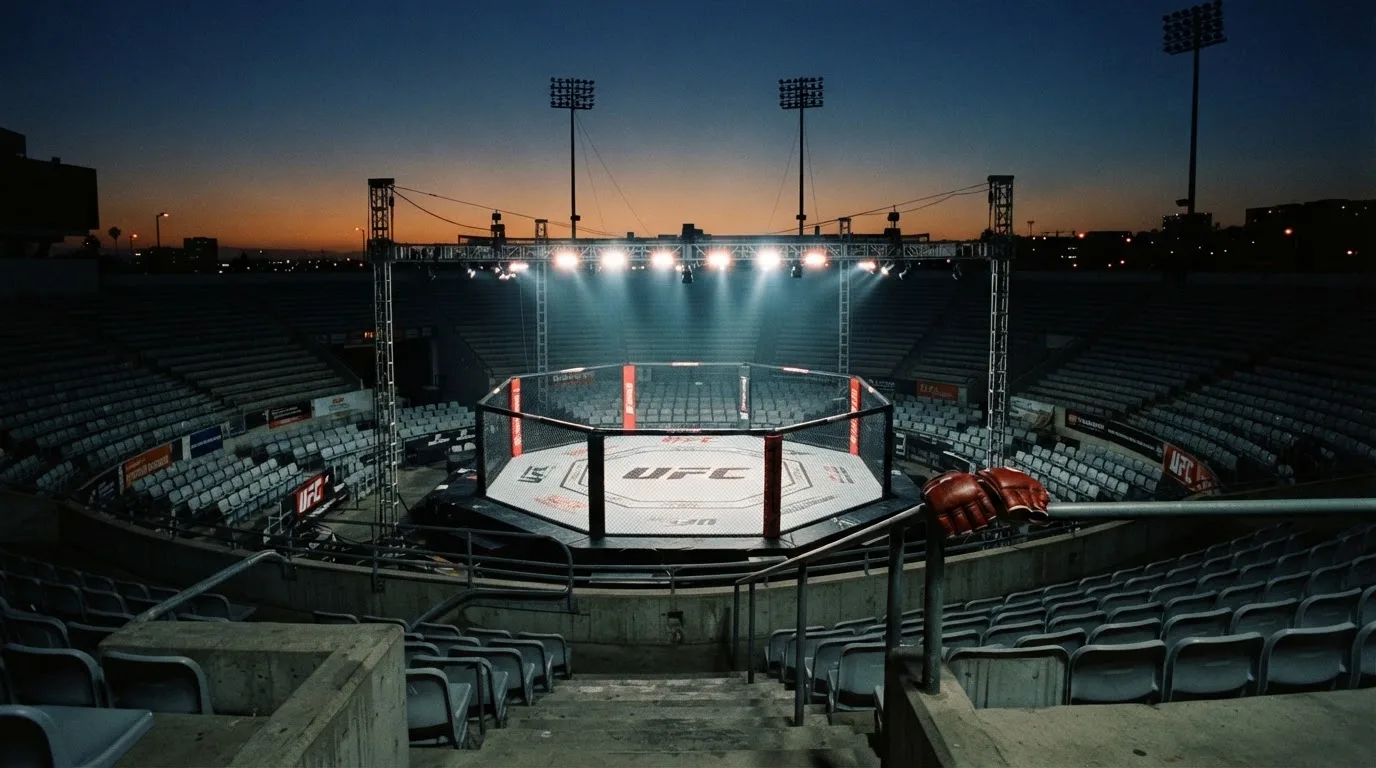
UFC events run late in the UK. Most pay-per-view cards start around 1am British time on Sunday morning, with the main event later still. That changes the texture of the bet: the reader is tired, the markets have moved several times since the card was announced, and live in-play prices are refreshing on a phone in bed. None of that is a reason to bet more than was planned. It is a reason to set the deposit limit before the card, to decide in advance which fights warrant a stake, and to leave the in-play tab alone unless a bet was sized for it. The bookmaker’s tools are designed for that — deposit limits, time-outs, product blocks, self-exclusion through GAMSTOP — and a reader who has not turned any of them on is betting on a platform they have not finished configuring.
GAMSTOP itself is the single most important safeguard. Self-exclusion runs for six months, one year, five years, or five years with auto-renewal; once chosen, the minimum period stays in place for a further seven years unless the customer asks GAMSTOP to remove it. It covers every UK-licensed online operator — bookmakers, casinos, bingo sites — and registration is a single online form. The Commission also mandates financial vulnerability checks (LCCP condition 3.4.4) that apply when a customer’s deposits minus withdrawals exceed £150 across a rolling 30 days; that is a public-records check, not an income check, and it triggers when a punter’s net spend crosses the threshold. Operators must offer a gross deposit limit; the first changes took effect on 31 October 2025 and a second phase was postponed to 30 September 2026.
The third pillar is the support network. GamCare runs the National Gambling Helpline. GambleAware funds treatment and advice. The NHS operates gambling clinics in several regions. Gamblers Anonymous runs meetings in person and online. A reader who finds themselves chasing a losing Saturday night card into the small hours, raising stakes to recover, or hiding the size of their bets from someone they live with, has crossed a line that no odds can undo. The phone number is on GamCare’s site; the call is free; the conversation is confidential.
Crypto, Bitcoin and the question of anonymity at UFC fights
A second path to a UFC bet runs through cryptocurrency. Several operators serving UK customers advertise Bitcoin, Ethereum and stablecoin deposits; some promise faster withdrawals, lighter paperwork, or the chance to bet without a full identity check. The promise of anonymity is the part that needs the most careful reading.

Crypto deposits do not remove the licensing requirement. Any operator whose remote facilities are used by customers in Great Britain needs a Gambling Commission licence; a Curaçao, Maltese or Anjouan licence is not a substitute. An unlicensed site offering Bitcoin deposits is still an unlicensed site, and the bet placed there carries the same loss of protection as any other unlicensed bet — no GAMSTOP coverage, no Commission complaints route, no approved dispute-resolution body, no British consumer redress if the operator withholds funds. Bitcoin makes the payment fast and the operator hard to reach by the time the customer notices.
Identity verification sits at the licensed end of this market. Since 7 May 2019 every UK-licensed operator has had to verify a customer’s name, address and date of birth before the first deposit or wager, including with a free bet or bonus. Crypto deposits do not weaken that rule; the operator still has to know who is betting, because the Commission’s anti-money-laundering duties apply to every payment method. The deposit in Bitcoin or Ethereum changes the rail, not the check. A reader who values pseudonymity as a matter of privacy has to weigh that benefit against the protection that comes from playing inside the Commission’s framework: the £150 vulnerability check, the 10x bonus cap, the GAMSTOP membership, and the dispute-resolution route if a withdrawal is delayed.
Crypto’s actual edge is speed and reach. A Bitcoin withdrawal at a licensed exchange-traded operator can settle in minutes where a bank transfer takes two working days; an Ethereum transfer can be cheaper than a card payment for an overseas customer. Those are real benefits for a punter who has decided to bet, done the affordability check, and chosen the operator on the merits. They are not reasons to choose an unlicensed brand.
UFC free bets, welcome offers and what they actually cost
The most quoted number on any UFC betting page is the headline price of the welcome offer. “£40 in free bets”, “Bet £10, get £30”, “Risk-free first bet” — these are marketing words dressed as bargains, and the arithmetic underneath them is what the offer is worth. A free bet whose stake is not returned with a winning wager pays only the profit; a “risk-free” first bet that refunds in free-bet credit on a loss is not a refund in money; a “100% bonus” doubles the deposit and then asks for it back in bets before any of it can be withdrawn.
The mechanics matter more than the headline. Three rules govern almost every welcome offer on a UK-licensed site. First, a qualifying bet is required: a stake of the customer’s own money, usually at minimum odds of 1/2 (1.50 decimal) or 2.0, settled before the free bet is credited. Second, the free bet itself carries its own conditions, which are the part the marketing never leads with — minimum odds, maximum odds, market restrictions, expiry window, and a cap on what can be won. Third, the wagering requirement on a cash bonus is capped at 10x by the Commission’s promotion rules in force since 19 January 2026, so a £10 bonus at 50x is no longer legal; a £10 bonus can require no more than £100 of qualifying bets. That cap applies to bonuses with a wagering condition, not to free bets with no rollover.
The shape of a UFC-specific offer usually mirrors the sport’s calendar. Cards land on Saturday nights and Sunday mornings UK time; a free bet credited on Friday and expiring on Sunday has a tight window. QuinBet’s free bets are valid for seven days from credit, with minimum odds of 1/2 (1.50) and maximum odds of 50/1; straight accumulators are allowed but Trixies, Patents and Yankees are not. Betway’s new-customer welcome for UK and Ireland customers is £40 in free bet tokens (four £10 tokens) credited on settlement of a first bet of at least £10 at minimum odds of 2.0, with a seven-day expiry and debit card deposits only. Sporting Index’s new-customer offer is a £10 fixed-odds bet at minimum odds of 1/2, unlocking three £10 fixed-odds free bets, three £5 Total Goals spread bets, three £5 Winning Favourites spread bets and a £1 Race Index spread bet; the qualifying bet cannot be placed in play or cashed out early. Each of these is a real offer at a real operator; each has terms that change the value.
The harder calculation is what the offer is worth. A free bet whose stake is not returned pays the profit, not the return. On a £10 free bet at decimal odds of 4.00, the return if it wins is £30 in profit (the £10 stake is gone); at decimal odds of 2.00, the profit is £10; at decimal odds of 1.50, the profit is £5. The expected value is what the free bet is worth on average, not what it wins on the day. For a £10 free bet on a market with a 5% margin at decimal odds of 4.00, the value is the free-bet amount multiplied by (odds minus 1) divided by odds, multiplied by the payout share of that market — about £5.62 of expected value before the expiry and the market restrictions are counted. The same £10 free bet at decimal odds of 2.00 on the same market is worth about £3.75; at decimal odds of 1.50, about £2.50. None of these is what the headline says.
The wagering bonus side is more uniform. A £20 deposit bonus at 10x wagering requires £200 of qualifying bets before the bonus is withdrawable; at the legal maximum, the bonus is the ceiling on the requirement. A reader who sees an offer with no wagering condition listed should treat it as a free bet; a reader who sees “10x” should treat it as a modest bonus; a reader who sees higher than 10x is looking at an unlicensed operator. The bonus cap is part of what the licence buys.
UFC betting apps and mobile betting in the UK
UFC is a screen sport. The fights run late, the cards are dense, the markets refresh between rounds, and the prop bets are deep enough that a desktop screen has nothing on it that a phone cannot show. Most UK-licensed bookmakers now build their product around the app first and the desktop second, and the difference between them is largely about how the markets are laid out and which features survive the move to a smaller screen.
The features worth weighing are practical. Live in-play prices are essential — a UFC card without live markets is a static slip. Cash out is standard at most major books but with restrictions on free-bet stakes, in-play markets, and certain bet types. Best Odds Guaranteed (BOG) on horse racing is irrelevant to a UFC punter except as a marker of which operators run the racing product well; William Hill pays BOG on UK and Irish racing from 8am on the day of the race on single and multiple bets, Fafabet from 9am on win and each-way bets, and Bet600 pays at the starting price where the SP exceeds the early or show price. None of that carries over to MMA, and a punter betting only on UFC should weigh the racing features only as a marker of how the operator runs its book.
The smaller details separate the apps that have been built for UFC from the apps that have not. A fight-night card with twenty bouts can produce more than a hundred markets per bout: method of victory, round of finishing, total rounds over/under, fighter to win by submission, fighter to win in round one, fighter to win by knockout or technical knockout, fighter’s winning method as a group bet. An app that buries those markets under two menus is asking the punter to give up on the bet builder. An app with a working bet builder — same-game multi, acca builder — is the difference between laying a single on the favourite and building a price across three fights on the card. Midnite’s site shows an acca builder and popular accas alongside in-play prices and price boosts with maximum-stake limits. Kwiff’s Supercharge feature can instantly boost the odds on a bet — for example from 2/1 to 20/1 — on single or multi bets on any sport. Bet365 layers in-play betting and live streaming of events worldwide, plus Bet Track, Match Live and a Live Golf Tracker for following bets in play; the streaming footprint is wider than most operators’. Each is a different combination of features; none is universal.
The mobile-specific friction points are worth knowing. Geolocation checks are routine for live streams because rights-holders restrict them by territory. Identity verification on first deposit often happens through the camera on the phone, and a passport or driving licence scan that fails under bedroom lighting is a common reason verification stalls. Withdrawal times to debit cards and bank transfers run one to three working days at most operators; e-wallets are faster; crypto, where offered, can be minutes. A punter planning to withdraw a betting deposit the morning after a card should not pick an operator whose stated withdrawal time is three working days plus a weekend.
Live UFC betting and cash out
A UFC bout is three to five rounds of five minutes each. The shape of the fight changes inside a round: a takedown lands in the first thirty seconds and the favourite’s price collapses; a flash knockdown at the end of round two turns the underdog into the favourite for round three; an accidental eye-poke in round four prompts a doctor stoppage and the bout is ruled a no contest. None of that is predictable in advance. It is the case for live betting.
Live UFC markets in the UK cover the obvious moves — match winner after each round, method of victory, total rounds over/under — and a longer tail that varies by operator. Round-of-finishing markets update between rounds. Fighter-to-win-by-KO/TKO/submission/decision markets update on significant strikes landed. Some operators offer a “next round winner” market that resolves after each round. Most suspend prices for ten to thirty seconds after a significant strike so they can reprice. The best in-play books are those whose prices update fastest, whose suspension windows are shortest, and whose cash-out feature actually works on in-play bets.
Cash out is the feature that turns live betting from a spectator sport into a managing one. The bookmaker offers to settle the bet early at a price derived from the current market; the punter takes the smaller guaranteed profit or limits the loss, depending on how the bet is sitting. The price is the bookmaker’s, not the market’s; it almost always understates the true value of the position, because the operator needs the cash-out feature to be profitable on average. The honest use of cash out is the rare case — a fighter clearly hurt between rounds, a card locked in, a late injury news flash — where the punter knows something the price has not caught up to. The dishonest use of cash out is the case where the punter is reducing a bigger loss to a smaller one and telling themselves it was a trade.
The restrictions are the part the marketing rarely leads with. A free-bet stake usually cannot be cashed out early. An in-play bet often can. A bet placed with a price boost may have its cash-out value calculated on the un-boosted price. An accumulator insurance promotion — usually one leg let down refunds the stake as a free bet — interacts with cash out in ways that vary by operator. None of these is a deal-breaker, all of them are reasons to read the terms of the specific feature before relying on it during a live card.
Predictions, strategy and the discipline of a UFC betting bankroll
A UFC prediction is a forecast: a probability that fighter A beats fighter B by the method the markets expect, given what each has shown in recent fights and what we know about injuries, weight cuts, camp reports and stylistic matchups. Building the prediction is the work. Translating it into a bet is the second job, and the second job is the one most punters skip.
The discipline starts with the bankroll. A bankroll is the money set aside for betting, separated from the household budget, sized to absorb a losing run without forcing a top-up. The usual guidance is one to three per cent of the bankroll per bet: on a £1,000 bankroll, a £10 to £30 stake per pick. The number is small because a UFC card has a finite number of bets and the variance from one card to the next is high — a single underdog winning in round one can swing a punter’s monthly return by ten points. Larger stakes are possible on stronger edges, but the system is the one that loses money when the bankroll is not respected, not the picks.
The next discipline is the price. A prediction is a probability; a price is a decimal fraction of one. Decimal odds of 2.00 imply a 50% chance of winning (one over 2.00); decimal odds of 4.00 imply a 25% chance. The conversion is mechanical: implied probability = 1 / decimal odds. The bookmaker’s market price rarely equals the punter’s assessed probability; the gap is the margin. On a two-way market priced at 1.90 / 1.90, the implied probabilities are 52.63% and 52.63%, summing to 105.26% — the extra 5.26% is the bookmaker’s take. A punter whose assessed probability on fighter A is 55% has a positive expected value at any price better than 1.82 (1 / 0.55); anything longer than that is a value bet.
The next discipline is the record. A punter who does not log picks, odds, stake and result is a punter who cannot tell whether the system is working. A simple spreadsheet — date, fighter, method, odds, stake, result, profit/loss — separates the bets that made money from the bets that felt like they did. The running total over a hundred or two hundred bets is the only honest measure of whether the prediction system is worth the time spent building it.
The final discipline is the refusal of certainty. A tip that names a winner is a tip that asks the reader to trust the tipster’s edge over their own. The honest version of a UFC betting tip is the version that gives the reader a probability, a price at which that probability becomes a value bet, and an honest note on the uncertainty — a torn ACL last time out, a late weight-cut miss, a referee who has a history of letting fights run. None of that promises a win. What it promises is the reader placing a bet whose terms they understand and whose price they have tested.
UFC betting markets and odds explained
A UFC bout offers more markets than most other individual sports. The reason is the variety of finishing methods: a fight can end in any round by knockout, technical knockout, submission, doctor’s stoppage, or disqualification, or go the distance and be decided by the judges. Each method is a market; each round is a market; each combination is a market. A reader who knows the menu knows what they are buying.
The main markets, in roughly the order they appear on a UK betting slip:
- Fight winner (moneyline). The most basic market: which fighter wins. Priced in decimal odds, with the underdog longer and the favourite shorter. A pick’em fight prices close to 1.91 / 1.91 at a margin-only book; a heavy favourite prices around 1.20 with the dog at 4.50 or longer.
- Method of victory. Winner plus how the bout ended: KO/TKO, submission, or decision. The price collapses the winner market and the method into one line. A fighter with a strong submission game against a striker who has never been submitted often prices shorter on submission than on the straight win.
- Round of finishing. Which round the fight ends in, or whether it goes the distance. A first-round finish market for a fast starter is one of the higher-variance markets on the card.
- Total rounds over/under. A line set by the bookmaker — for a three-round bout, often 1.5 rounds; for a five-round championship bout, 2.5 rounds — with over and under prices. The over wins if the fight lasts longer than the line; the under wins if it ends earlier.
- Fighter to win by KO/TKO / submission / decision. Three separate markets on each fighter. Useful when the punter has a view on the method but not on the round.
- Go the distance: yes / no. Whether the fight sees the judges’ scorecards. Tightly correlated with method of victory; a price on “no” usually beats a combined price on “by KO/TKO or submission” once the margin is stripped out.
The odds on those markets contain the bookmaker’s margin. The margin is the percentage of every pound staked that the bookmaker keeps on average; it is built into every price. The honest way to see the margin is to convert every price on a market to an implied probability, add them up, and subtract one. On a fight winner market priced at 1.91 / 1.91, the implied probabilities are 52.36% and 52.36%, summing to 104.71%; the overround is 4.71% and the margin is 4.5%. On the same fight priced at 1.80 / 2.05, the implied probabilities are 55.56% and 48.78%, summing to 104.34%; the overround is 4.34% and the margin is 4.2%. The lower-margin book is the cheaper book for that market.
A worked example on a two-way market at decimal odds of 1.90 / 1.90 makes the arithmetic concrete. The implied probability on each side is 1 / 1.90 = 52.63%. Both sides added: 52.63% + 52.63% = 105.26%. The overround is 5.26%, the bookmaker margin is 5.0%, and the punter’s payout share is 95.0%. A real fight card runs on margins wider than that; a UFC undercard often prices at 6–8% margin on the main lines, with deeper markets carrying more.
The punter’s edge, when there is one, sits in the gap between the punter’s assessed probability and the market’s implied probability, with the margin stripped out. If the punter’s probability on fighter A is 58% and the bookmaker’s price implies 52.63% on the 1.90 line, the punter has a value bet only if the bookmaker’s price is 1.72 or longer (1 / 0.58). Anything shorter than 1.72 is a bet whose expected value is negative; anything longer is a bet whose expected value is positive. The math does not care who is fighting.
UFC events, divisions and the betting calendar
UFC has held over 750 events by 2026 across eight men’s and three women’s divisions. The first event was on 12 November 1993 in Denver, Colorado; Dana White has been president since 2001, and the promotion is now owned and operated by TKO Group Holdings. The British punter sees the sport as a year-round calendar of numbered pay-per-view events (UFC 300, 301 and so on) and ESPN/ESPN+ Fight Nights in between, with champions in each division and contender bouts filling the undercards. The next two numbered events on the calendar at the time of writing are UFC 334 (Gane vs. Hokit) on 14 November 2026 at Madison Square Garden, New York City, and UFC 335 (Oliveira vs. Lopes) on 12 December 2026 at T-Mobile Arena, Las Vegas.
Bout length and judging matter to the markets. Each UFC round is a maximum of five minutes with one minute’s rest between rounds; championship fights and non-title main events are scheduled for a maximum of five rounds, other bouts for three rounds. The ten-point must system applies to UFC fights: three judges score each round, the winner receiving ten points and the loser nine or fewer, with 10-8 rounds typical for dominant performances. UFC bouts can be won by submission, knockout, technical knockout, judges’ decision (unanimous, majority, split or technical) or disqualification; a bout can also be ruled a no contest. If a UFC title fight ends in a draw, the defending champion retains the title.
What this means for betting is that the markets are rich and the rules are specific. A bout can be ruled a no contest on a stoppage caused by an accidental foul — a finger to the eye, an illegal kick — that leaves a fighter unable to continue. Method-of-victory bets on a fight that ends in a no contest are usually voided. Over/under total rounds bets on a fight stopped before the line are settled on the round in which the fight ended, not the round at which it was stopped. Draw markets on title fights behave differently from draw markets on non-title bouts because the title stays with the champion. The rules are not complicated, but they are specific, and a punter who has not read the relevant market terms will find out what they signed up for at settlement.
The ten UK-licensed UFC betting operators, compared
The table that follows is a comparison of the ten UK-licensed bookmakers that the Gambling Commission’s public register lists for remote general betting on real events, with the licence number and the licence holder beside the brand and a brief summary of what each operator’s own terms say on the subject of UFC betting. It is not a ranking and not a recommendation: every brand named holds a current remote licence, every brand can take a UFC bet, and the differences between them are about products and terms, not about safety. No single brand is “the only” licensed operator; the register lists many more than these ten, and a place in this comparison is a place in this comparison, not a licence.
| Brand | Gambling Commission remote licence and holder | What the operator’s terms state on UFC and related markets |
|---|---|---|
| Kwiff | 044448-R-323408-017 · Eaton Gate Gaming Limited | Supercharge feature can instantly boost the odds on a bet on any sport, including single or multi bets; in-play and pre-match UFC markets are part of the regular card. |
| Sporting Index | 027343-R-308898-011 · Sporting Index Limited | New-customer offer ties fixed-odds and spread bets together; UFC fixed-odds markets are available alongside the spread-betting product the operator runs under FCA supervision. |
| bet365 | 055148-R-331498-002 · Hillside (UK Sports) ENC | In-play betting and live streaming of events worldwide, plus Bet Track, Match Live and a Live Golf Tracker for following bets in play; UFC markets are typically priced in-play with full method-of-victory coverage. |
| Tote | 054779-R-331321-008 · TDCO Limited | Pool-betting heritage carried into the online product; UFC fixed-odds markets are part of the catalogue alongside the tote pools on horse racing. |
| Fafabet | 057385-R-333191-006 · Taichi Tech Limited | Best Odds Guaranteed on UK and Irish horse racing from 9am on race days on win and each-way bets; UFC fixed-odds markets are offered but the racing-focused terms do not extend to MMA. |
| QuinnBet | 061011-R-335683-004 · QuinnBet (Gibraltar) Limited | Free bets valid for seven days from credit, usable on any market at minimum odds of 1/2 (1.50) and maximum odds of 50/1; accumulators allowed, full cover bets (Trixie, Patent, Yankee) excluded. |
| William Hill | 039225-R-319373-015 · WHG (International) Limited | Best Odds Guaranteed on UK and Irish horse racing from 8am on race day, on single and multiple bets, not ante-post, tote or pari-mutuel; UFC markets priced across the full method and round grid. |
| Betway | 039372-R-319367-029 · Betway Limited | £40 in free bet tokens (four £10 tokens) for new UK and Ireland customers on settlement of a first bet of at least £10 at minimum odds of 2.0, seven-day expiry, debit card deposits only; UFC markets cover the standard card. |
| Geoff Banks | 054095-R-330366-010 · GB Sports Advisors Limited | Live in-play prices and ante-post prices on future events; the operator’s product is sized for the sharper end of the market, with UFC fights priced on the standard markets and a selection of props. |
| Bet600 | 044731-R-323941-016 · Tyche Tech Limited | Best Odds Guaranteed on horse racing paid at the starting price where the SP exceeds the early or show price; UFC markets are part of the regular MMA offering. |
Three patterns sit behind the table. First, every brand on it holds a remote general betting standard (real events) licence from the Commission; the licence categories differ from operator to operator but the betting rights on UFC are the same across them. Second, the racing-focused features (Best Odds Guaranteed, each-way terms, ante-post rules) do not extend to MMA — a punter betting only on UFC is choosing the bookmaker on the basis of UFC markets, the in-play product, and the offer, not the racing. Third, the free-bet and bonus structures vary widely, and the value of a welcome offer is the product of stake, minimum odds, expiry, market restrictions and the cap on free-bet winnings, not the headline figure. A punter who chooses on the headline alone has not read the table.
Overview of UFC betting in the UK
UFC betting in the UK sits inside the same legal framework as every other sport on a licensed bookmaker’s slip. The Gambling Act 2005 covers Great Britain — England, Scotland and Wales; Northern Ireland runs its own regime, and a GB licence does not regulate there. Since the Gambling (Licensing and Advertising) Act 2014 an operator whose remote facilities are used by customers in Great Britain needs a Gambling Commission licence wherever the operator is based; a Curaçao, Maltese or Gibraltar licence is not a substitute. The Commission’s public register is the whole test of who holds a licence, and the register can be searched by business name, trading name, domain or account number.
What a UK-licensed operator offers on UFC is the full market menu: fight winner, method of victory, round of finishing, total rounds over/under, fighter to win by method, go the distance, and the bet-builder combinations. Live in-play betting is standard, with prices suspended briefly between rounds or after a significant strike. Cash out is standard on most operators, with restrictions on free-bet stakes and on certain market types. Best Odds Guaranteed, the racing concession that pays out at the bigger of the taken price or the starting price, is irrelevant to MMA. Spread betting on UFC fights is offered by some operators, and a punter who confuses spread betting with fixed-odds betting will find that the liability runs the wrong way: spread-betting losses can exceed the deposit, and the product is regulated by the FCA where the bets are on financial markets and by the Commission where the bets are on sports outcomes.
The player pays no tax on betting winnings in Great Britain. General Betting Duty is the operator’s tax on gross profits, currently 15%; from 1 April 2027 a new remote betting rate of 25% applies within it, while remote bets on UK horse racing, bets on self-service betting terminals in licensed premises, pool betting and in-person betting stay at 15%. Whether operators pass duty on through the odds is not established; the punter’s price is the punter’s price. Spread betting carries its own rates — 3% on financial spread bets, 10% on other spread bets — and is a separate product.
The credit-card ban applies across the licensed market. Since 14 April 2020 no UK-licensed operator can accept a credit card for gambling, including a credit-card-funded payment through an e-wallet. Debit cards and bank-based payments are not covered by that ban. The minimum age is 18, and identity verification is required before the first deposit or wager, including with a free bet or bonus. There is no state-set deposit or loss ceiling; the customer’s chosen deposit limit is the ceiling, and the Commission’s affordability and vulnerability checks run on top of it.
Legality, regulation and the offshore question
A licensed UK bookmaker is one whose name appears on the Gambling Commission’s public register against a current operating licence for the relevant category. The Commission’s licence categories relevant to UFC betting are remote general betting standard (real events) and remote betting intermediary (the betting exchange licence). Both are listed in the register by business name and account number; both can be verified by anyone with a browser and a few minutes.
The register also lists the licence holder’s name, which is not always the trading name the customer sees. Hillside (UK Sports) ENC holds the licence under which bet365 trades in the UK. Platinum Gaming Limited, Gibraltar, runs Unibet UK. WHG (International) Limited runs William Hill. Betway Limited runs Betway. Eaton Gate Gaming Limited runs Kwiff. Sporting Index Limited runs Sporting Index. TDCO Limited runs Tote. Taichi Tech Limited runs Fafabet. QuinnBet (Gibraltar) Limited runs QuinnBet. GB Sports Advisors Limited runs Geoff Banks. Tyche Tech Limited runs Bet600. Several of the larger groups operate more than one UK-facing brand under separate licences or separate trading names; Ladbrokes and Coral, Paddy Power and Betfair, are the well-known examples, and the register lists both brands under each group’s corporate entities.
What the licence buys the customer is a package. Identity verification before the first bet, including with a free bet or bonus. GAMSTOP membership, with the multi-operator self-exclusion scheme active across every UK-licensed online operator. The £150 financial vulnerability check under LCCP condition 3.4.4, triggered when deposits minus withdrawals cross the rolling-30-day threshold. The 10x cap on bonus wagering requirements, in force since 19 January 2026. The ban on mixed-product promotions (an offer that requires betting on football to unlock free spins, for example). The CAP Code rules on advertising — no marketing of strong appeal to under-18s, no one who is or seems to be under 25 in a significant role in an advertisement. The dispute-resolution route through an approved ADR body if a withdrawal is delayed or a bet is disputed. The Commission’s enforcement arm if the operator breaches the licence conditions.
What the licence does not buy is a winning bet. It buys a regulated market in which the customer can place bets under known rules and seek redress through known channels. A punter who decides to bet on UFC at a licensed operator has bought into that framework. A punter who decides to bet on UFC at an unlicensed operator has not, and the consequences are not abstract. Funds held by an unlicensed operator are outside the Commission’s reach; disputes do not go through an approved ADR body; GAMSTOP does not cover the brand; the £150 vulnerability check does not apply; the 10x bonus cap does not apply. The Commission’s enforcement powers are aimed at the operator, not the customer — cease-and-desist notices, search-engine referrals, work with registrars, hosts and payment providers, and the court-order DNS blocking powers that have been granted or are about to be granted. A customer who bets at an unlicensed site has not committed an offence under the materials reviewed, but has walked away from every protection a GB licence provides.
There is no “safest” unlicensed operator. There is the licensed market, with its checks, its limits, its dispute-resolution route and its small but real cost in paperwork; and the unlicensed market, with no checks, no limits, no dispute resolution and the realistic prospect of withheld funds if the operator decides to withhold them. Neither is a free choice; both are choices with prices, and a punter who has not understood what the licence costs and what it buys is paying one price without knowing the alternative.
How UK punters choose a UFC betting app
The decision reduces to a short list of practical questions. Does the operator hold a current Gambling Commission remote licence? Does the app offer the UFC markets the punter actually wants — method of victory, round of finishing, bet builder? Does the in-play product update between rounds, and does cash out work on in-play bets? What does the welcome offer actually cost in qualifying-bet conditions, minimum odds, expiry window and free-bet stake treatment? What are the withdrawal times to debit cards, bank transfers and any e-wallets offered? What safer-gambling tools are turned on by default — deposit limits, time-outs, product blocks — and how quickly does GAMSTOP registration take effect if the punter needs it?
A punter who runs through that list against the table earlier in this guide will see that the operators cluster into three groups. The first is the full-service bookmaker — bet365, William Hill, Betway, Unibet — where the UFC markets are deep, the in-play product is mature, and the welcome offer is structured but not always generous. The second is the racing-led bookmaker — Tote, Fafabet, QuinnBet — where the racing product is the headline and the UFC product is solid but secondary; Best Odds Guaranteed applies to racing only, and the welcome offers are often racing-shaped. The third is the sharper or specialist bookmaker — Kwiff, Geoff Banks, Sporting Index, Bet600 — where the product is sized for a customer who has a view and wants a price for it; Kwiff’s Supercharge and Geoff Banks’ in-play and ante-post focus are markers of that positioning.
The punter who wants the cheapest line on a heavy favourite and the most reliable in-play product is best served by a full-service bookmaker. The punter who wants a price boost or a Supercharge on a specific pick is best served by Kwiff. The punter who wants to lay a bet rather than back one — to take the other side of a market at a betting exchange — needs a different operator entirely, and the Commission’s register lists the exchanges separately under the betting intermediary licence. The punter who wants spread betting on a UFC method-of-victory market needs an FCA-regulated spread-betting firm, and Spreadex is the name most often seen in that space; spread-betting losses can exceed the deposit, and the product is not a substitute for fixed-odds betting.
How a UFC betting tip is built
The mechanics are the same as any other form analysis. The first job is form: each fighter’s recent record, the quality of the opposition, the recency of the last fight, and the trend of the last three to five performances. A fighter on a three-fight winning streak against ranked opposition is a different proposition from a fighter on a three-fight winning streak against unranked opposition, and the form line has to be read in the light of the quality of the names on it. Next, the matchup: striker against wrestler, grappler against counter-striker, finisher against decision fighter. Stylistic advantages cut through form lines, and the markets usually price them in but not always enough. Next, the intangibles: a torn ACL last time out, a long layoff, a missed weight cut, a late change of opponent, a camp that has lost a key coach. None of these is in the record. All of them change the probability.
From those inputs, the punter builds a probability. The probability is a single number between zero and one that the punter believes represents fighter A’s chance of winning by the expected method. The number is honest when the punter is willing to write it down and test it against the next hundred fights; the number is dishonest when the punter rounds it to the nearest five per cent and feels confident at 60%. The discipline is to log the number, the closing line, the result, and to look at the running total after a hundred picks. A punter whose probability is consistently more accurate than the market’s has an edge; a punter whose probability is consistently less accurate than the market’s is paying for the privilege of losing.
The translation to a price is mechanical. Implied probability = 1 / decimal odds. Value = assessed probability × decimal odds, with anything greater than 1.0 representing positive expected value. The punter who believes fighter A wins 58% of the time wants a price of 1.72 or longer (1 / 0.58); the punter who believes fighter A wins 65% of the time wants 1.54 or longer. A bet at a shorter price than the punter’s probability implies is a bet whose expected value is negative, even if the punter’s probability is correct. The market is not the punter’s friend; the market is the price the punter pays to test the punter’s view.
The next job is the stake. The Kelly criterion is the textbook answer — stake = edge / odds, where edge is the punter’s assessed probability minus the market’s implied probability — but full Kelly is aggressive and a half-Kelly or quarter-Kelly stake is closer to what a sensible punter uses in practice. The flat-stake alternative is one to three per cent of the bankroll per bet, regardless of edge, which gives up some return in exchange for smoother variance. A punter who cannot stomach the variance of full Kelly will not stick to full Kelly under a losing run, and a system the punter abandons is a system the punter does not have.
The final job is the record. Date, fighter, method, price, stake, result, profit and loss. A spreadsheet is enough. The hundred-bet review is the only honest measure of whether the system is worth the time spent building it. A punter who does not keep the record is guessing about whether the system works, and a punter who is guessing is the punster the marketing is written for.
UFC betting tips and the honesty problem
The honest answer to “what is the best UFC betting tip” is that there is no best tip. There is a process: read the form, weigh the styles, account for the intangibles, set the probability, find the price, size the stake, log the result. None of the steps is a tip. All of them are the work.
What the marketing calls a tip is usually one of three things. The first is a tipster’s pick: a name, a method, a price. The tipster has done some or all of the work above and is selling the conclusion. The honest version of a tipster is one who publishes a long-term record of picks, prices and results; the dishonest version is one who publishes recent winners and asks the reader to subscribe for the losers. The second is a “best bets today” article: a list of names for the card, often with no price and no reasoning. The honest version of the article is the one that gives the price and the stake; the dishonest version is the one that gives the names and asks the reader to find the price. The third is a “sure bet” or a “lock”: a bet the tipster claims cannot lose. There is no such bet. A bet whose outcome is certain is a bet whose price is 1.01; the bookmaker will not lay it and the punter will not stake enough to make the win meaningful. Every other bet loses sometimes.
The reason no tip is certain is that UFC fights are decided by humans under imperfect conditions, on a night when one of them might miss weight, the other might tear a ligament on the way to the scales, and a referee might stop the bout thirty seconds into round one for a cut that was not the fighter’s fault. The probability the punter builds is a probability over many such nights, not a probability for this one. A punter who treats the probability as a certainty has confused the model for the world.
The discipline, then, is to read the form, set the price, size the stake, log the result, and accept the loss when it comes. A punter who can do that has a betting system. A punter who cannot is paying for the entertainment of watching fights with money on them, which is a legitimate use of money, and not a system at all.
Frequently asked questions
Where can I bet on UFC fights in the UK?
Any UK-licensed bookmaker takes UFC bets as part of its standard catalogue. The Gambling Commission’s public register lists every operator with a remote general betting standard (real events) licence, searchable by business name, trading name, domain or account number. Bet365, William Hill, Betway, Kwiff, QuinnBet, Fafabet, Sporting Index, Tote, Geoff Banks and Bet600 all hold such a licence; the comparison table earlier in this guide shows the licence number and holder for each. Betting with an unlicensed operator carries no GAMSTOP coverage, no Commission complaints route and no British consumer redress if funds are withheld.
Where should I bet on UFC fights?
The honest answer is at the licensed operator whose product matches the bet the reader wants to place. A reader who wants deep in-play markets and live coverage picks bet365; a reader who wants a price boost on a specific pick picks Kwiff; a reader who wants a free-bet welcome offer with a debit card deposit picks Betway; a reader who wants a sharper-priced book on a specific market picks one of the smaller operators. The right answer is the one that fits the reader’s betting style and bankroll, not a single brand that suits everyone.
What is a value bet, and why is no tip ever certain?
A value bet is a bet whose price is longer than the price implied by the punter’s assessed probability. If the punter’s probability is 58% and the price is 1.72 or longer, the bet is a value bet; anything shorter is not. No tip is certain because every probability is an estimate over many fights, not a guarantee for one fight. A torn ACL last time out, a missed weight cut, a late opponent change, or a referee’s stoppage on a cut, can flip a probability the punter has set correctly. The honest version of a tip gives the probability, the price and the uncertainty; the dishonest version gives the pick and asks the reader to trust it.
What is the bookmaker’s margin and how can it be seen in the odds?
The margin is the percentage of every pound staked that the bookmaker keeps on average. It is built into every price and is visible by converting each price to an implied probability (one divided by decimal odds), adding them up, and subtracting one. On a two-way market priced at 1.90 / 1.90, the implied probabilities are 52.63% on each side, summing to 105.26%; the overround is 5.26%, the margin is 5.0%, and the punter’s payout share on the market is 95.0%. The lower the margin, the cheaper the book for that market; the higher the margin, the more the punter pays for the same bet.
How is the return on a bet worked out from the stake and the odds?
For a single bet, return equals stake multiplied by decimal odds, and net profit equals stake multiplied by (odds minus one). A £10 stake at decimal odds of 2.50 returns £25 (£15 profit); a £10 stake at odds of 1.50 returns £15 (£5 profit). For a combination bet, the odds of the legs multiply into one price before the stake is applied: a £10 accumulator with three legs at 1.80, 2.20 and 3.00 multiplies to 11.88, returning £118.80 if all three legs win. A free bet whose stake is not paid back with a winning wager pays only the profit, not the return, and the expected value is what the free bet is worth on average, not what it wins.
Combat & motorsport – UK betting
Content created by the «UK betting» team
