
Badminton Betting Tips: Value, Markets and Bookmakers Reviewed
 Available in US
A note on the data below: checked against the Gambling Commission’s public register and each bookmaker’s own published terms on 27 October 2026.
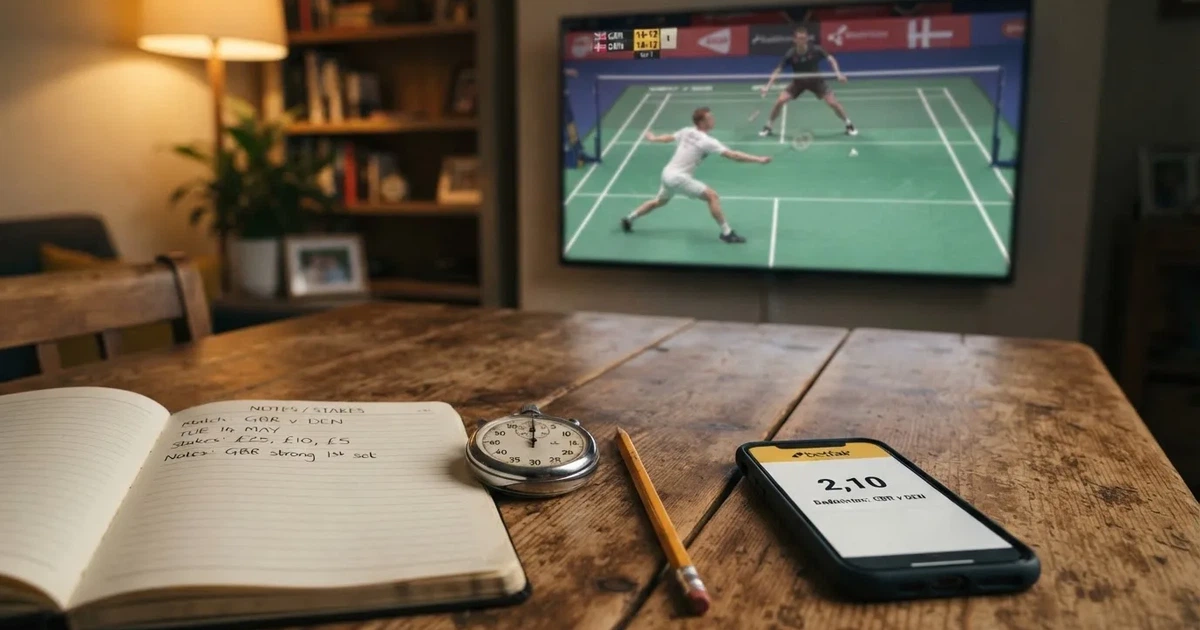
Badminton sits in an unusual place on a British betting site. It does not draw the volume of football or horse racing, but the BWF World Tour runs almost year-round and the Olympics cycle turns a niche sport into a four-day headline event every four years. The appeal for a tipster is obvious — markets are thinner, models are tighter, and prices move slower on second-tier events. The appeal for a bookmaker is the same thing turned into a margin. This page is a guide, not a tip sheet. No concrete match, no predicted winner, no “lock of the day” — those promises do not survive contact with a rally point at 20–20. Instead: how a tip is built, what it costs the bettor who follows it, and which bookmakers actually let a punter place a badminton bet under rules a British regulator has checked.
Live Betting and Cash Out on Badminton
Live betting on badminton is a different product from pre-match betting on football. A rally usually lasts under a minute, momentum shifts inside a single game, and the bookmaker’s screens refresh at a pace that punishes slow software. Most UK bookmakers now price live badminton, and a handful lean on it as a feature.

bet365 leads the field for in-play coverage of niche sports and a live-streaming infrastructure that follows events worldwide. Its in-play product carries Match Live trackers that update game-by-game in selected matches and Bet Track for following open positions when the live picture drops out. Badminton does not always get a live feed, but the tracker compensates where one is missing, and the in-play market is wide enough to back a player mid-match. Swifty Sports explicitly lists live streaming and in-play betting among its sportsbook features and has Cash Out on markets including football and horse racing, with badminton inside the in-play product. Fitzdares builds its app around in-play live odds across a smaller sport set and lists cash out, accumulators and specials alongside its antepost horse racing product. Ladbrokes’ app carries in-play betting and Acca Boosts and treats badminton as one of several in-play markets during major BWF events.
The cash-out question is the one that actually decides whether a live bet is worth opening. Cash out lets a punter close a position before the match finishes, locking in profit or cutting loss. The price the bookmaker offers is its own — built from the live market with another margin laid on top. A punter who backs a player pre-match at 2.10, watches them take the first game 21–14, and is then offered 1.70 to cash out is not being offered “the same bet” at a smaller price. The bookmaker is offering to take the bet off the punter’s hands at a price that protects the bookmaker’s edge twice: once in the original margin and once in the cash-out spread. Where cash out exists on badminton, it usually does not appear as a button on every market — it sits on the main match winner and the game handicap on bigger events and disappears entirely on smaller ones. Read the slip before relying on it.
In-play betting on badminton also runs into a pacing problem that football does not have. A football match has pauses — throw-ins, goal kicks, set pieces — that give a punter a moment to act. A badminton rally does not pause for the betting screen, and the next game starts inside thirty seconds of the last. Software lag is the live bettor’s real cost on this sport: a price seen three seconds before a rally starts is not the price that exists when the bet is confirmed. The punter who wins consistently in-play on badminton is the punter whose app is fast and whose discipline is to wait for the game break, not to chase the rally.
Predictions, Strategy and Why No Tip Is Certain
A “tip” on badminton is a forecast, and a forecast is a probability dressed as a name. The work behind a serious forecast looks like this: a player’s recent results against opposition of similar ranking, head-to-head record, fatigue from a tournament that has run four rounds in five days, court type (some players prefer the faster courts used in Asia, some the slower European ones), and the market’s own implied probability once the bookmaker’s margin has been stripped out. Stripping out the margin is the step a tipster cannot skip — without it, the tipster is comparing one inflated price against another.
A value bet is the term of art for a price that is bigger than the true probability the tipster has calculated. If a tipster’s model gives a player a 60 per cent chance of winning and the bookmaker is offering odds that imply 50 per cent, the price is a value bet. The 10-point gap is the edge. Over many bets, the punter who only places value bets makes a profit; over one bet, anything can happen, and the 60-per-cent favourite loses four matches out of ten. The page that sells the punter a single-event reading of a many-event calculation is often overstating the result. A value bet is a long-run concept, and a tipster who sells a single match as a winner has either dropped the math or is not telling the punter about the other matches where the same model would have lost.
Stats software has become the bettor’s working tool on a sport this thin. Head-to-head databases, BWF ranking points, rally-by-rally data from the BWF’s own feeds and tournament draw simulations feed models that no human can run by hand. None of this changes the underlying uncertainty. A badminton match between two ranked players is decided by who wins the long rally at 19–18 in the third game more often than by any single factor a model can capture, and the long rally is a coin flip with a small edge to whoever has played more of them this week.
Strategy sits on top of the model. Bankroll discipline — staking a fixed percentage of the bank on every value bet rather than chasing losses — is the part of betting the marketing never talks about. A punter with a 55 per cent strike rate of value bets, staking 5 per cent of the bank per bet, will survive a losing run of six in a row and still have most of the bank intact. The same punter staking 25 per cent of the bank on a single outcome is bankrupt after four losses, regardless of how accurate the model is. Staking is the boring word for the most important decision a punter makes.
And then the warning the marketing always leaves out. Betting is not an income. The bookmaker’s margin sits inside every price; the punter pays it on every bet, win or lose. The published RTP of a slot machine is the same concept wearing different clothes — the punter gets back, on average, less than they stake. A punter who treats betting as entertainment with a chance of profit is using the product as designed. A punter who treats it as a wage is fighting the math, and the math does not move.
Bet Types and Odds on Badminton
Badminton betting markets are simpler than football’s but follow the same logic. The main markets a British bookmaker offers on a BWF event are:
- Match winner — back one player to win the match. Two-way (no draw in badminton, unlike football). This is the market the bookmaker’s headline margin sits on.
- Game handicap — back a player to win with a games handicap applied (-1.5 games means the player must win 2–0; +1.5 means they lose by one game or win). Useful for matches where one player is heavily favoured.
- Total games — over/under 2.5 games. A match that goes to three is the punter’s friend if they have read the form correctly; a 2–0 blowout pays the under.
- Set betting — back the exact scoreline: 2–0 or 2–1. Higher odds, lower probability, the same margin.
- Outright winner — back a player to win the tournament. Available well in advance on the bigger BWF events.
- Accumulator (acca) — combine two or more selections. The odds multiply: a double at 1.80 and 2.20 pays 3.96. Each leg carries its own margin, and the acca’s overall margin is the combination of all of them. BoyleSports’ Acca Insurance, for example, requires opt-in, a minimum stake of £5, minimum odds of 1/2 (1.50 decimal) per leg, pays a maximum refund of £20 as a free bet that expires in 7 days and demands that all bets are placed and settled on the same day. Read the small print before treating an acca as a free hit.
Badminton odds work the same way as any other sport’s odds. The decimal odds are what the stake returns, including the stake itself: a £10 bet at 2.50 returns £25 (£15 profit plus the £10 back). Fractional odds are the British standard on racing and many sportsbooks: 3/1 means a £1 stake returns £4 total (£3 profit plus the £1 back), 5/2 means a £2 stake returns £7 (£5 profit plus the £2 back), and evens (1/1) means the stake returns double. A 2.00 decimal is evens; a 1.50 decimal is 1/2. The conversion from fractional a/b to decimal is a ÷ b + 1, so 5/2 = 2.50 + 1 = 3.50 decimal, and 9/10 = 0.90 + 1 = 1.90 decimal.
What a Margin of a Market Looks Like
The margin is the slice of every pound staked the bookmaker keeps on average. To see it, take a market with two possible outcomes and add up the implied probabilities of every price offered:
> A two-way match at 1.90 / 1.90: implied probability per side = 1 ÷ 1.90 = 0.5263, or 52.63 per cent. Two sides × 52.63 per cent = 105.26 per cent. The 5.26 per cent above 100 per cent is the margin.
A punter backing either side at 1.90 receives, on average, 1 ÷ 1.0526 = 95 per cent of stake back over many bets at this price. The 5 per cent gap is the bookmaker’s cut. On a market priced at 1.85 / 1.85, the implied probabilities are 54.05 per cent each, totalling 108.1 per cent, and the margin sits at about 8.1 per cent. The larger the margin, the harder the punter has to work to find a value bet. Badminton sits at the thinner end of British bookmaker margins on big matches and the thicker end on smaller events — the difference between a BWF World Tour Super 1000 final and a mid-tier International Challenge can be 2 to 3 percentage points of margin.
Where the price has been given without a snapshot date — which is the usual state of an article that quotes decimal odds in passing — describe the price in words (a “tight match winner market”, an “each-way price of evens or bigger”) rather than printing a number that ages.
Sports and Tournaments Worth Following
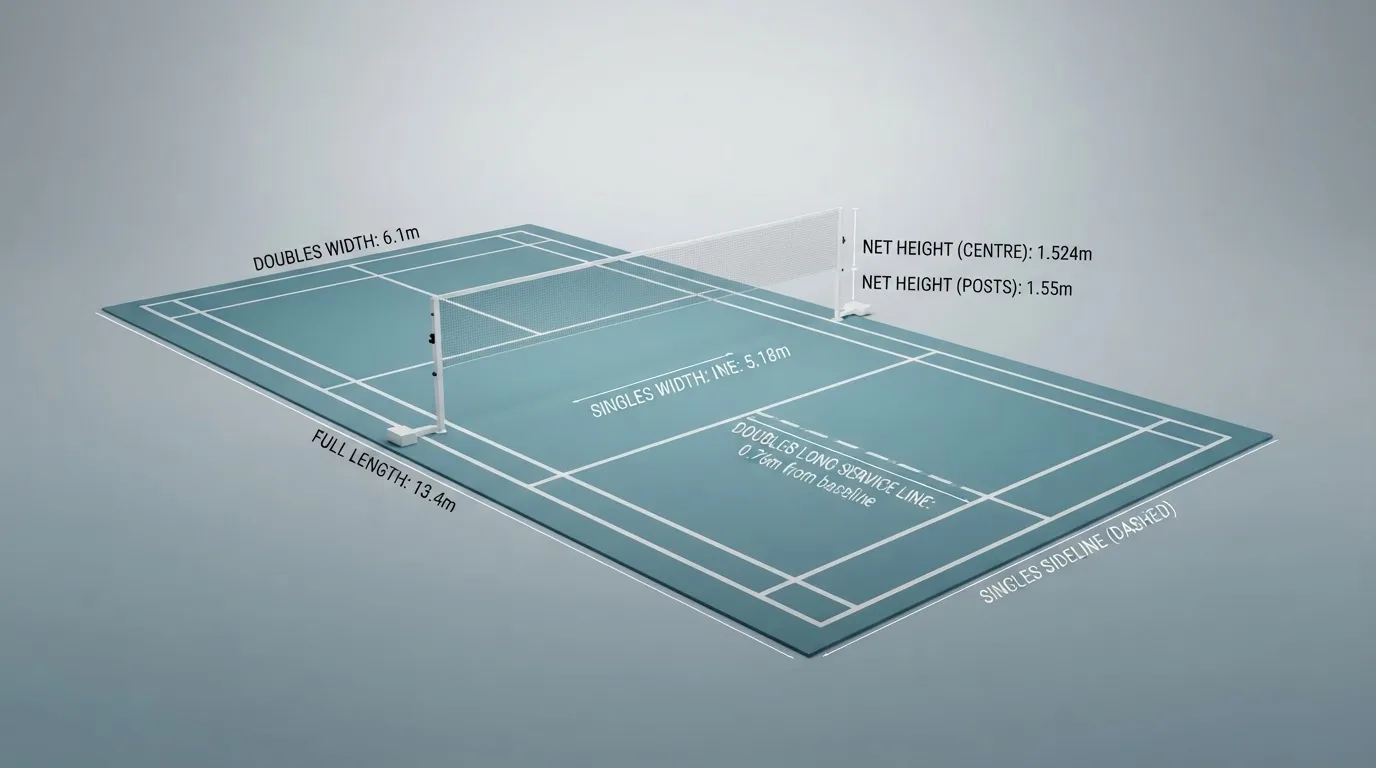
The Badminton World Federation (BWF), founded in 1934 as the International Badminton Federation, governs the international game and runs the World Tour, the World Championships and the team events. Badminton has been an Olympic sport since 1992, with mixed doubles added four years later. Five disciplines sit inside the same sport: men’s singles, women’s singles, men’s doubles, women’s doubles and mixed doubles. Each game is played to 21 points with rally point scoring — every rally produces a point, regardless of who served — and a match is the best of three games. At 20–20 play continues until one side leads by two; at 29–29 the next point wins. The court itself is 13.4 m long, 6.1 m wide for doubles and 5.18 m wide for singles, with the net 1.55 m high at the edges and 1.524 m at the centre. The geometry does not change between events, but the playing speed does: the slow European courts and the fast Asian ones produce different match shapes, and the punter who does not know which surface they are betting on is guessing.
The Calendar Worth Following
The BWF World Tour runs from January to November with events of varying tier. The Super 1000 and Super 750 events — the All England Open, the Indonesia Open, the Malaysia Open, the China Open — carry the strongest fields and the deepest markets. The All England Open itself dates to 1900 and remains the sport’s most prestigious individual tournament. Below them sit the Super 500, Super 300 and Super 100 events, where the field thins and the bookmaker’s margin grows.
The team events add a second strand. The Thomas Cup (men’s) and Uber Cup (women’s) are held every two years; the Sudirman Cup (mixed) began in 1989 and is also held every two years. The team format plays havoc with outright markets — a country’s first singles player can lose to a lower-ranked opponent and the team still win — and outright betting on the team events is a different beast from the individual game.
The BWF World Championships have been held since 1977, and the Olympic badminton tournament sits inside the Summer Games every four years. Outside the BWF calendar, the British bookmaker will also price the Premier Badminton League (India) and assorted national opens during the European season.
Markets the British Bookmaker Covers
The headline markets on a BWF Super event are match winner, game handicap, total games and outright tournament winner. The deeper markets — first to 15 points in a game, total points in a specific game, race to 11 in the deciding game — appear on the bigger events and vanish on the smaller ones. Bet builders, where a punter constructs a same-game multi from several micro-markets, are rarer on badminton than on football and tend to be limited to match winner plus total games plus first-game winner on selected events. acca insurance and the standard racing-focused acca features (Best Odds Guaranteed, Acca Boost) do not always extend to badminton.
The short version: the bookmaker is not the punter’s main constraint on this sport. The market depth is. A bookmaker that covers fifty BWF events a year is a different product from one that covers fifteen.
Reviewed Bookmakers for Badminton Betting
Ten bookmakers hold a Gambling Commission remote licence and offer badminton betting to British customers. Each is reviewed below against the same test: how wide the badminton coverage actually is, what the published terms state about the markets a punter will use, and the licence status as it stood on 27 October 2026. None of the offers below is a recommendation to claim — the description is what the operator’s own terms say it is, and a punter reads the full terms before staking anything.
Ladbrokes
Ladbrokes runs its UK site under LC International Limited with Gambling Commission account 54743, covering remote general betting standard (real events) and remote betting intermediary. The sportsbook carries in-play betting and Acca Boosts across its sports, and badminton appears inside its in-play product on bigger BWF events. The horse-racing features — Best Odds Guaranteed on UK and Irish racing, odds boosts on horse and greyhound bets — do not extend to badminton, and a punter after outright tournament prices on a BWF Super 1000 will find a small but workable outright market. Ladbrokes suits a punter who already uses it for racing and wants badminton inside an account they are keeping open anyway.
Copybet
Copybet runs under Copybet UK Limited with Gambling Commission account 53774, covering remote general betting standard (real events). The site is best known for its Best Odds Guaranteed on UK and Irish racing, paid all day every day, and the first-past-the-post rule on horse racing that pays out on the order horses cross the line even if the winner is later disqualified. None of that is badminton. The badminton offering is mainstream rather than specialist: match winner, the bigger handicaps and a small outright market. Copybet is a viable choice for a punter who wants a racing-focused bookmaker with occasional badminton options.
BoyleSports
BoyleSports runs under Boylesports Enterprise with Gambling Commission account 39469. The Acca Insurance product requires opt-in, a £5 minimum stake, 1/2 (1.50 decimal) minimum odds per leg, a £20 maximum refund paid as a free bet that expires in 7 days and same-day placement and settlement. Badminton appears as a standard match-winner and handicap market on bigger events. BoyleSports suits a punter who builds accumulators across multiple sports and wants the insurance leg as a backstop.
BetTom
BetTom runs under Bet Tom Limited with Gambling Commission account 64959. The sports welcome offer is 50 per cent back as a free bet of up to £50, with a matching 50 per cent back up to £50 as free slot funds for casino play. The welcome offer is the kind of split casino-and-sports structure the regulator has been tightening against: since 19 January 2026, mixed-product promotions that require gambling on two or more product types are banned under the CAP Code and the LCCP, so the form of this offer matters at the time it is claimed. The badminton coverage itself is mainstream, and the welcome offer’s value depends on whether the punter plays casino. BetTom suits a punter who plays both and reads the bonus terms carefully.
Tote
Tote runs under TDCO Limited with Gambling Commission account 54779, and its product is built on pool betting rather than fixed odds. The Tote’s place terms on horse racing are well known; its sportsbook extends to badminton on selected events, but the punter after a fixed-odds badminton bet will find a thinner offering than on a fixed-odds specialist. The Tote suits a punter who likes pool betting and treats badminton as a side market.
Swifty Sports
Swifty Sports runs under Swifty Global (UK) Ltd with Gambling Commission account 58957. The product is explicit about what it offers: Best Odds Guaranteed, Cash Out on horse racing and football, daily price boosts, live streaming and in-play betting, with Bet Builder listed as coming soon. The Cash Out product extends to selected in-play markets, and badminton sits inside the in-play product on bigger events. Swifty Sports sits on a feature-led product with cash out and live streaming, and for badminton, it focuses on the major events where in-play liquidity is strongest. It is a suitable platform for a punter who prioritises feature depth over market breadth.
Fitzdares
Fitzdares runs under Fitzdares Limited with Gambling Commission account 400, one of the older Commission account numbers on the register. The app is built around horse racing, with cash out, accumulators, Lucky 15s, specials and antepost markets alongside football, tennis, rugby, cricket, golf and American football and in-play live odds. Badminton sits inside the in-play product on selected events, and the outright market on BWF tournaments is workable but not deep. Fitzdares is a strong option for a punter who values a premium, racing-centric interface and bets on badminton as a peripheral interest.
Betmaster
Betmaster runs under BM Solutions GB Ltd, registered in Malta, with Gambling Commission account 65699. The site is a fixed-odds bookmaker covering mainstream events, and badminton appears on the bigger BWF tournaments. The corporate structure — a Maltese-registered operator with a GB licence — is the standard post-2014 shape for a remote bookmaker, and the GB licence is the test that matters for a British customer. Betmaster provides a straightforward service for a punter who prefers a direct market interface without additional bells and whistles.
Bet600
Bet600 runs under Tyche Tech Limited with Gambling Commission account 44731. The Best Odds Guaranteed product covers horse racing: if the starting price is bigger than the early or show price taken, the bet is paid at the SP. The racing product is the headline; badminton is a smaller market inside a sportsbook that is otherwise built for racing. Bet600 suits a punter who backs horses as a primary product and uses badminton occasionally.
bet365
bet365 runs under Hillside (UK Sports) ENC with Gambling Commission account 55148. The in-play product covers a wider set of sports than most British bookmakers, the live streaming infrastructure follows events worldwide, and badminton appears as an in-play market on most BWF events. The Match Live tracker and Bet Track product follow open positions on selected events, and the Live Golf Tracker is the public face of a feature set that runs across sports. bet365 remains the primary destination for a punter seeking the most comprehensive in-play badminton data.
Licence Status at a Glance
| Brand | Licence holder | Gambling Commission account | What the operator’s terms say on badminton |
|---|---|---|---|
| Ladbrokes | LC International Limited | 054743-R-330863-014 (54743) | In-play and Acca Boost markets on selected BWF events |
| Copybet | Copybet UK Limited | 053774-R-330743-010 (53774) | Standard match-winner and outright markets on bigger events |
| BoyleSports | Boylesports Enterprise | 039469-R-319383-025 (39469) | Match-winner and handicap on bigger events; Acca Insurance across sports |
| BetTom | Bet Tom Limited | 064959-R-339314-003 (64959) | Standard badminton coverage with a sports welcome offer |
| Tote | TDCO Limited | 054779-R-331321-008 (54779) | Pool-betting-led product with badminton on selected events |
| Swifty Sports | Swifty Global (UK) Ltd | 058957-R-334734-006 (58957) | Live streaming, in-play betting and Cash Out on selected markets |
| Fitzdares | Fitzdares Limited | 000400-R-103839-030 (400) | In-play live odds across a smaller sport set including badminton |
| Betmaster | BM Solutions GB Ltd | 065699-R-339929-002 (65699) | Standard fixed-odds coverage on bigger BWF tournaments |
| Bet600 | Tyche Tech Limited | 044731-R-323941-016 (44731) | Racing-led product with badminton as a smaller side market |
| bet365 | Hillside (UK Sports) ENC | 055148-R-331498-002 (55148) | In-play betting, live streaming and Bet Track on a wide badminton calendar |
The licence accounts above were verified against the Gambling Commission’s public register on 27 October 2026. A punter who wants to confirm a licence independently searches the register by business name, trading name, domain or account number. Any change since that date is a change the punter checks before staking.
What Badminton Betting Actually Is in 2026
Badminton betting is a thin market on a deep sport. The BWF World Tour runs most of the year; the Thomas Cup, Uber Cup and Sudirman Cup give a team format every two years; the Olympic tournament runs every four years and concentrates British press coverage into a four-day window. The British punter who wants to bet on badminton finds match winner, game handicap, total games, set betting and outright tournament markets at most of the licensed bookmakers reviewed above, with bet builders and deeper in-play markets only on the bigger events.
The shape of the market changes by event. A BWF Super 1000 final has the depth of a Masters 1000 tennis event — a small outright market, a wide match-winner market, in-play betting and a cash-out button on the bigger bookmakers. A BWF International Challenge quarter-final has the depth of an ITF tennis Futures event — a match-winner market, a small handicap, and a margin that runs several percentage points higher than the headline event. The punter who treats every badminton match as the same product is paying the bigger-event price on the smaller-event margin.
The British regulatory frame is what protects the punter who bets with a licensed bookmaker. The Gambling Commission has licensed every brand reviewed above, and every GB-licensed online operator takes part in GAMSTOP. Identity verification runs before the first deposit, which means no anonymous play at a licensed site. A punter who bets with an unlicensed brand loses the GAMSTOP coverage, the Commission complaints route, the approved dispute-resolution body and the British consumer redress if funds are withheld; an unlicensed brand is also not bound by the 10x bonus cap or the £150 vulnerability check.
The licensing test for a British punter is the Gambling Commission’s public register, searched by business name, trading name, domain or account number. The register is the whole test: a brand on the register is licensed, a brand not on it is not. The punter who bets on badminton does not need a tip to check this.
Legal Frame for Badminton Betting in Great Britain
The Gambling Act 2005 covers Great Britain — England, Scotland and Wales. Northern Ireland runs an older law, so a “GB licence” regulates England, Scotland and Wales and not Northern Ireland. The Gambling Commission is the regulator, a non-departmental public body sponsored by the Department for Culture, Media and Sport, and a remote bookmaker serving British customers needs a Commission licence wherever it is based. The Gambling (Licensing and Advertising) Act 2014 closed the offshore loophole: a Curaçao, Maltese or Gibraltar licence is not a substitute for a Commission licence at the point of consumption.
The minimum age is 18. Identity verification runs before the first deposit or gamble, including with a free bet or bonus, and covers name, address and date of birth. The rule has been in force since 7 May 2019, and a licensed site that did not check is a licensed site in breach.
What may be bet on has no statutory list. An operator holds a licence for a category — remote general betting standard (real events), remote general betting standard (virtual events), remote general betting limited, remote pool betting or remote betting intermediary — and offers markets under its own rules and the Licence Conditions and Codes of Practice (LCCP). In-play betting is allowed and the controls sit in the operator’s licence conditions. Betting exchanges run under a betting intermediary licence; rates and rules specific to exchanges come from each exchange’s terms.
Stakes and deposits are not capped by statute. The operator sets its own maximum stake and may restrict individual customers. Financial vulnerability checks (LCCP condition 3.4.4, in force since 30 August 2024) apply when a customer’s deposits minus withdrawals exceed £150 in a rolling 30 days (since 28 February 2025): the check is a public-record check, not an income check and not a credit reference check. Financial risk assessments — the “affordability checks” of the press — have been announced in a staged plan (Commission article of 7 July 2026), with no start date. Deposit limits (RTS 12) require operators to offer a gross deposit limit on a fixed time frame; the first changes applied on 31 October 2025, a second phase has been postponed to 30 September 2026, and whether that second phase is live is not established. There is no state-set deposit or loss ceiling for betting: limits are the customer’s choice.
The player pays no tax on betting winnings in Great Britain. General Betting Duty is the operator’s tax on gross profits, currently 15 per cent. From 1 April 2027 a new remote betting rate of 25 per cent applies within it; until then the remote rate stays at 15 per cent. Spread betting has its own rates (3 per cent financial, 10 per cent other). No part of duty is charged to the punter, and whether operators pass duty on through shorter odds is not established.
Credit cards are banned for gambling in Great Britain since 14 April 2020 (LCCP condition 6.1.2), and the ban covers credit-card-funded e-wallet payments. Debit cards and bank transfers are not covered. Whether a licensed operator accepts cryptocurrency deposits is not established and varies by operator: a punter who pays in crypto checks the operator’s own payments page before depositing.
Responsible Gambling Tools
Every licensed British bookmaker offers a set of safer-gambling tools, and the LCCP sets the minimum.
GAMSTOP is the national multi-operator online self-exclusion scheme and a mandatory licence condition for online operators since 31 March 2020. A punter who registers with GAMSTOP is excluded from every GB-licensed online operator for the chosen period: six months, one year, five years, or five years with auto-renewal. After the minimum period the exclusion stays in place for a further seven years unless the punter asks GAMSTOP to remove it. GAMSTOP covers online sites and apps; betting shops run a separate self-exclusion service.
Deposit limits are the punter’s primary day-to-day tool. A punter sets a daily, weekly or monthly deposit limit on the account and the operator refuses deposits that breach it. Limits can be tightened immediately and loosened only after a cooling-off period. Whether the second phase of RTS 12 is in force is not established — the punter who wants a hard ceiling sets it themselves, regardless of the regulatory phase.
Time-outs and self-exclusion at the operator sit alongside GAMSTOP. A time-out is a short break — 24 hours, a week, a month — during which the account cannot deposit or bet. Operator-level self-exclusion runs from six months upwards and is a heavier version of GAMSTOP limited to one brand.
Reality checks and product restrictions are the bookmaker’s monitoring tools. Reality checks pop up during play to remind the punter how long they have been active. Product restrictions let the punter block casino, slots or specific bet types while keeping sports betting, or vice versa.
Financial vulnerability and risk checks are the bookmaker’s regulatory tools. The financial vulnerability check (LCCP condition 3.4.4, in force since 30 August 2024) runs when deposits minus withdrawals exceed £150 in a rolling 30 days (since 28 February 2025). The check is a public-record check for bankruptcy or county court judgments, not an income check. Financial risk assessments have been announced in a staged plan (Commission article of 7 July 2026), with no start date.
Where to get help. GamCare runs the National Gambling Helpline. GambleAware funds treatment and research. The NHS runs gambling clinics across England. Gamblers Anonymous runs peer-support meetings. The Gambling Commission’s public register is the first stop for a punter who wants to confirm a bookmaker’s licence status before staking. Unibet, for example, lists deposit limits, a Player Profile test, product restrictions and self-exclusion on its safer-gambling page alongside links to BeGambleAware, GamCare, GAMSTOP, Gambling Therapy and the Betting and Gaming Council. Other licensed operators carry equivalent pages.
Bonuses and Free Bets on Badminton
The bonus market on badminton follows the bonus market everywhere else in British sports betting: headline offers are easy to find, the terms are where the offer lives or dies.
A welcome offer is the headline a new customer sees on signing up. The shape is a matched deposit, a free bet, or a “bet and get” structure. The matched deposit pays a percentage of the first deposit as a bonus, subject to a maximum; the free bet is credited after a qualifying bet; the bet-and-get pays a free bet for a qualifying wager at minimum odds. Every welcome offer carries wagering requirements — the punter has to turn the bonus over a set number of times at minimum odds before withdrawing — and the cap on those requirements is 10x under the rules in force since 19 January 2026. A £10 bonus at 10x requires £100 of qualifying bets; anything above 10x is not legal under a GB licence.
A free bet is a credit the punter uses to place a bet without risking their own cash. The stake is usually not paid back with a win: a £10 free bet at 3.00 returns £30 (£20 profit plus nothing on the stake) rather than the £30 the punter would have received on a cash bet. Free bets also expire — typically 7 days — and the cap on winnings varies by offer. BetTom’s sports welcome offer, for example, is 50 per cent back as a free bet of up to £50, with a matching 50 per cent back up to £50 as free slot funds for casino play; full terms apply. The split between sports and casino is a mixed-product structure that the regulator has been tightening against since 19 January 2026.
An accumulator insurance refunds the stake as a free bet if one leg of a multi-leg acca loses. BoyleSports’ Acca Insurance requires opt-in, a £5 minimum stake, minimum odds of 1/2 (1.50 decimal) per leg, a maximum refund of £20 as a free bet that expires in 7 days, and all bets placed and settled on the same day. The insurance pays a free bet, not cash, and the stake is not returned with a winning leg.
A price boost or enhanced odds is a one-off inflated price on a specific selection. Ladbrokes runs odds boosts on horse and greyhound bets and Acca Boosts on selected accas; the equivalent on badminton is rarer and tends to appear on outright tournament markets on bigger BWF events. The boost is a marketing tool with the same margin as a standard price underneath.
A money-back offer refunds the stake as cash or as a free bet if a specific condition is met — a losing first bet, a 0–0 draw, a specific player scoring. The refund is usually a free bet, not cash, and the same stake-not-returned rule applies.
The wagering requirement is the term that decides whether an offer is worth taking. A punter who reads only the headline and ignores the wagering requirement is paying for a marketing promise with turnover they did not budget for. The 10x cap is the regulatory ceiling; a punter who sees a 30x or 50x requirement on a bonus offered by a GB-licensed bookmaker is looking at an offer from before the cap took effect, an offer in breach, or an offer from an unlicensed brand. The punter who sees a mixed-product promotion — “bet on football to get free spins”, “deposit to get sports bonus and casino bonus together” — is looking at an offer the regulator has banned since 19 January 2026. The promotional code or bonus code is never published here: codes age, expire and vary by channel, and the punter who wants the offer checks the bookmaker’s own promotions page before depositing.
The free bet’s real value is a calculation, not a headline. For a free bet whose stake is not paid back, value = free-bet amount × (odds − 1) ÷ odds × payout share of that market. A £10 free bet at 3.00 on a market with a 95 per cent payout share is worth £10 × 2.00 ÷ 3.00 × 0.95 = £6.33 on average. That is the free bet’s expected value over many uses: a single bet can pay more or pay nothing, and the £6.33 is the average. The punter who claims five £10 free bets at 3.00 over a month has spent nothing of their own cash on those bets and is sitting on roughly £31 of expected value — before considering the qualifying bet that unlocked them.
What the Punter Checks Before a Bet
The single habit that protects a British punter on badminton is checking the licence. The Gambling Commission’s public register is searchable by business name, trading name, domain or Commission account number, and the register is the only place a licence is verified. Every brand reviewed above was on the register on 27 October 2026 with the account number shown; a brand that has lost its licence since is a brand the punter withdraws from. The punter who cannot find the brand on the register, or finds it under a different name than the one they deposited with, stops.
The second habit is reading the terms. Wagering requirements, minimum odds, expiry dates, payment-method exclusions, market restrictions, maximum-stake limits and cap on free-bet winnings are all in the small print, and the small print is where the offer is either worth taking or not. The punter who has not read the terms has not placed a bet yet.
The third habit is bankroll discipline. A punter with a fixed staking plan and a fixed session budget survives losing runs. A punter chasing losses does not.
The fourth habit is the self-check. A punter who finds themselves depositing more than they budgeted, betting more frequently than they planned, hiding betting from family, or chasing losses with bigger stakes is a punter who should activate GAMSTOP, set a deposit limit, or contact GamCare. The tools exist, the help exists, and the punter who needs them is the punter for whom the rest of this page does not work.
The Working Math Behind a Badminton Bet
The two calculations every punter should be able to do in their head are the return on a bet and the margin of a market.
Return on a winning bet. The stake multiplied by the decimal odds gives the total return: £10 at 2.50 returns £25. The profit is the stake multiplied by the odds minus one: £10 × (2.50 − 1) = £15 profit. A combination bet’s odds are the legs multiplied together: a double at 1.80 and 2.20 is 1.80 × 2.20 = 3.96. A £10 stake at 3.96 returns £39.60 (£29.60 profit).
Margin of a two-way market. The implied probability of a price is 1 ÷ decimal odds. A 1.90 price implies a 52.63 per cent chance; a 1.85 price implies 54.05 per cent. The two implied probabilities added together give the market’s total book. A 1.90 / 1.90 market totals 105.26 per cent; the 5.26 per cent above 100 is the margin. A 1.85 / 1.85 market totals 108.1 per cent; the margin is 8.1 per cent. The payout share — the proportion of every pound staked the market returns on average — is 1 ÷ market total: 95 per cent on a 1.90 / 1.90 market, 92.5 per cent on a 1.85 / 1.85 market.
These are not the only numbers a punter uses, but they are the two that decide whether the rest of the work matters. A punter backing a player at 2.10 on a market whose true probability (in the punter’s model) is 50 per cent has found a value bet: the price implies 47.6 per cent, the model gives 50 per cent, the 2.4-point edge is the punter’s expected value over many such bets. A punter backing the same player at 1.80 on the same market has found a price worse than the model’s probability and is paying the bookmaker to bet.
The margin is a band, not a single figure. A two-way match at 1.90 / 1.90 carries a margin around 5 per cent; the same match at 1.85 / 1.85 carries a margin closer to 8 per cent. Badminton’s bigger events sit at the tighter end of the band; the smaller events sit at the looser end. The punter who only bets on the bigger events pays a smaller margin on average and keeps more of every winning stake. The punter who bets on every available event pays a heavier margin and gives back more of every winning stake to the bookmaker. The arithmetic is the same in both cases; the band is the difference.
Frequently Asked Questions
How do I bet on badminton?
Pick a licensed bookmaker from the Gambling Commission’s public register, open an account, verify your identity (name, address and date of birth — the rule has applied since 7 May 2019), deposit by debit card or bank transfer (credit cards are banned for gambling in Great Britain), and find the badminton market under the sports list. Match winner, game handicap and total games are the three core markets; outright tournament markets appear on bigger BWF events. Stake only what you can afford to lose.
What is a value bet and why is no tip ever certain?
A value bet is a price bigger than the true probability of the outcome. The bookmaker’s market at 1.90 on a player implies 52.63 per cent; if the punter’s model puts the player’s real chance at 60 per cent, the price is a value bet and the 7.37-point edge is the punter’s expected value over many bets. A single bet pays the same regardless of whether it is a value bet — a 60-per-cent favourite loses four matches in ten, and the punter who treats one match as a winner is misreading the math. Value is a long-run concept, and no tip, model or system turns a 60-per-cent probability into a certainty.
What is the bookmaker’s margin and how does it show in the odds?
The margin is the slice of every pound staked the bookmaker keeps on average. A two-way market priced at 1.90 / 1.90 has implied probabilities of 52.63 per cent on each side; added together they total 105.26 per cent, and the 5.26 per cent above 100 is the margin. The payout share — what the market returns on average — is 1 ÷ market total, so the 1.90 / 1.90 market returns about 95 per cent of stake on average. The wider the gap between the implied probabilities and 100 per cent, the heavier the margin, and the harder the punter has to work to find a value bet.
How do I work out the return on a bet from the stake and the odds?
Multiply the stake by the decimal odds to get the total return: a £10 stake at 2.50 returns £25 (£15 profit plus the £10 stake back). A combination bet’s odds are the legs multiplied together: a double at 1.80 and 2.20 is 3.96, and a £10 stake returns £39.60. The profit is the return minus the stake. Where the bookmaker quotes fractional odds, the conversion is a/b → a ÷ b + 1, so 5/2 = 3.50 decimal and 9/10 = 1.90 decimal.
How do I check that a bookmaker holds a Gambling Commission licence?
Search the Gambling Commission’s public register by business name, trading name, domain or Commission account number. The register is the whole test of whether a brand holds a licence. A brand on the register with a remote general betting standard (real events) category is licensed for fixed-odds badminton betting; a brand not on the register is not. Licensed operators use .com as well as .co.uk, so the domain alone proves nothing. Every licence status above was verified on that date.
Which responsible-gambling tools does a licensed bookmaker have to offer?
Every GB-licensed online operator takes part in GAMSTOP, the national multi-operator online self-exclusion scheme, and offers deposit limits, time-outs, operator-level self-exclusion, reality checks and product restrictions as standard. Safer-gambling pages list BeGambleAware, GamCare, the National Gambling Helpline, GAMSTOP, Gambling Therapy and the BGC. A financial vulnerability check (LCCP condition 3.4.4) runs when deposits minus withdrawals exceed £150 in a rolling 30 days; financial risk assessments have been announced in a staged plan with no start date. Deposit limits, GAMSTOP and the safer-gambling page are the punter’s tools; the bookmaker is the operator of those tools, not their author.
Tennis, darts & cue sports – UK betting
Content created by the «UK betting» team
